de l'Amicale Jean-Baptiste Salis Air Meeting
Cerny airfield - La Ferté-Alais
May 22-24, 2026
|
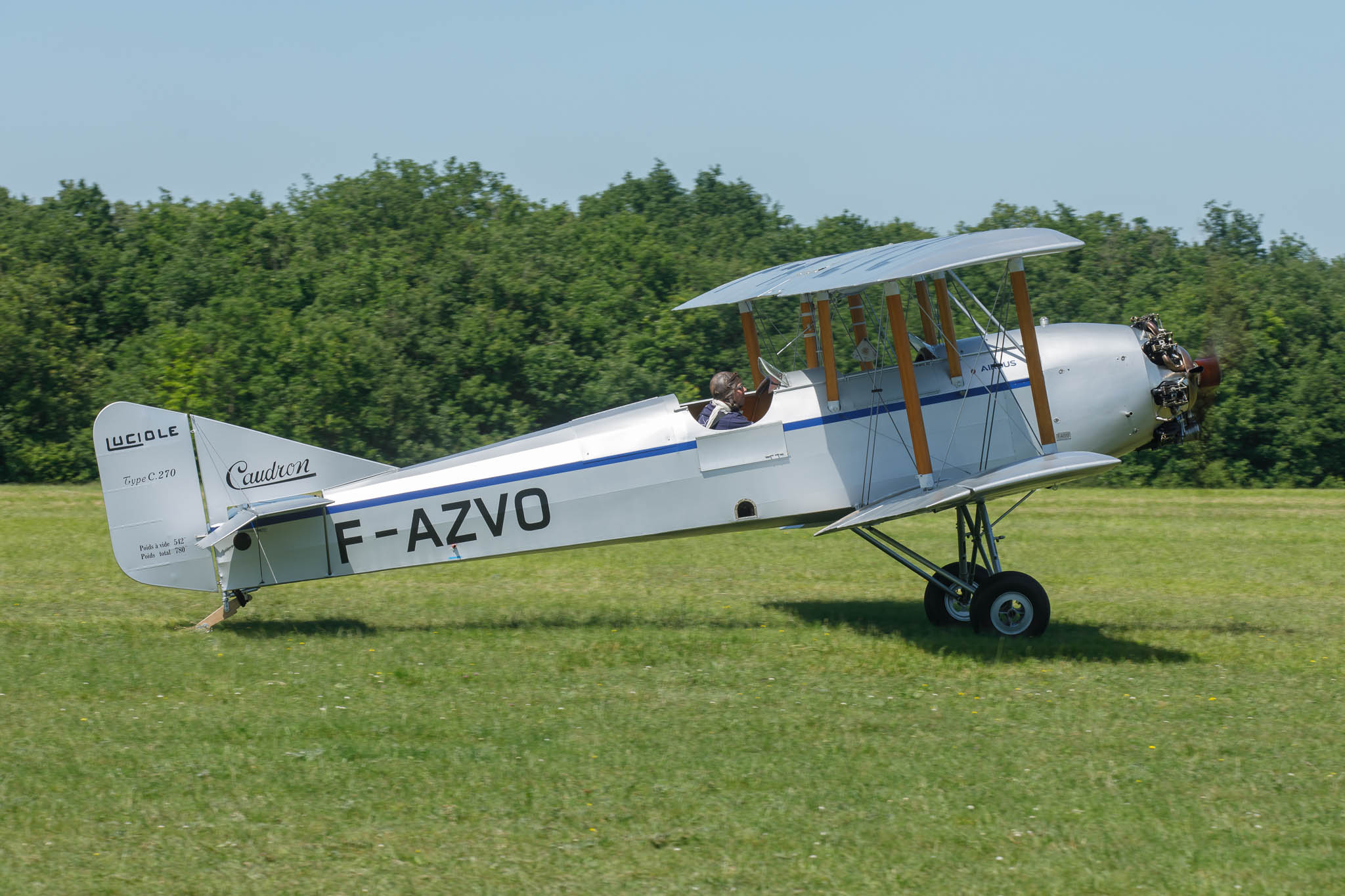
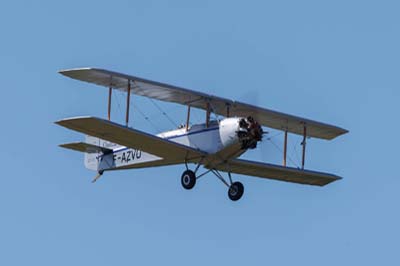
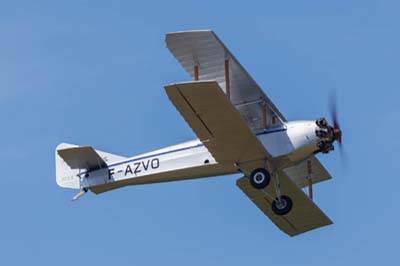
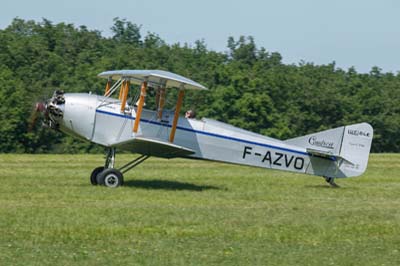
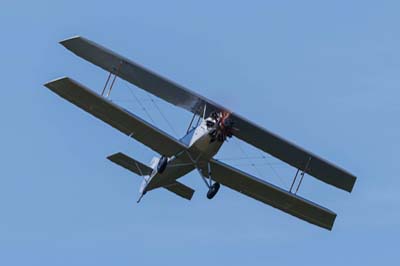
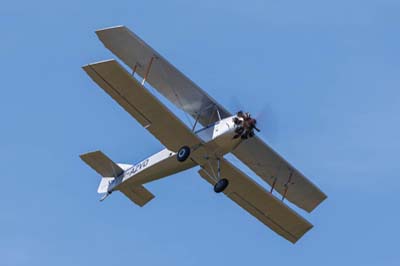
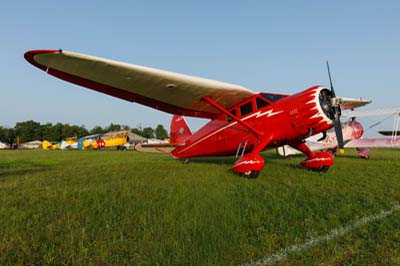
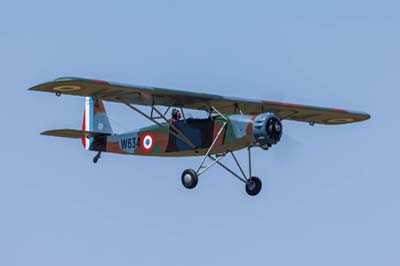
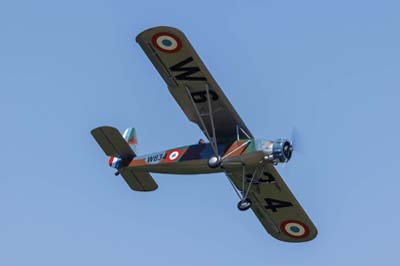
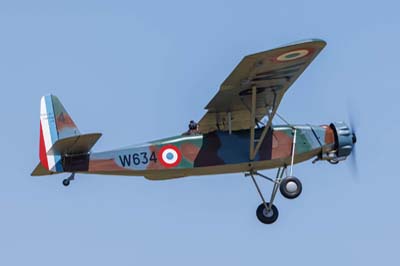
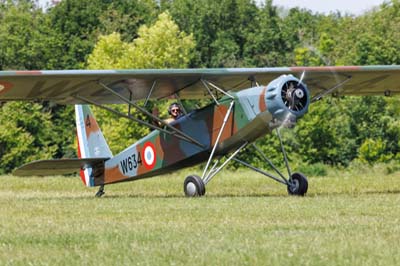
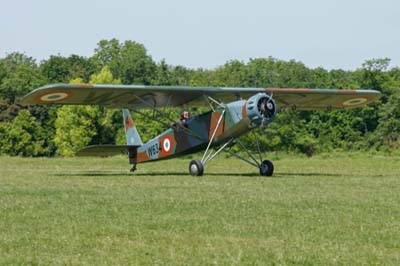
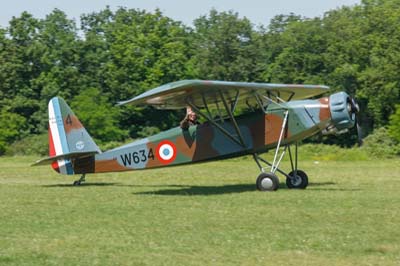
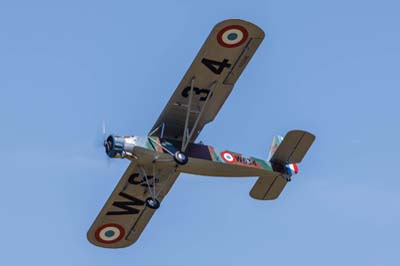
| Caudron C.270 Luciole (F-AZVO) from 1932 flying in the 'Golden Years' section. |
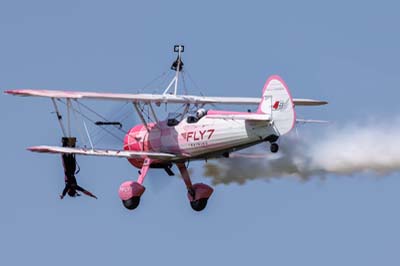 |
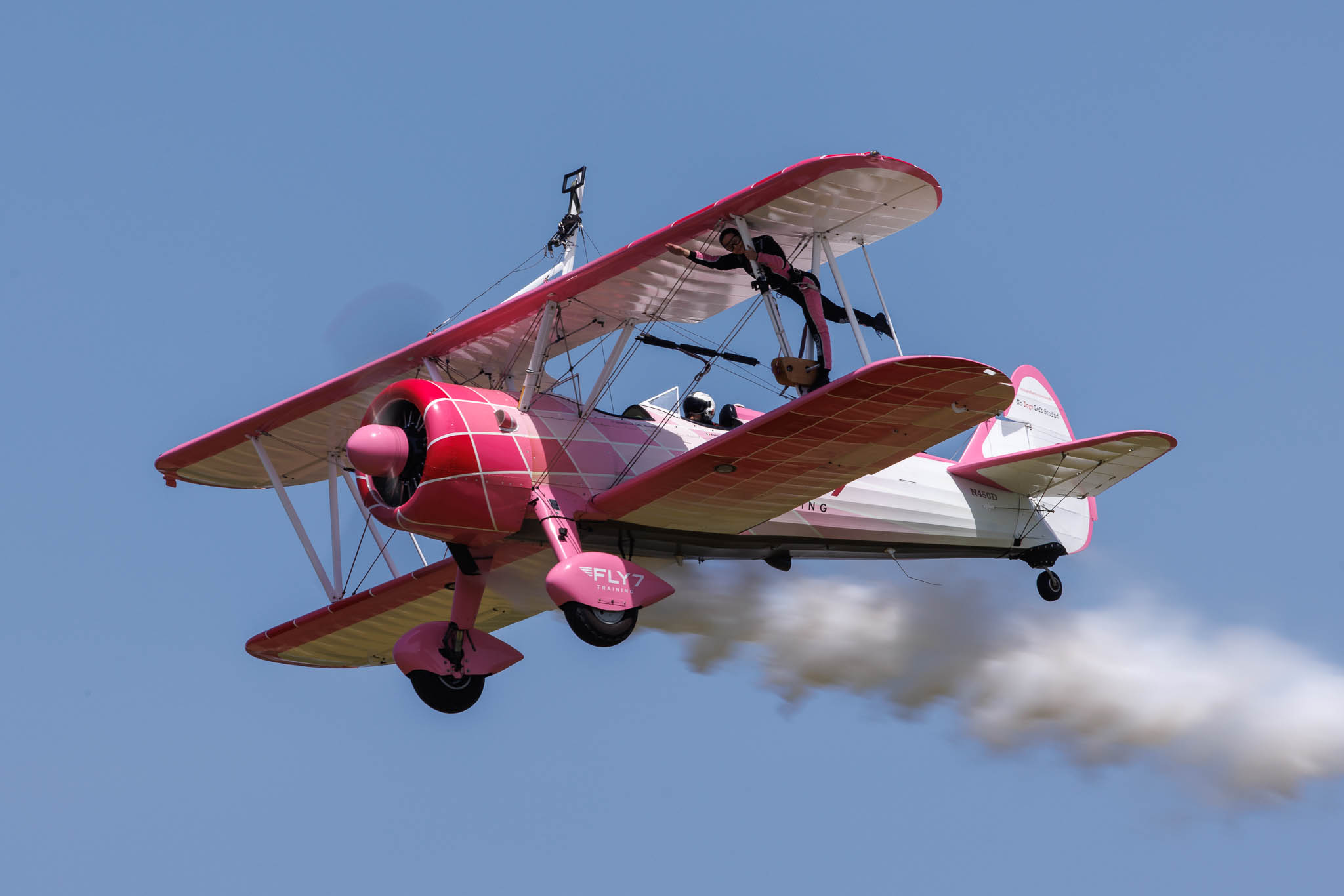
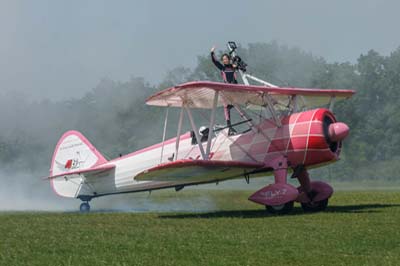
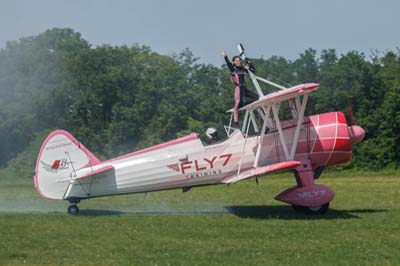
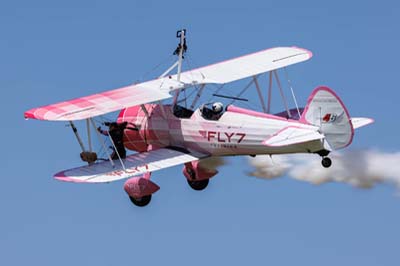
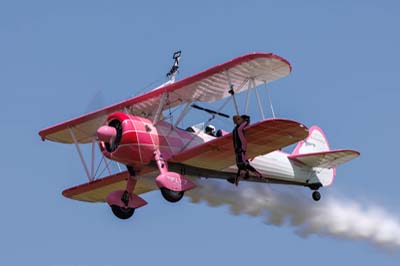
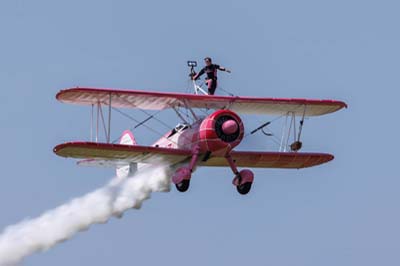
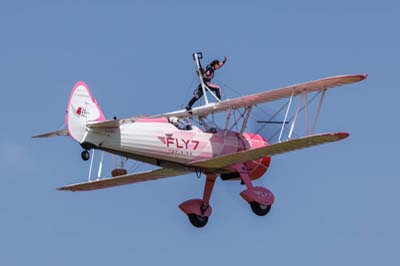
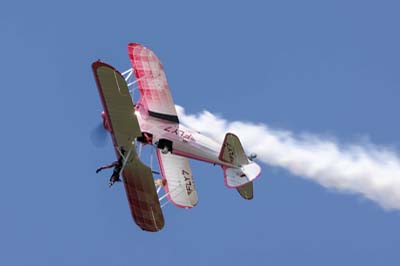
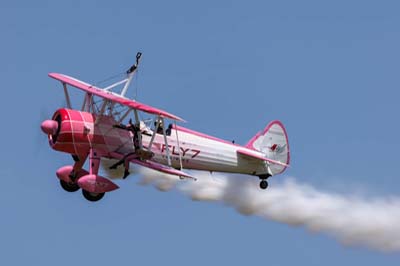
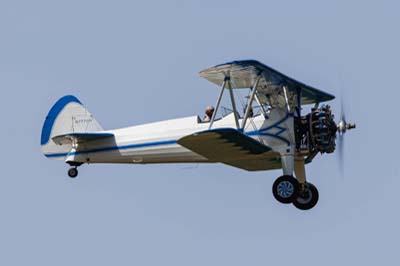
Danielle Del Buono demonstrated remarkable courage as she climbed around the wings of a Boeing-Stearman Kaydet during flight, hanging inverted beneath the aircraft before waving to the crowd. |
Le Temps des Hélices 2026: France's Greatest Celebration of Historic Aviation
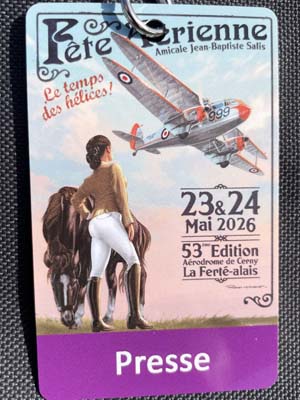
There are airshows that entertain, and there are airshows that immerse visitors in aviation history. Le Temps des Hélices at Cerny-La Ferté-Alais belongs firmly in the latter category. Held on May 23 and 24, 2026, the 53rd edition of this renowned French event once again proved why it is regarded as one of Europe's finest celebrations of historic flight.
Located just 40 kilometres south of Paris in the peaceful countryside of the Essonne region, La Ferté-Alais offers an experience unlike almost any other aviation event. Organised by the Amicale Jean-Baptiste Salis, the weekend combines a world-class flying display with one of Europe's finest collections of airworthy historic aircraft. Rather than simply watching aircraft perform overhead, visitors are encouraged to explore the Musée Volant Salis, wander through the hangars and flight line, and meet the engineers, pilots and volunteers responsible for preserving these remarkable machines.
This year's event celebrated French aviation and military history, although aircraft from Britain, Switzerland, Germany, Poland and the United States ensured there was something for every enthusiast. Long before the flying began, the airfield was alive with activity. I was able to visit on the Friday before a rare privilege. Historic aircraft stood alongside military exhibits, aviation traders and restoration organisations, creating an atmosphere that felt closer to an aviation festival than a traditional airshow.
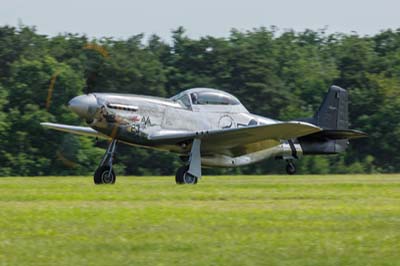
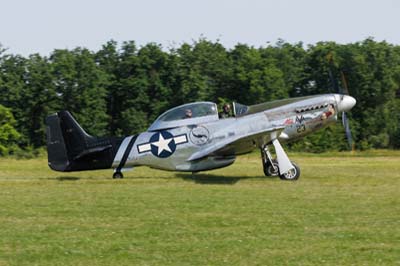
The static displays alone justified the journey from the UK. Visitors could admire a host of French built aircraft. For those wanting more than a close look, the choice of experience flights was exceptional. Visitors could take to the skies in everything from Boeing-Stearman Kaydets and North American T-6 Texans to a SOCATA Rallye, SOCATA Epsilon and even the beautifully restored North American P-51D Mustang 'Miss AVA'. It was an opportunity few aviation enthusiasts could resist.
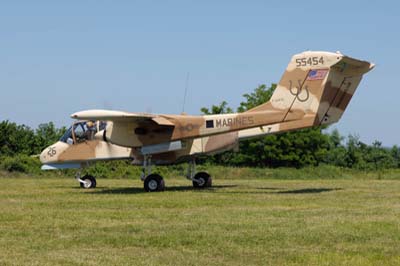
Flying commenced shortly after 1:00 pm with a colourful parachute display by the French Air and Space Force's Phoénix team, descending from a North American OV-10B Bronco. Their graceful formation jump provided a fitting opening before the flying programme embarked on its traditional journey through more than a century of aviation history.
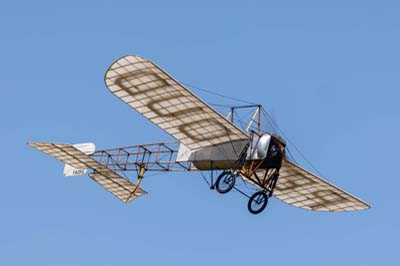
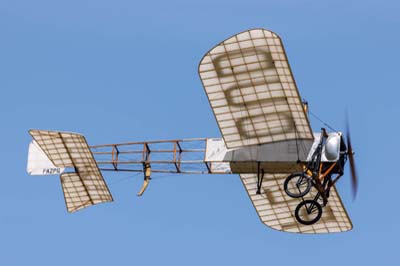
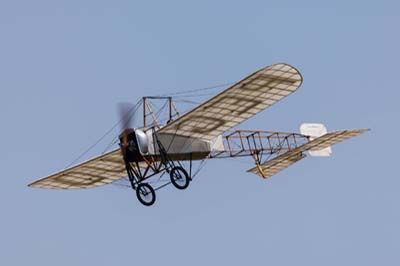
The opening sequence celebrated the earliest pioneers of French flight. The famous Bleriot XI and elegant Morane H demonstrated just how far aviation had progressed in little more than a century. Despite the warm conditions and lively air, both aircraft were flown with impressive precision, even managing close formation passes that delighted the crowd.
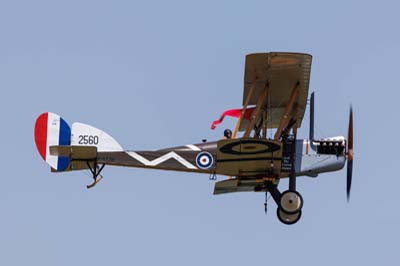
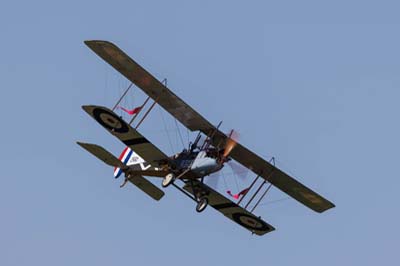
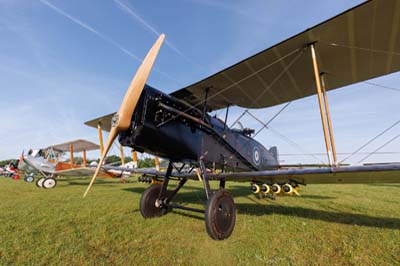
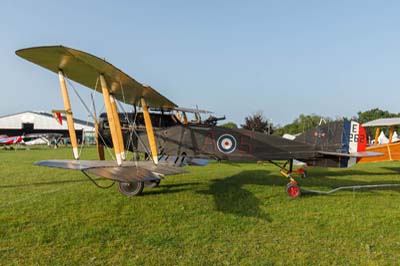
The timeline quickly advanced to World War One, where replica fighters recreated the fragile dogfights of aviation's formative years. A Fokker Dr.I and RAF SE5a performed mock combat, while one of the most eagerly anticipated appearances was the flying debut of an outstanding RAF BE2f reproduction. Built by The Vintage Aviator Ltd in New Zealand, the aircraft represented a Royal Flying Corps night fighter and demonstrated the extraordinary quality of modern historic aircraft restoration.
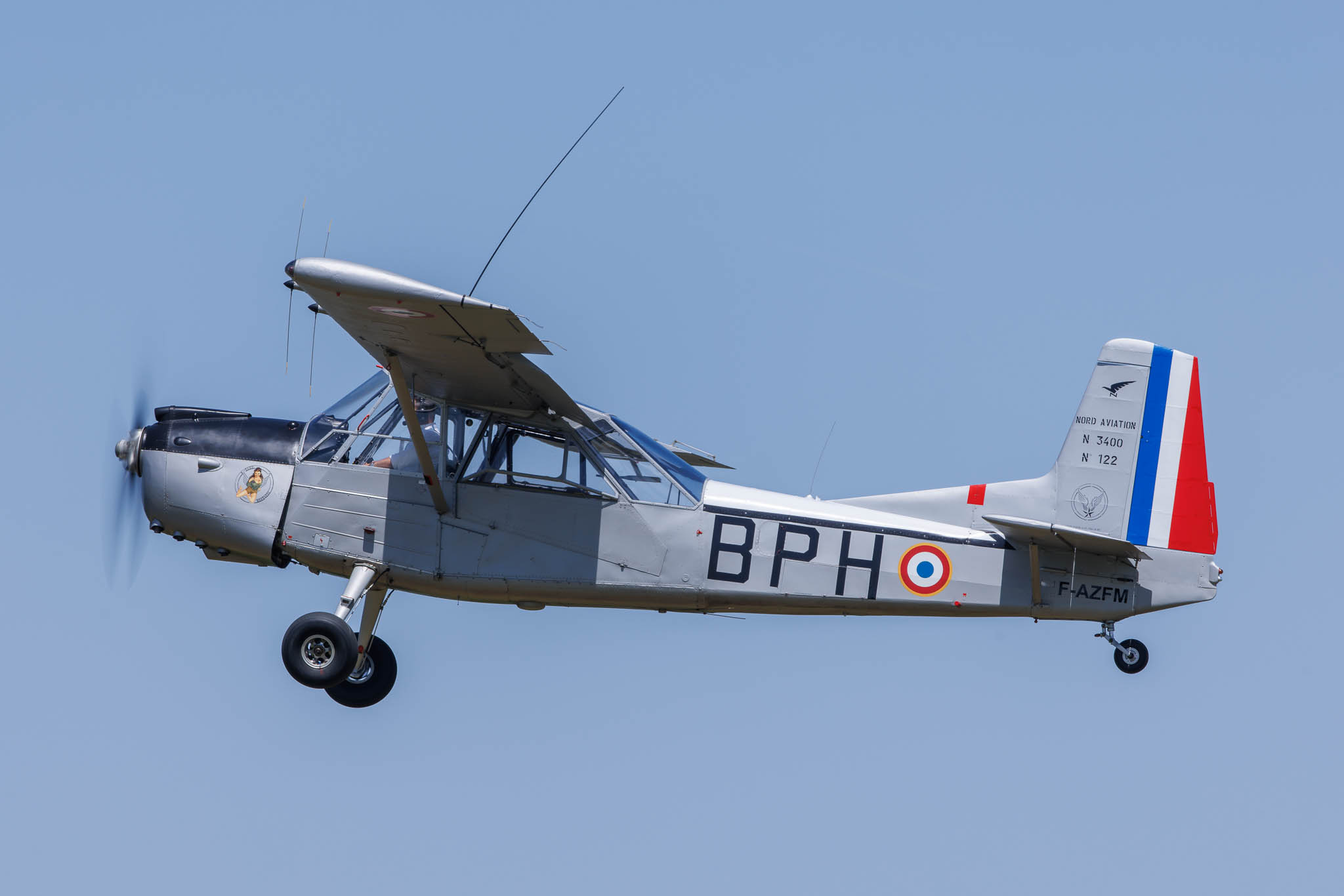
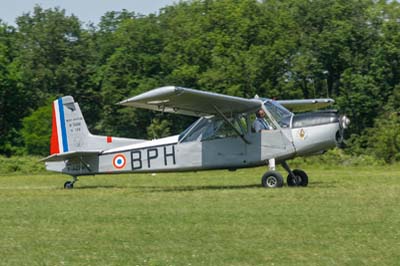
France's distinctive interwar aviation industry followed, represented by graceful parasol wing fighters. The Morane-Saulnier MS.317 displayed elegant aerobatics while the unusual Salmson D7 CriCri flew low level passes beneath it. A trio of Nord aircraft then illustrated post-war French aircraft development, with the Nord 1101 Noralpha, Nord 3202 and Nord 3400 Norbarbe providing an unusual but fascinating display rarely seen outside France.
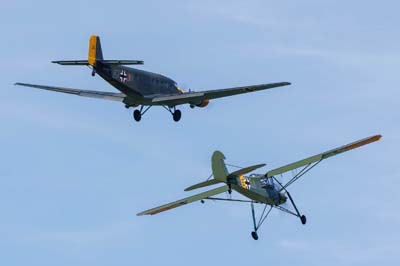 |
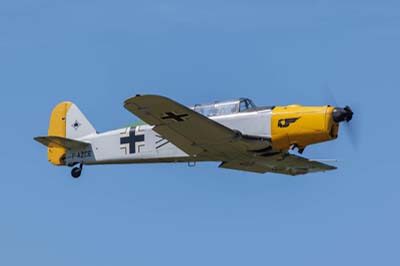
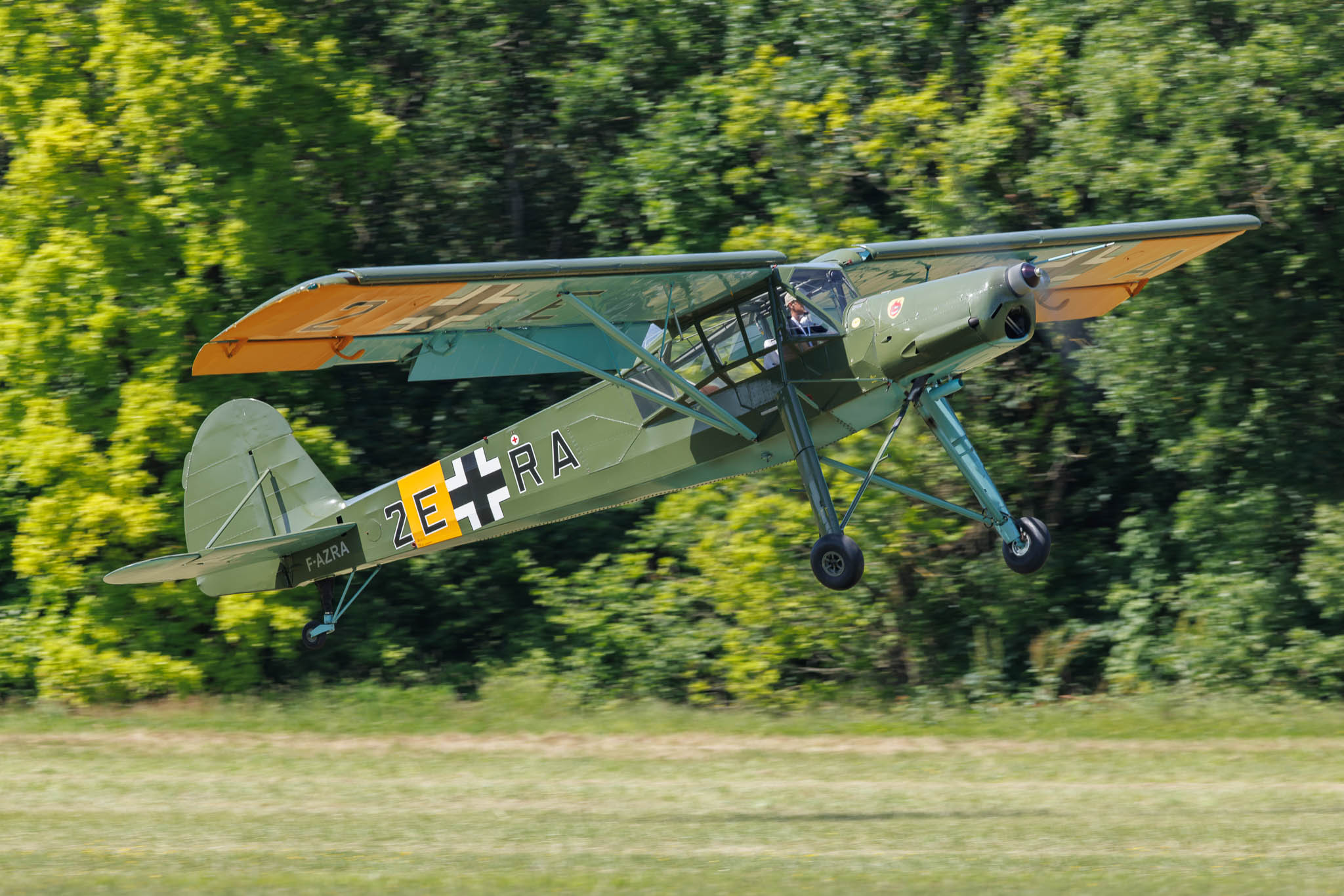
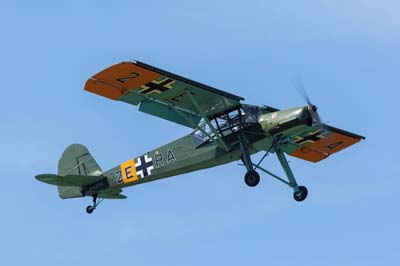
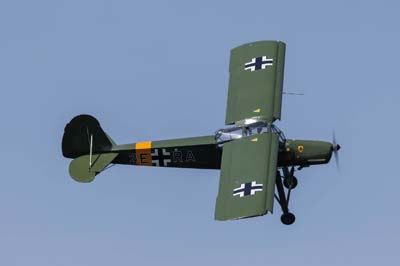
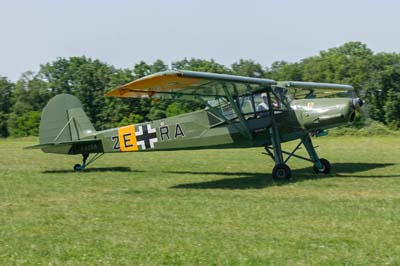
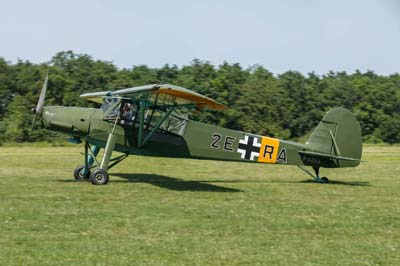
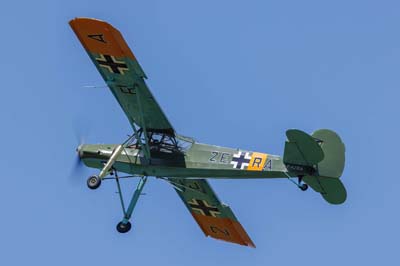
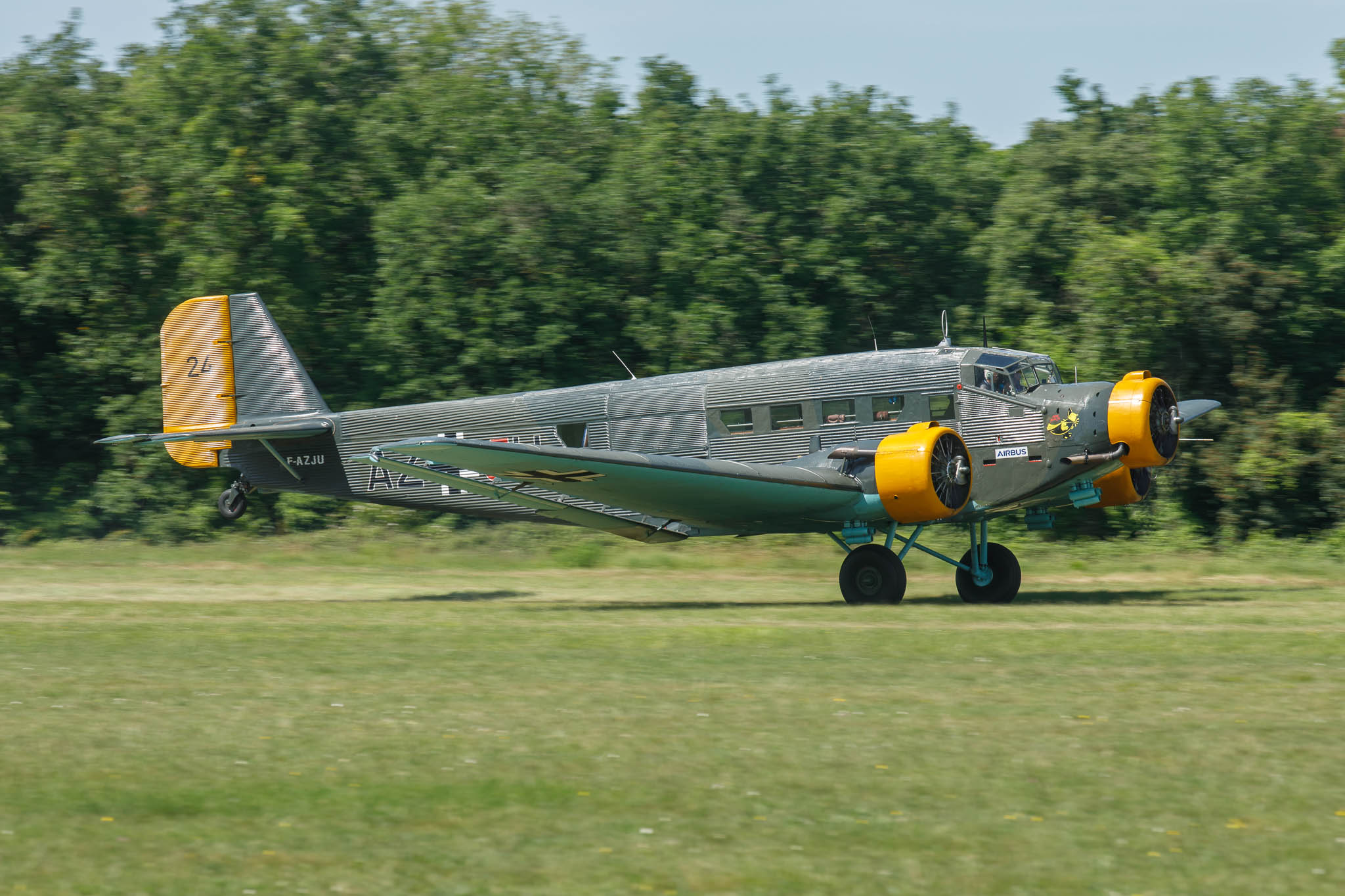
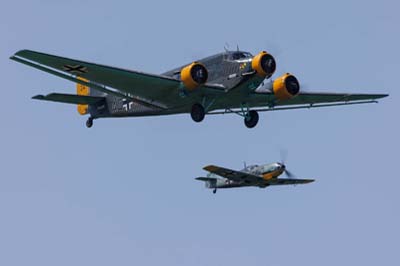
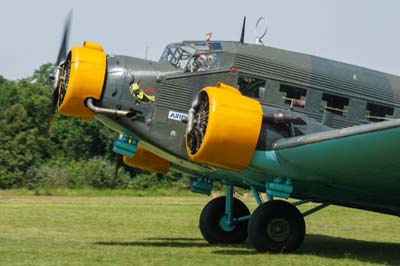
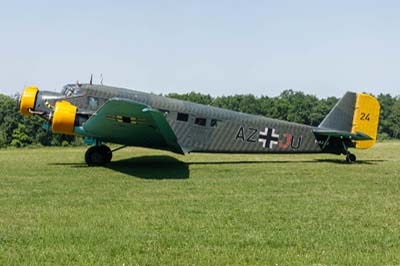
The Morane-Saulnier MS.505 Criquet (F-AZRA) displaying as a Fiesler Fi 156 Storch with the Junkers Ju52/3M (F-AZJU). |
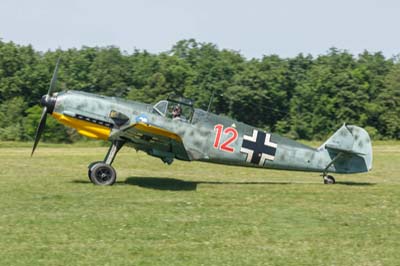 |
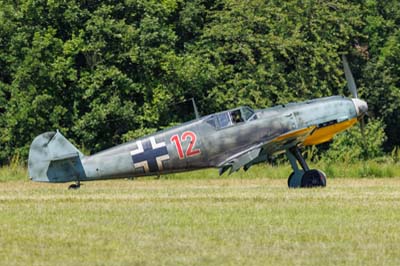
Messerschmitt Bf 109E-4/N flown by Charlie Brown. |
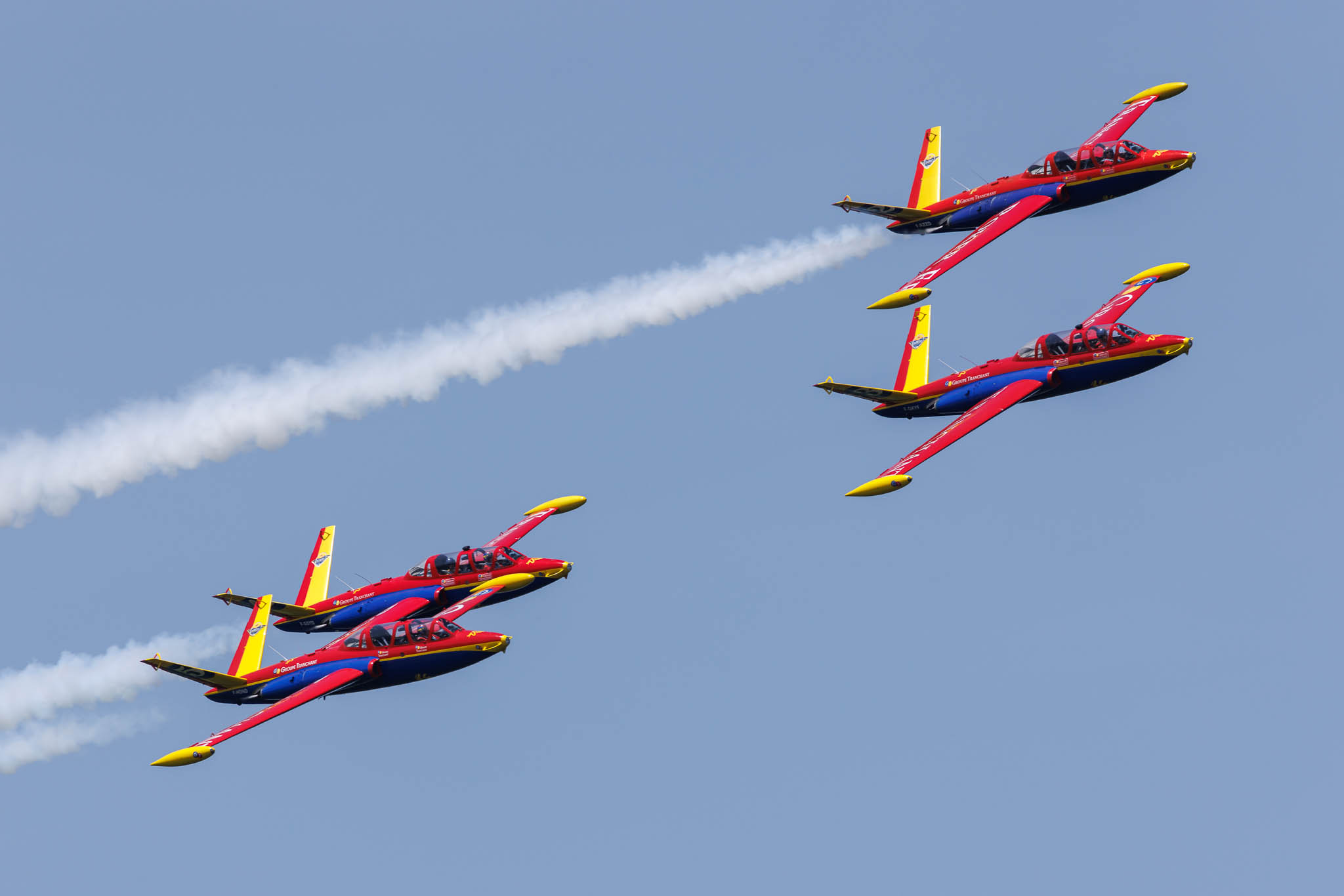
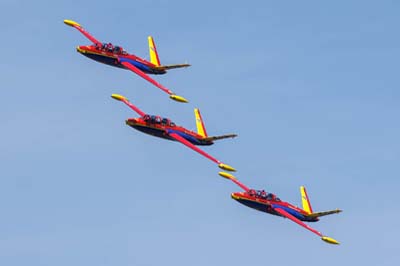
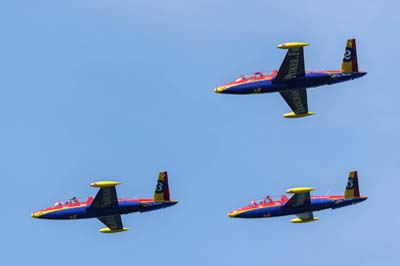
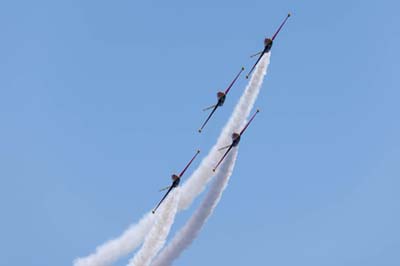
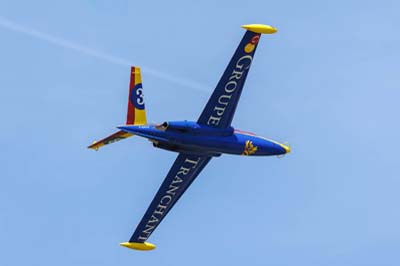
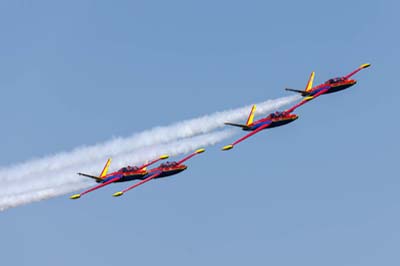
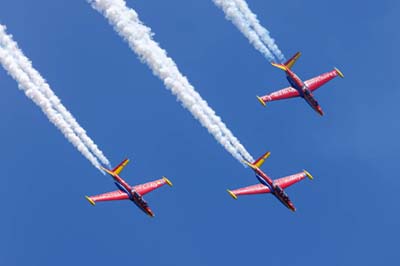
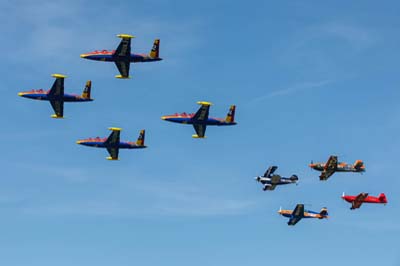
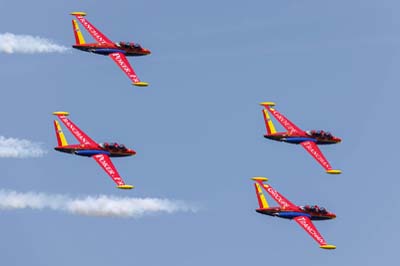
The mood changed dramatically as the programme shifted towards classic airshow entertainment. Patrouille Tranchant combined four Fouga Magisters with some of France's finest civilian aerobatic pilots flying CAP, Pitts and Extra aircraft. Individual aerobatic routines blended seamlessly into close formation flying before the Magisters returned to perform sweeping passes and one of the weekend's most elegant performances.
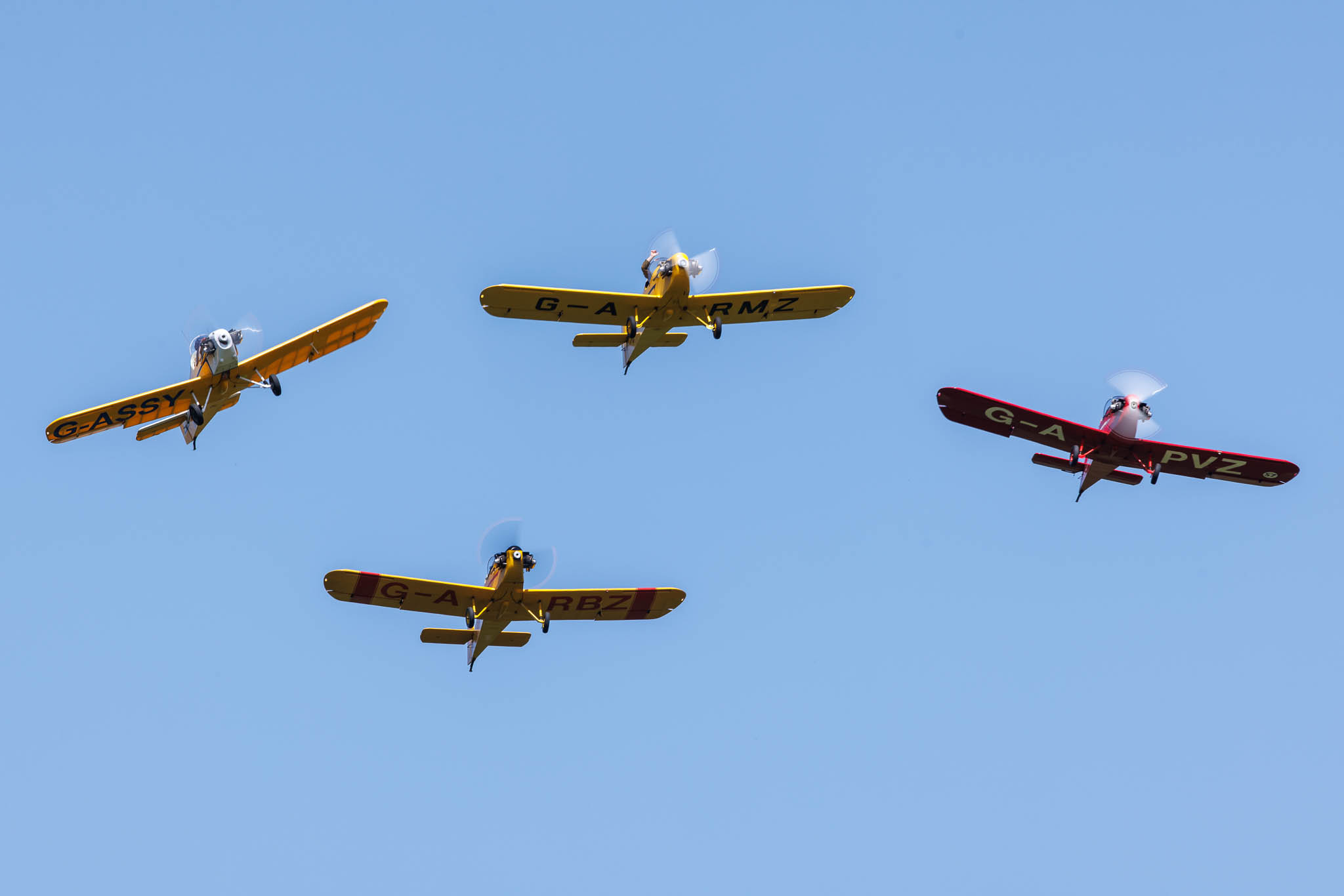
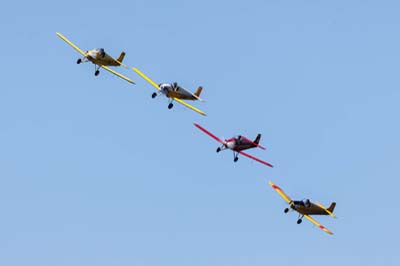
British display flying was represented by the ever-popular Tiger Club Turbulent Team. Their combination of flour bombing, balloon bursting, limbo flying and gentle humour has long been a favourite with French audiences, and the enthusiastic reaction from families along the crowd line showed their appeal remains undiminished.
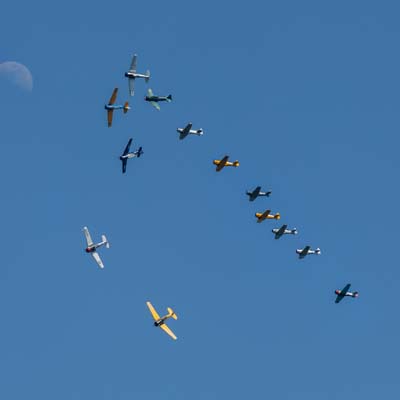 |
Tora! Tora! Tora! and 12 North American T-6 Texans. |
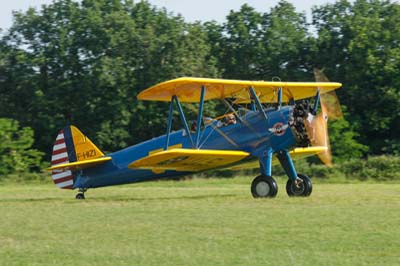
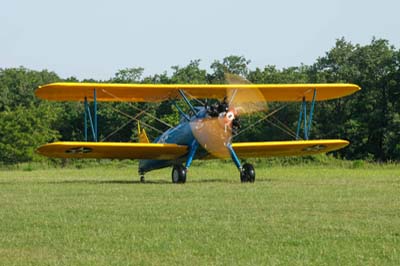
Another crowd favourite came from Switzerland's 46 Aviation. Danielle Del Buono demonstrated remarkable courage as she climbed around the wings of a Boeing-Stearman Kaydet during flight, hanging inverted beneath the aircraft before waving to the crowd. It was a spectacular reminder of the golden age of barnstorming and one of the most talked-about displays of the weekend.
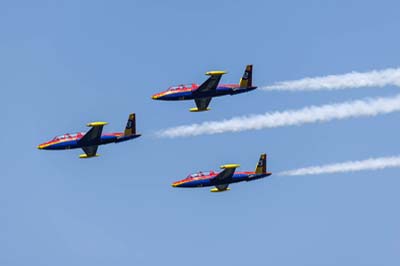
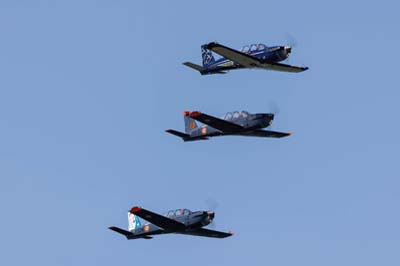
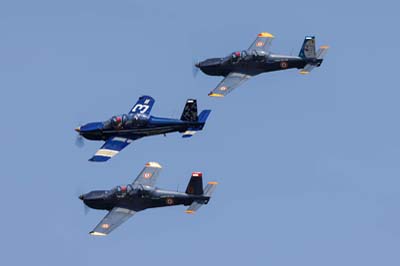
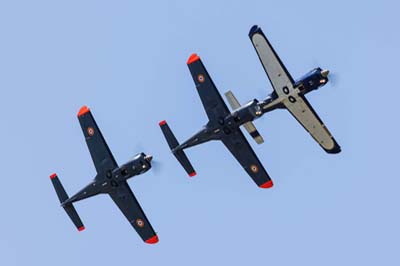
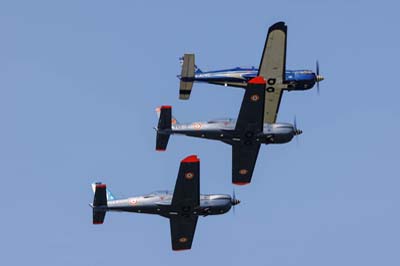
New for 2026 was Les Casques Rouges, a civilian display team flying three former Armée de l'Air SOCATA TB30 Epsilon trainers. Their energetic routine echoed the famous Cartouche Doré displays, proving these retired military trainers continue to deliver an impressive performance long after leaving frontline service.
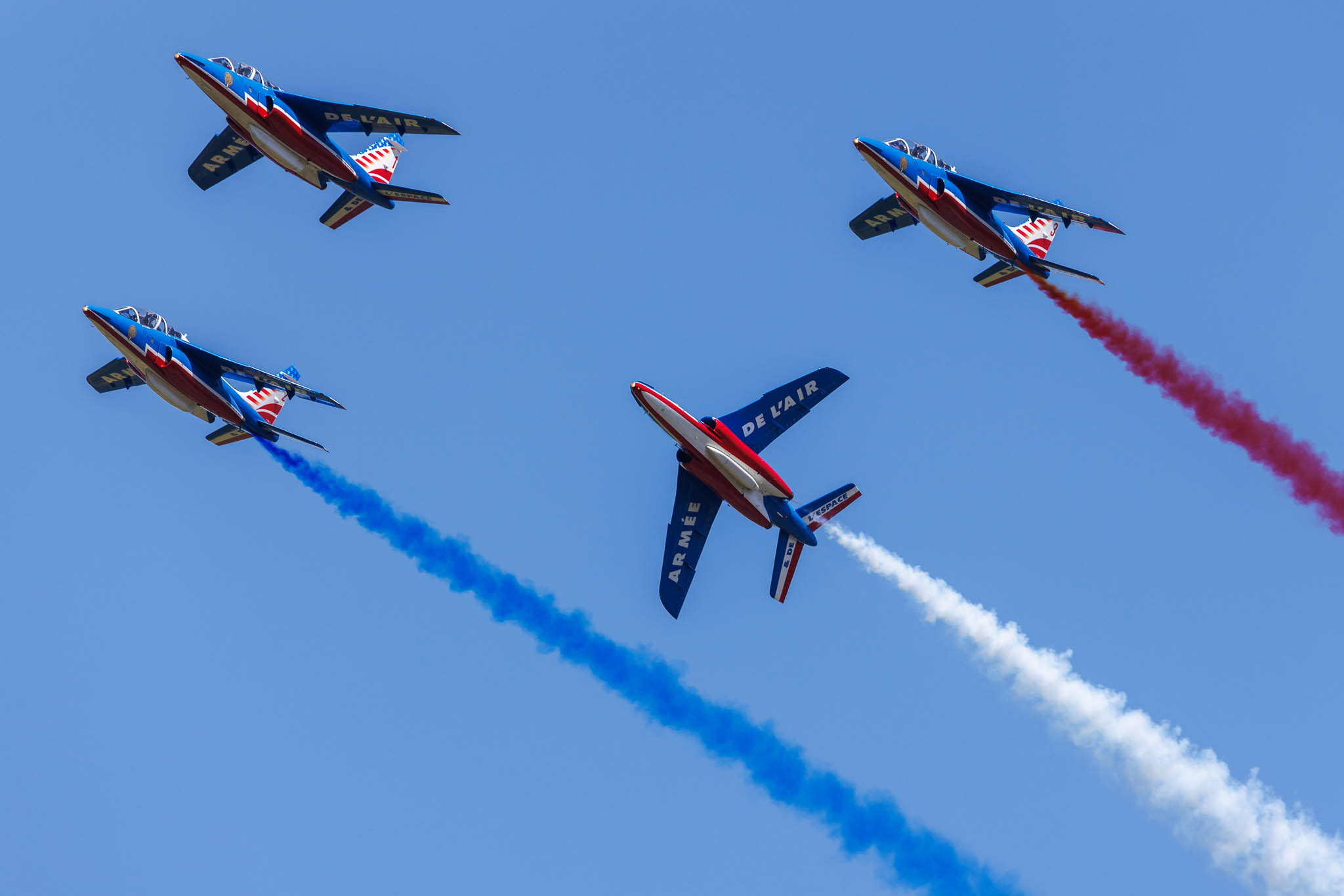
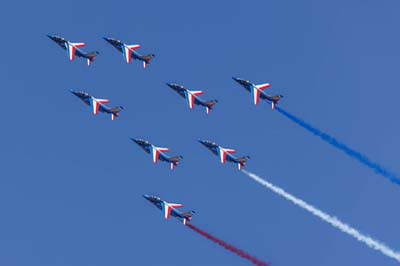
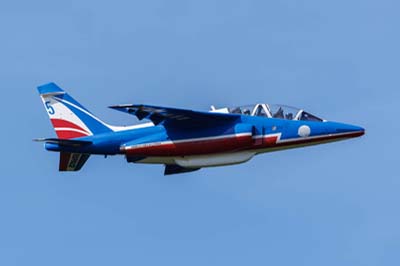
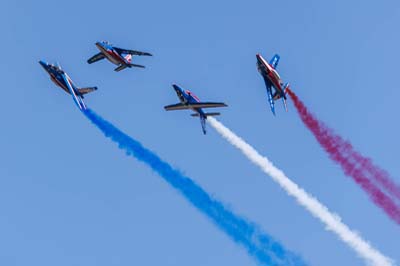
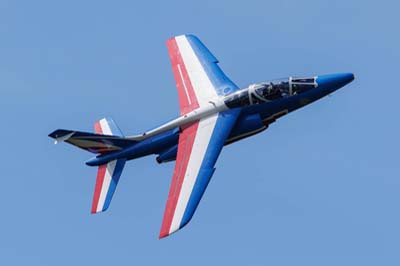
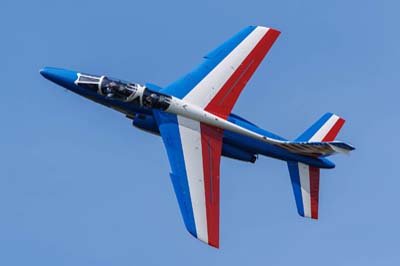
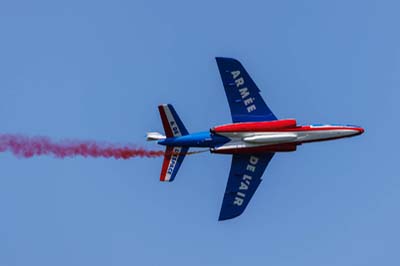
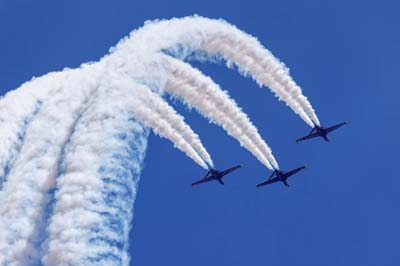
Military aviation returned with the unmistakable sight of La Patrouille de with coloured smoke and immaculate formation flying filling the skies. Ahead of their forthcoming United States tour, subtle Stars and Stripes artwork.
The second half of the programme demonstrated why La Ferté-Alais has become famous for its large-scale historical recreations. Rather than presenting isolated flying displays, the organisers bring history to life with carefully choreographed sequences, combining aircraft, pyrotechnics, music and narration to recreate pivotal moments in aviation history.
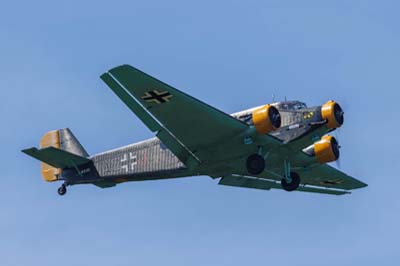
For many aviation enthusiasts, however, the highlight of the weekend came during the Luftwaffe themed sequence. Traditionally built around aircraft from the Salis collection, and the Morane-Saulnier MS.505 Criquet (F-AZRA) displaying as a Fiesler Fi 156 Storch with the Junkers Ju52/3M (F-AZJU). The 2026 display featured something truly exceptional with the appearance of a genuine Messerschmitt Bf 109E-4/N flown by Charlie Brown. Recovered from northern Russia after lying at its crash site since January 24, 1942, the aircraft has undergone an extensive restoration and today represents one of the world's most authentic early Bf 109s. Its original Daimler-Benz DB601 engine produced a noticeably smoother and more melodic sound than the later DB605 powered variants commonly seen at European airshows. Brown flew a measured but elegant routine, including gentle aerobatics, before joining the Spitfire Mk IX for formation passes on Sunday. Seeing two of the Second World War's most iconic fighters sharing the sky was undoubtedly one of the defining images of the weekend.
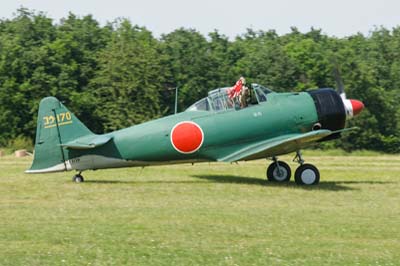
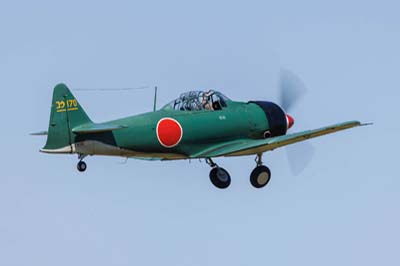
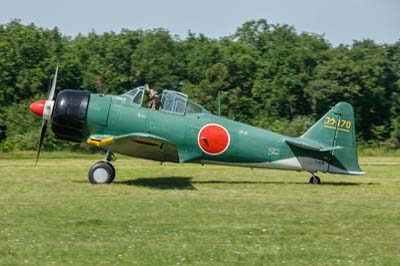
One of the most anticipated set pieces was the return of the spectacular recreation of scenes from Tora! Tora! Tora!. Twelve North American T-6 Texans, accompanied by two Boeing-Stearman Kaydets, simulated the opening attack on Pearl Harbor, diving across the airfield in formation as explosions and anti-aircraft fire erupted below. The museum's Mitsubishi A6M Zero, itself a modified T-6 Texan, then entered the battle in a series of convincing mock dogfights before disappearing dramatically behind the tree line.
Although familiar to regular visitors, the sequence remains one of the defining moments of every La Ferté-Alais airshow.
The following Vietnam War themed display relied less on aircraft numbers and more on atmosphere. The Musée Européen de l'Aviation de Chasse OV-10B Bronco joined one, or two depending on the day, North American T-28 Trojans to recreate a combat search and rescue mission over the jungle. |
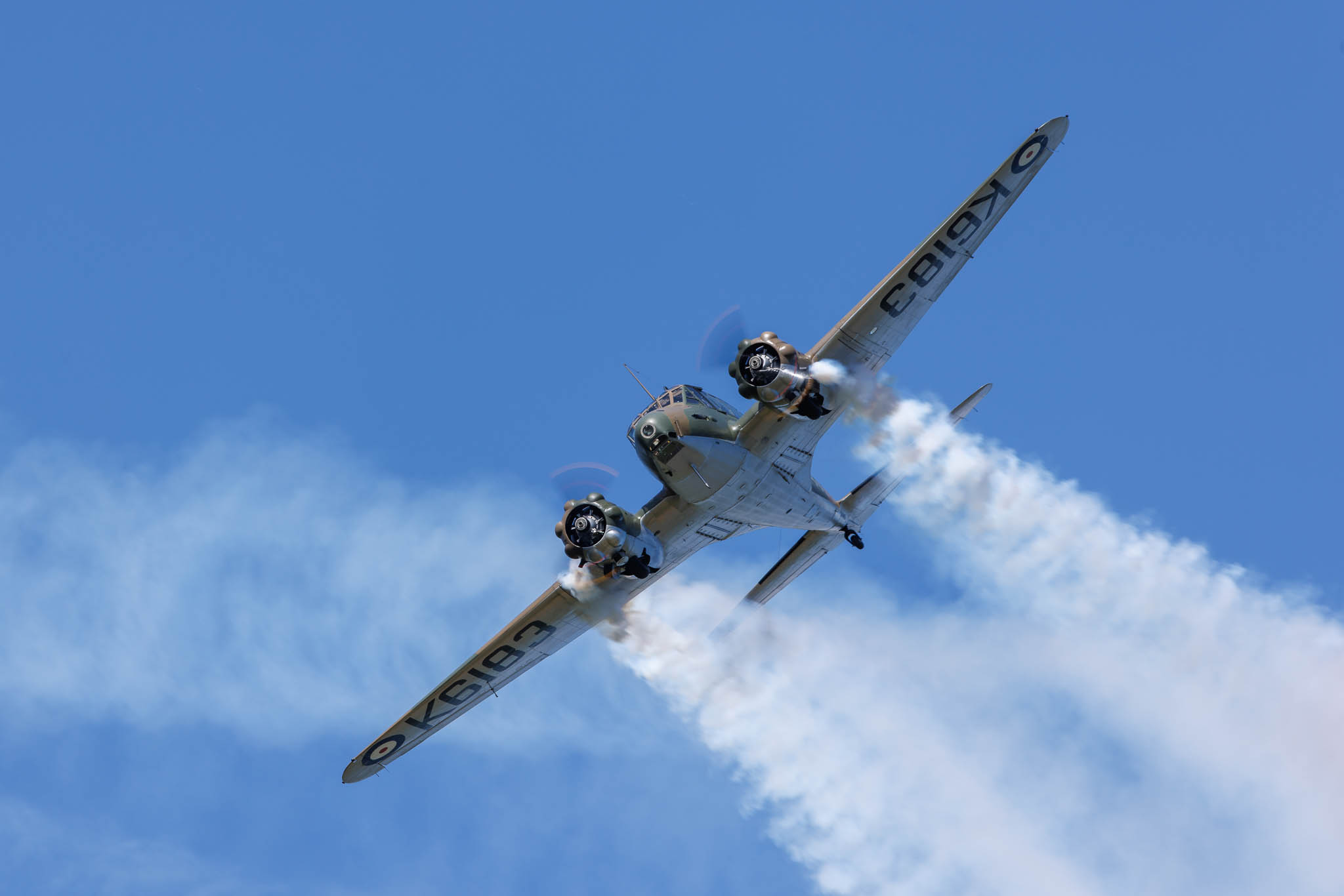 |
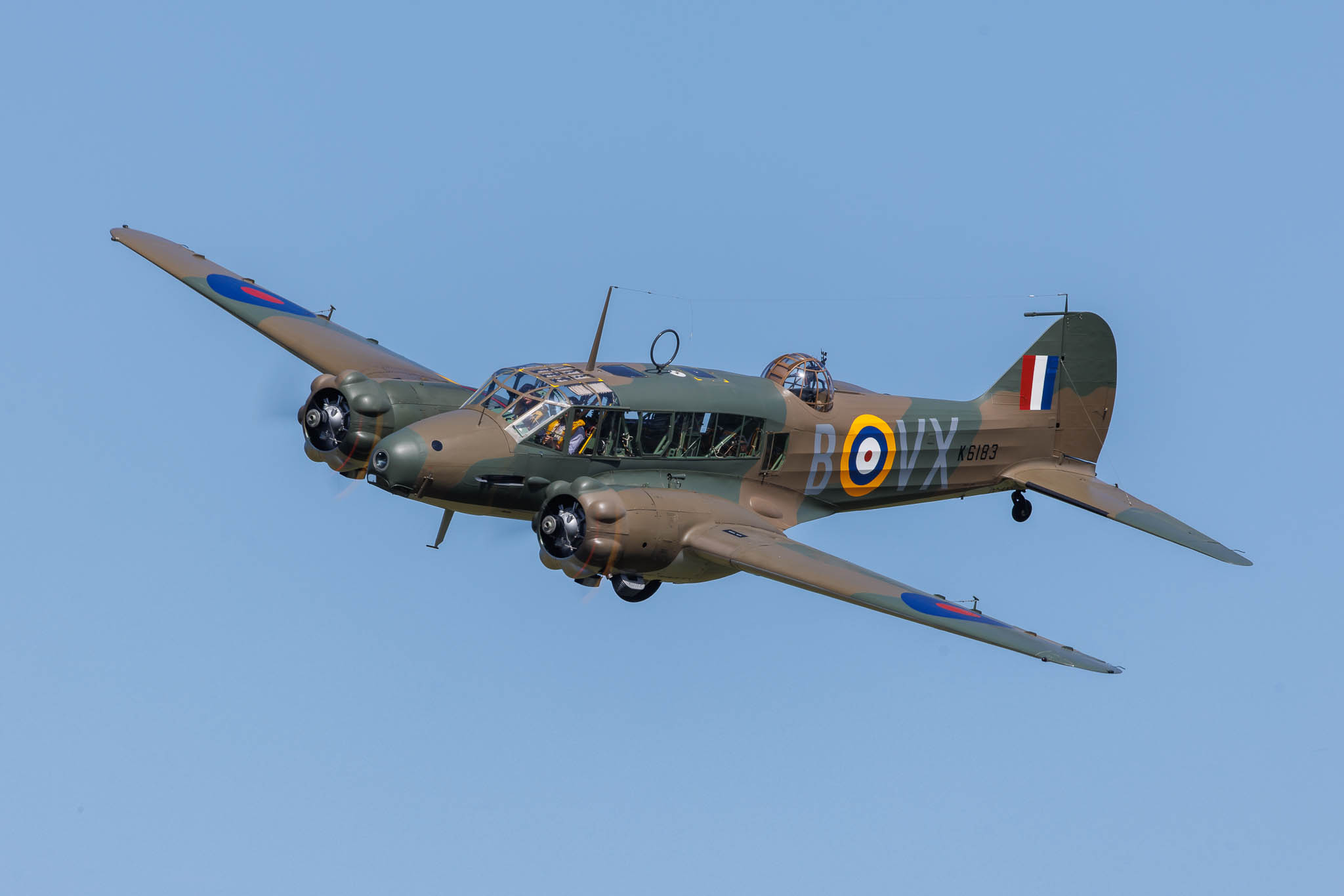
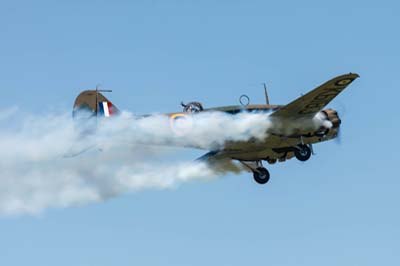
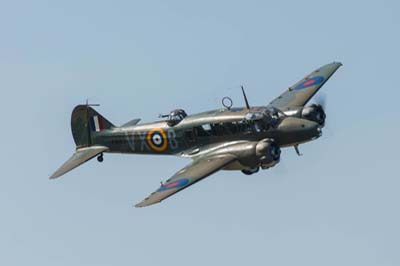
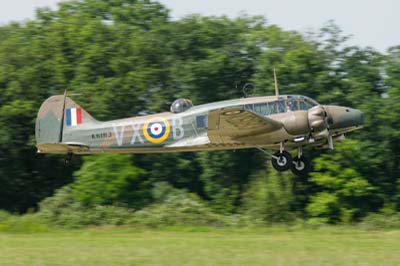
| The only airworthy Avro Anson Mk.1 (K6183 'VX-B' registered OO-ANS). |
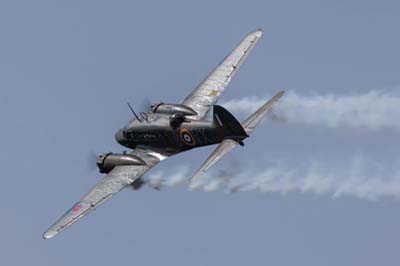
Between the larger theatrical displays came an impressive selection of individual warbird performances. The beautifully restored Avro Anson I, operated by RAF Station Czechoslovakia and flown by Richard Santus, made its La Ferté-Alais debut with a surprisingly energetic routine that demonstrated just how graceful the twin-engine trainer could be.
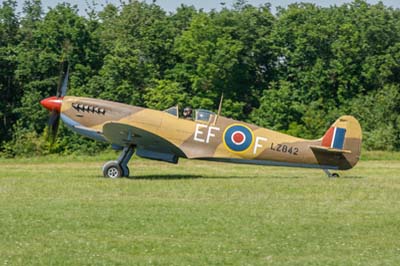
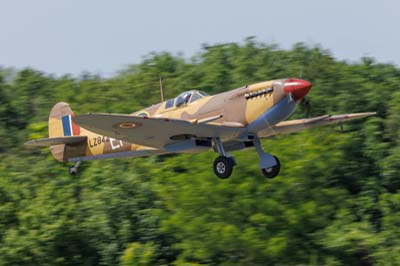
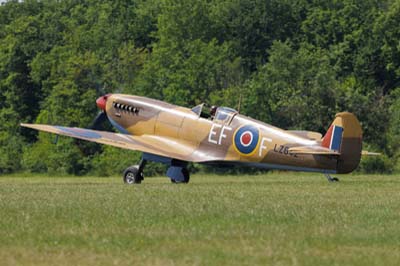
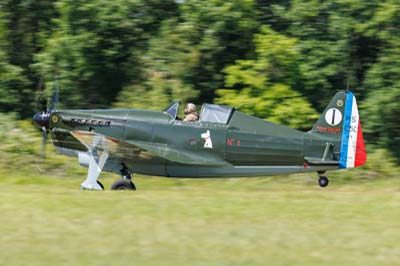
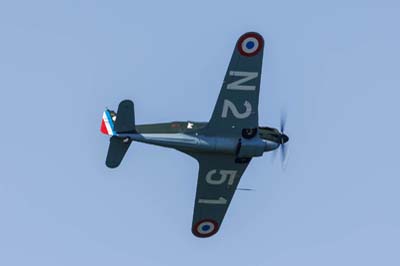
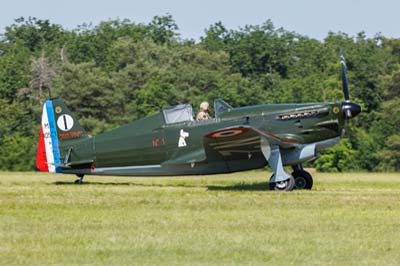
Mark Bennett's Supermarine Spitfire Mk IX, flown by Jim Scholfield, represented another important survivor. Believed to be the earliest airworthy Mk.IX, it continues to wear the markings of Canadian pilot Bill Olmstead's 232 Squadron aircraft, flown during the Allied invasion of Sicily. Completing the World War Two fighter line-up was Association Morane Charlie Fox's Morane-Saulnier MS406C-1, in reality a Swiss-built EKW D-3801, representing the French fighter force during the opening stages of the conflict.
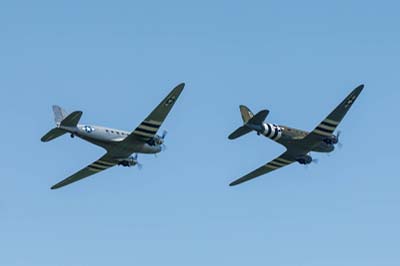 |
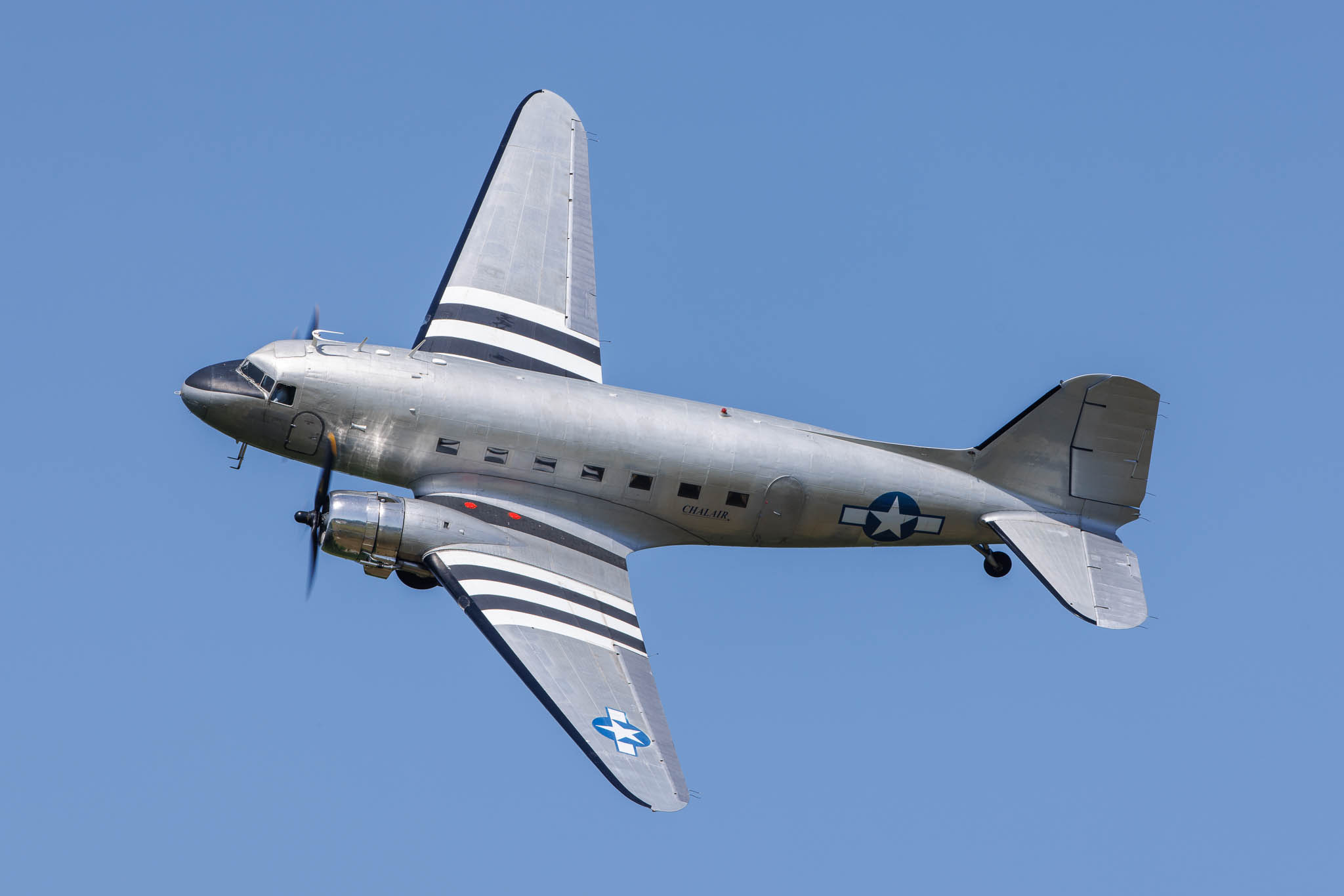
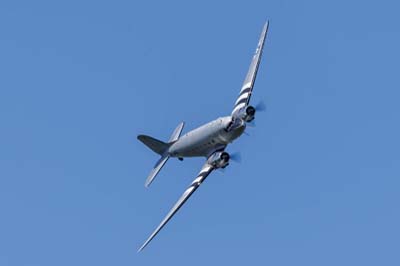
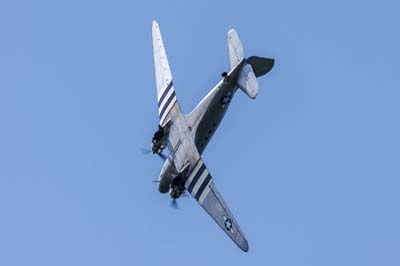
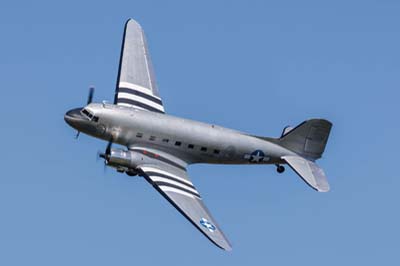
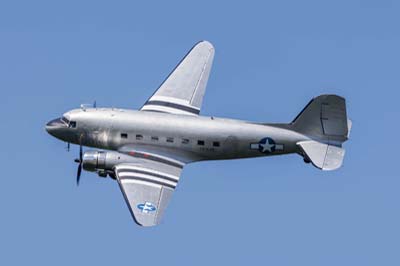
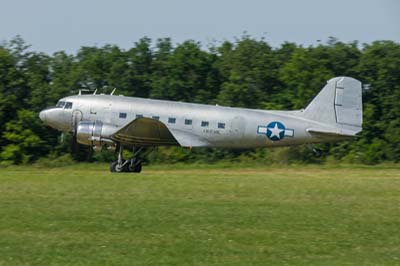
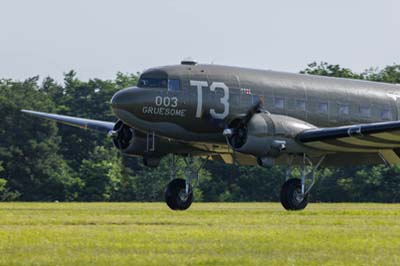
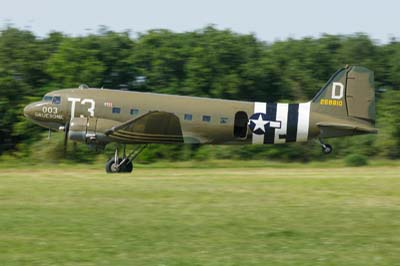
Association Un Dakota sur la Normandie's Douglas C-47B Skytrain was joined by the Musée Aéronautique de Bretagne's C-53 Skytrooper. |
The D-Day commemorations provided another moving chapter in the programme. Association Un Dakota sur la Normandie's Douglas C-47B Skytrain was joined by the Musée Aéronautique de Bretagne's C-53 Skytrooper, from which parachutists from the French Army's Section Technique de l'Armée de Terre descended in full combat equipment. The pair of Dakotas then returned to perform beautifully executed formation passes, recalling the enormous airborne operations that supported the Normandy landings.
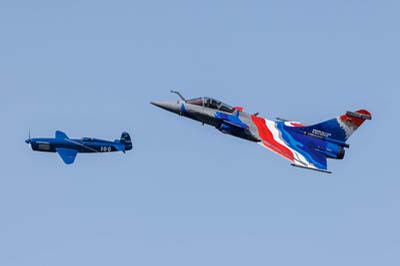 |
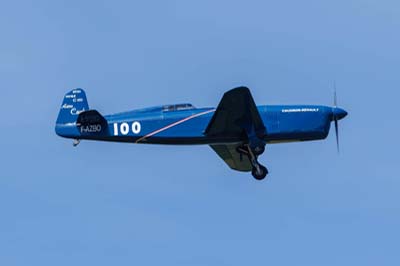
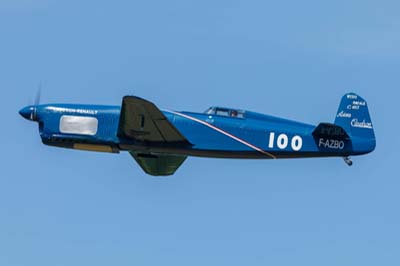
Two aircraft sharing the Rafale name, the Caudron-Renault C460 Rafale and Dassault Rafale C |
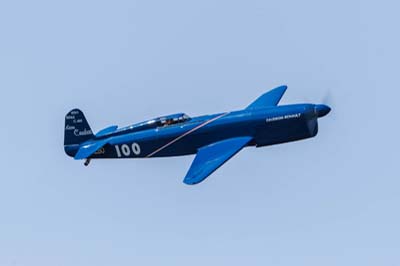
An equally memorable debut came from another aircraft carrying legendary status, the Caudron-Renault C460 Rafale. Originally built for the 1934 Coupe Deutsch de la Meurthe air race, the sleek racing aircraft became famous after winning the 1935 competition and later achieving success in the United States. Following its restoration to airworthy condition by Renault, the replica made its public flying debut with a series of high-speed passes while historic Renault competition cars paraded below.
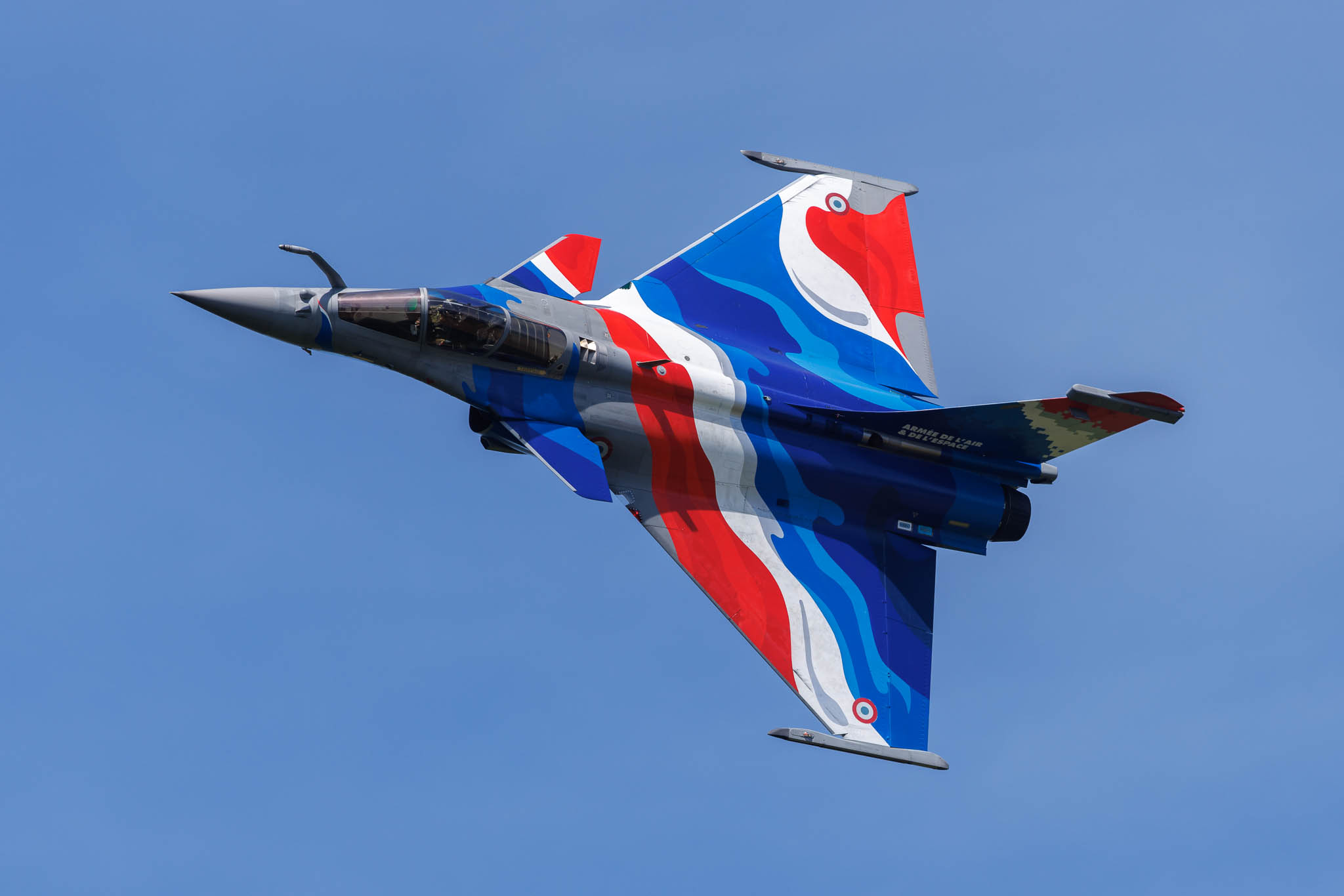
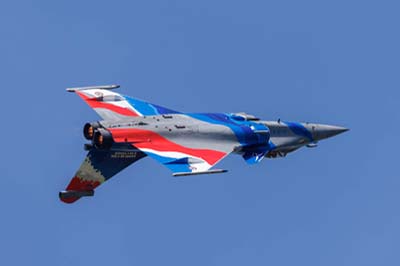
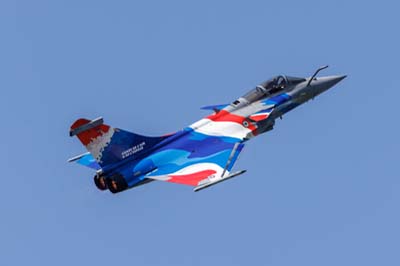
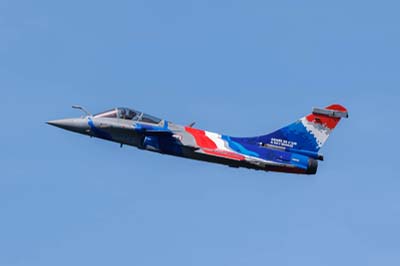
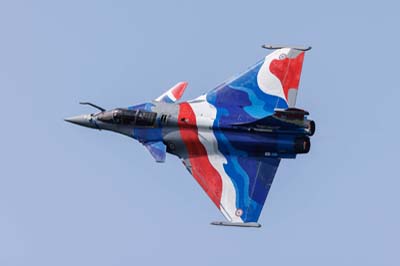
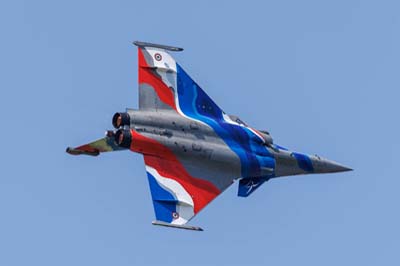
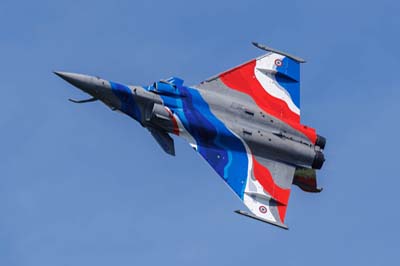
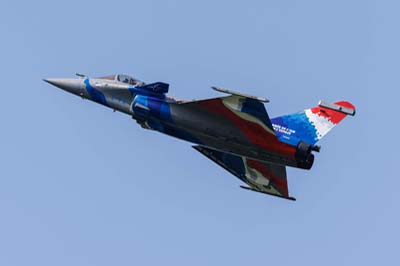
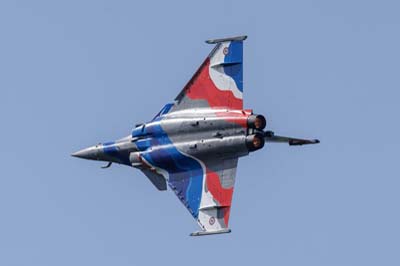
The elegant 1930s racer returned to the display line leading the French Air and Space Force's (Armée de l'Air et de l'Espace, named as such from 2020) Dassault Rafale C, flown by Captain Alexandre Roeckel. The pairing of two aircraft sharing the Rafale name, yet separated by almost 90 years of aviation development, perfectly captured the spirit of Le Temps des Hélices. Few airshows could so effectively connect France's pioneering aviation heritage with its modern aerospace industry.
As evening approached, the flying concluded with a traditional biplane balbo. Four Stampe SV4s, four Bücker Jungmanns, five Boeing-Stearman Kaydets filled the evening sky, following an energetic aerobatic routine by a Lycoming powered Jungmann. Against the warm evening light, it provided a fitting finale to another outstanding edition of the show.
While the 2026 programme perhaps featured fewer high-powered warbirds than some previous years, it more than compensated through variety, authenticity and storytelling. From pioneering aircraft and fragile World War One replicas to classic warbirds, military jets and imaginative historical recreations, every display formed part of a carefully crafted journey through aviation history.
That is what continues to distinguish La Ferté-Alais from almost every other European airshow. It is not simply about aircraft flying past the crowd, but about preserving aviation's heritage in the air, where these remarkable machines truly belong. Set within one of Europe's most picturesque airfields and supported by an unrivalled collection of airworthy historic aircraft, Le Temps des Hélices remains one of the world's finest celebrations of flight and a destination that deserves a place on every aviation enthusiast's calendar. |
| Flying Program - The Golden Years |
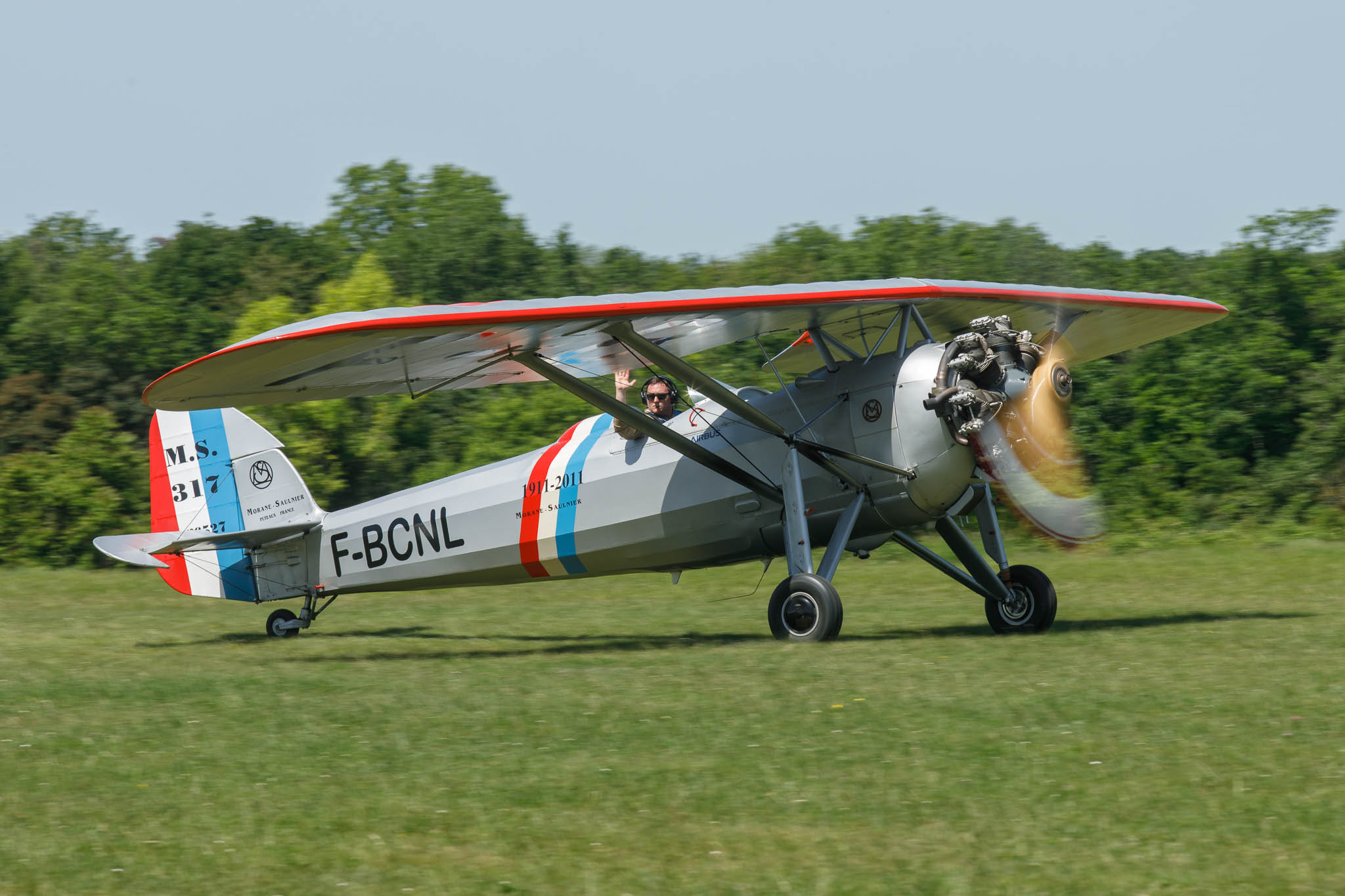
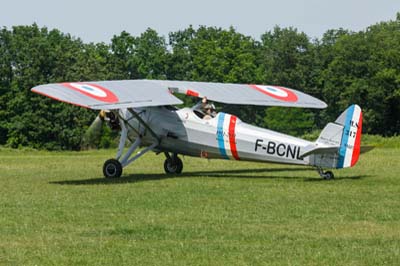
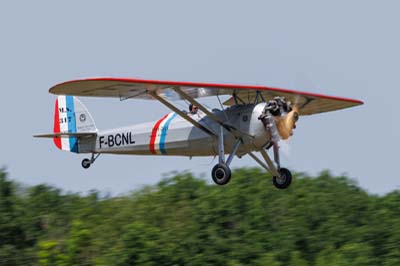
| Left to right: Morane-Saulnier MS.317 (F-BCNL c/n 6527). The MS.301 first flew in 1931 and from 1960 40 MS.315s were upgraded to MS.317 for the French Navy. |
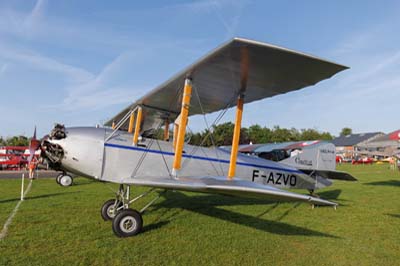
Left to right: Caudron C.270 Luciole (F-AZVO). The Caudron C.270 Luciole ("Firefly") is a French sporting, touring and training biplane designed by Paul Deville. It first flew in 1931 and proved highly successful, with more than 700 examples built during the decade before World War Two. Almost 300 were purchased by the French government for the Aviation Populaire programme, which promoted flying training among civilians.
Built in 1932, F-AZVO initially served with the Armée de l'Air before entering civilian ownership as F-ALVO and later F-BBPT. In 1975, it moved to the UK civil register as G-BDFM, where it remained for more than 20 years. In April 1999, the aircraft returned to France, was re-registered as F-AZVO and continues to fly in its homeland. |
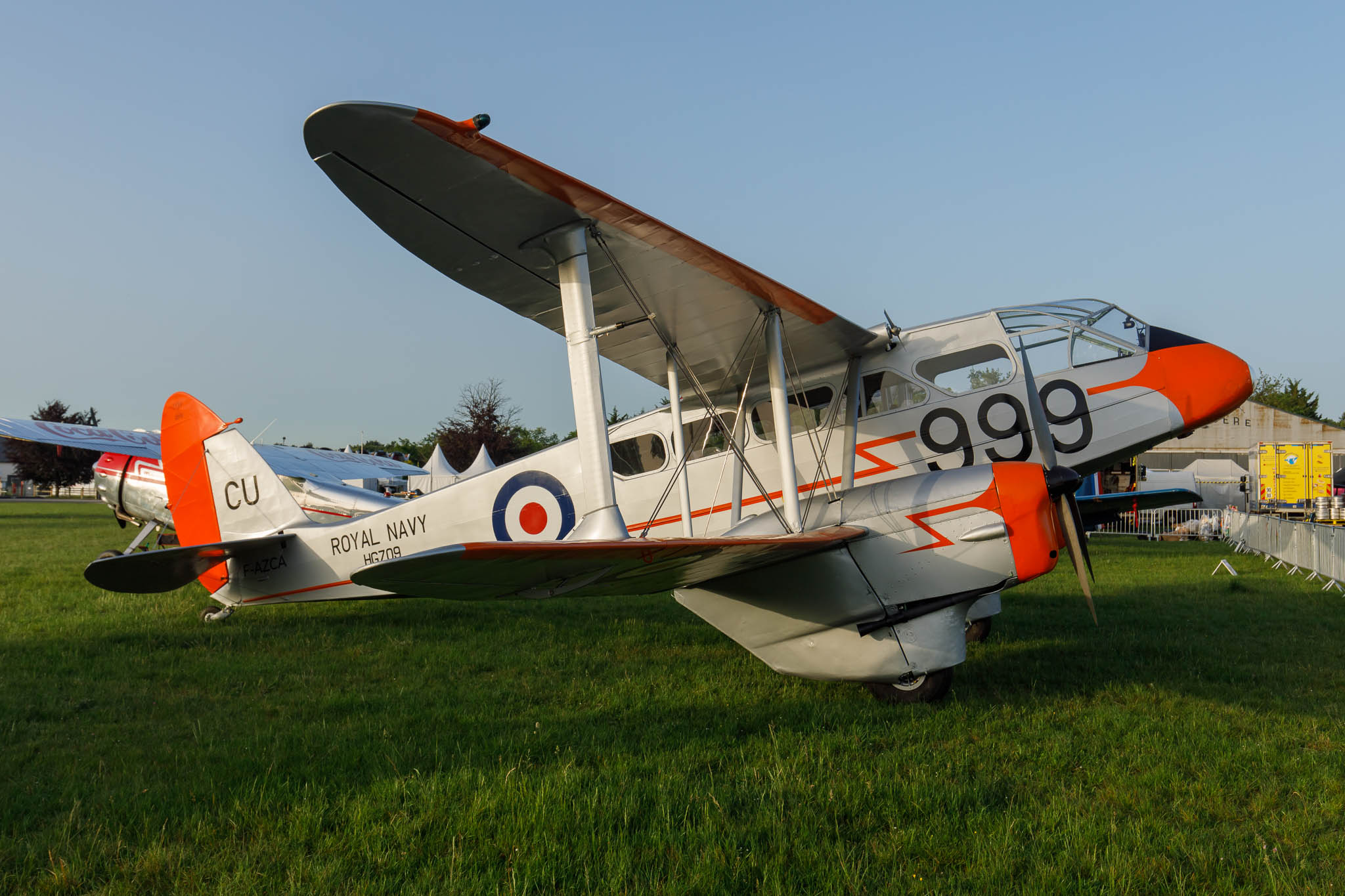 |
| de Havilland DH.89A Dragon Rapide (HG709 'CU-999' registered F-AZCA) is housed at the Amicale Jean-Baptiste Salis (AJBS) aviation museum. It is painted in a highly authentic Royal Navy color scheme (Dominie HG709), as operated by the RNAS Culdrose Station Flight in the early 1960s. It first flew in 1934 and was bought by AJBS in 1973 (as F-BGON) and restored in 1980. |
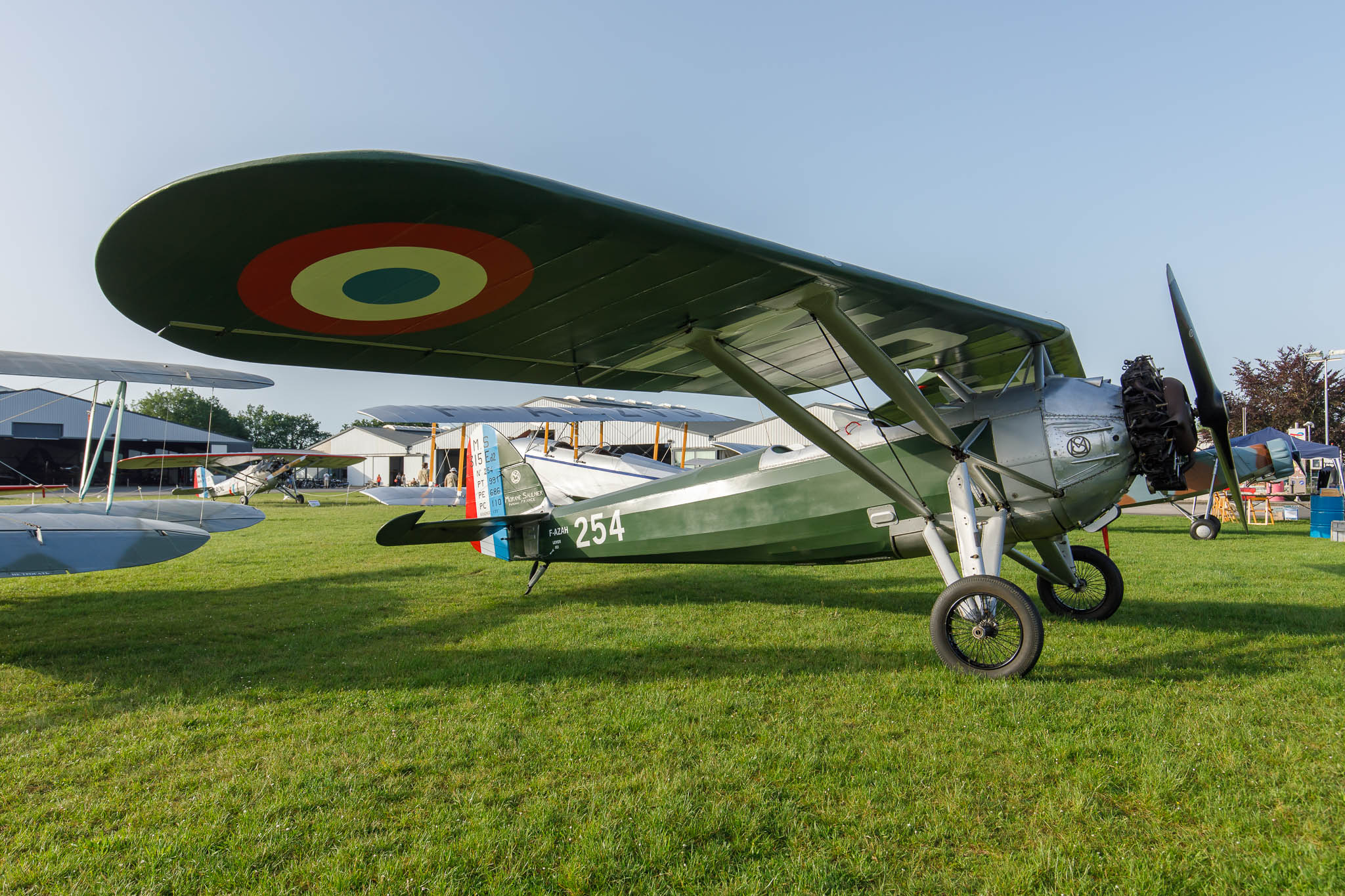
Left to right: Morane-Saulnier MS-315 (F-AZAH '254') from 1935, it is with the operational fleet of the Amicale Jean-Baptiste Salis (AJBS).
Morane-Saulnier MS.138 (F-AZAJ '5').
Stinson SR-10C Reliant (F-GPJS) a classic single-engine, high-wing aircraft built in 1938. It is part of the Musée Volant Salis (Amicale Jean-Baptiste Salis). |
| Left to right: Boeing PT-13D Kaydet (N450D) is a modified Stearman biplane operated by 46 Aviation for their European wingwalking displays. |
Left to right: Salmson D7 Cri-Cri Major (F-AZAB). The maiden flight of the original D.6 version of this high-wing monoplane took place on April 14, 1936. Thirty aircraft were ordered by the Armée de l'Air as trainers, while the French government planned to acquire a further 325 for the nation's aero clubs. Following the outbreak of World War Two, many civilian Cri-Cris were impressed into military service.
This example was acquired by Jean Salis in 1973 and meticulously restored to flying condition by the Salis family's Casques de Cuir collection at La Ferté-Alais, flying as F-AZAB until 1983. After many years in storage, it was damaged in a hailstorm. Following an extensive restoration, the Cri-Cri returned to the air in 2023 for the first time in 40 years. |
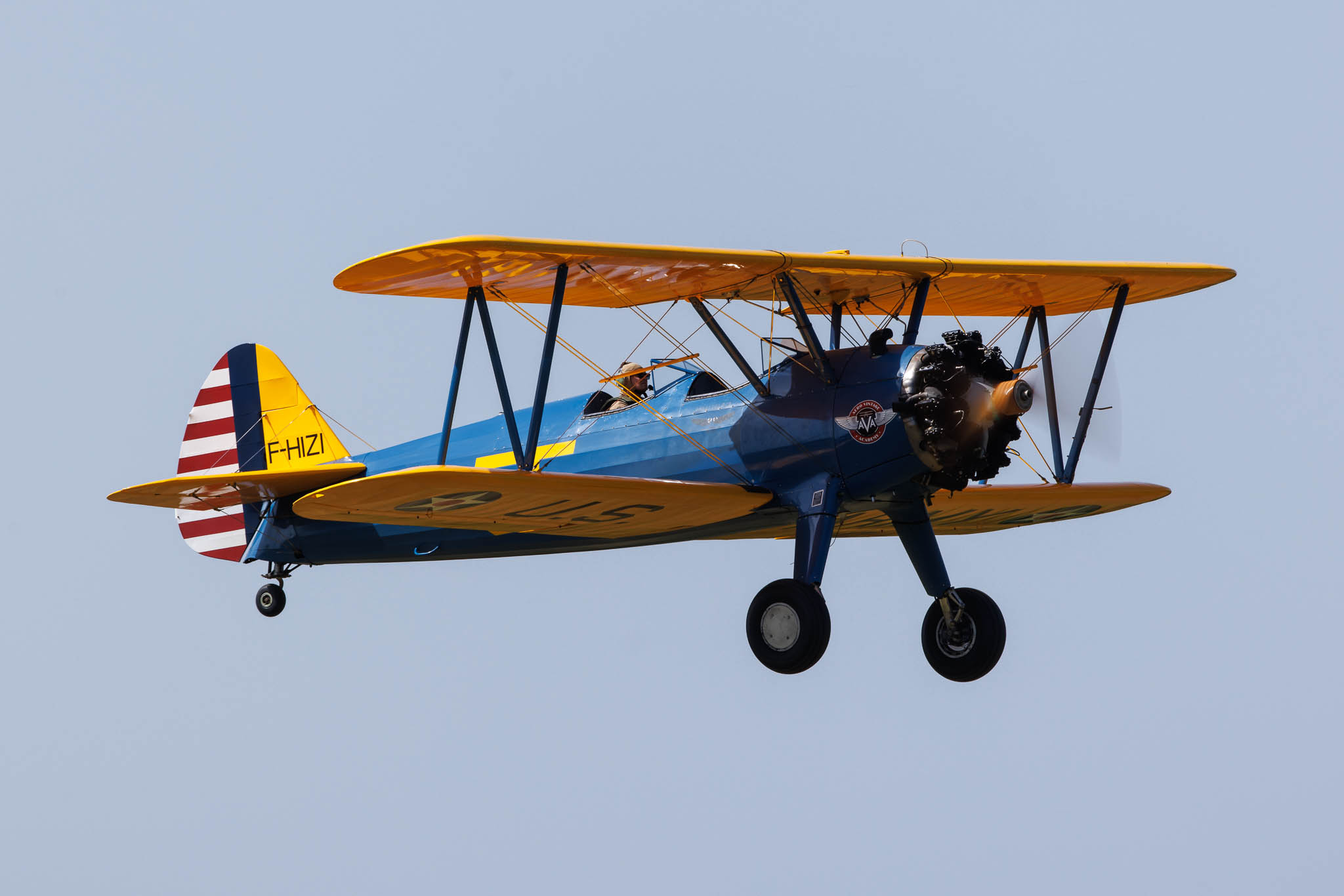
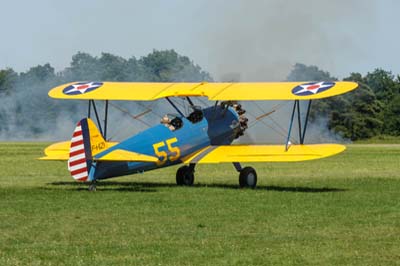
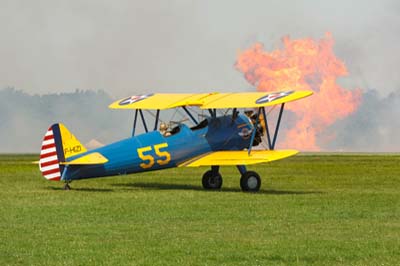
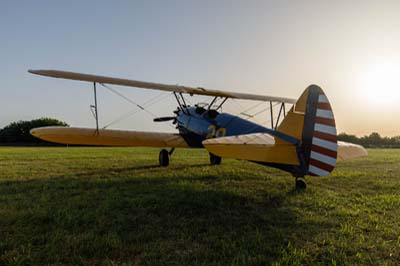
| Left to right: Boeing A75N1 Stearman (40-1991 '55' registered F-HIZI) with Aero Vintage Academy. |
Left to right: Boeing E75 Kaydet (42-17378 '796' registered N43SV). Built in 1943 as a PT-13D model.
Boeing-Stearman PT-13D Kaydet (42-17481 '29' registered N1771B). Built 1943 as a PT-13D for the USAAF.
Boeing-Stearman PT-13D Kaydet (42-17493 '4273' '741' registered F-AZJR).
Boeing-Stearman E-75 Kaydet (42-16939 registered N777CH). |
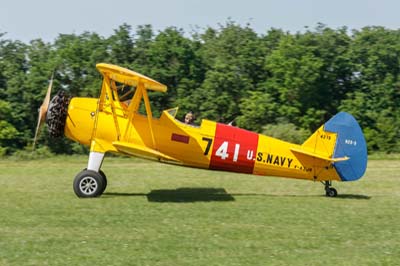
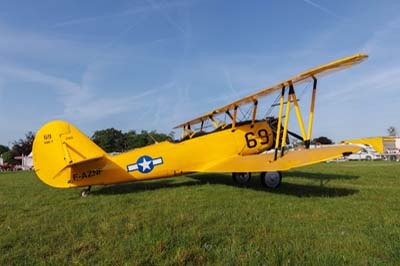
Left to right: Naval Aircraft Factory N3N-3 (2909 '69' registered F-AZNF).
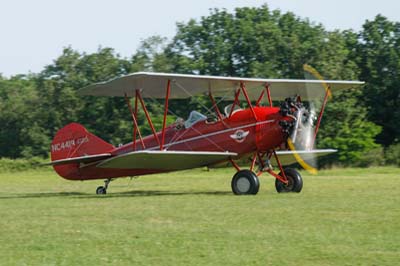
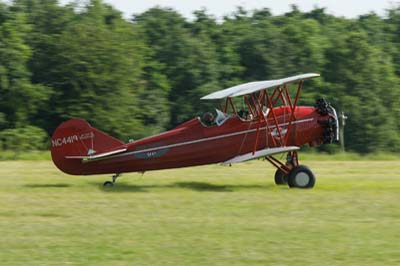
Travel Air 4000 (NC4418) from 1928. |
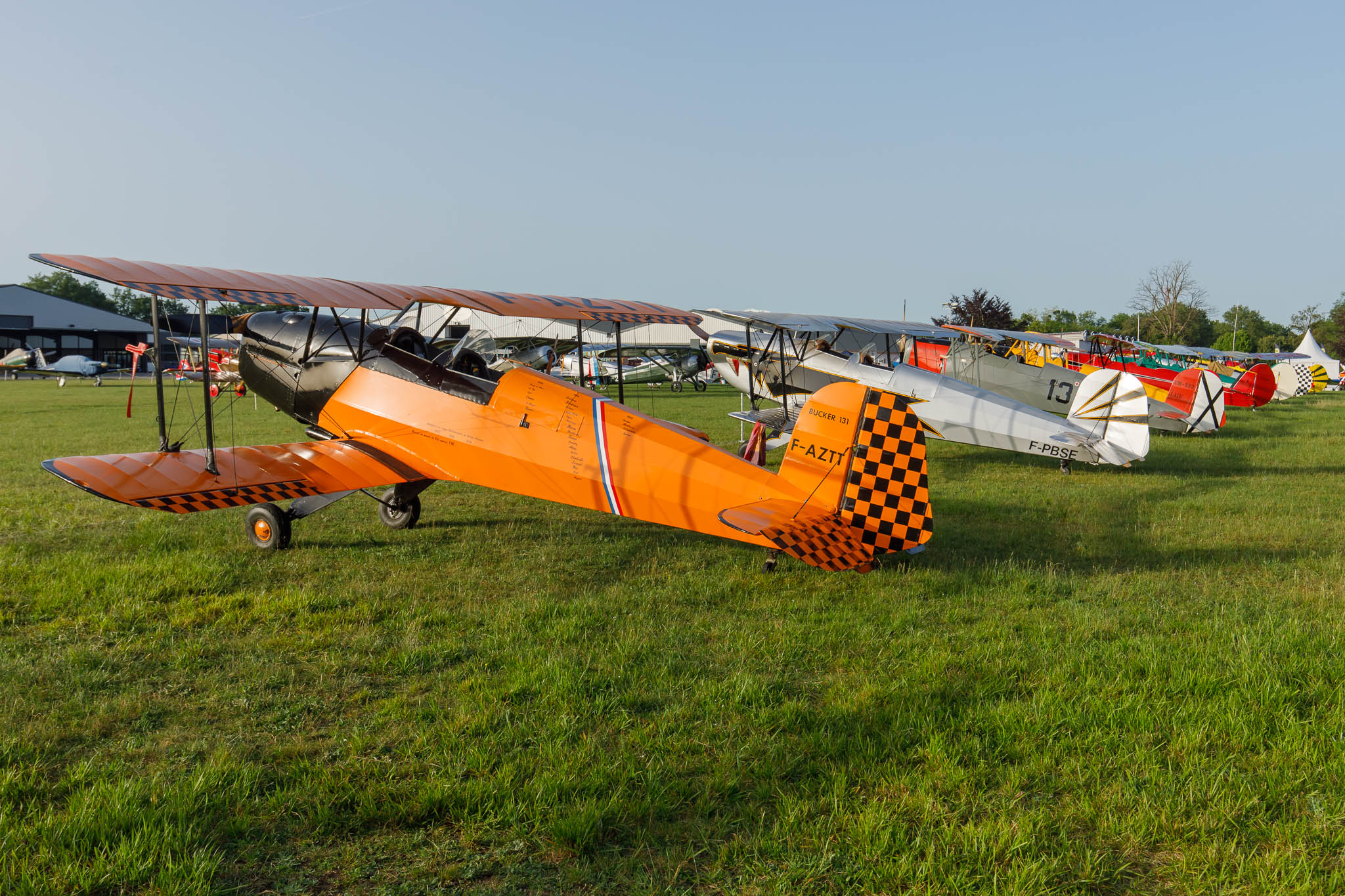
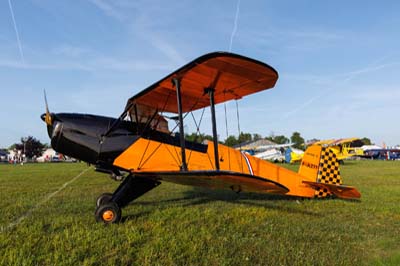
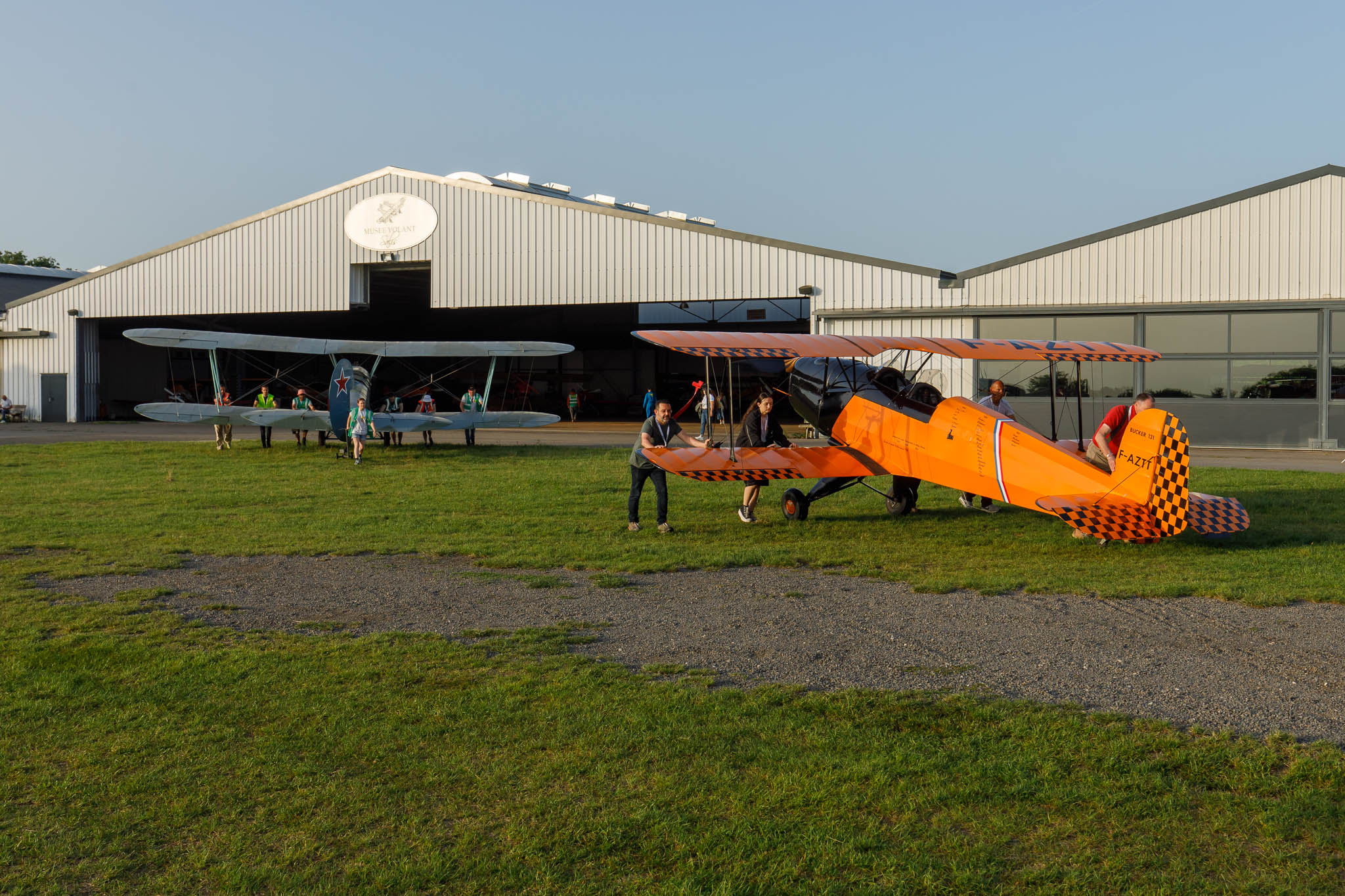
Left to right: Bücker Bü-131 Jungmann (F-AZTT).
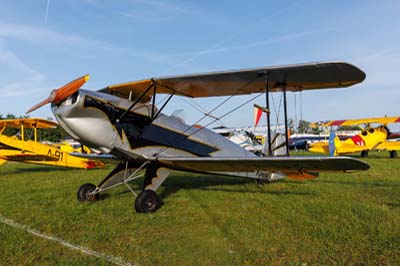
CASA 1.131E Jungmann (E.3B-624 registered F-PBSE).
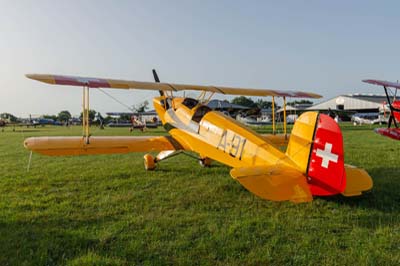
CASA 1.131E Jungmann (E.3B-433 painted as 'A-91' registered F-AYKG). |
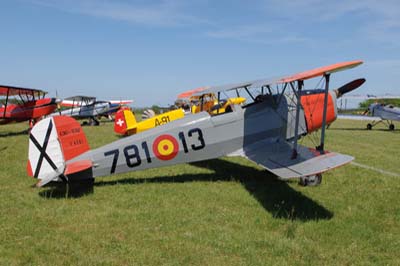
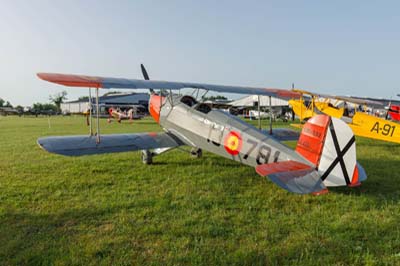
Left to right: Casa 1.131E Jungmann (E.3B-532 '781-13' registered F-AZGI).
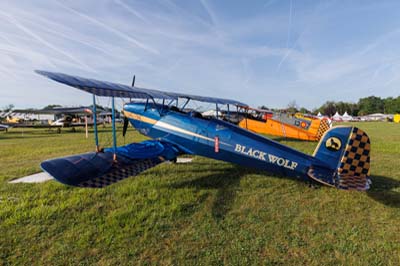
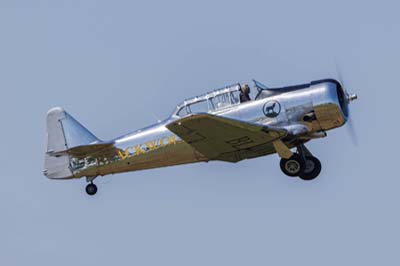
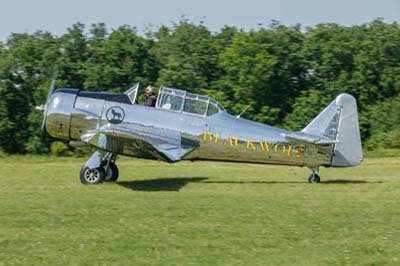
Bücker Bü-131B Jungmann (F-AZVK c/n 27) marked "Black Wolf". |
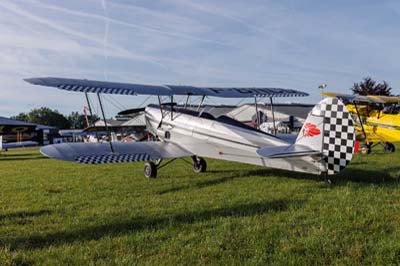
Left to right: Stampe-Vertongen SV-4A (F-BNCU c/n 447).
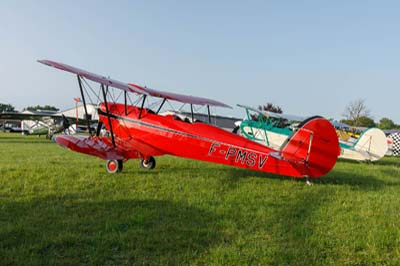
Stampe SV4L (F-PMSV).
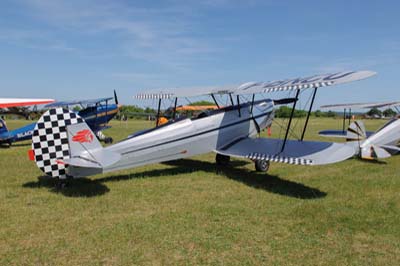
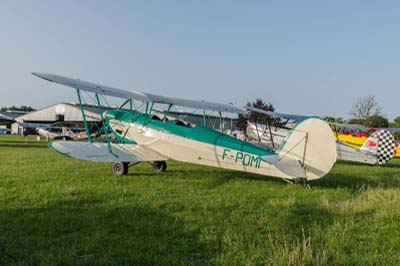
Stampe SV-4C (F-PDMI c/n 673). |
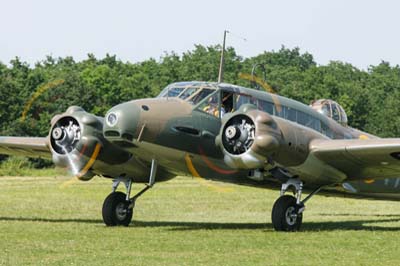
| Left to right: Avro Anson Mk.1 (MH120 painted as 'K6183 / VX-B' registered OO-ANS), operated by RAF Station Czechoslovakia and based at Podhorany u Ronova in the Czech Republic. It is painted in the camouflage of the RAF Coastal Command. The original Anson K6183 served with No.206 Squadron. It famously became one of the very first British aircraft to be engaged in combat during World War II when it was shot down by a German Heinkel He 115 floatplane on September 5, 1939. |
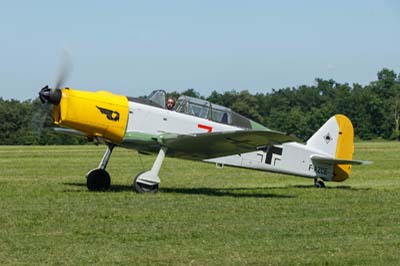
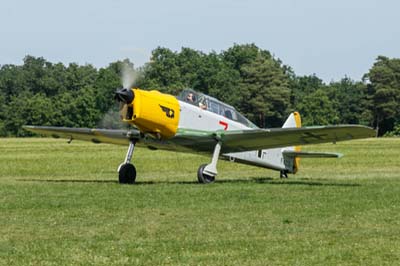
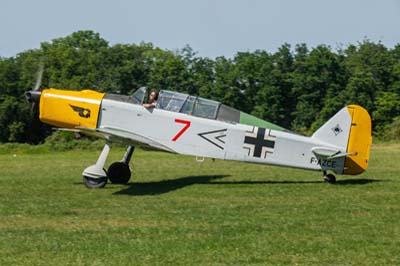
| Left to right: Pilatus P-2-06 (U-152 registered F-AZCE, previously HB-RAX). |
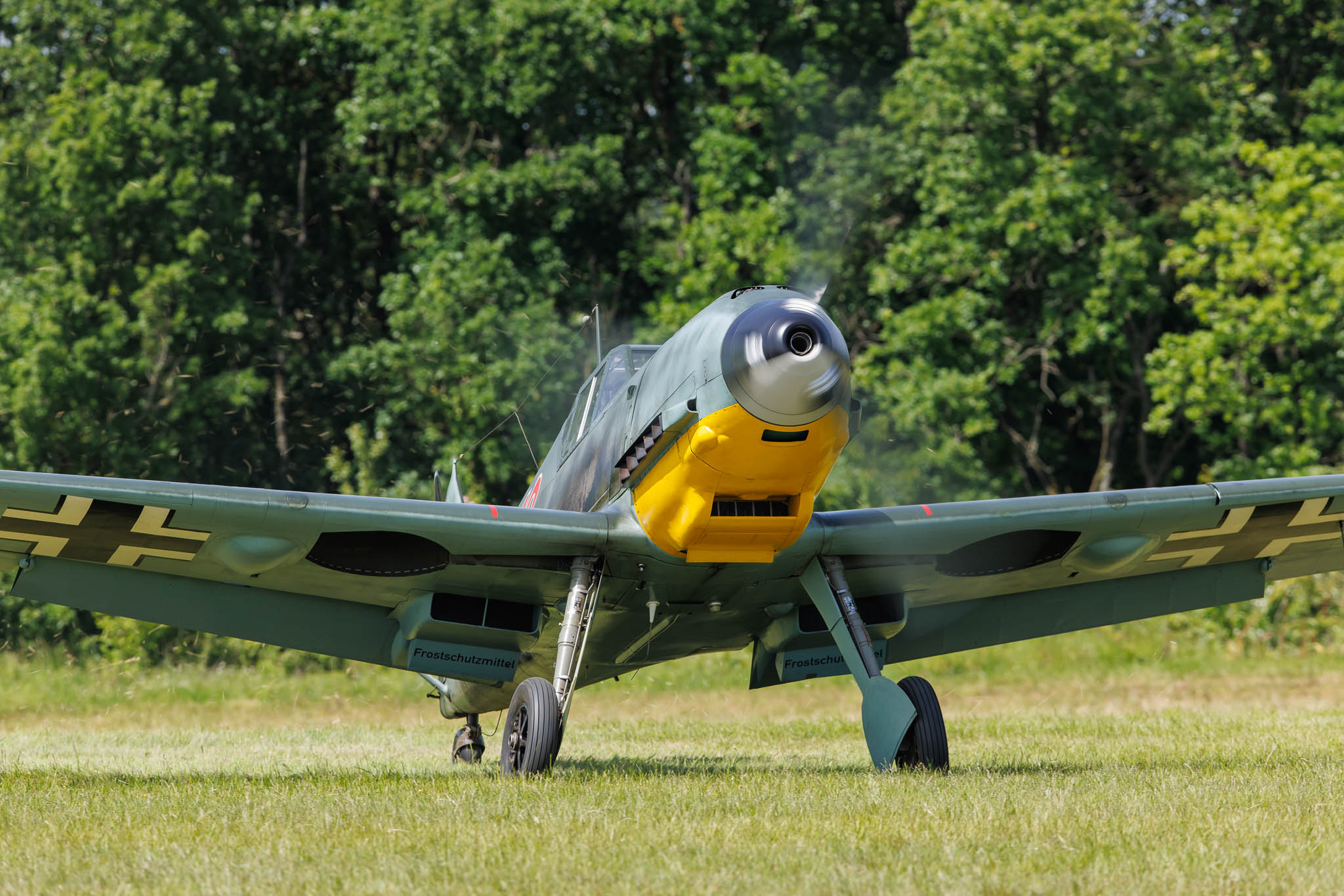 |
Left to right: Messerschmitt Bf 109E-4 (Wk.1983 'Red 12' registered D-FEML previously G-EMIL). The Bf 109 was one of the finest single seat fighters from World War Two with 33,000 being produced. It was designed in 1935 and performed very well during the Spanish Civil War. It was only matched by the Spitfire's and Hurricane's performance. It could out climb both and was faster than the Hurricane but not the Spitfire. Its main limiting factor was its limited endurance as it could only engage in combat over England for a few minutes.
Red 12 was built in June 1939. It was recovered in 1993 from Titovka near Murmansk, where it had crash-landed on 24 January 1942 after combat with Soviet Hawker Hurricanes. Restored with its maiden flight in June 2023.
TF-51D Mustang (45-11518 later NZ2427 registered G-CLNV, F-HTFM) named "Miss AVA". Originally built as a P-51D, the aircraft was extensively rebuilt from a wreck and previously flew in the UK as "Janie" between 2001 and 2016. It re-emerged as the dual-control TF-51D "Miss Ava" in silver with black stripes. |
| Left to right: Supermarine Spitfire Mk.IX (LZ842 'EF-F' registered G-CGZU). Built in 1943 at Castle Bromwich, it is the only airworthy Spitfire flying with a Merlin 63 engine. |
Left to right: Douglas C-47B Skytrain (44-77020, RAF KN655, RCAF 12965 registered F-AZOX) with the Association Un Dakota sur la Normandie. Built in May 1945, this specific aircraft flew with the USAF, RAF, and RCAF, and famously transported the British Royal Family during Canadian tours.
Douglas C-53D Skytrooper (42-68110 registered F-HVED). Built in Santa Monica, California, in June 1943 it is now nicknamed "Gruesome", it is operated by the Musée Aéronautique de Bretagne, located in Saint-Jacques-de-la-Lande.
|
| Left to right: Morane-Saulnier D-3801 (J-143 registered HB-RCF '1' c/n 194) License-built in Switzerland in 1942 it is based on the MS.406 C1. It is with the Association Morane Charlie Fox |
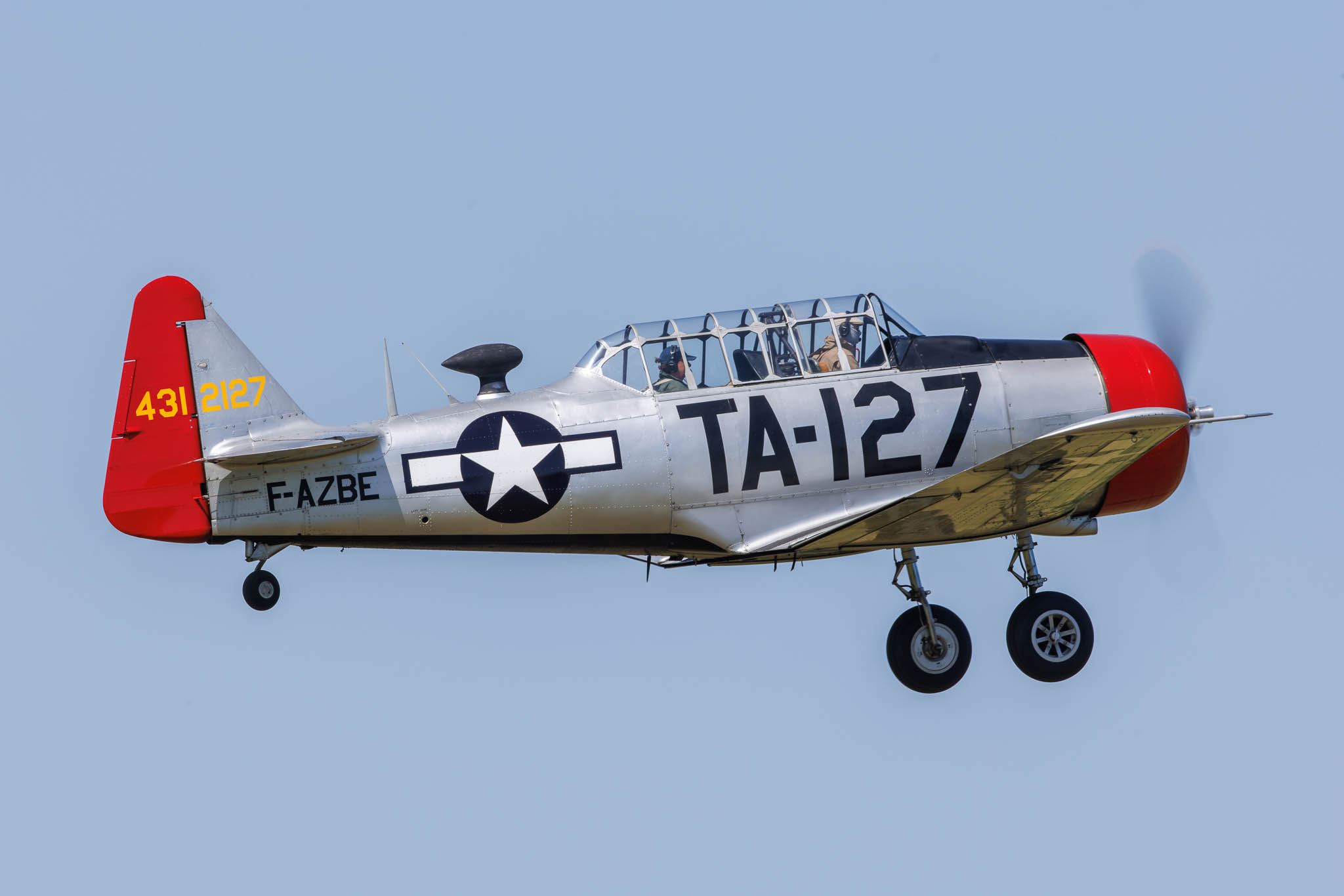
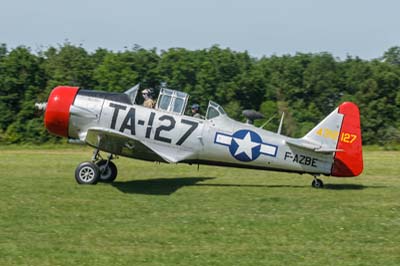
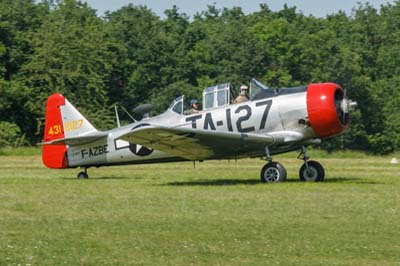
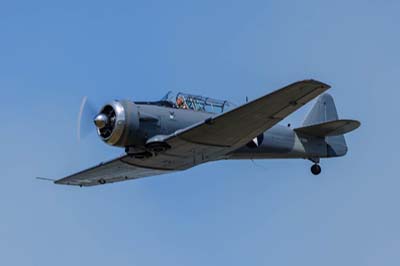
Left to right: North American SNJ-4 Texan (43-12127 'TA-127' registered F-AZBE).
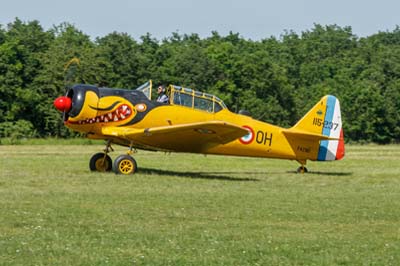
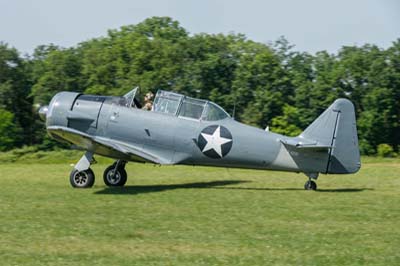
North American T-6G Texan (51-15237 'OH' registered F-AZBQ). |
Left to right: North American T-6J Harvard Mk.IV (20384 RCAF registered F-AZGB).
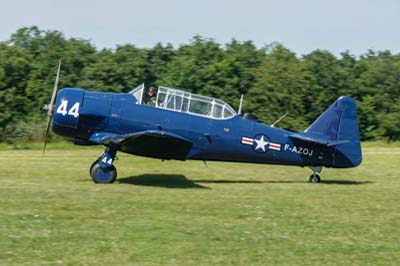
North American T-6H Harvard Mk.4 (MM53790 '44' registered F-AZOJ) from 1951. It served in the Italian Air Force (Aeronautica Militare). |
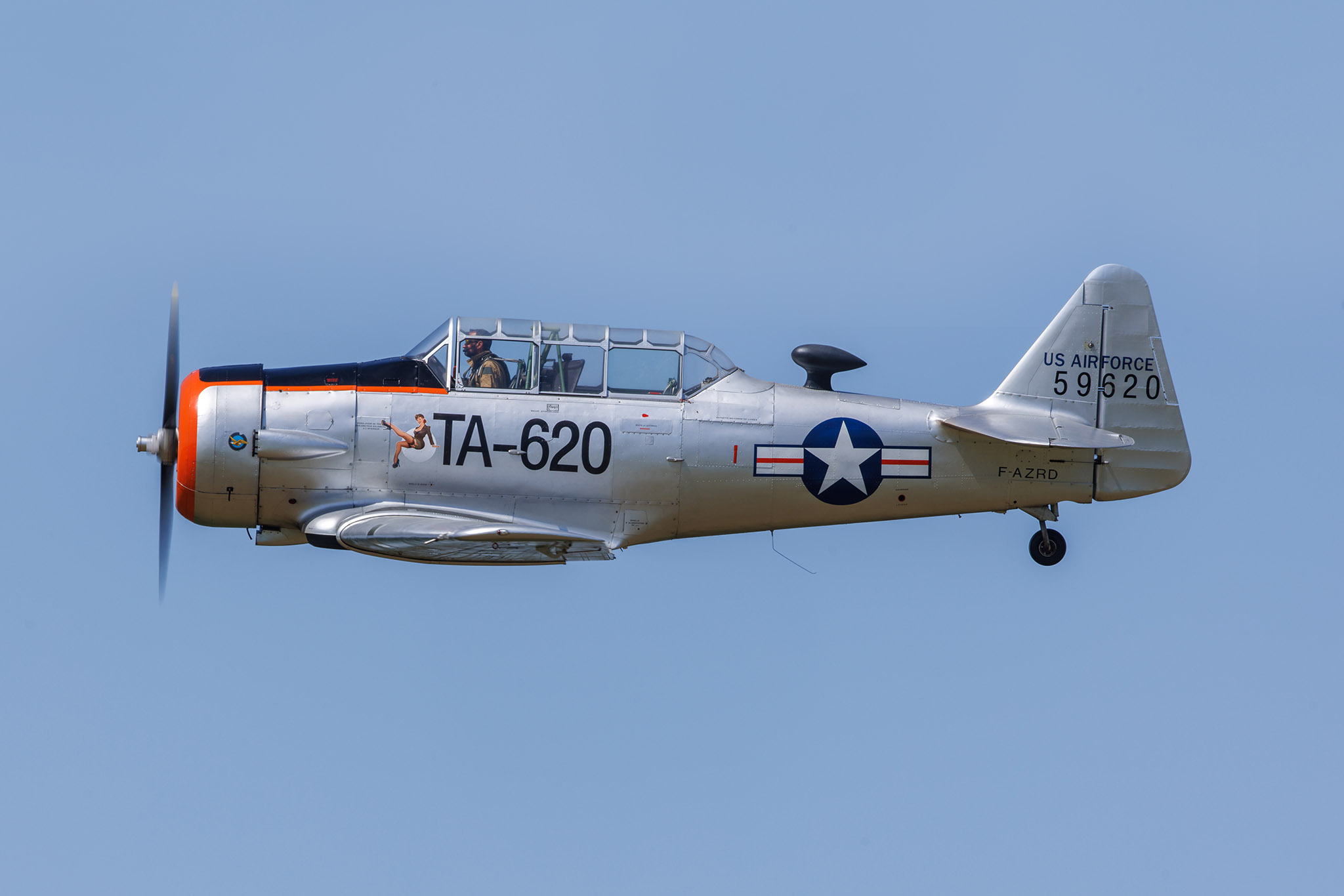
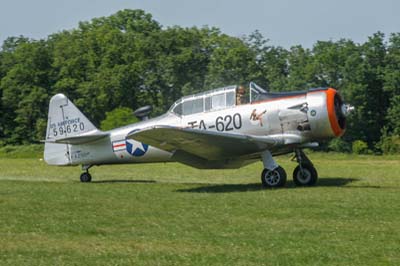
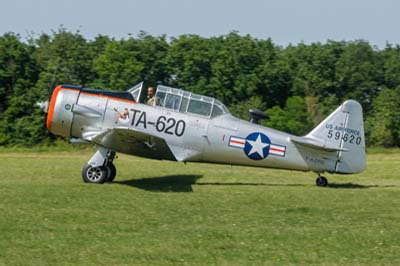
Left to right: North American AT-6D Harvard Mk.III (59620 'TA-620' registered F-AZRD).
North American T-6G Texan (49-3037 registered F-AZCQ) inscribed "Black Wolf". |
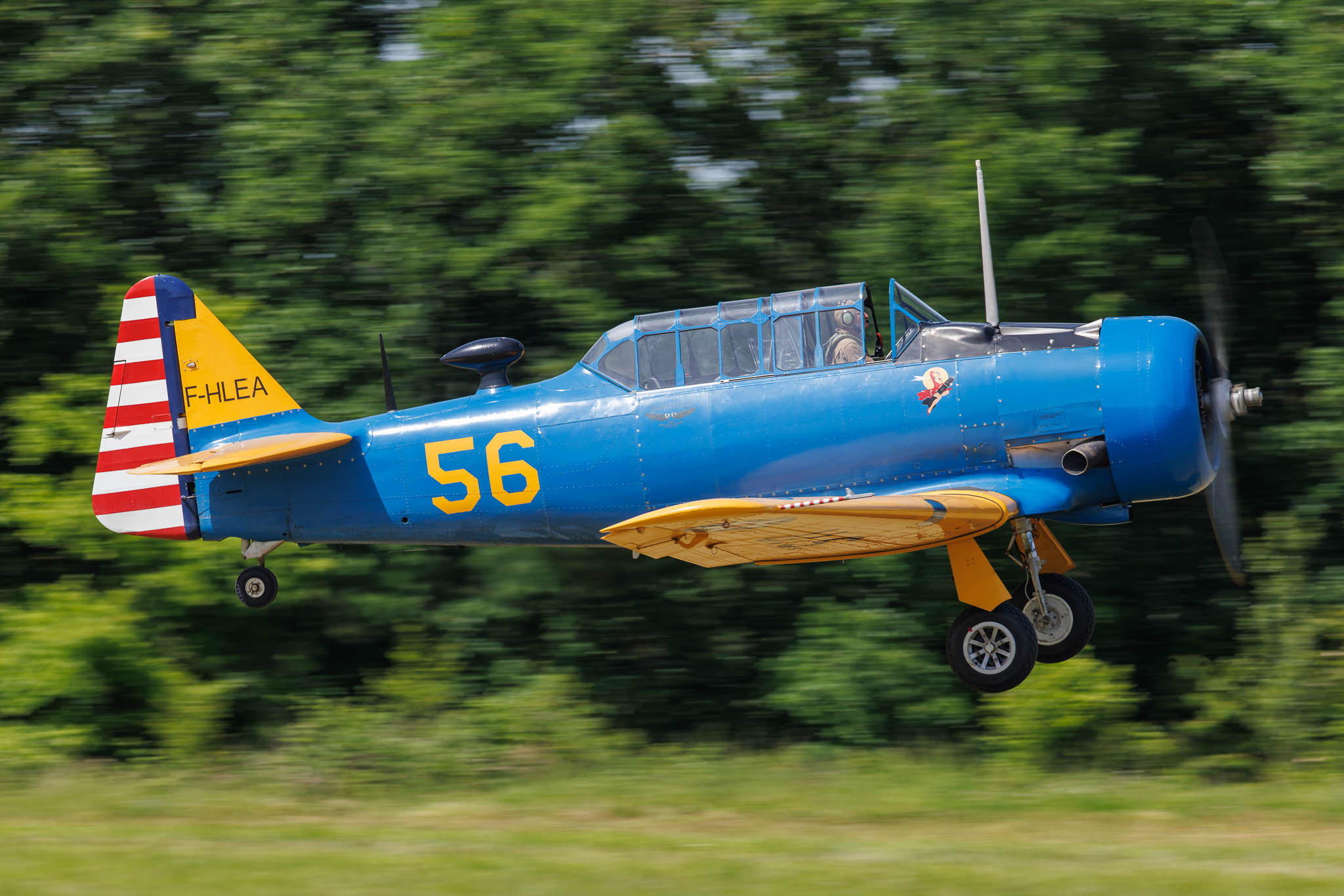
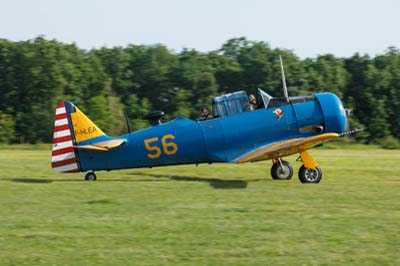
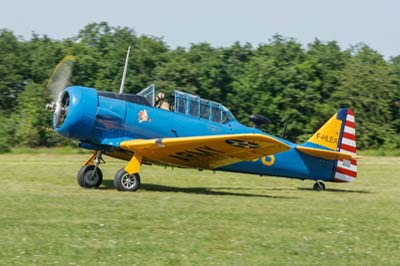
Left to right: North American T-6G Texan (49-3056 '56' registered F-HLEA) with the Aero Vintage Academy.
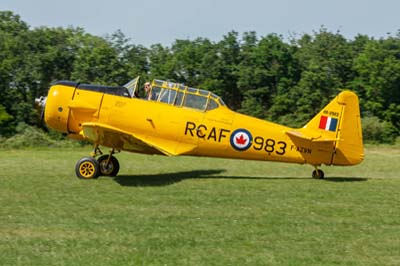
North American T-6G Texan (49-2983 registered F-AZVN).
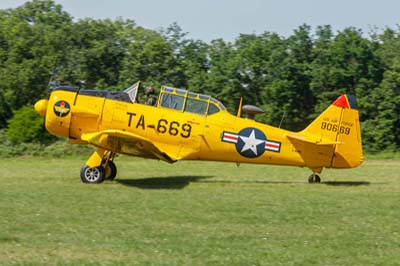
North American AT-6D Texan (90669 'TA-669' registered F-AZBL) |
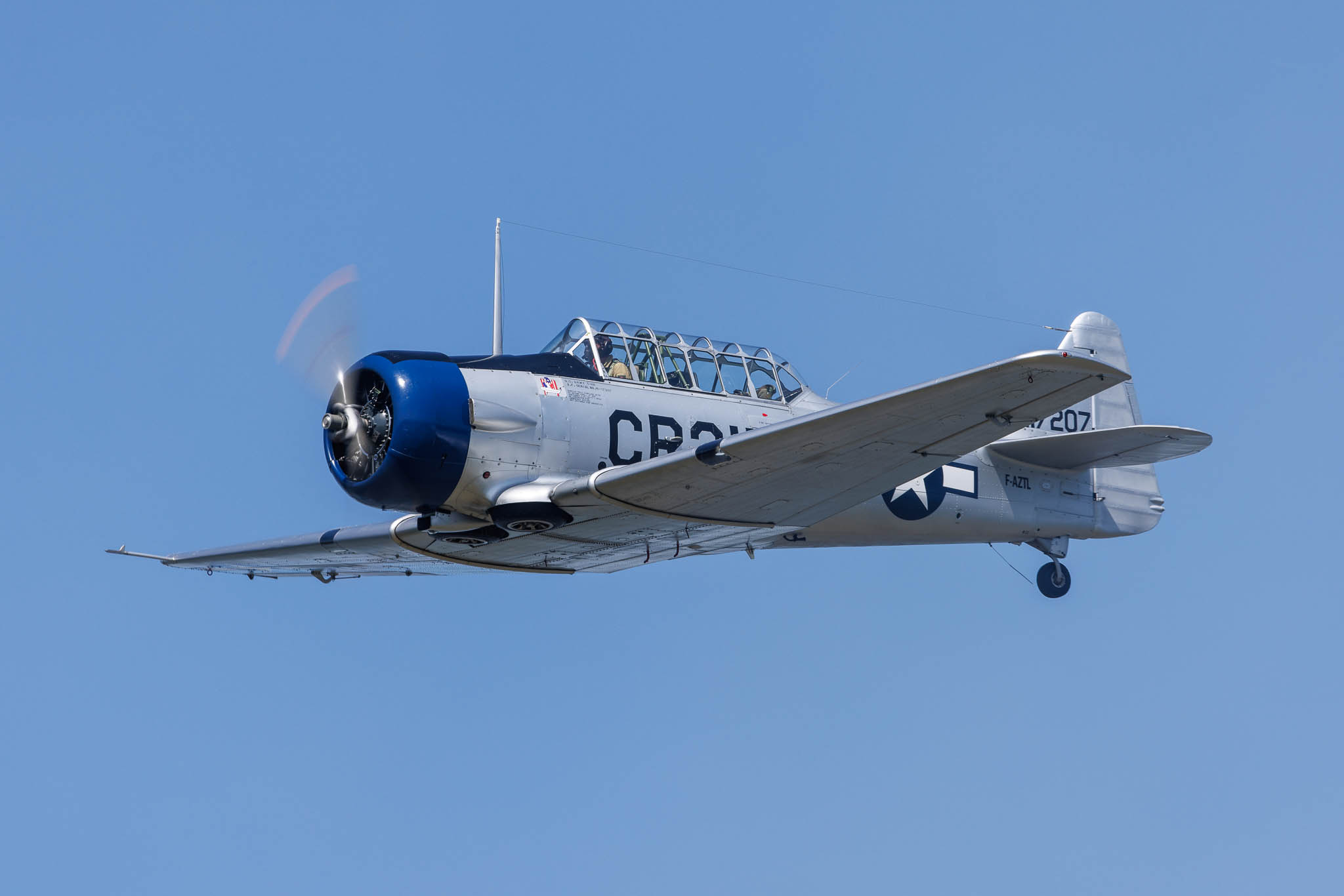
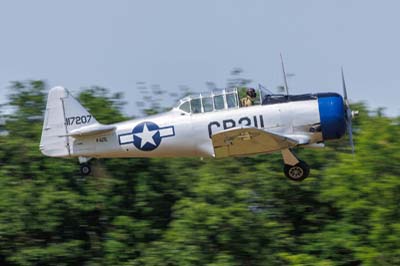
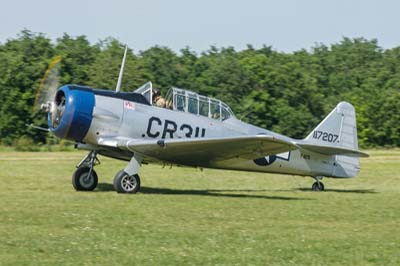
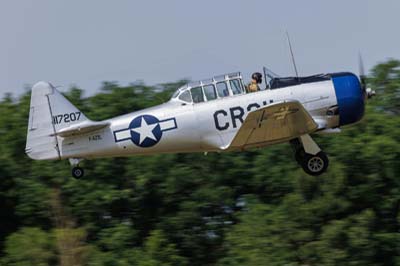
Left to right: North American T-6G Texan (51-15102 painted '51-17207 CR-311' registered F-AZTL).
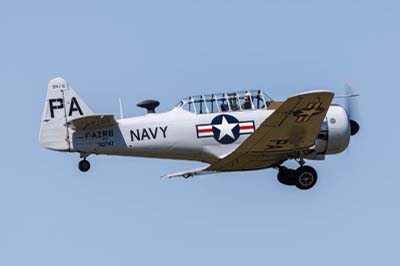
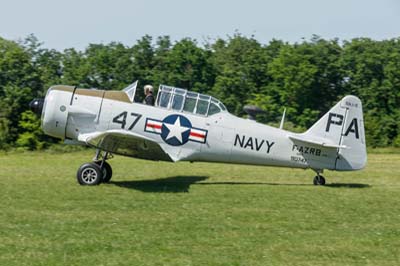
North American SNJ-5 Texan (90747 'PA-47' registered F-AZRB). |
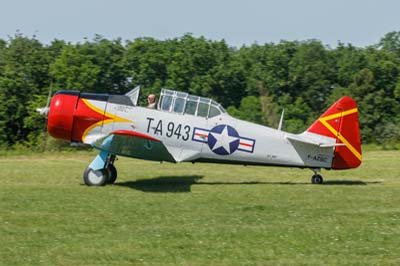
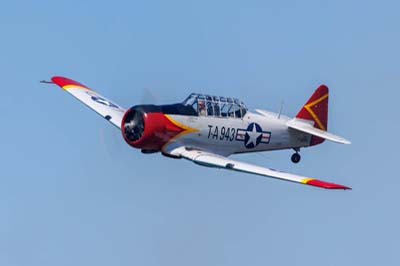
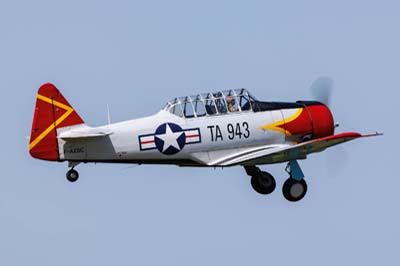
| Left to right: North American AT-6D Texan (41-34672 'TA-943' registered F-AZSC). |
| Left to right: North American AT-6 Texan (41-33606 registered F-AZZM) modified to portray a Mitsubishi A6M "Zero". |
| Left to right: Morane-Saulnier MS.505 Criquet (2039 registered F-AZRA '2E+RA') mascarading as a Fiesler Fi 156 Storch. Operated by the Amicale Jean-Baptiste Salis (AJBS). |
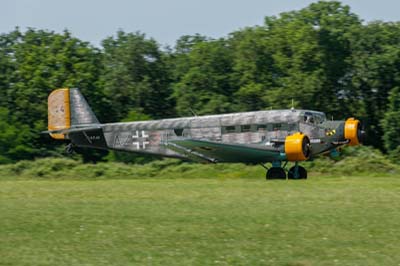
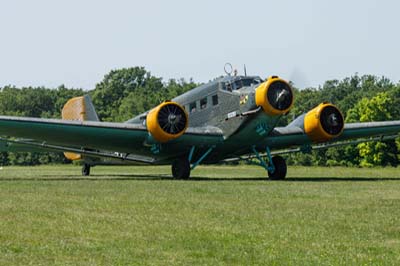
| Left to right: Junkers Ju52/3M (F-AZJU 'AZ+JU' '24') operated by the Amicale Jean-Baptiste Salis (AJBS). |
| Military training (1950-1970) |
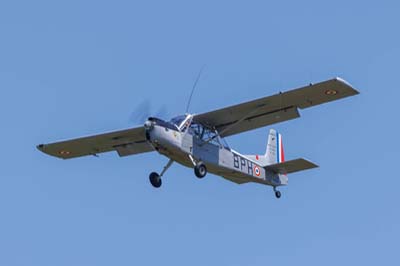
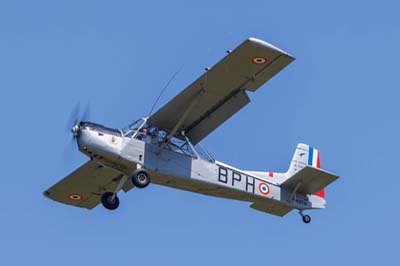
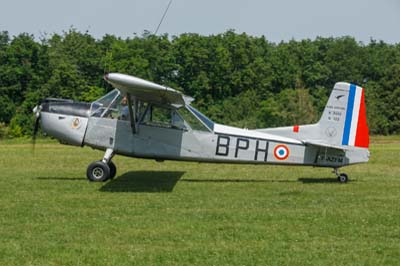
| Left to right: Nord 3400 Norbarbe (F-AZFM 'BPH' c/n 122). Built by the SNCAN (Nord Aviation) in 1960. It is a French observation aircraft based at the La Ferté-Alais Aerodrome, flown and maintained by the association Fana Air Retro. Originally designed as a two-seat observation and liaison aircraft for the French Army Light Aviation (Aviation Légère de l'Armée de Terre - ALAT), only 150 examples were built. |
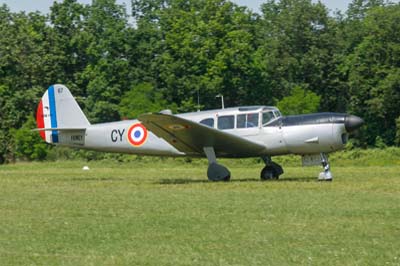
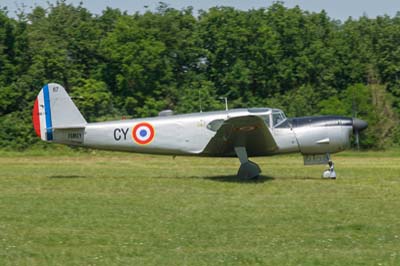
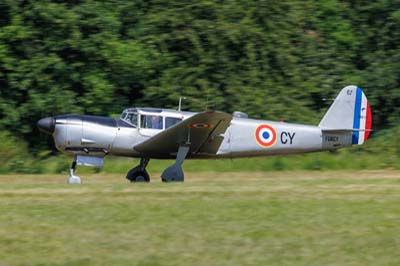
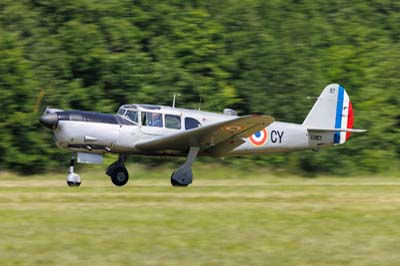
| Left to right: Nord 1101 Noralpha (67 'CY' registered F-GMCY). Built by SNCAN (Société Nationale de Construction Aéronautique du Nord) at Les Mureaux near Paris, it was based on the Messerschmitt Bf 108 Taifun. |
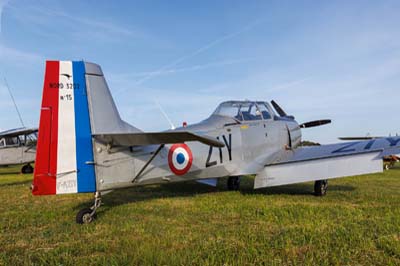
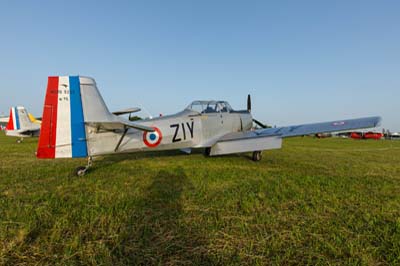
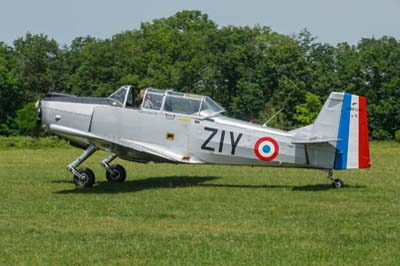
| Left to right: Nord 3202 (15 'ZIY' registered F-AZIY), designed as a basic trainer for the ALAT to replace the Stampe-Vertongen SV.4 it first flew in 1957. 'ZIY' has been with AJBS since 1979, where it was stored until its restoration from 1989 to completion in 1994 |
| Left to right: Dassault Rafale C (148 '4-VA') with ETR03.004, Armée de l'Air based at St Dizier. |
| Left to right: Alpha Jets with the Patrouille de France based at Aerial Base 701 in Salon-de-Provence. |
| Left to right: Fouga CM.170 Magisters (411/F-AZZD '2', 315/F-GKYF '3', 455/F-GSYD '4' and 482/F-HDND '5' ) ex AdlA when flown by the Patrouille de France, they are now with Patrouille Tranchant. |
Left to right: Fouga CM.170 Magisters
North American OV-10B Bronco (55454 registered F-AZKM) operated by the Musée Européen de l'Aviation de Chasse (MEAC). |
| Left to right: SOCATA TB-30 Epsilons (149 '315-ZM' registered F-HKYN, 144 '315-ZI' registered F-HKYL and F-AYYD) with the Zébulons Formation display team. |
Left to right: The Tiger Club Turbulent Display Team
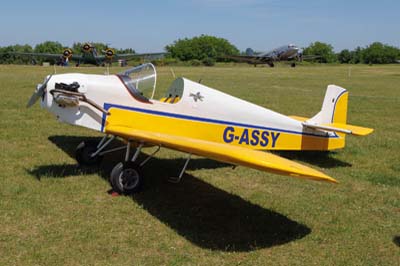
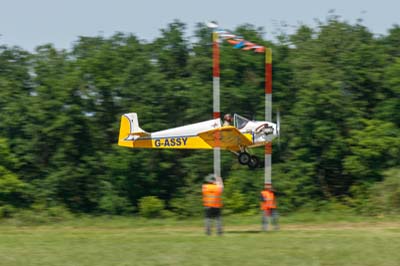
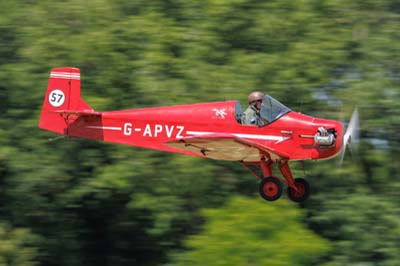
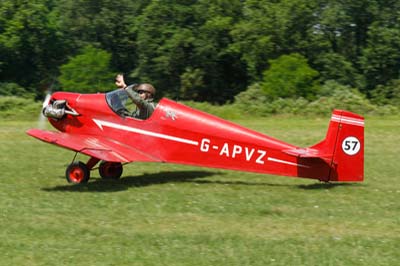
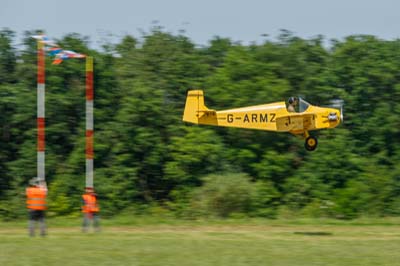
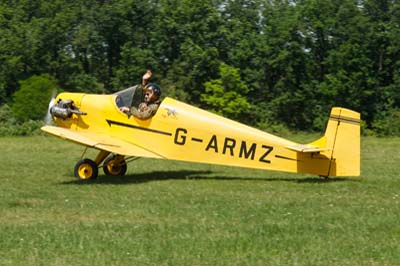
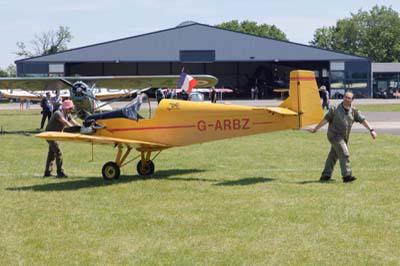
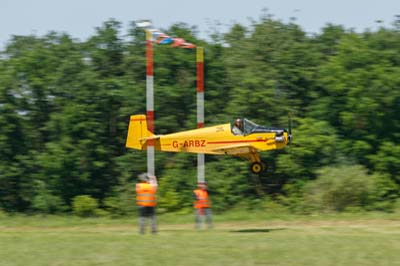
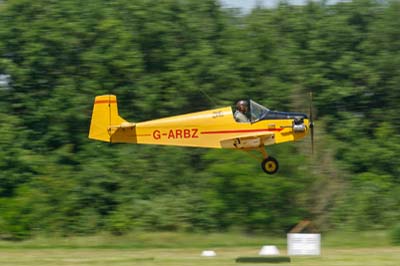
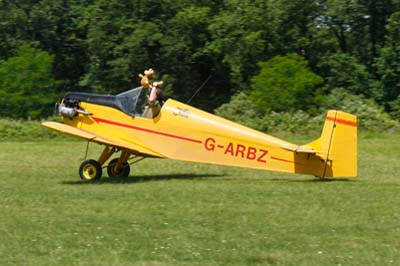
Druine D.31 Turbulents (G-ASSY and G-APVZ). Rollason Aircraft & Engines Ltd. began building the French-designed Druine D.31 Turbulent under license in 1957 at Croydon Airport, UK. They subsequently manufactured 26 factory-built D.31 aircraft and three strengthened D.31A models through the late 1950s and early 1960s. |
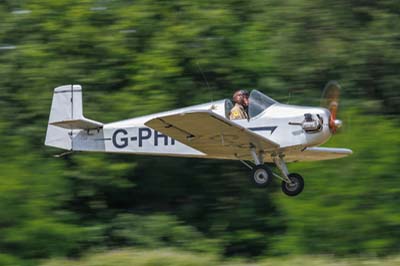
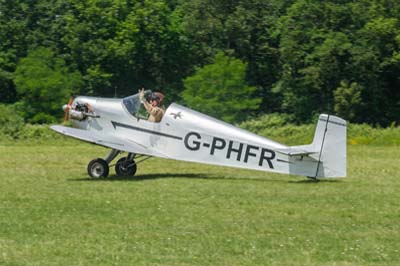
| Left to right: Druine D.31 Turbulents (G-PHFR). |
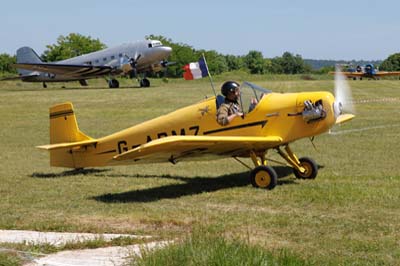
| Left to right: Druine D.31 Turbulent (G-ARMZ). |
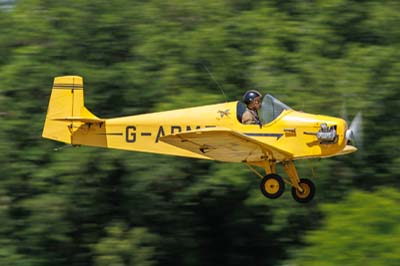
| Left to right: Druine D.31 Turbulent (G-ARBZ). |
Bücker Bü 131 Jungmann (F-AZTT) on its way to the static display.
|
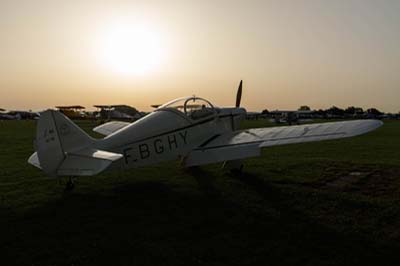
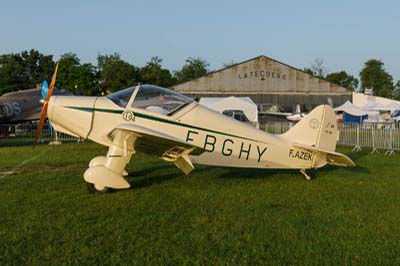
Left to right: SIPA S.903 (F-AZEK c/n 99) built in 1951 as S.901 (F-BGHY), it was later re-engined and re-designated. It is currently kept at the Musée Volant Salis (Amicale Jean-Baptiste Salis).
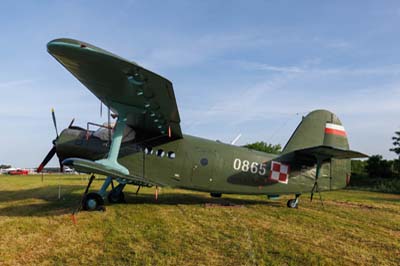
Antonov An-2 (0865 registered SP-AOO). |
| The Flying Replicas... "Pioneers of World War One" in the program |
In the interest or documneting all the aicraft on display, I am including this section on the replicas. Not my favourite aircraft to photograph and normally ignored, many of these replicas are unique and quite impressive.
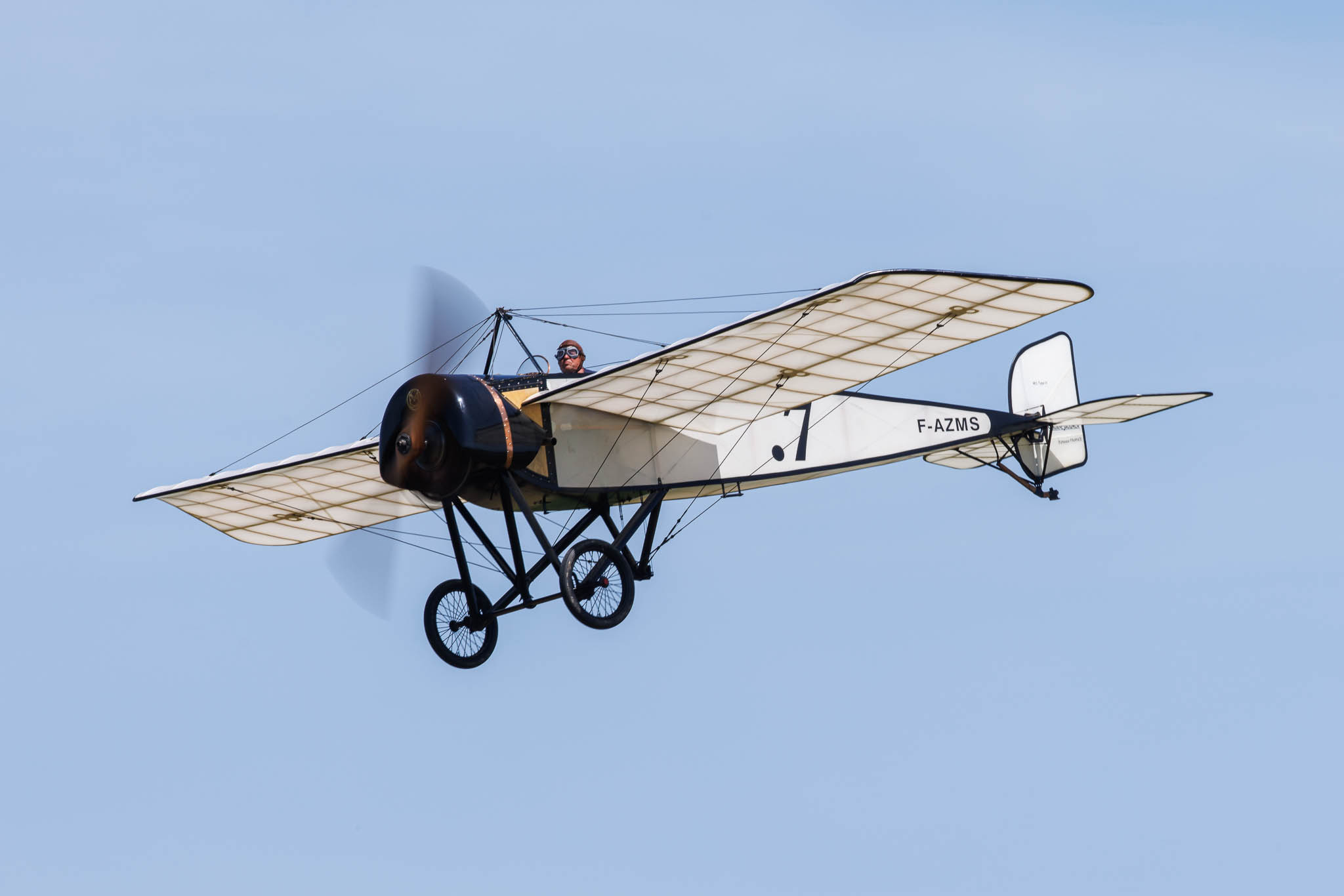
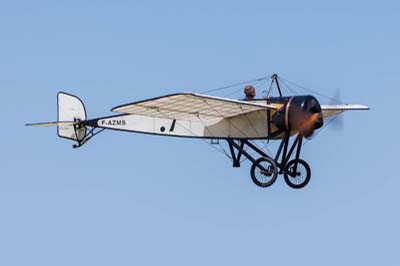
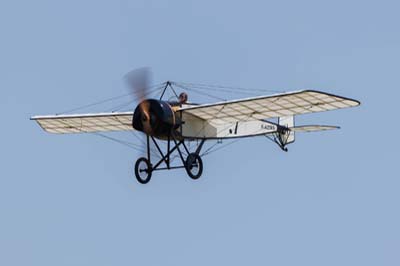
Left to right: Morane-Saulnier Type H (F-AZMS '7') a replica of a 1913 French pre-WWI parasol-wing monoplane, built by Salis Aviation. The original Type H was a single-seat derivative of the Type G. It gained worldwide fame when aviator Roland Garros made the first non-stop flight across the Mediterranean Sea in 1913 using a similar Morane monoplane. |
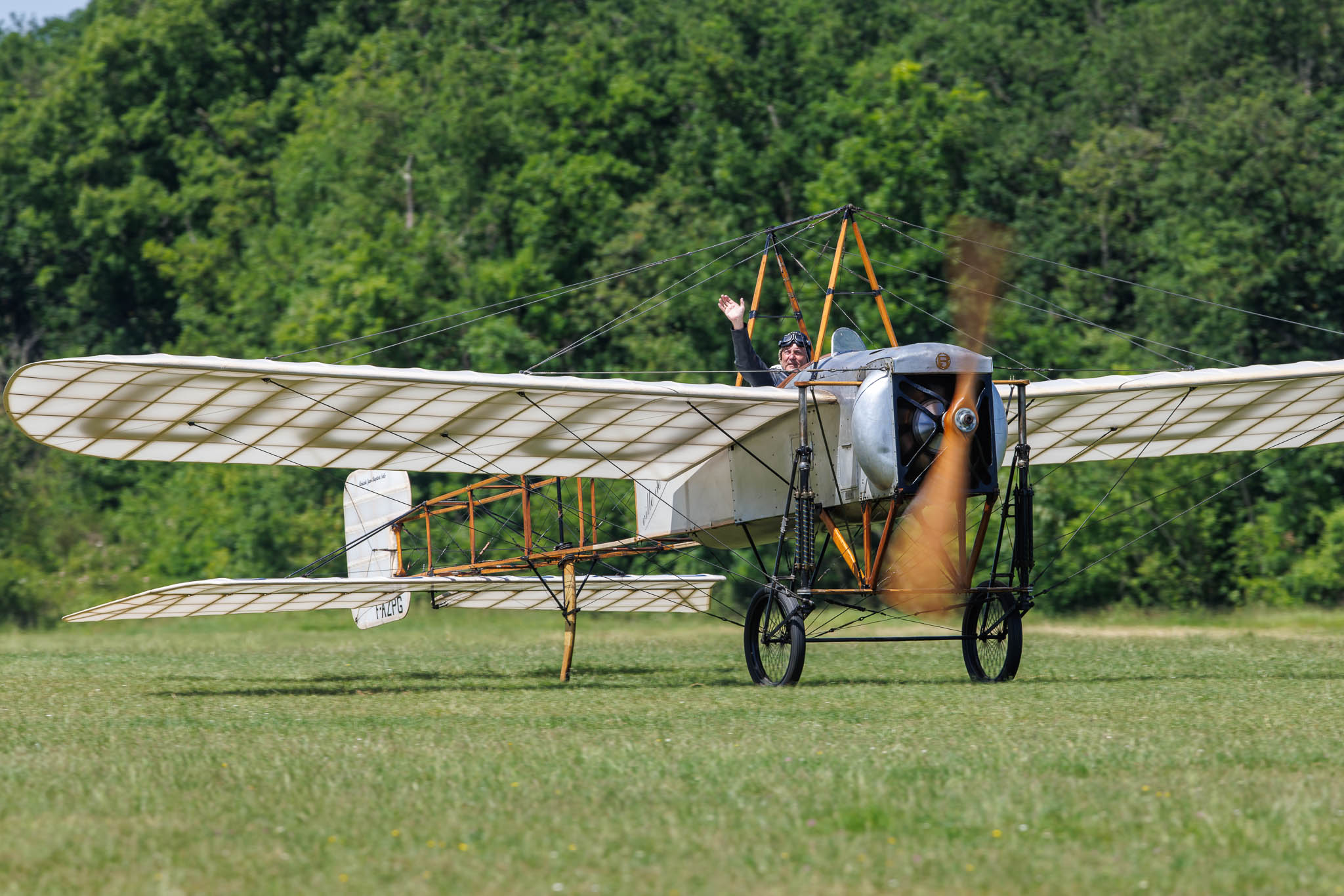
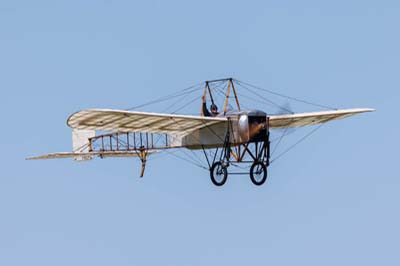
| Left to right: Blériot XI-2 (F-AZPG). A replica, it features authentic materials powered by a 3-cylinder 45 hp Lenape Papoose engine. |
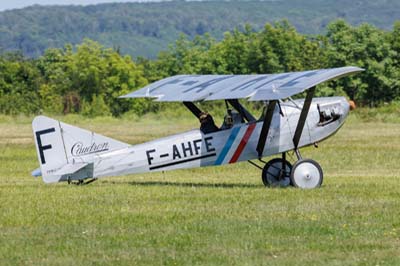
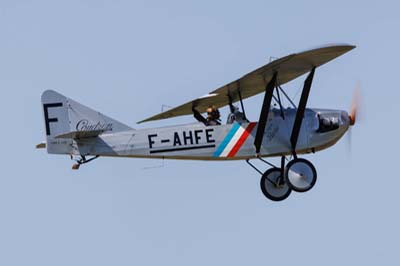
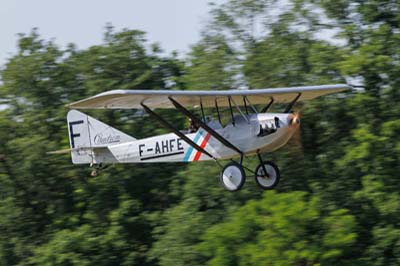
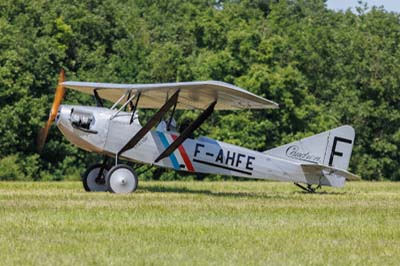
| Left to right: Caudron C.109 (F-AHFE). This is a replica of the aircraft built in 1925 by the Société des Avions Caudron. Piloting F-AHFE, French aviation pioneer Maryse Bastié set a monumental women's flight duration record of 26 hours and 47 minutes on July 27, 1929. It has '37ANI' painted under the starboard wing. |
Left to right: Caudron C.460 Rafale (F-AZBO) replica which honors the iconic 1930s French racing aircraft. The original Caudron C.460 made its first flight in the 1930s; the replica recently completed a comprehensive restoration.
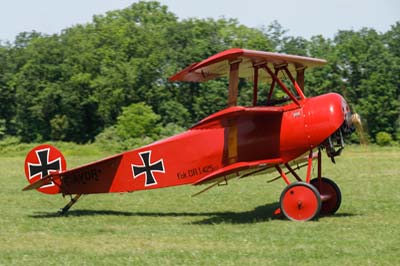
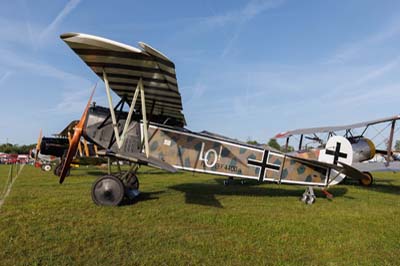
Fokker Dr.I Dreidecker Triplane (F-AYDR). |
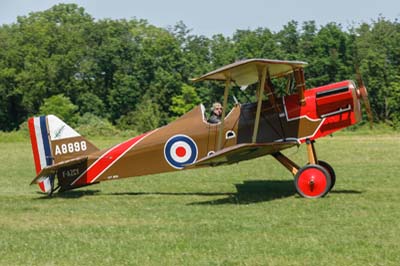
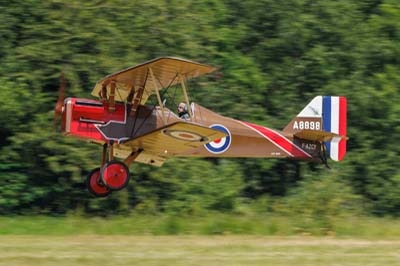
Left to right: Royal Aircraft Factory SE.5 (F-AZCY 'A8898') replica.
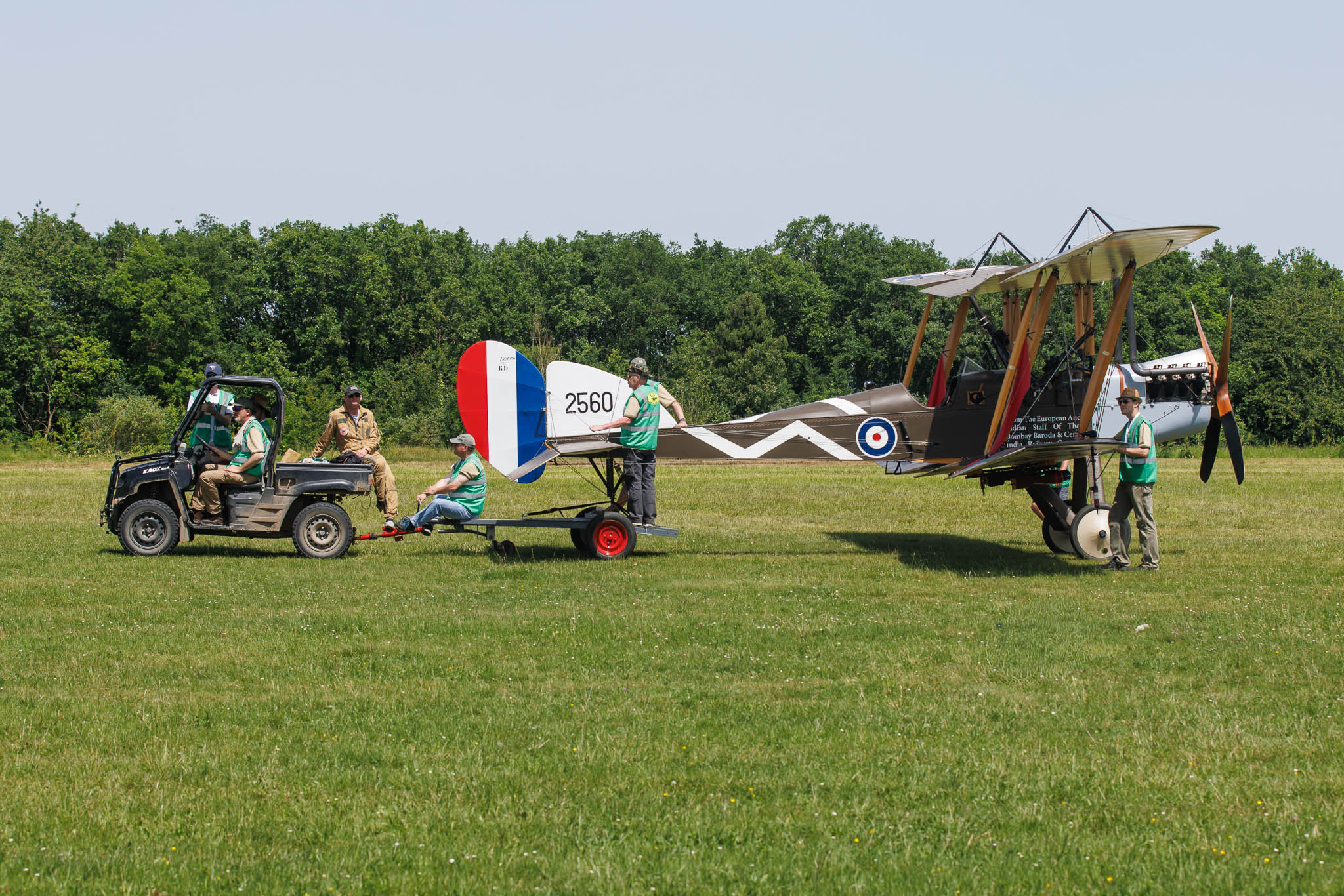
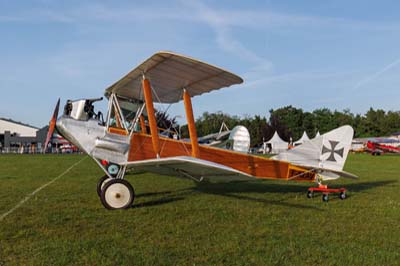
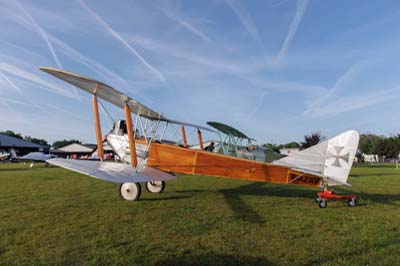
Royal Aircraft Factory BE.2f (2560 F-AZZN) replica built in 2009 by TVAL in New Zealand. |
Left to right: Albatros C.II (F-AZAV). A replica owned by the Amicale Jean-Baptiste Salis (AJBS).
Fokker D.VIIF ('4400/18' registered F-AZLM) is an airworthy replica maintained and operated by the Memorial Flight association. It is painted in the colors of the legendary German ace Ernst Udet. |
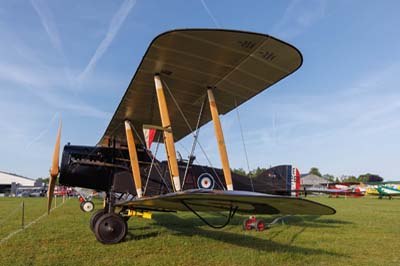
| Left to right: Bristol F.2B Fighter ('E2262 A-6' registered F-AYBF) replica. |
My Backround to La Ferté-Alais and Jean-Baptiste Salis.
La Ferté-Alais is far more than a warbird and vintage aircraft air show with a distinctly French character. It has been one of my favourite aviation destinations since I first discovered the airfield in 1975. At that time, many of the aircraft were still stored outdoors and the vast museum hangar had yet to be built. I vividly remember a line of around 20 North American AT-6 Texans, recently recovered from an airfield dump. Many were later restored to flying condition, while a few remained abandoned among the trees for several years.
Situated 30 miles (50 km) south of Paris, La Ferté-Alais Airfield was established by the renowned French aviator Jean-Baptiste Salis at the beginning of World War Two. The Association Jean-Baptiste Salis (AJBS), founded in the mid-1960s as a living aviation museum, was developed further during the 1970s by his son, Jean Salis. Today, the organisation preserves a collection of around 75 vintage and replica aircraft, the majority maintained in flying condition. Many regularly appear in films and television productions, while around 30 aircraft take part in the famous annual Pentecost Air Show. Supported by around 300 members, including some 60 active volunteers each week, AJBS continues to recover, restore and operate rare historic aircraft through its workshops in partnership with Salis Aviation.
Jean-Baptiste Salis was born in 1896 and became France's youngest qualified pilot at the age of 16. After joining the French Army in 1915 he was transferred to the Armée de l'Air in 1917 as a flying instructor. By the end of World War One, he had accumulated more than 1,900 flying hours and had earned a reputation for spectacular aerobatics, often stretching military regulations.
Following the war, Salis established flying schools at Chambéry and Chamonix before founding the world's first aerobatic display team, La Patrouille Tricolore, in 1927. He also began a lifelong association with the film industry, providing aircraft and aerial flying for cinema productions.
In 1939, Salis purchased farmland at Cerny, near La Ferté-Alais, where he began constructing an airfield to train Armée de l'Air pilots. With the outbreak of World War Two, his aircraft and equipment were requisitioned and destroyed to prevent them falling into German hands. Refusing German offers of cooperation, Salis instead secretly supported the French Resistance. His airfield, codenamed Biniou, was used for clandestine operations, while his ownership of a local sawmill provided effective cover for resistance activities in the surrounding forests.
After the war, Salis rebuilt the airfield and workshops, laying the foundations for what would become one of Europe's finest collections of flying historic aircraft. Among his earliest restoration projects was an original Blériot XI, which he famously flew across the English Channel in 1955 to mark the 50th anniversary of Louis Blériot's pioneering crossing.
Until his death in 1967, Jean-Baptiste Salis worked alongside his son Jean, restoring historic aircraft both for their own collection and for the film industry. Since 1960, aircraft from La Ferté-Alais have appeared in almost 150 productions, including Empire of the Sun and Indiana Jones. The first air show at Cerny was held in 1970, and the site's impressive museum hangar was completed in 1977, providing a permanent home for its growing collection.
Today, La Ferté-Alais remains one of Europe's most remarkable living aviation museums, where historic aircraft are not simply preserved but regularly flown, ensuring the legacy of Jean-Baptiste Salis continues for future generations. |
 |