In Action
800/801 Naval Air Squadron
Naval Strike Wing (NSW)
RAF Cottesmore
|
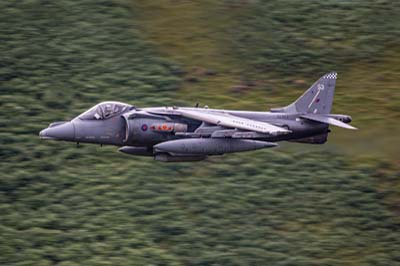
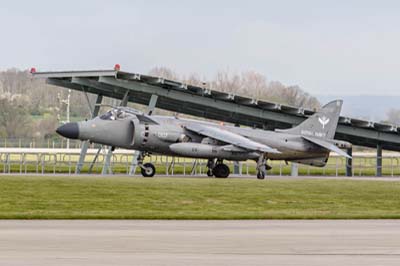
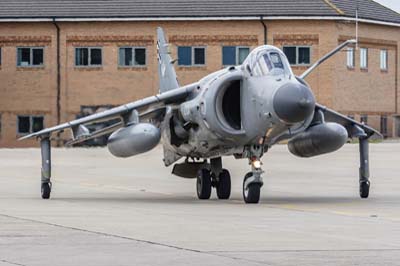
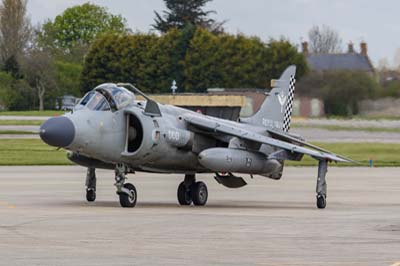
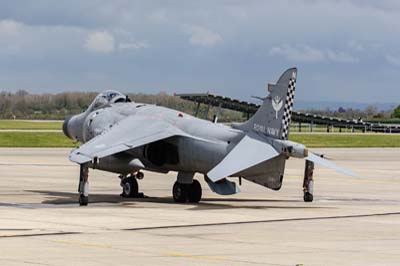
 In March 2007 the Naval Strike Wing (NSW) was formed comprising of elements of 800 and 801 Squadrons and is the Fleet Air Arm's only fixed wing strike force. The NSW is one of three squadrons, the other being 1(F) Squadron RAF and 4(AC) Squadron RAF which make up Joint Force Harrier (JFH). 801 NAS was re-commissioned in October 2006 adding a black and white chequered tail to the existing 800 NAS Squadron Harriers.
800 Naval Air Squadron (800 NAS) reformed on March 31, 2006 and were allocated 13 Harrier GR.7A/GR.9s from RAF Cottesmore and are part of JFH. JFH was formed on April 1, 2000 combining the RAF's Harrier GR.7s with the Royal Navy's Sea Harrier FA.2s. It's aim was to draw together the two services, combining the best tactics and training procedures to produce a very effective strike force that can deploy from land and sea. With upgrades to the RAF's Harriers to GR.7A and eventually to GR.9/9A standard it was decided by the MOD in 2002 to retire prematurely the less capable Sea Harrier FA.2.
By March 31, 2006 the last Sea Harriers had flown from Yeovilton to RAF Shawbury for disposal and their Royal Navy Squadrons (800, 801 and 899) having disbanded at RNAS Yeovilton. JFH is now operating from just RAF Cottesmore and RAF Wittering. Under JFH Cottesmore is the home of 800 NAS followed by 801 NAS in October 2006 with 1(F) Squadron and 4(AC) Squadron, each to operate nine Harrier GR.7/7A or GR.9/9As. Wittering is responsible for training and is operating the two-seat Harrier T.10 of which eleven are being upgraded to T.12 standard. Eventually all JFH's GR.7s will be upgraded to GR.9/9A standard enabling them to use smart
weapons such as Brimstone.
In March 2010 800 and 801 NAS were merged to form a single squadron 800 NAS. The new Joint Strike Wing (JSW) consisted of 1(F) Squadron and 800 NAS.
Under the Strategic Defence and Security Review 800 NAS has disbanded and the Harrier retired on December 15, 2010. Some pilots will transfer to the US Navy Pilot School to commence carrier training. |
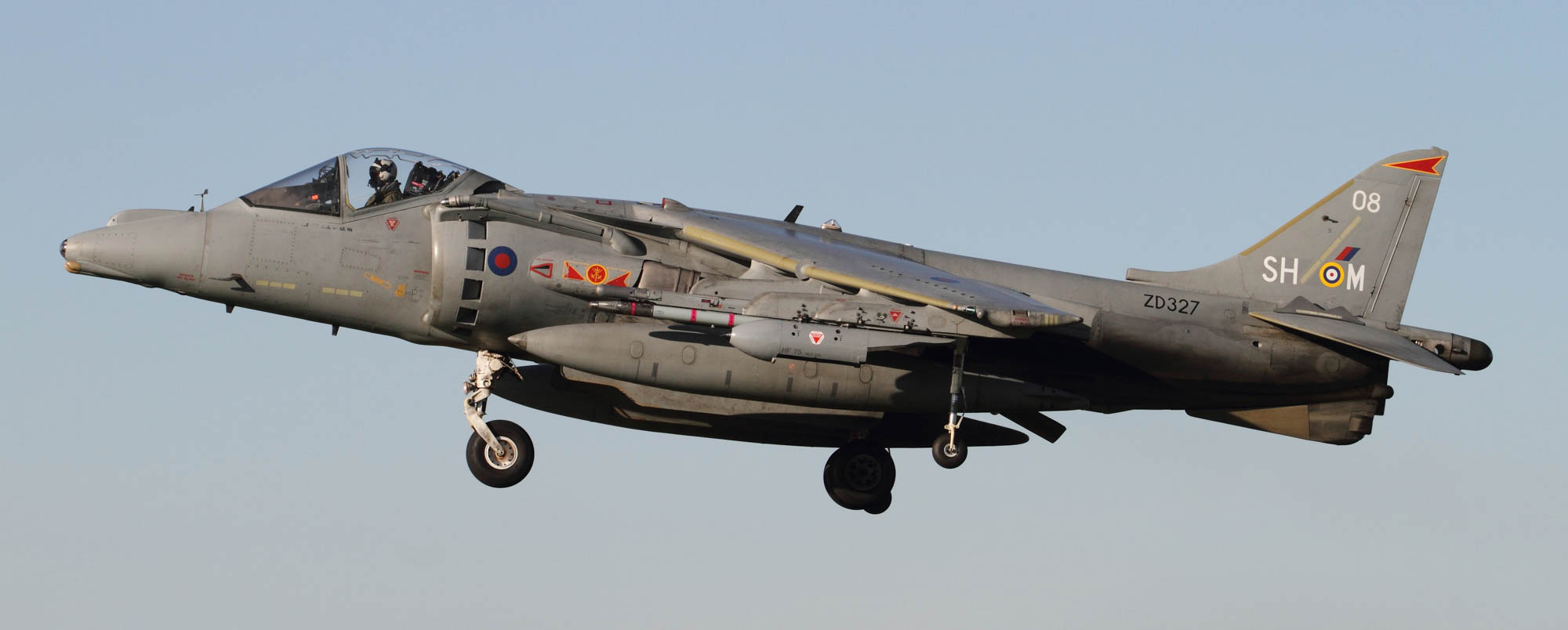 |
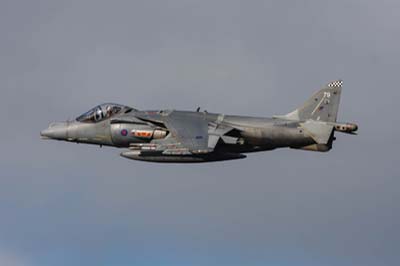
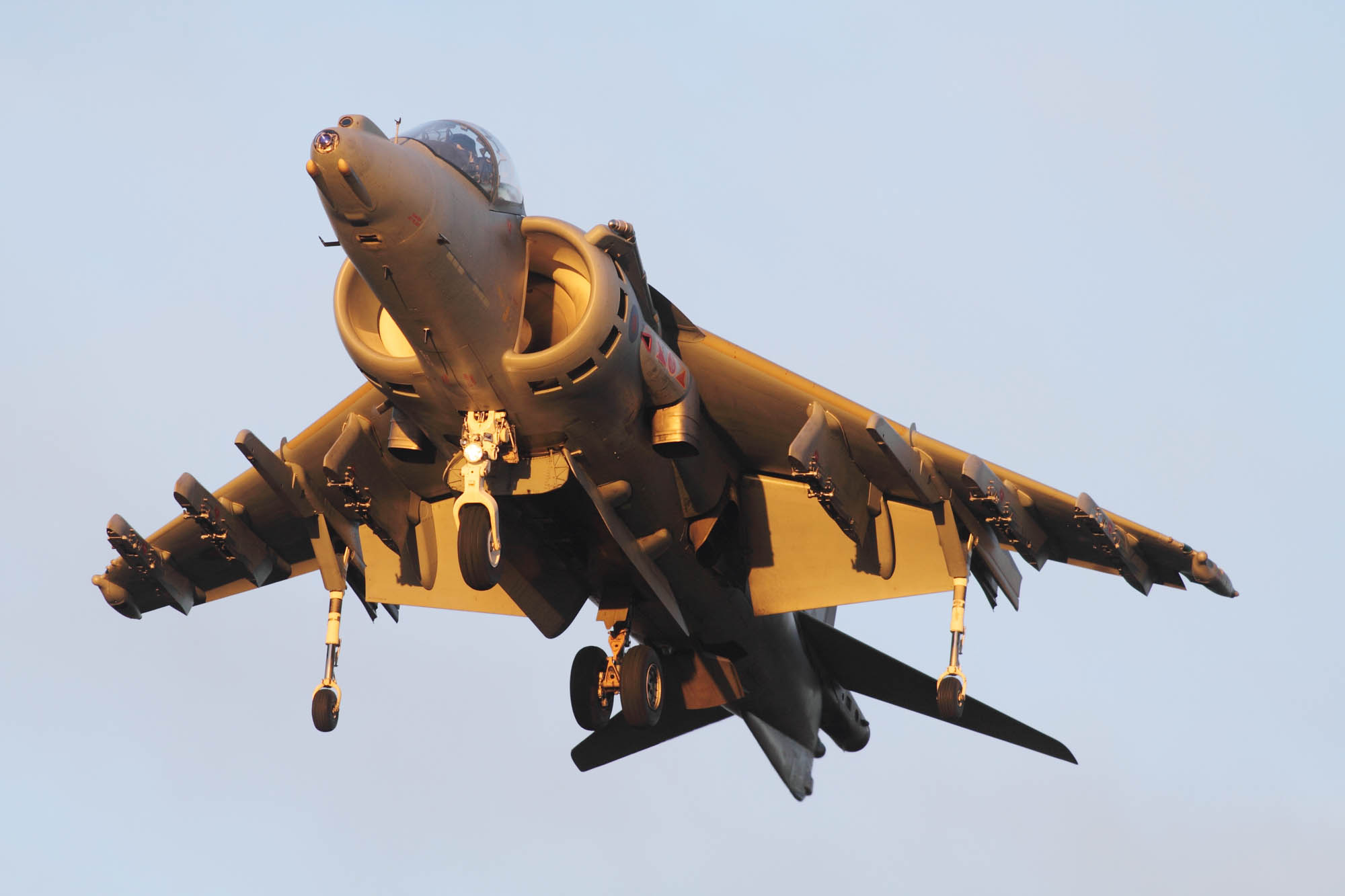
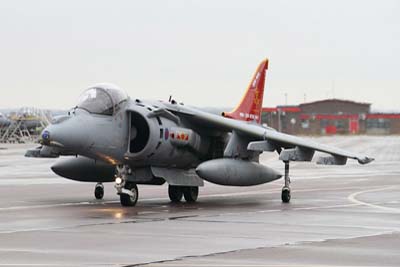
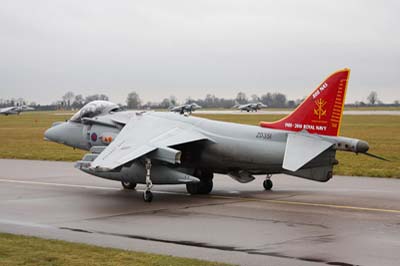
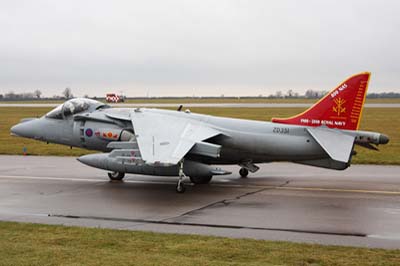
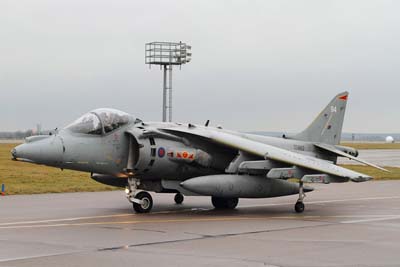
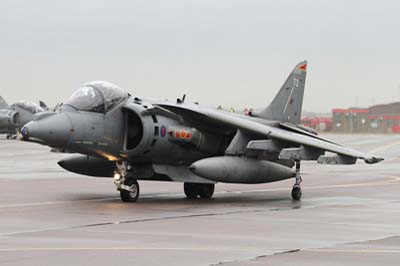
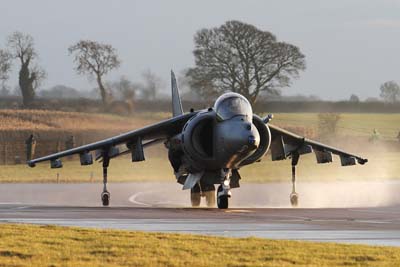
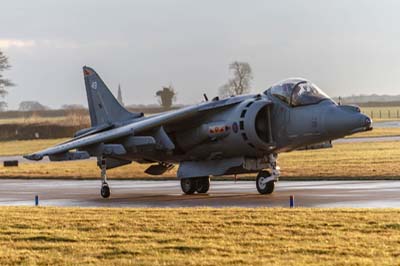
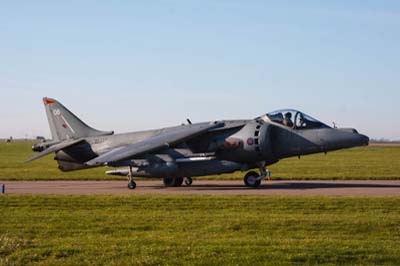
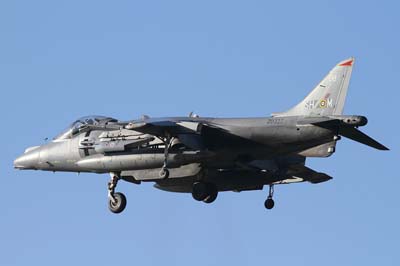
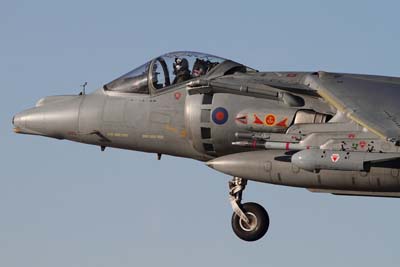
Harrier GR.7A (ZD327 '08' 'SH-M') with a Battle of Britain code on the tail in November 2010 on approach to Cottesmore.
|
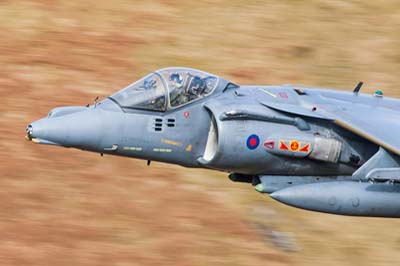
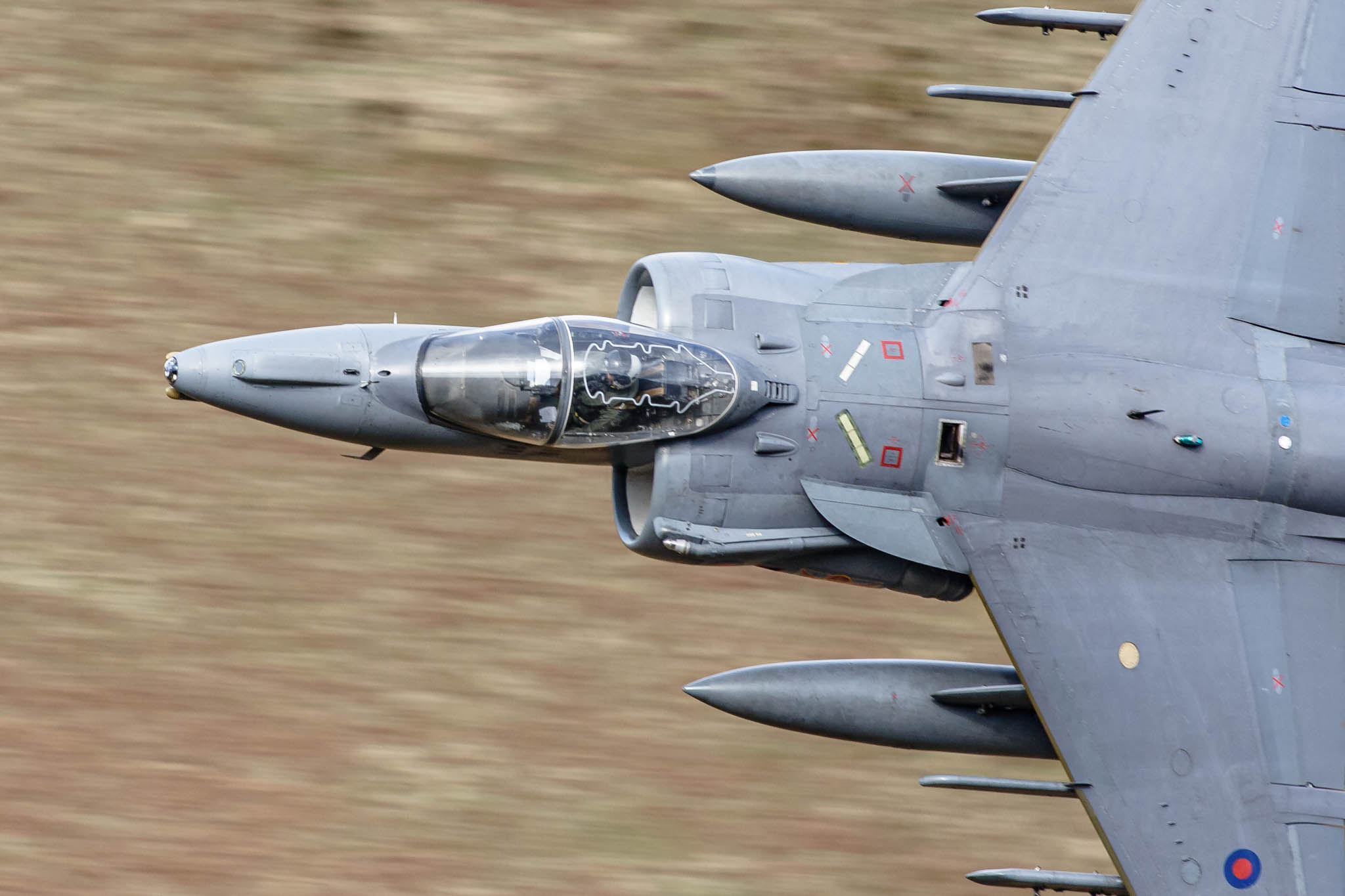
| This sequence of frames made four different magazines (five in total), one book and a MOD publication! |
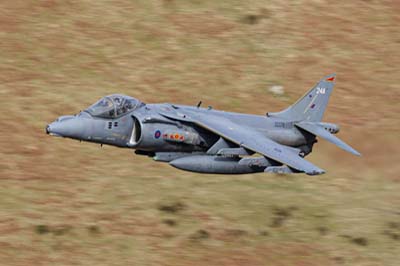
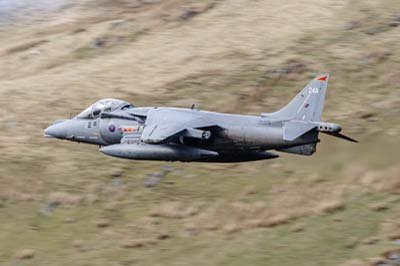
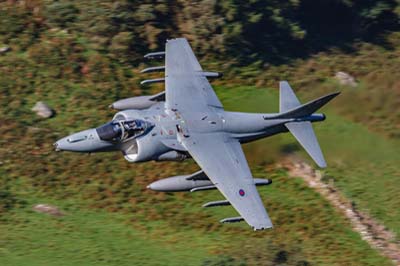
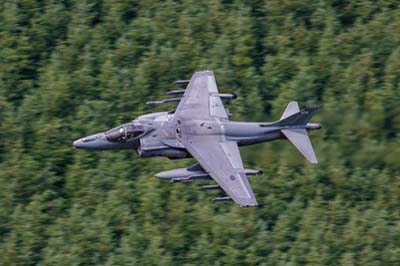
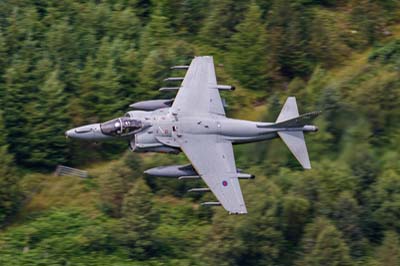
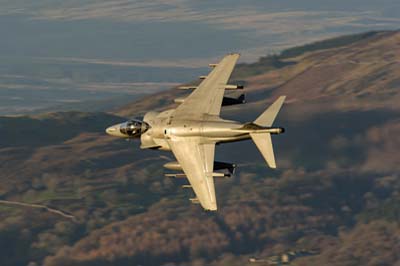
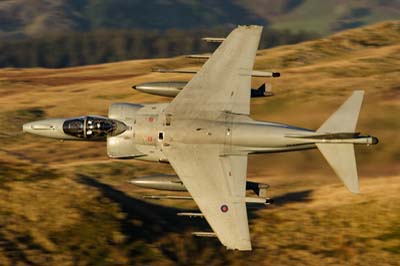
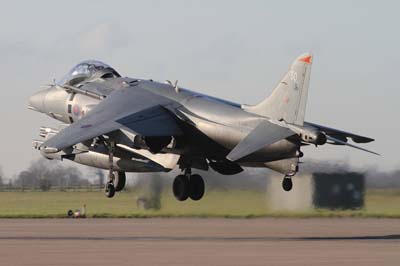
| The Harrier GR.7A (ZD376 '24A') is captured here when flying at low-level in Wales flown by Lt. Adam Hogg, in their first week of operation and is in the new 800 NAS markings. This particular aircraft has recently returned from Kandahar, Afghanistan and is still showing its mission markings from when rockets/bombs were fired/dropped. A few weeks later 800 NAS deployed to the Middle East on Operation 'Aguila' aboard HMS Illustrious. |
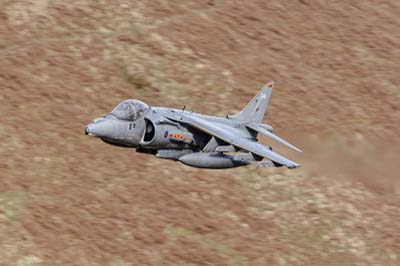
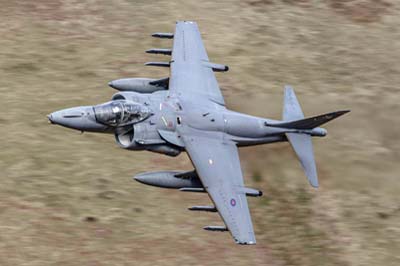
| Left to right: Harrier GR.7A (ZD376 '24A') flying at low-level in Wales in June 2006. |
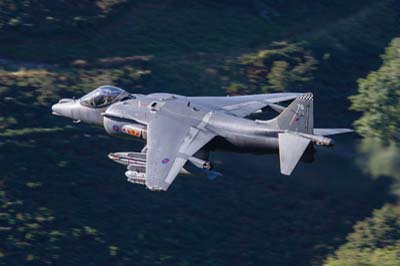
| Left to right: Harrier GR.9 (ZD329 '10' and ZG508 '79') was the first of a pair from 800/801 NAS using callsign 'Vixen Flight' in September 2009. |
| Left to right: Harrier GR.9A (ZG504 '75A') and Harrier GR.9 (ZD463 '53') on their way back to Cottesmore after appearing at the Yeovilton air show in July 2009. Harrier GR.9A (ZD327 '08A') and Harrier GR.7A (ZD411 '40A') in July 2009 using callsign's 'Spider 1' and 'Spider 2'. |
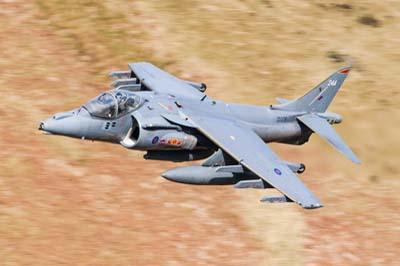
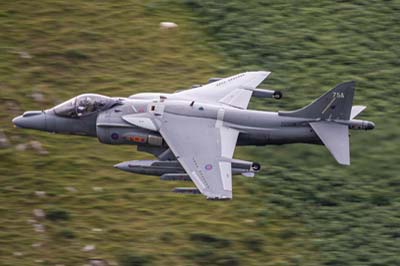
Left to right: Harrier GR.9 (ZG508 '79') in 801 NAS colours at 500 feet through LFA 7 in Wales in October 2009.
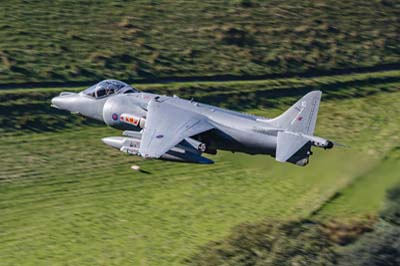
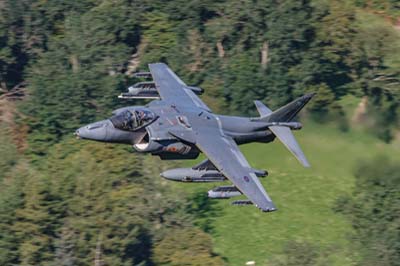
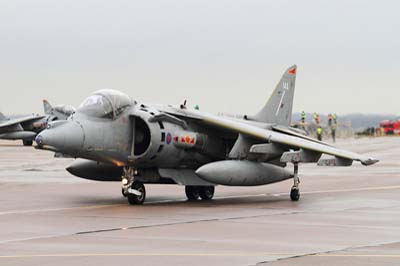
Harrier GR.9 (ZD406 '35') in the now joint 800/801 NAS markings including the more recently applied black and white chequered fin tip. These aircraft are now part of the Naval Strike Wing (NSW) and were caught low-flying through Wales in November 2007. |
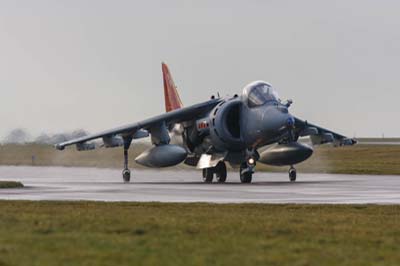
| Harrier GR.9 (ZD437 '49') in 800 NAS markings in December 2010 |
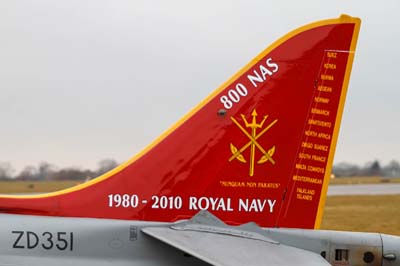
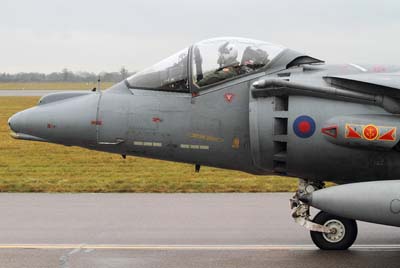
| Left to right: Harrier GR.9A (ZD351) with a 800 NAS special tail in December 2010 for the final flypast. |
| Left to right: Harrier GR.9A (ZD347 '14A'), Harrier GR.9 (ZG862 '94') and Harrier GR.9 (ZG502 '73') on December 15, 2010 for the final flypast. |
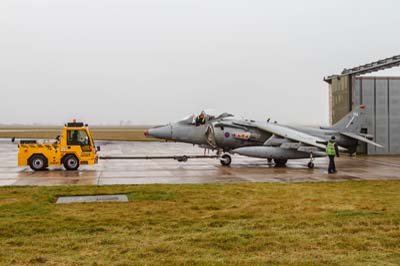
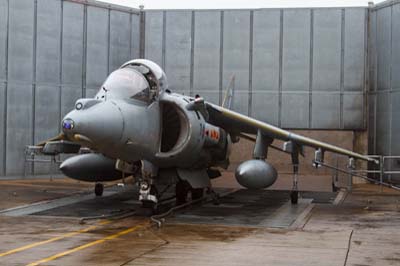
| Left to right: Harrier GR.9 (ZD347 '14A') of 800 NAS in the engine de-tuner on the morning of December 14 to prepare this jet for the following day's flypast. Harrier GR.9 (ZD437 '49') on an engine test sortie on December 13, 2010 at Cottesmore. |
| Left to right: Harrier GR.9s (ZD327 '08' 'SH-M' and ZD438 '50' in November 2010 at Cottesmore. |
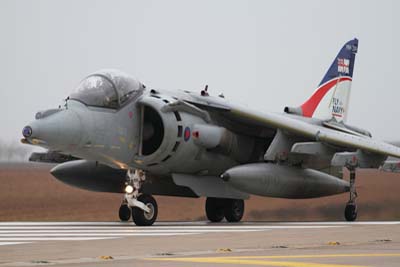
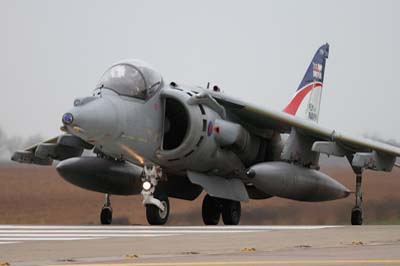
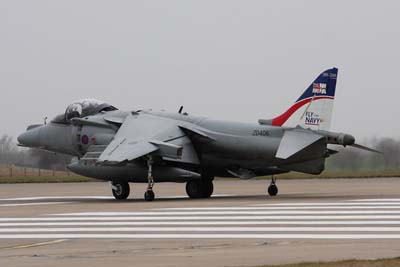
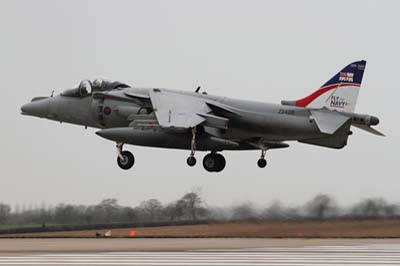
| Left to right: Harrier GR.9 (ZD406') with a special 'Fly Navy 100, 1909 - 2009' tail at Cottesmore in March 2010. |
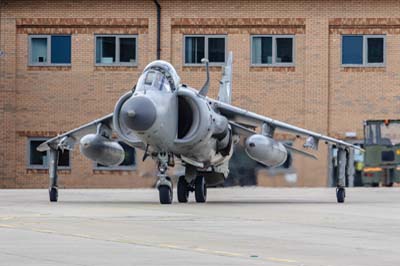
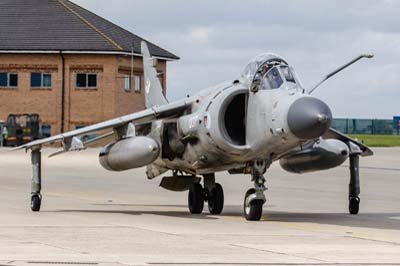
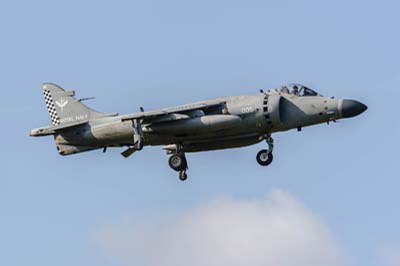
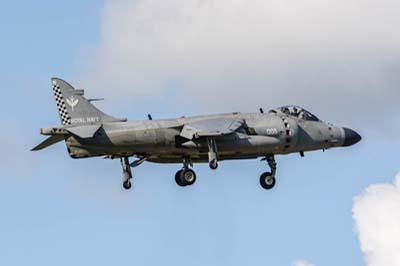
| Three images of Sea Harrier F/A.2 (ZH804 'R-007') and one of Sea Harrier F/A.2 (ZH796 'N-001') with 801 NAS in April 2005 at RNAS Yeovilton. |
| Left to right: Returning to the 801 NAS ramp Sea Harrier F/A.2 (ZH797 '000'). Sea Harrier F/A.2 (ZH811 'N-005') which is just about to go out and two images of her returning to base, after a completed sortie. ZH811 was one of the last Sea Harriers to be delivered back in 1998, ZH813 was the last and has already been retired after just seven years service. In April 2005 at RNAS Yeovilton. |