Romanian Air Force - Forţele Aeriene Române
The MiG-21 LanceR
July 2006
|
| Since the end of the 'Cold War' and the toppling of President Nicolae Ceausescu in December 1989 the Romanian Air Force (RoAF) has gone through a vast restructuring of its Air Force and a rationalisation of its aircraft. By the mid 1990s and with Romania's economy improving a decision was made to upgrade 110 of its MiG-21M/MF/UM fighters. This was later increased to 114 following a series of write-offs during the upgrade program. The MiG-21s were delivered from Russia between 1969 (MiG-21M), 1972 (MiG-21UM/MF) and 1975 (MiG-21MF-75). An agreement was drawn up between Aerostar at Bacau in Romania and the Israeli Company Elbit who were managing the upgrade program. |
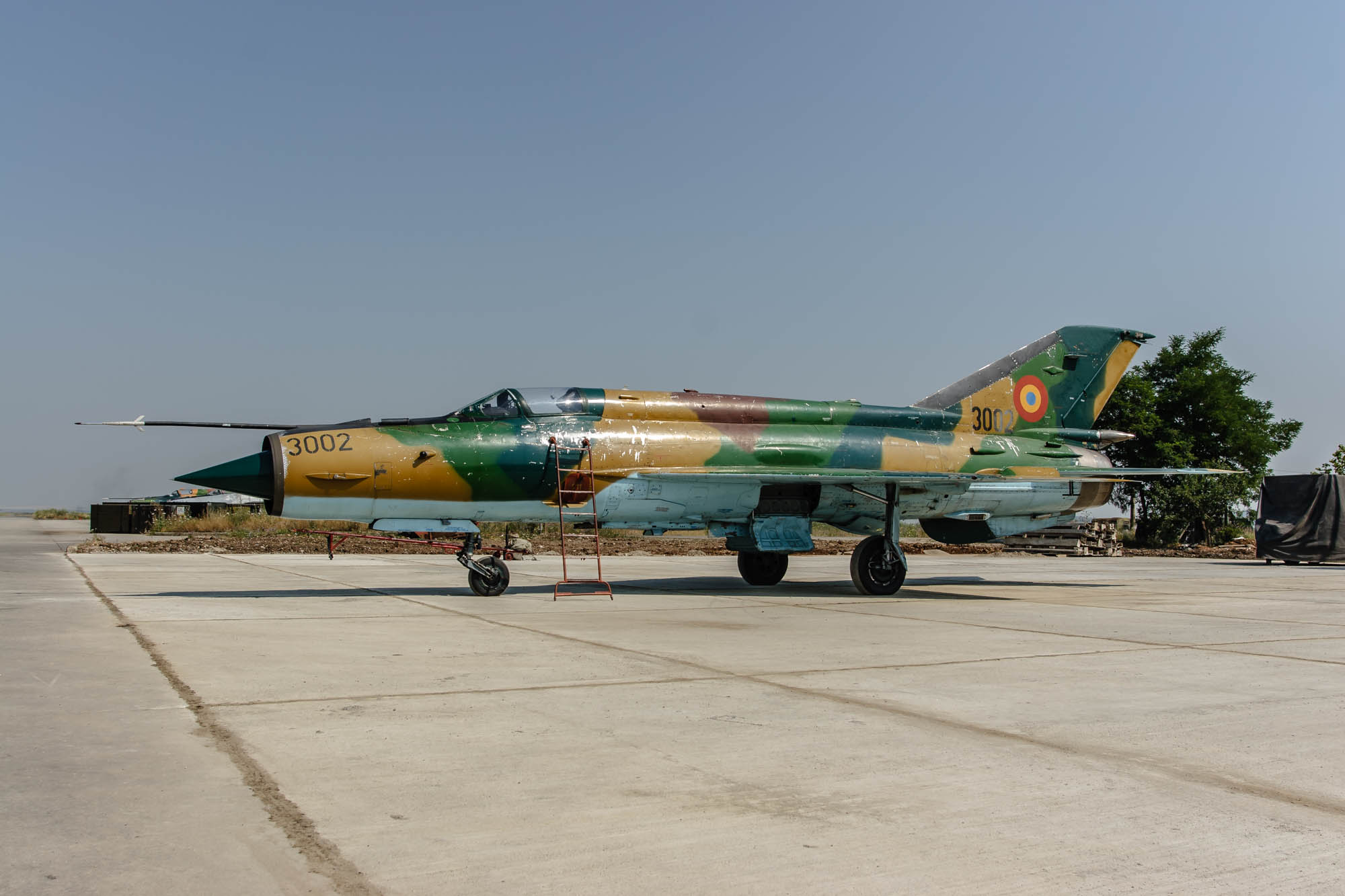
| Mikoyan Gurevich- Aerostar MiG-21 LanceR-A (3002). |
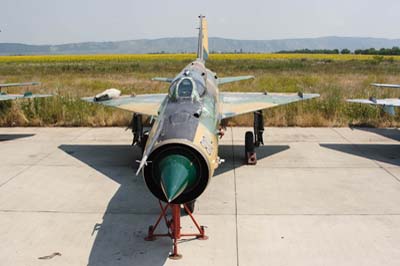 The LanceR (Lance for weapon and R for Romania) upgrade program was designed to increase of the combat capability and eventually NATO interoperability (Romania became a member of NATO on April 1, 2004), through the installation of an advanced avionics package. The upgrade was to be compatible with the packages installed on 5th generation combat aircraft. Improvements to the aircraft included an improved pilot-vehicle interface (PVI) in the cockpit redesign, enhanced warning systems and the ability to operate at night and during adverse weather conditions. The upgrade enabled the use of both Western and Eastern weapons, together with an increase of the survivability within a hostile environment during air combat with the installation of a new self protection system.
Three variants of LanceR went into service; the LanceR-A which was a single seat fighter-bomber for Close Air Support, the LanceR-B a two seat trainer and the LanceR-C which was a single-seat interceptor for Air Defence. The first LanceR squadron was formed at Bacau on May 8, 1997.
The first prototype MiG-21 LanceR-A (9809) was flown on August 22, 1995, followed by the LanceR-B (327) on May 6, 1996. The LanceR-C prototype (6607) first flew on November 6, 1996. |
 |
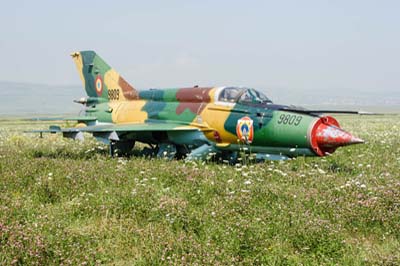 |
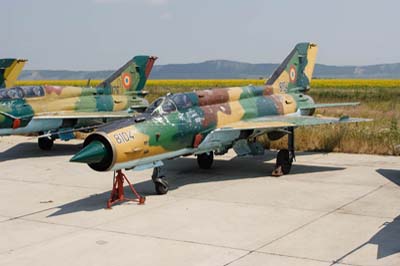
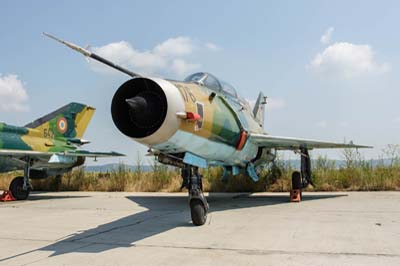
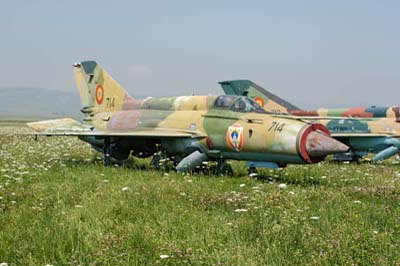
Left and right:MiG-21 LanceR- As (9809) was the first prototype MiG-21 LanceR-A flown on August 22, 1995 now in open storage at Bacau.
MiG-21 LanceR- As (714) was another prototype MiG-21 LanceR and was displayed at SBAC Farnborough in 1996. |
By the end of the upgrade program in 2003, 114 MiG-21s (40% of all RoAF MiG-21s in service at the start of the program) had been upgraded to LanceR standard. As during this period there had been four crashes (2x A, B and C). Originally 10 two-seat Bs were ordered, this was increased to 14 in 2000 by reducing the number of A and C variants by two each). The last remaining MiG-21PFM, MiG-21R and MiG-21US variants had all been withdrawn from service by 2003.
In the end there were 75 conversions (34 from MiG-21M and 38 from MiG-21MF) to LanceR-A, 14 conversions of the existing MiG-21UMs to LanceR-B and 25 conversions of MiG-21MFs to LanceR-C. Aerostar continues to provide integrated logistic support.
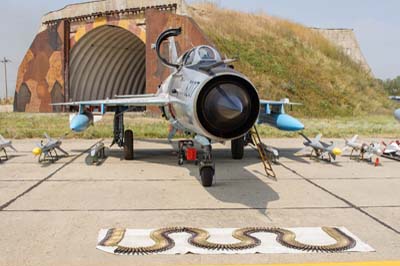 The LanceR fleet is now the backbone of the RoAF, performing air defence, close air support and training roles. The aircraft is unusual in now being able to carry both Eastern and Western armament. The LanceR was cleared for missiles such as the R60, R73 and Python 3 IR air-to-air missiles, 250lb and 500lb bombs, laser guided bombs (LGB), targeting and ECM. Some of the Lancer-As were also equipped with Rafael Litening targeting pods or Elbit/Aerostar Airborne Reconnaissance Pods. The LanceR's have now participated successfully in many NATO exercises. The upgraded aircraft have demonstrated greatly improved readiness levels, over their previous status and comparable to other NATO members.
 |
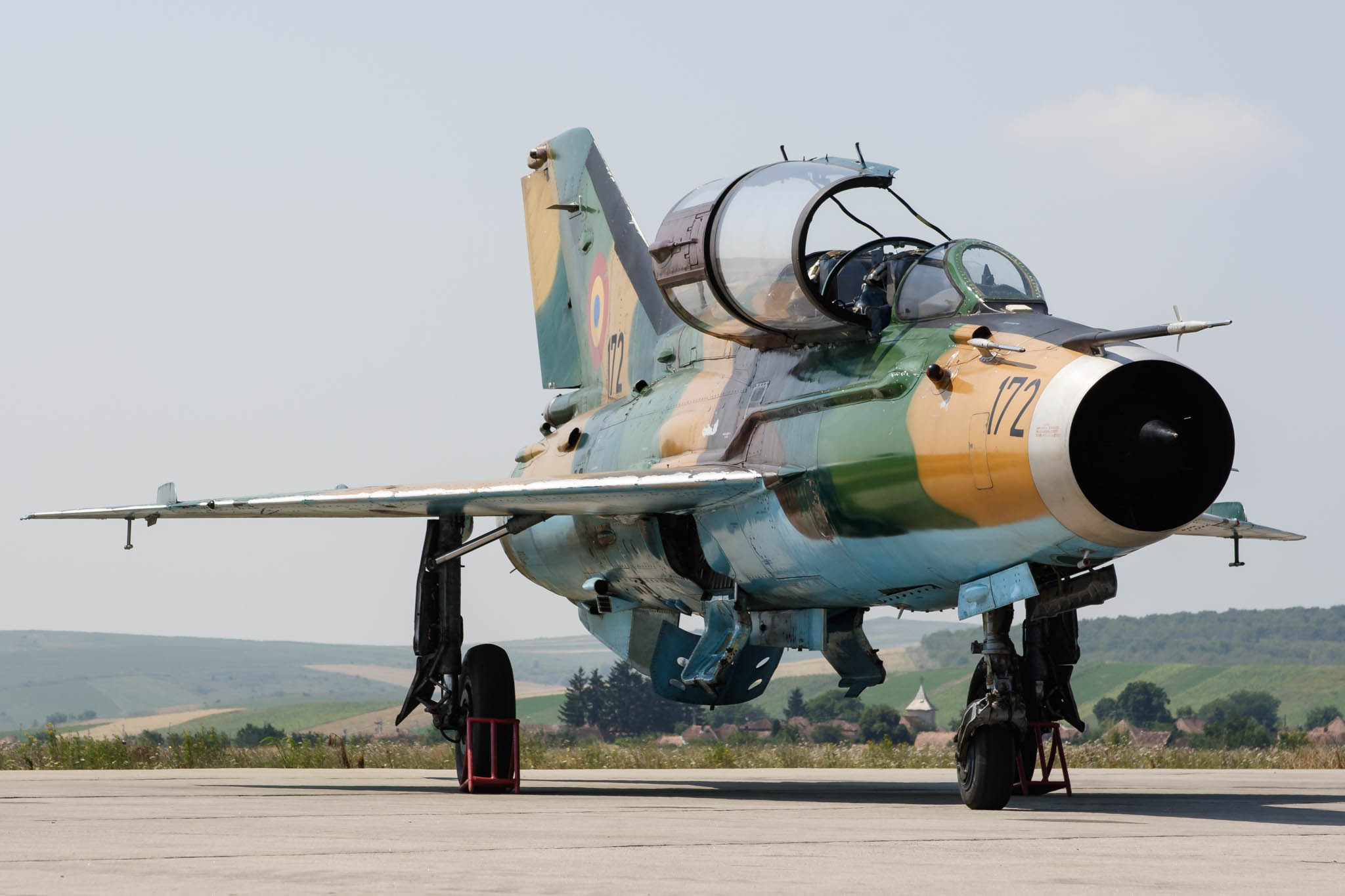 |
| MiG-21 LanceR-B (172) at Câmpia Turzii. |
The Romanian Air Force currently operates six squadrons of LanceR's from three air bases;
Baza 71 Aeriană at Câmpia Turzii with 711 and 712 Squadron,
Baza 86 Aeriană at Borcea-Fetesti with 861 and 862 Squadron and
Baza 95 Aeriană at Bacau with 951 and 205 Squadron which is the training unit.
The LanceRs are planned to be withdrawn by 2011 and replaced by new fighters. As an interim measure it is expected that Aerostar and Elbit will again work together to upgrade and supply former Israeli Air Force F-16A/Bs to carry beyond-visual-range weapons and guided air-to-ground munitions. |
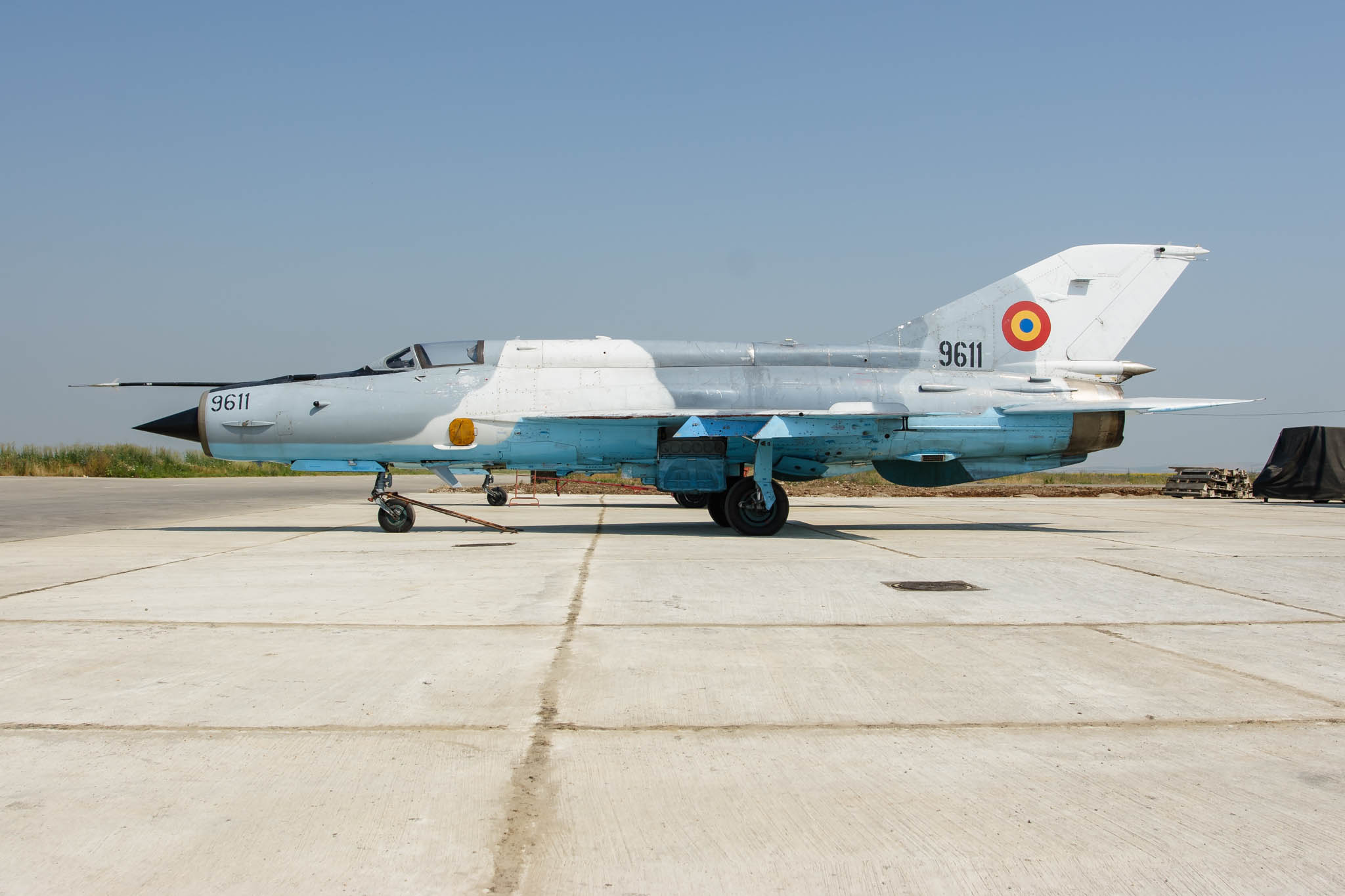
| MiG-21 LanceR-C (9611) at Câmpia Turzii. |
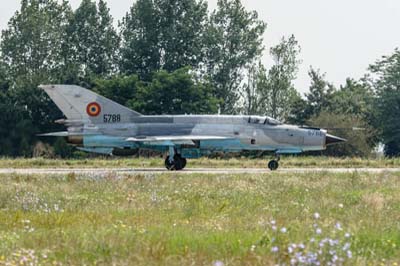
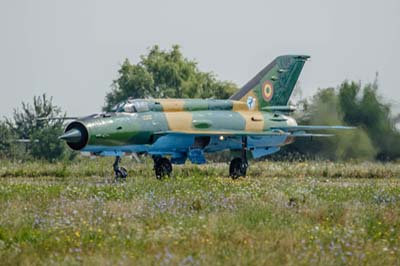
| Left to right: MiG-21 LanceR-B (176 x2) at Câmpia Turzii. MiG-21 LanceR-C (5788) and MiG-21 LanceR-A (8105) at Mihail Kogalniceanu during their flying displays RoIAS. |
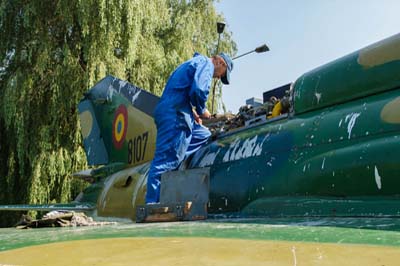
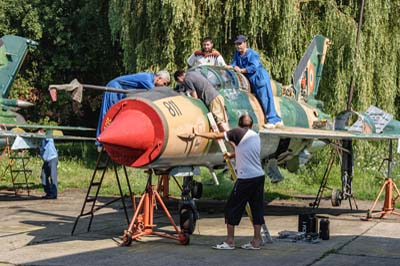
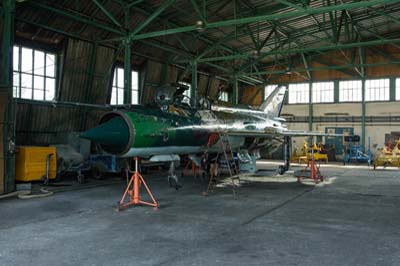
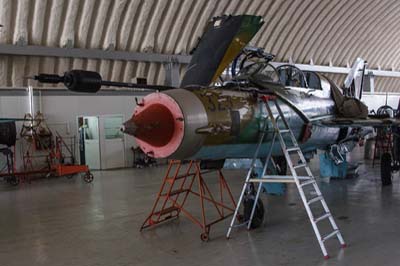
| Left to right: Active MiG-21 LanceR- As (8107, 811 and 5911) in the maintenance area at Bacau and MiG-21 LanceR-B (329) with the 'bonnet' open in the maintenance hangar at Câmpia Turzii. |
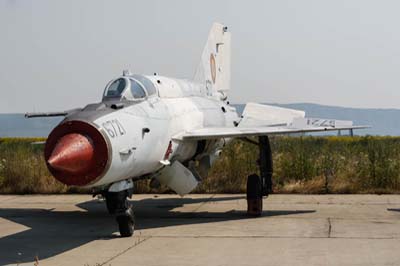
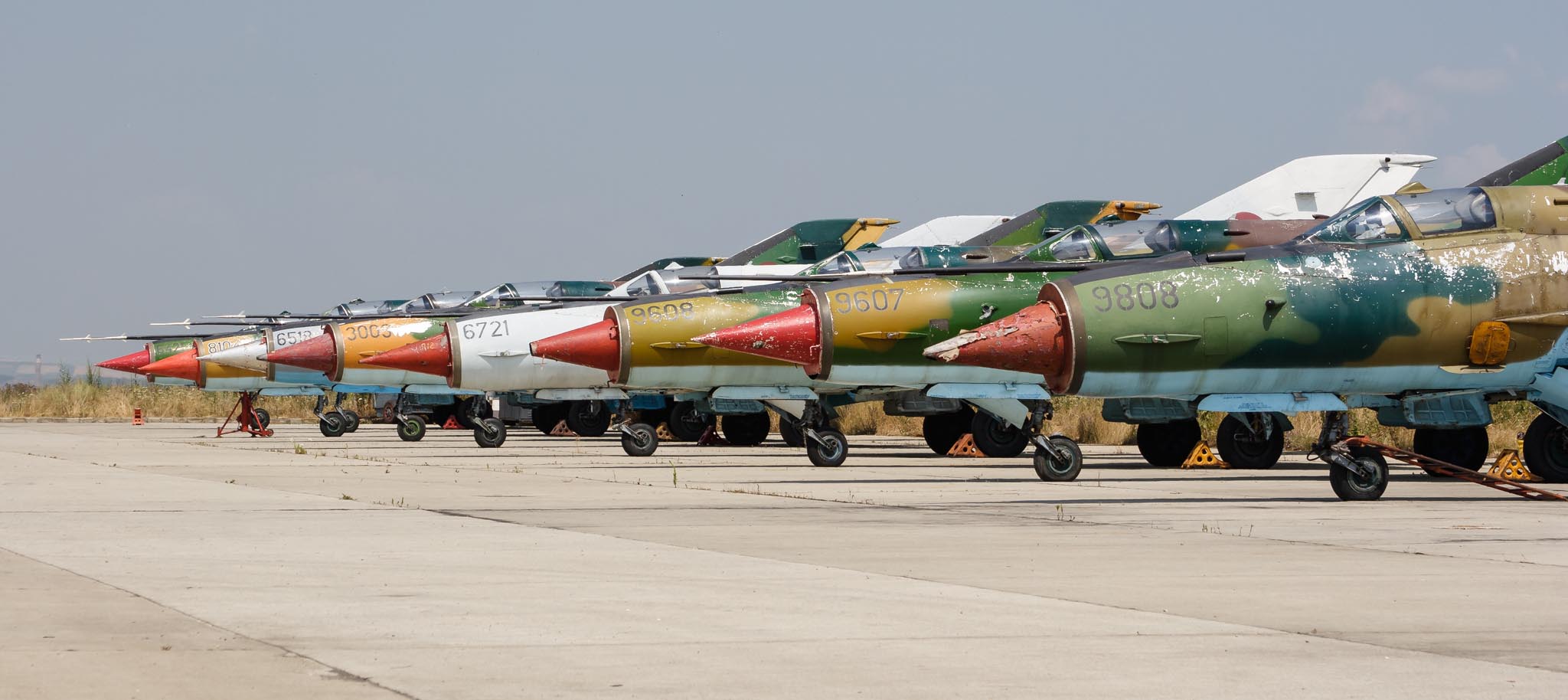
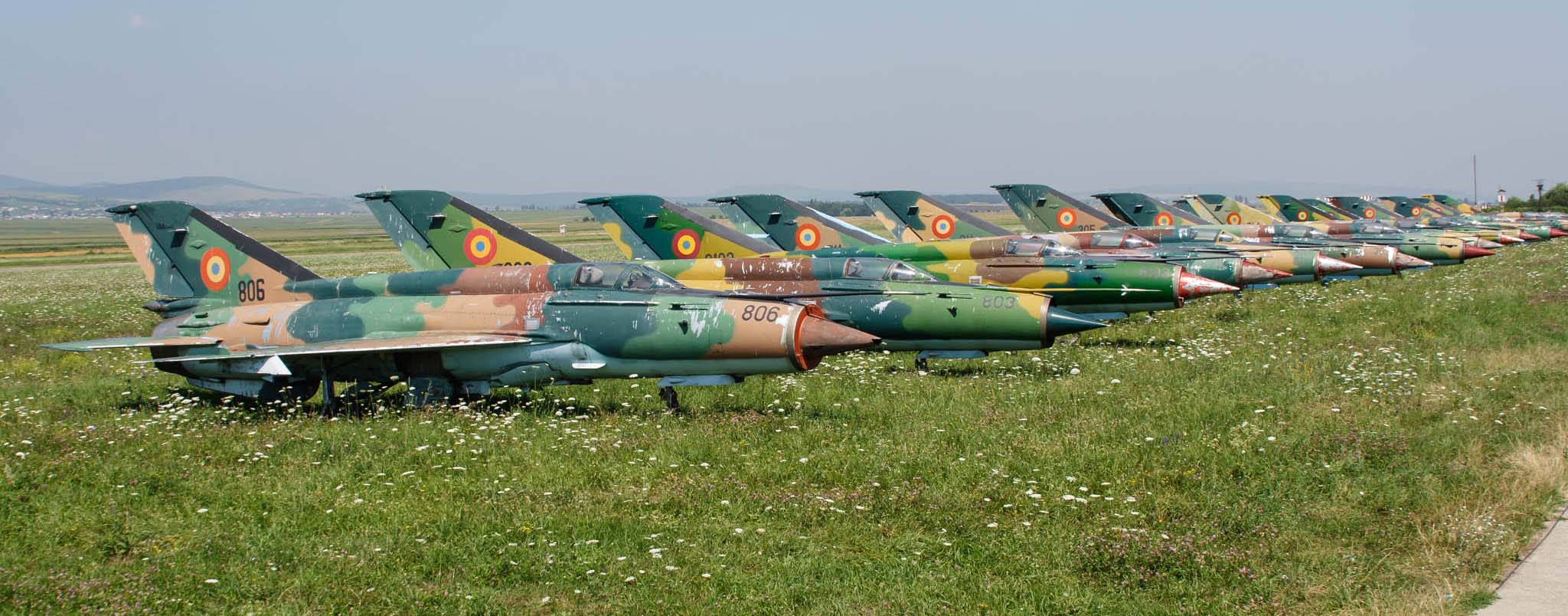
A large proportion of the 114 MiG-21 LanceR upgraded aircraft were in open storage by July 2006, having been withdrawn from service in later years.
MiG-21 Lancer-C '6721' (left) was in open storage at Câmpia Turzii in July 2006. In the following weeks it was over-hauled and made ready for service once again. 0n its first flight on November 22, 2006 the pilot lost control and the aircraft crashed near the town of Beliu, tragically the pilot failed to eject and was killed. |
The temporary storage area at Câmpia Turzii with all three variants of MiG-21 LanceR,
including the ill-fated LanceR-C '6721' which crashed a few months later (see above). |
| MiG-21 LanceR-As in open storage at Bacau. |
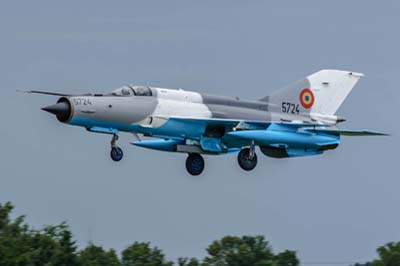
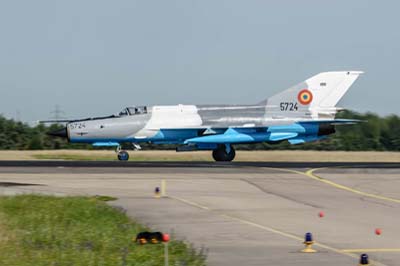
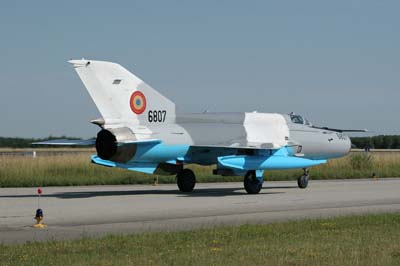
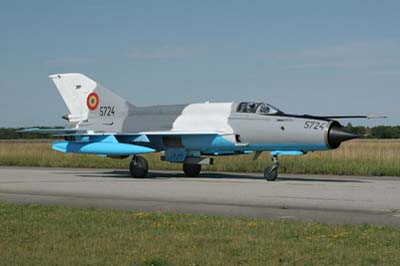
| Left to right: MiG-21 LanceR-Cs (5724 and 6807) at Lechfeld, Germany taking part in exercise ELITE 2007. |