Imperial War Museum
Duxford
2007, 2009, 2012, 2016, 2020, 2021, 2022, 2023 and 2024
|
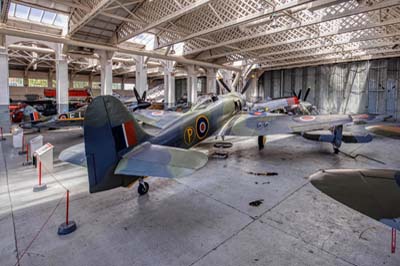
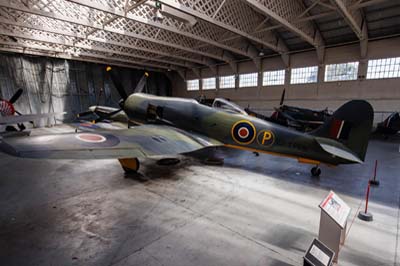
The Imperial War Museum (IWM) at Duxford in Cambridgeshire has got to be one of United Kingdom's most impressive aircraft museums, mostly because of its size and number of exhibits rather than for the rarity of its aircraft on display. The collection has grown since it was first opened to the public in 1976. The aircraft on display and available for close inspection, are dispersed around the famous former Battle of Britain airfield, at a number of distinct locations. Since my first visit over thirty years two major buildings have been constructed and now most of the collection is protected from the elements.
A Brief History of Duxford
Duxford airfield dates back to 1918 when the Royal Flying Corps and the Airco DH.9 arrived along with an American forces contingent tasked with assembling aircraft shipped from the United States. Many of the original buildings still stand including the wonderful double-bay Belfast hangars with their distinctive lattice effect roof supports and wooden hangar doors. By 1939 and the start of the World War Two, 19 Squadron RAF's first Spitfire squadron was operating from Duxford. In 1943 the RAF made way for the USAAF's 78th Fighter Group with their P-47 Thunderbolts, these were replaced by the P-51 Mustang by the end of 1944. The airfield was handed back to the RAF after the war and Meteors, Hunters and then the Javelin were flown from here until the airfields closure in 1961. In 1971 the IWM moved surplus aircraft to Duxford for storage.
The Old Flying Machine Company (OFMC) and
The Fighter Collection (TFC) moved to Duxford in 1983. Also operating from Duxford is the Aircraft Restoration Company (ARCo) and the
Historic Aircraft Collection (HAC) which has six warbirds based at Duxford, mostly in hangar 4.
This summary does not do justice to what is on display, the aircraft at the IWM are very impressive, where else could you see over twelve Spitfires for example? A full day's visit is required to properly appreciate the wealth of exhibits on show. Yes you can see everything during the flying displays held throughout the year at Duxford, but those shows really warrant your full attention not really leaving enough time for the hangared museum aircraft.
AirSpace
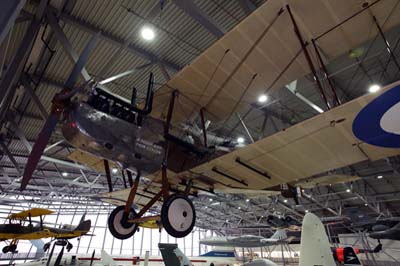
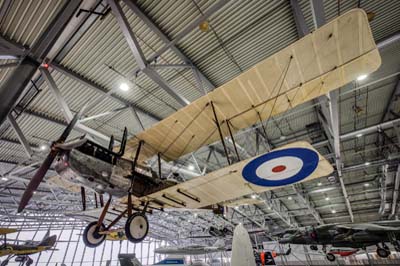
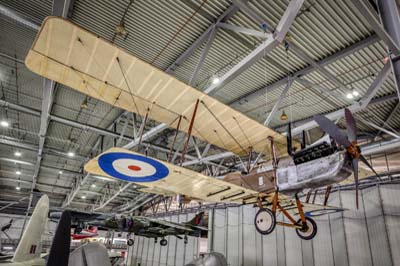
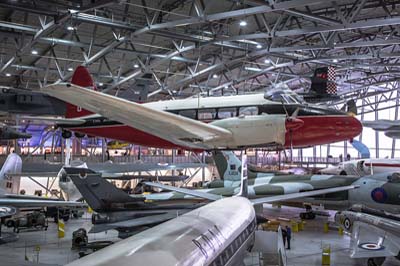
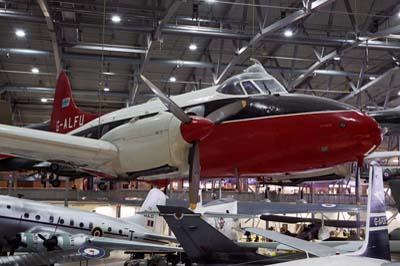
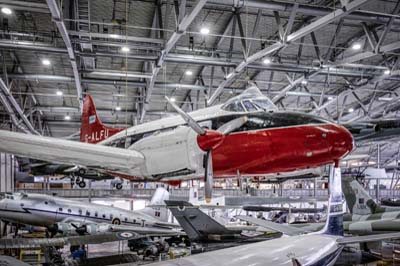
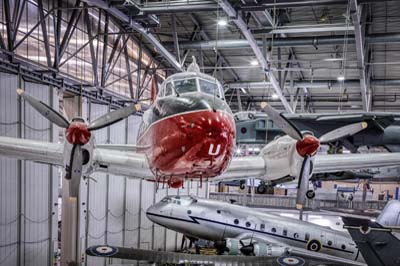
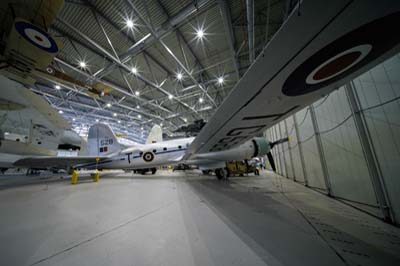
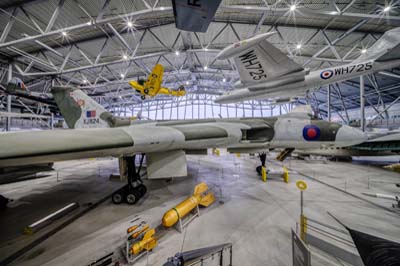
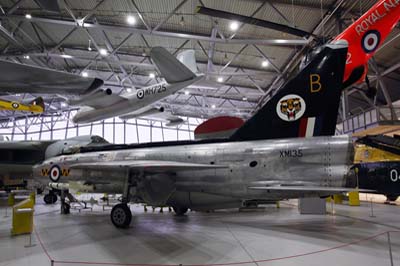
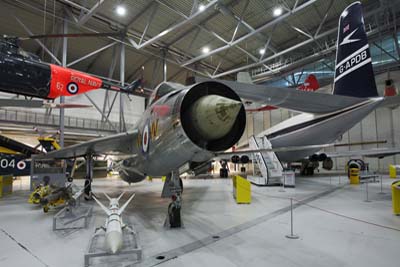
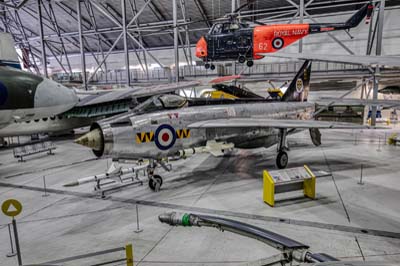
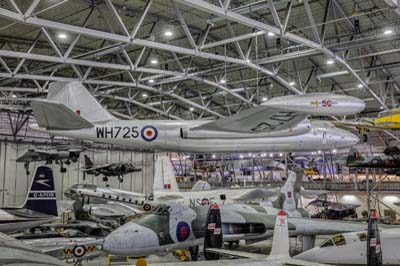
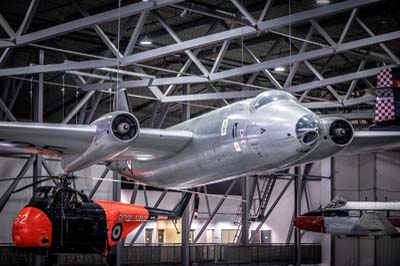
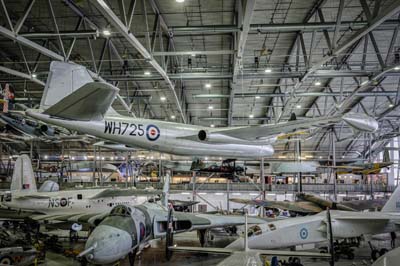
The impressive AirSpace building at the eastern end of the airfield was built at a cost of £25 million. It has recently been extended and re-opened in July 2007. Over thirty of the UK's most famous and groundbreaking aircraft are housed in the main section, twelve of which are suspended from the ceiling. Access is excellent at ground level and by using the stairs and walkways that go around three sides of this vast building. Exhibits range from the Vulcan, through to the TSR.2, Comet and Concorde. A Canberra, Lightning, Harrier, Jaguar and Tornado show how our military jets have evolved since the 1950s. First and World War Two aircraft are squeezed into the few remaining gaps, notably an RE.8, DH.9, Oxford, Anson, Lysander, Swordfish, Spitfire, Mosquito and Lancaster. There is also still room for a York, Sunderland and Hastings and quite a few more. At the time of my first 'Digital' visit in 2007, on long-term preservation and in a separate preparation area, were a Viscount, Shackleton and Victor. |
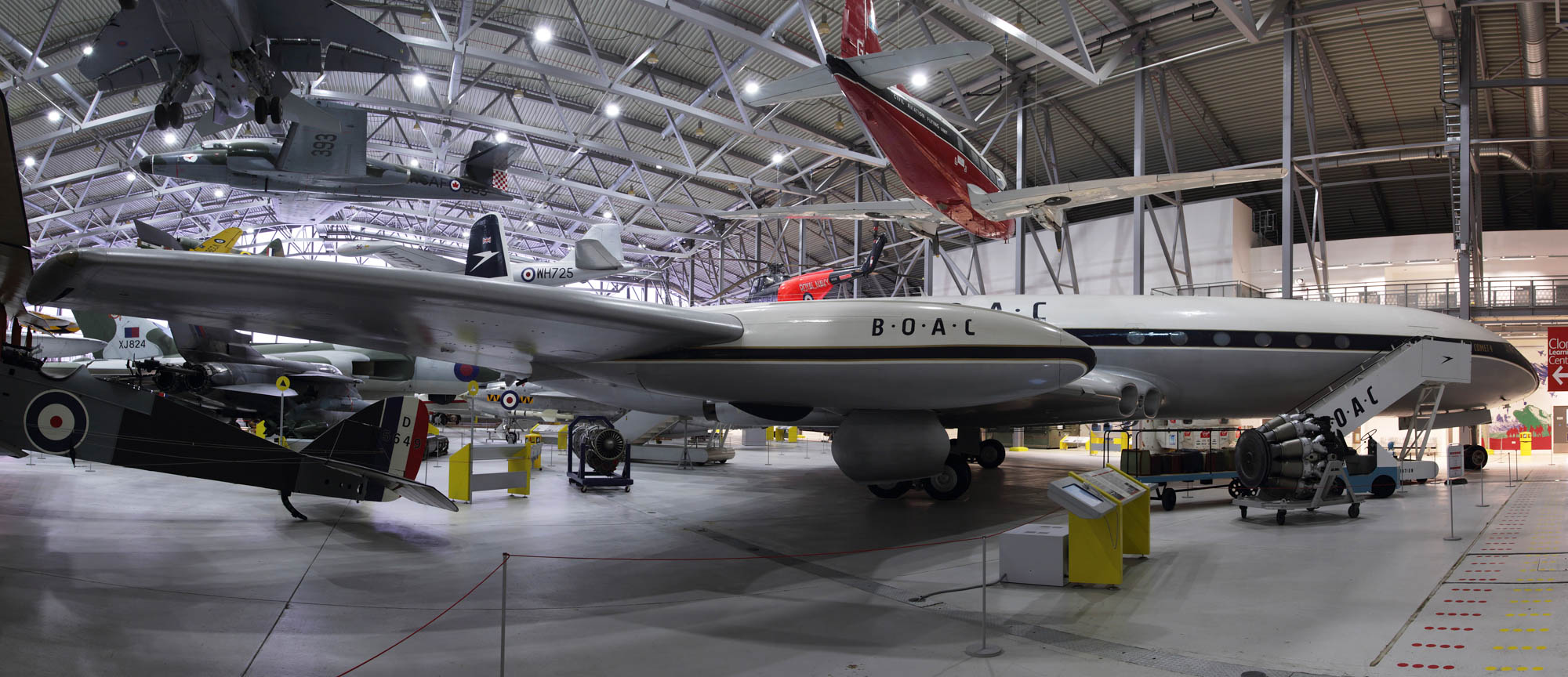 |
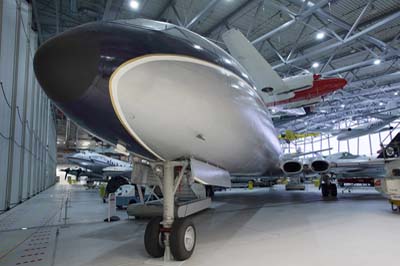
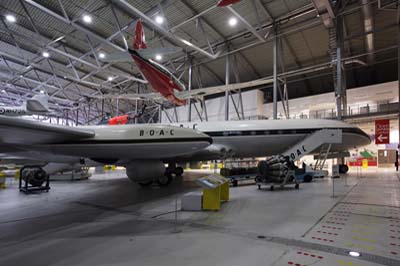
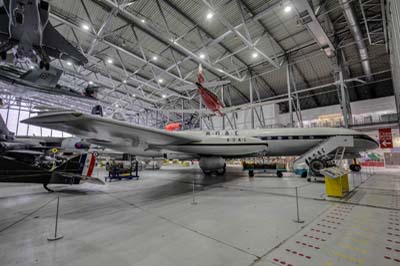
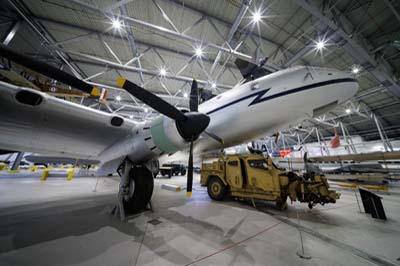
| Panoramic image of de Havilland DH 106 Comet 4 (G-APDB). |
| Left to right: de Havilland DH 106 Comet 4 (G-APDB). Delivered to BOAC in September 1958, two weeks later she flew the first ever scheduled service operated by a jet aircraft from West to East across the Atlantic. Leaving New York she arrived in London just 6 hours 12 minutes later having passed sister ship G-APDC making history itself by flying in the opposite direction. Later she was sold to Malaysian Singapore Airlines flying with them for four years before being sold to Dan-Air flying with them until retirement in November 1973. Dan-Air donated her to the East Anglian Aviation Society in February 1974. |
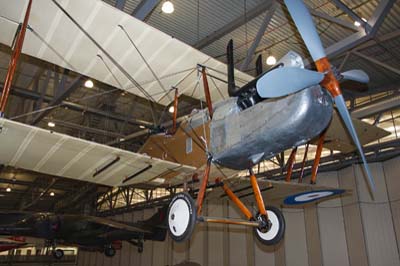
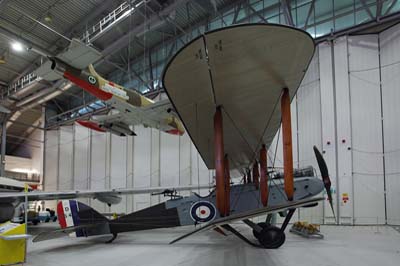
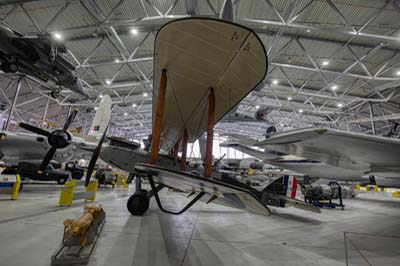
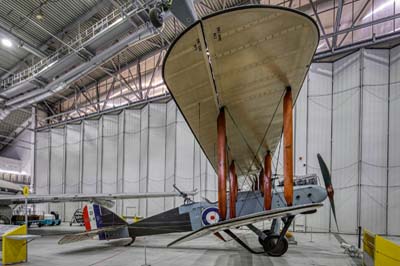
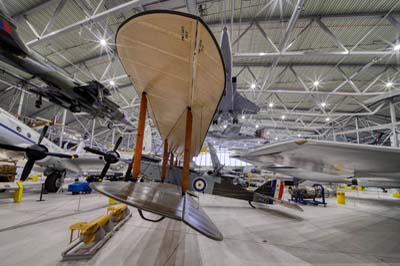
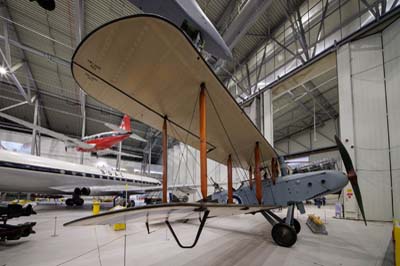
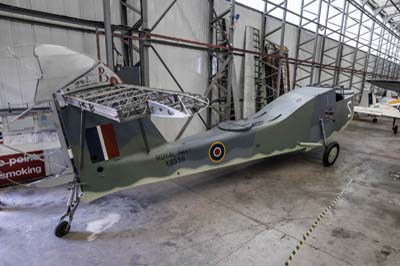
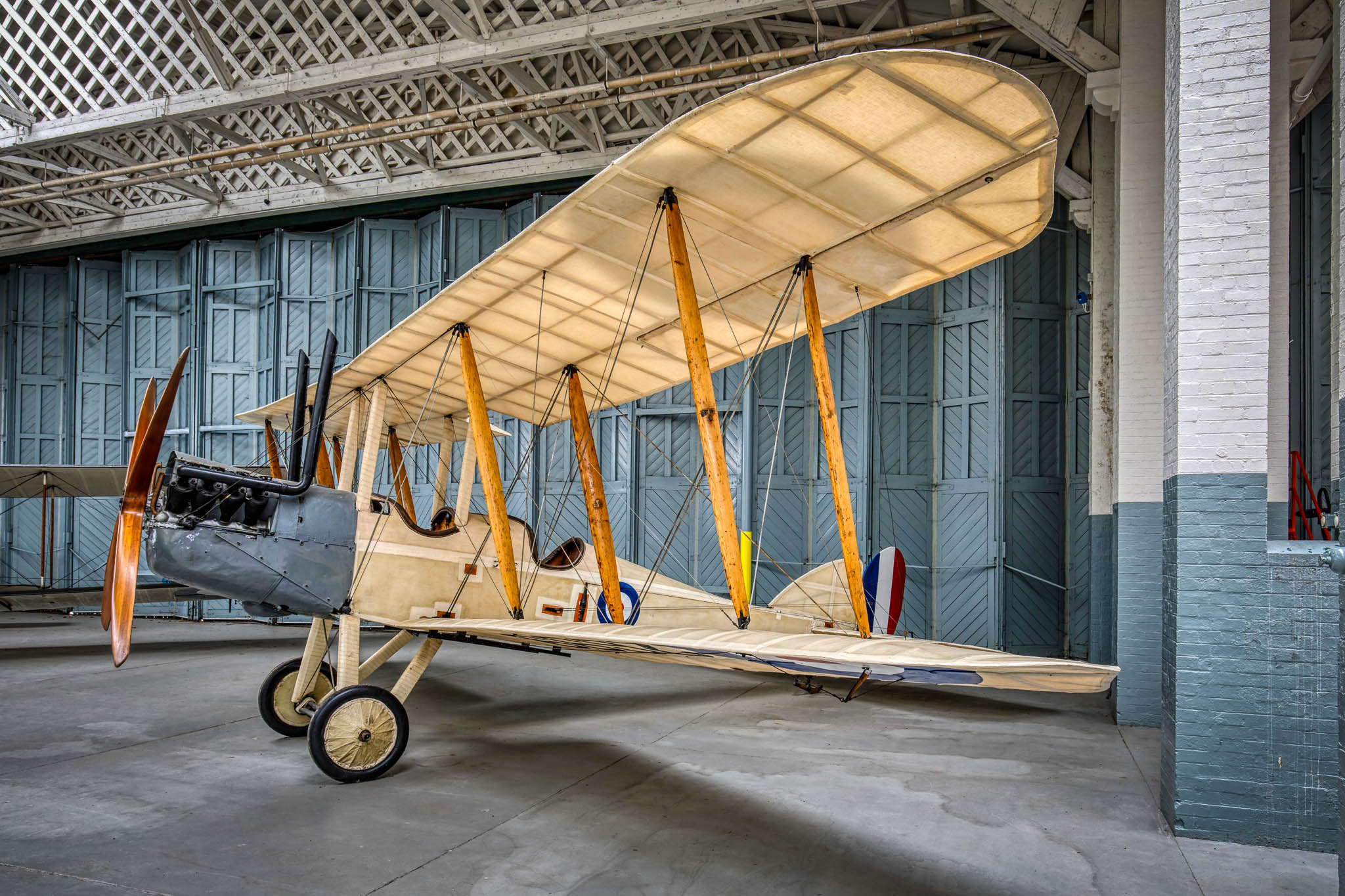
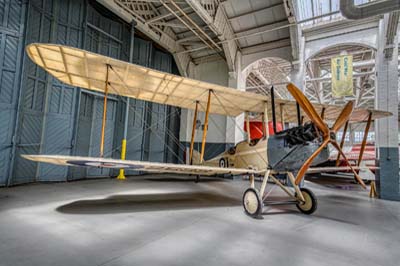
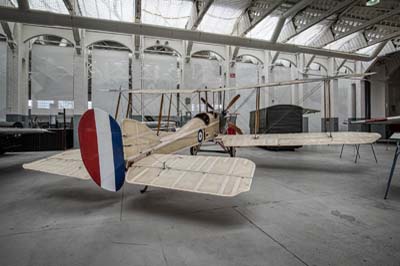
| Left to right: Royal Aircraft Factory RE.8 (F3556) is one of only two in existance the other is in the Brussel's Museum. Built by the Royal Aircraft Factory in England, the Reconnaissance Experimental 8 (R.E.8) was a successor to the R.E.7 and entered service in 1916. Initially used for reconnaissance, it was later employed for ground attack missions. Despite being very vulnerable to enemy attack, due to its poor manoeuvrability and an initial tendency to spin, over 4000 were built. |
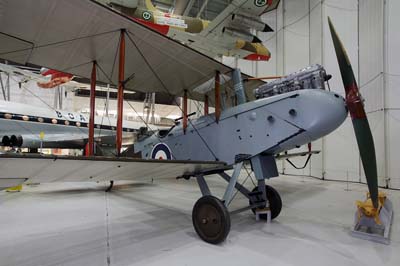
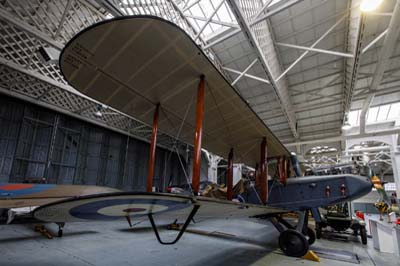
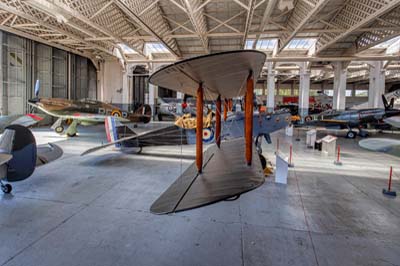
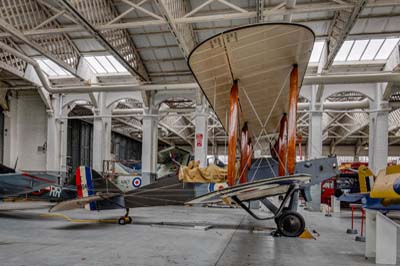
| Left to right: de Havilland (Airco) DH.9 (D5649). The DH.9A was built by Aircraft Manufacturing Co. (Airco) of Hendon (with several sub-contractors) and designed by Capt. Geoffrey de Havilland. He later formed is own company when Airco were taken over by BSA in 1920. The DH.9A was in service from 1918 to 1931 as a two-seat bomber. 900 were built during 1918 in Great Britain, the Russians even produced unlicensed aircraft for the Red Air Force. After the World War One the DH.9A was used extensively in Iraq and India. |
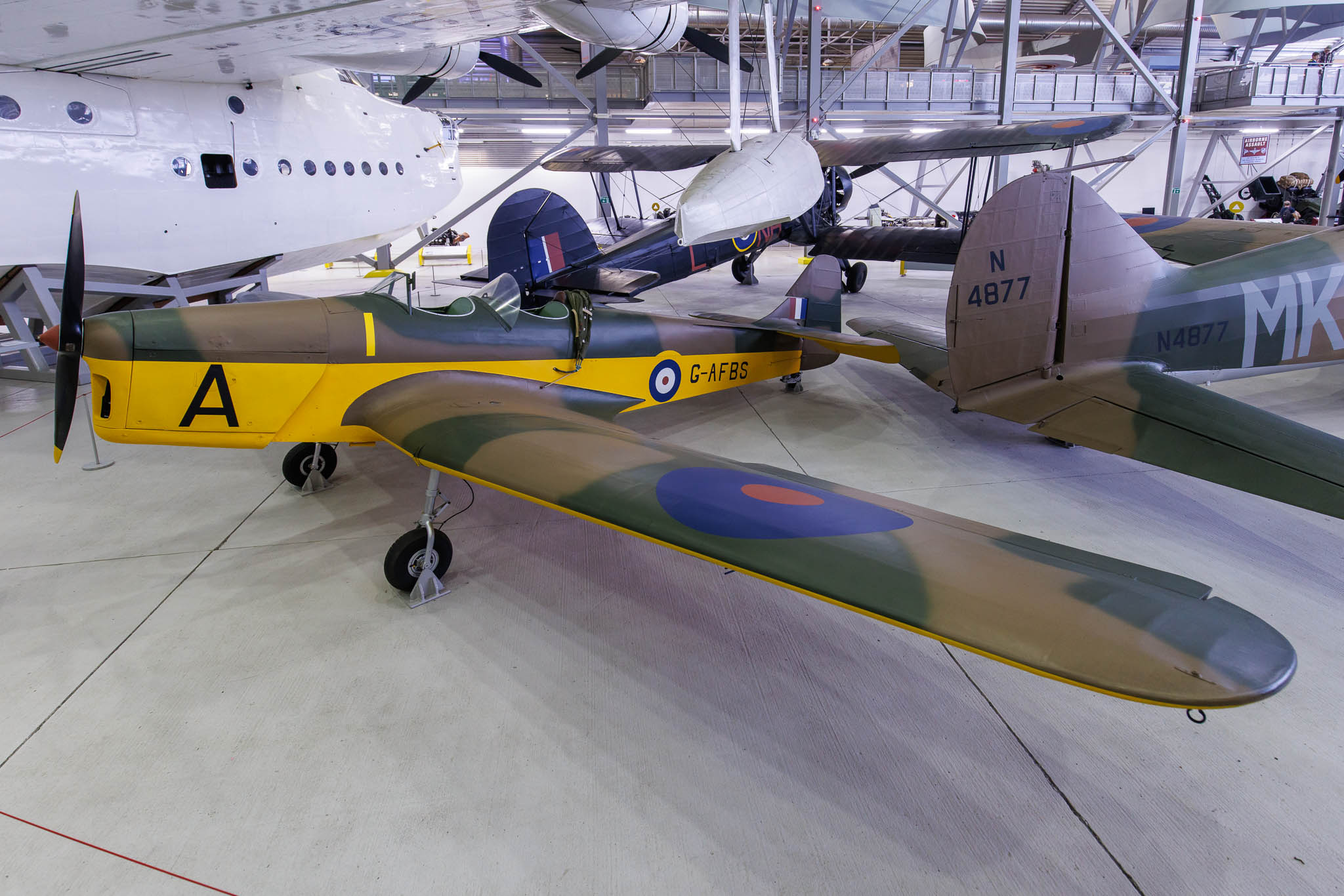
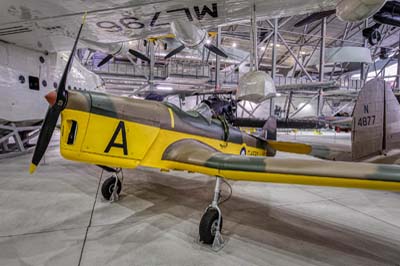
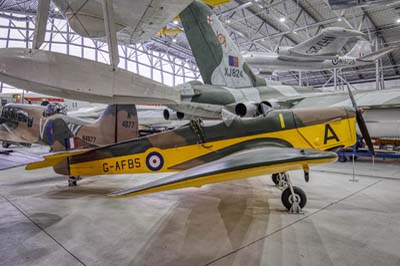
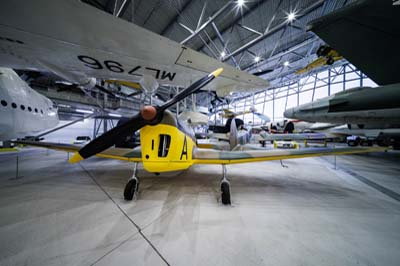
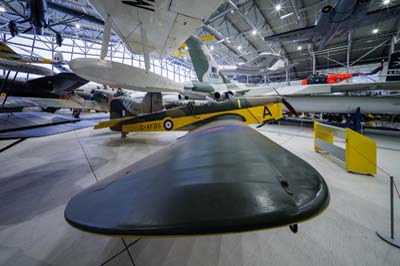
| Left to right: Miles Magister or Miles M.14A Hawk T.3 in military service (G-AFBS 'A' previously BB661). |
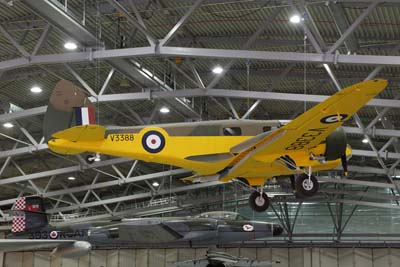
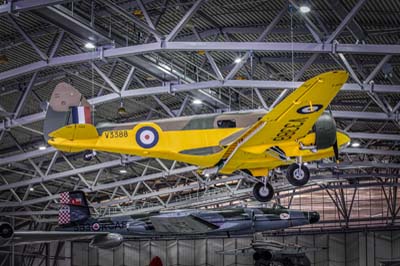
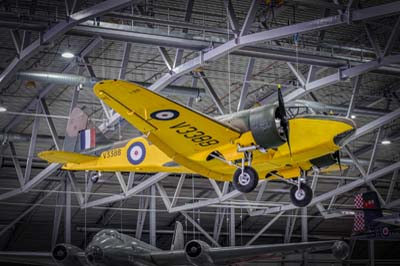
| Left to right: Airspeed Oxford 1 (V3388 registered G-AHTW). |
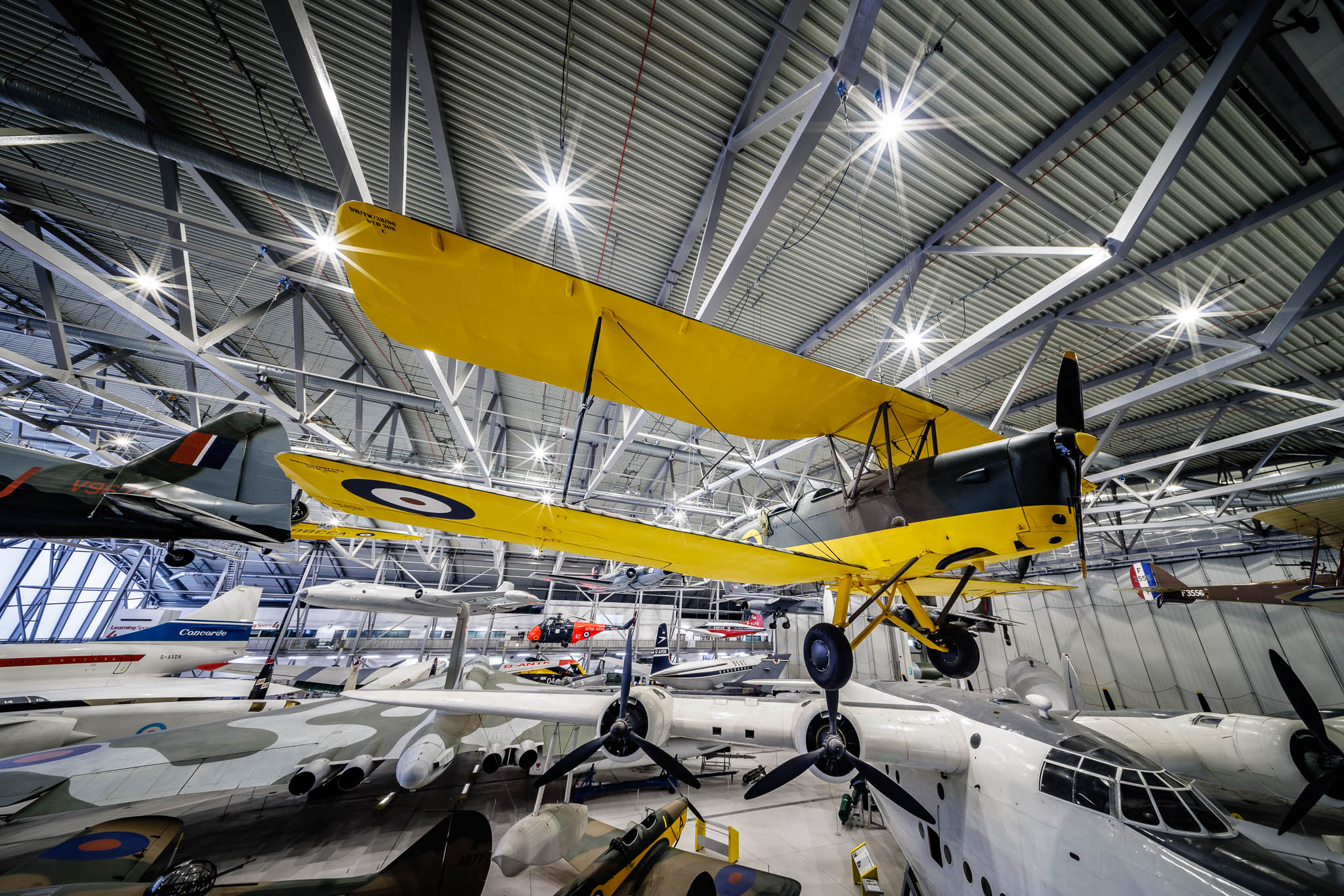
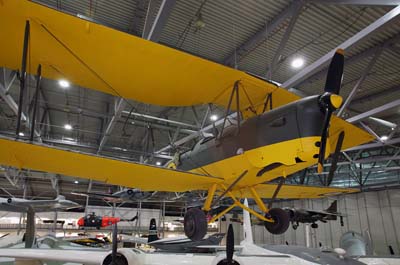
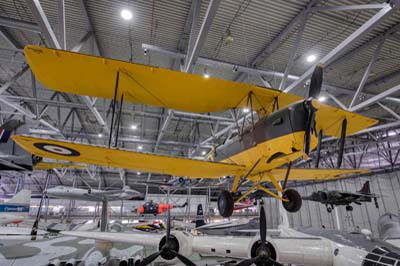
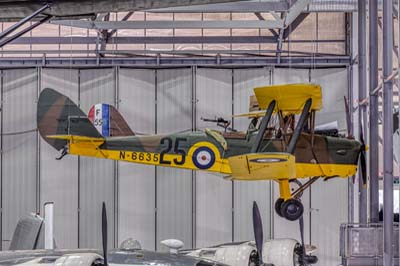
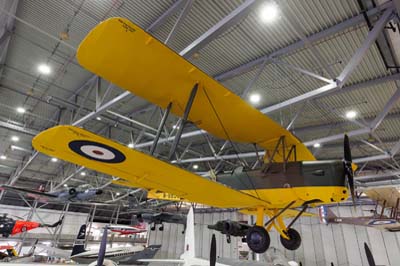
| Left to right: de Havilland DH82A Tiger Moth (N6635 '25') It is a composite painted as 22 EFTS Cambridge. |
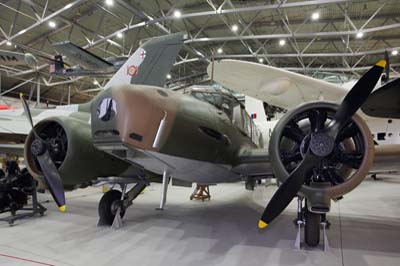
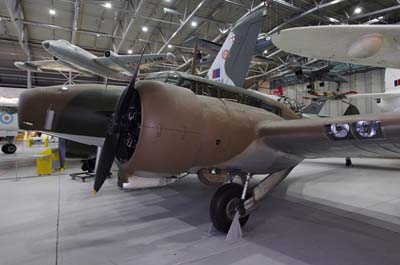
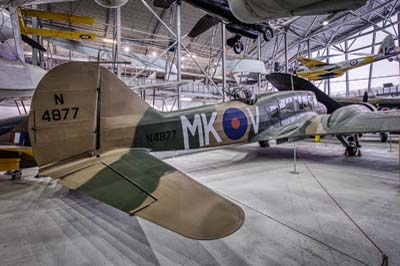
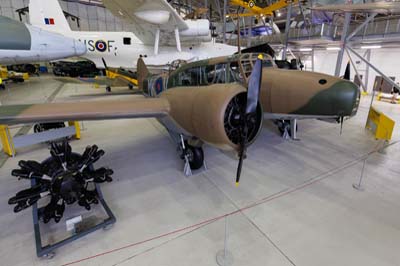
| Left to right: Avro Anson Mk.1 (N4877 'MK-V' registered G-AMDA). |
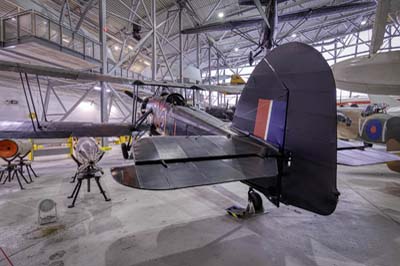
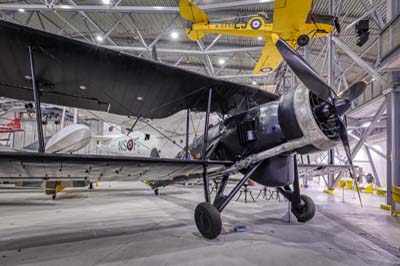
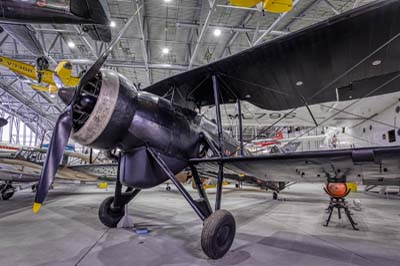
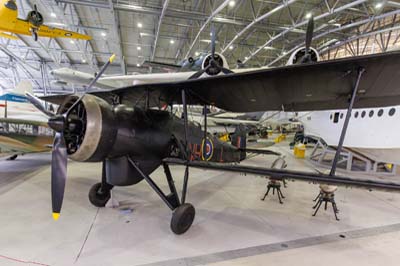
| Left to right: Fairey Swordfish Mk.III (NF370 'NH-L'). It was delivered on April 1, 1944 from the Blackburn Aircraft Ltd plant at Sherburn-in-Elmet in Yorkshire it is one of only two surviving Mark IIIs in the world. |
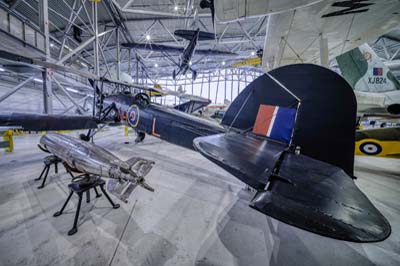
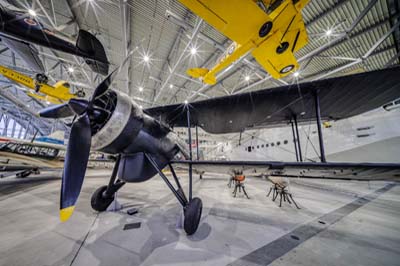
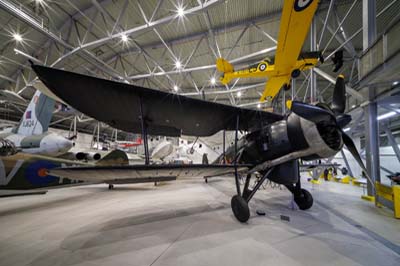
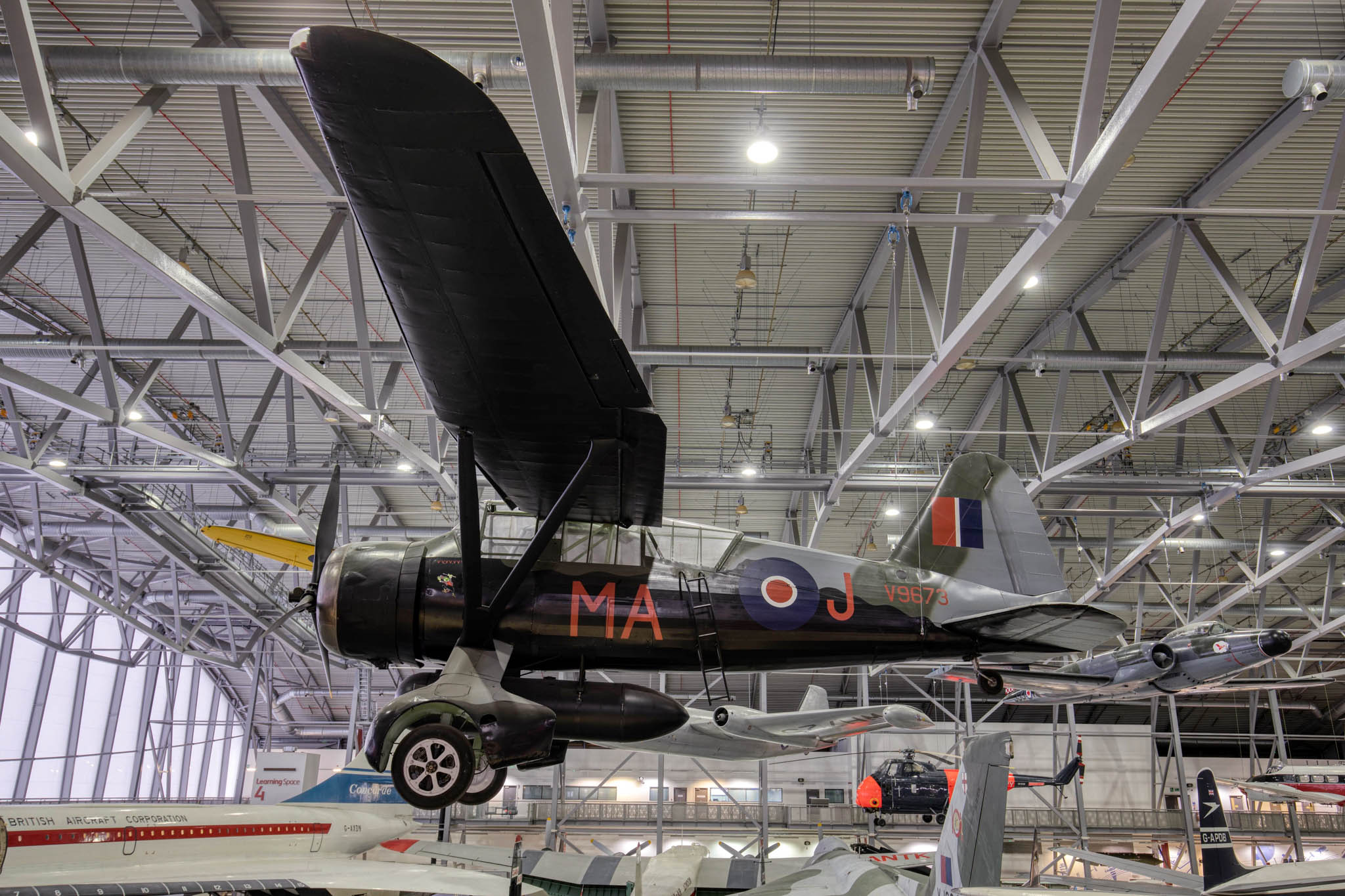
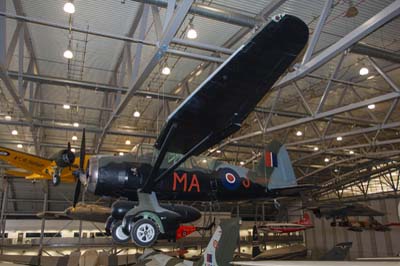
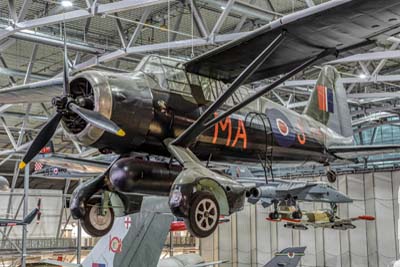
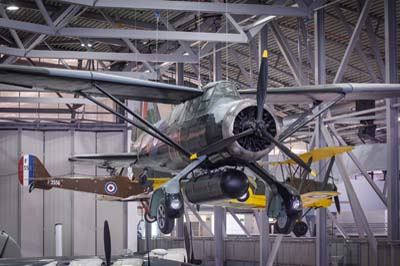
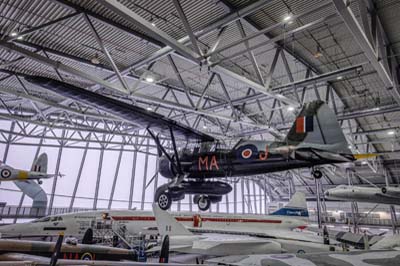
| Left to right: Westland Lysander III (V9673 'MA-J' registered G-LIZY). The Lysander was designed to operate closely with the Army as a special transport and observation aircraft. It was a very rugged aircraft able to land on small and unprepared landing fields. Four squadrons with 170 Lysanders, were moved to France in 1939. At the end of their time in France only 50 aircraft returned. They were later used to patrol coastal areas for downed airmen and could deploy dinghies when necessary. The Lysander operated with the RAF from 1938 to 1946. |
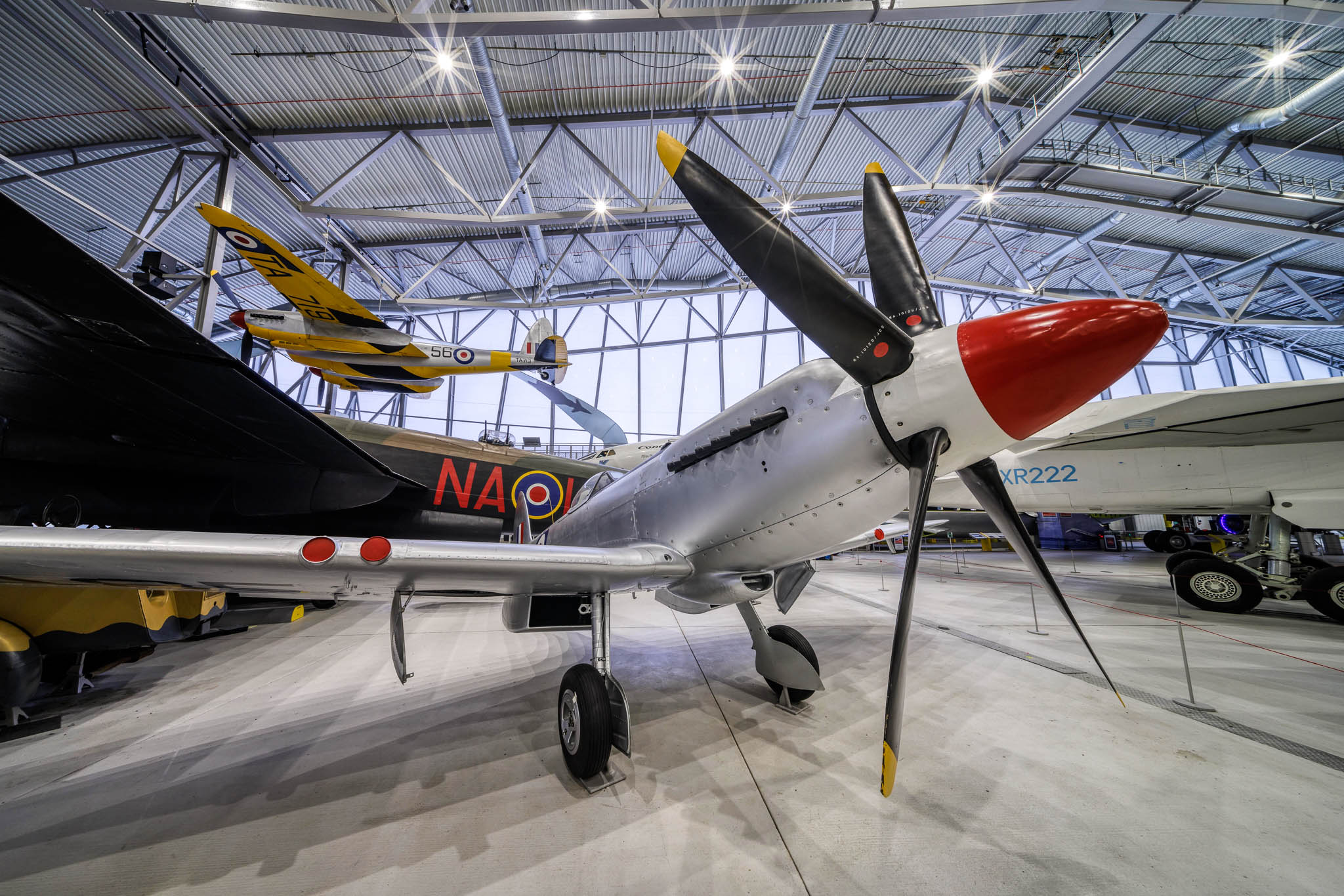
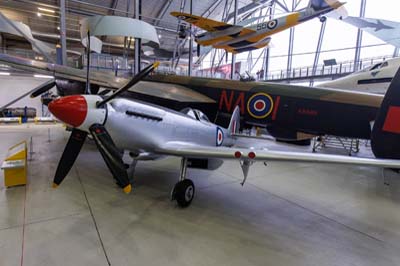
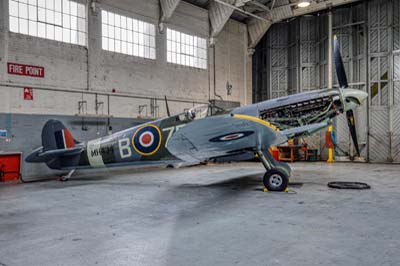
| Left to right: Supermarine Spitfire F.24 (VN485). |
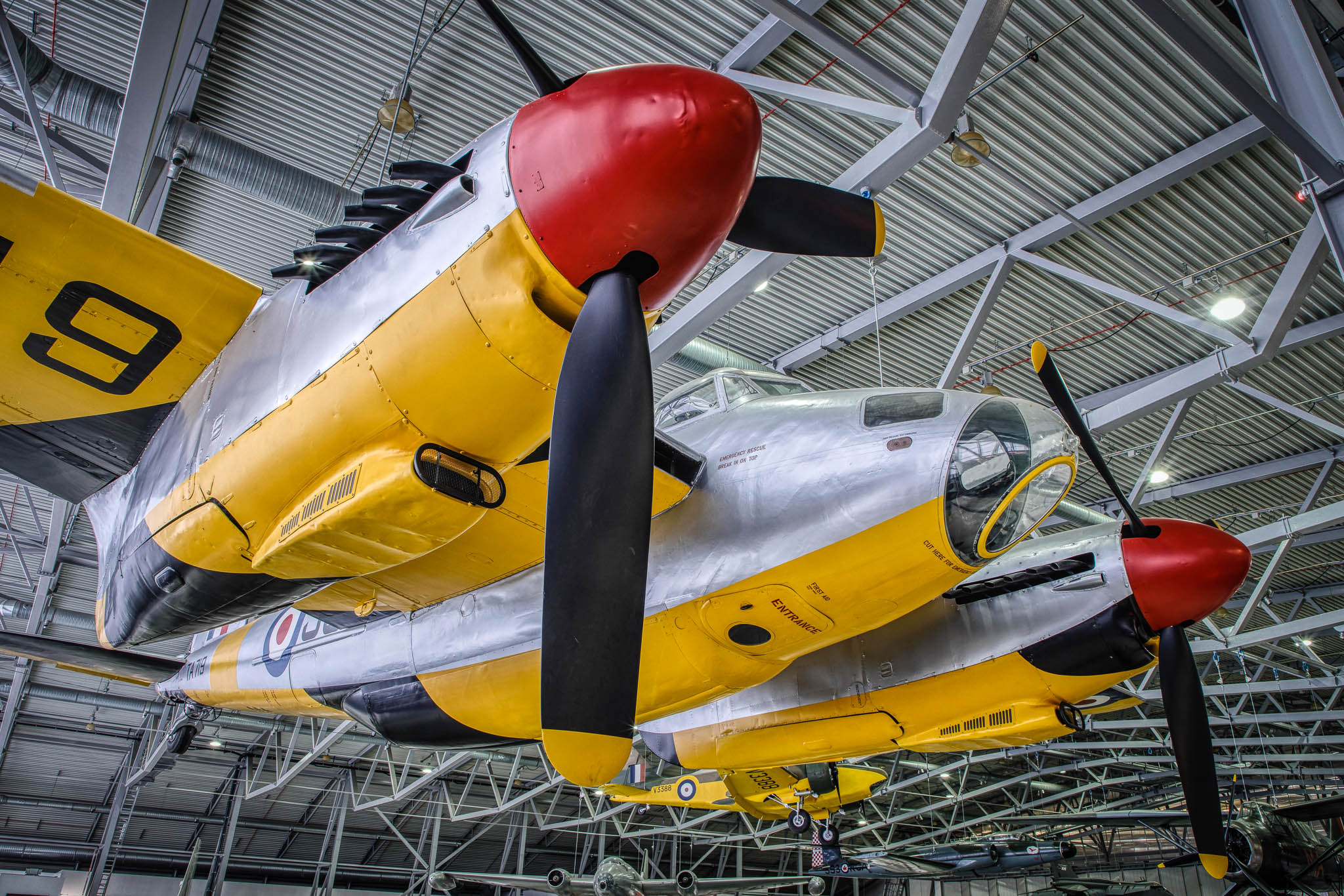
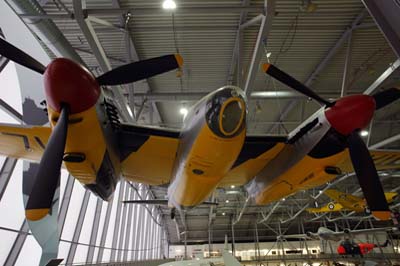
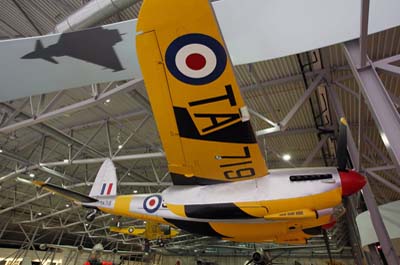
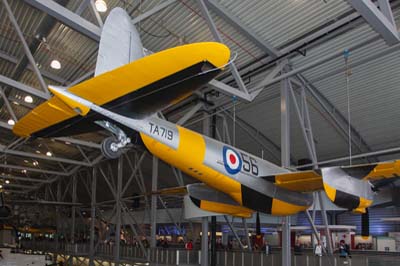
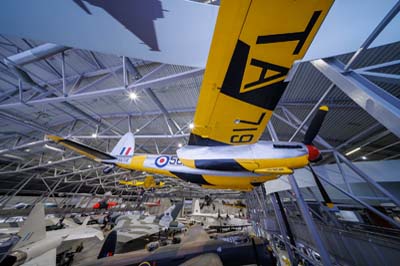
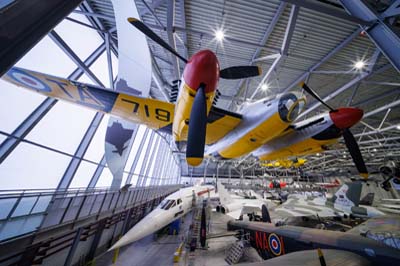
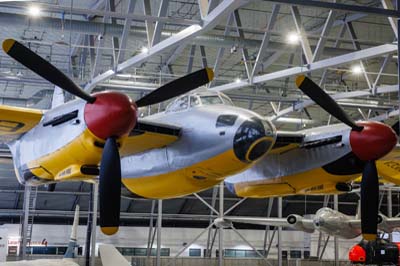
| Left to right: de Havilland Mosquito B.35 (TA719 '56' and G-ASKC) was built at Hatfield in June 1945 and was put into store until 1953 when it was converted to a TT.35. It served as a target tug with 4 CAACU till its retirement in 1963, when its was transferred to the Skyfame museum at Staverton. It moved to Duxford when the museum closed in 1978. |
| Left to right: de Havilland DH 104 Dove 6 (G-ALFU). |
| Left to right: Avro York C.1 (G-ANTK). Development of the Avro 685 started in 1941, the first civilian version going to BOAC in 1944. Eventually 50 civilian and 208 military versions were delivered. Most of the aircraft delivered to the RAF were later converted for civilian use. |
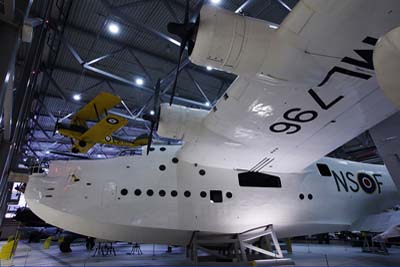
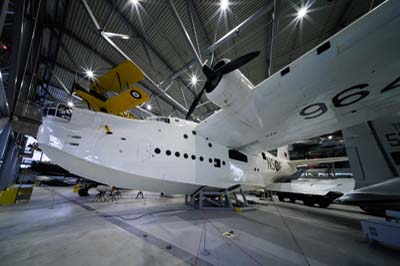
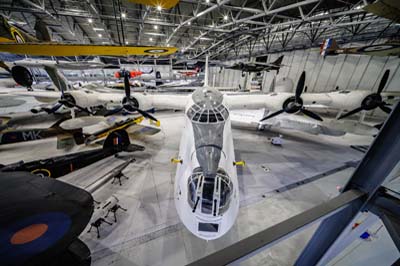
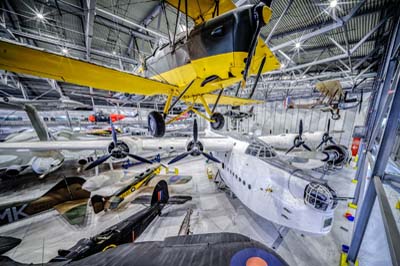
| Left to right: Short Sunderland MR.5 (ML796). |
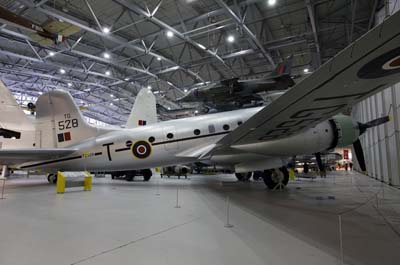
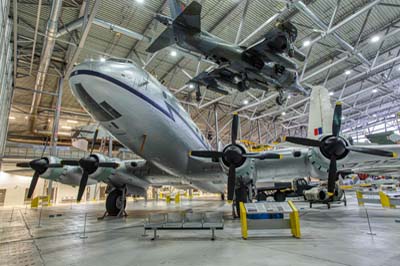
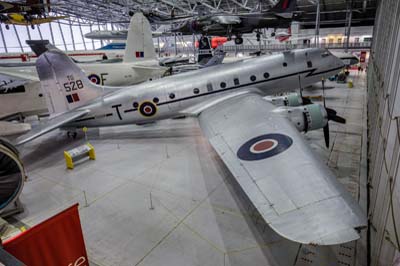
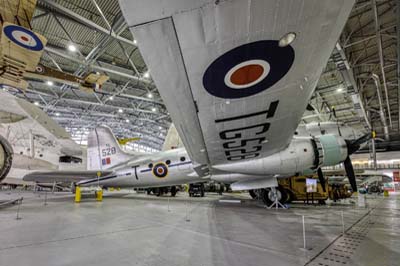
| Left to right: Handley Page Hastings C.1A (TG528 'T'). This is one of several aircraft to arrive here from the Skyfame museum at Staverton after its closure in 1979. It was originally delivery to the RAF in 1948. Based on the civilian Handley Page Hermes it was designed to replace the Avro York, at the time it was the largest transport aircraft supplied to the RAF, in total 147 were delivered from 1948. The last few were not retired until 1977. Only four complete aircraft survive today. |
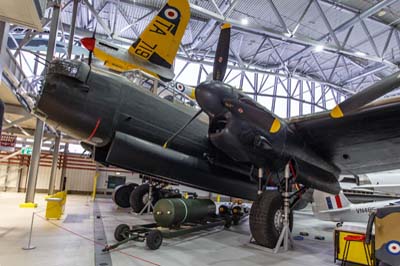
Left to right: Avro 683 Lancaster Mk X (KB889 'NA-I' registered G-LANC).
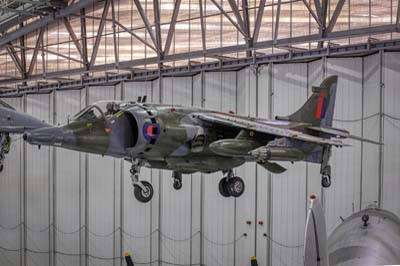
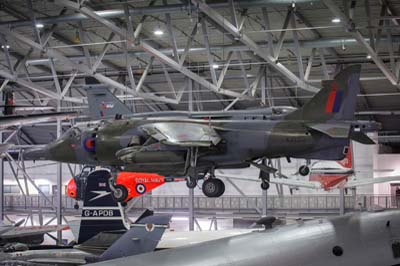
BAe Harrier GR.3 (XZ133 '10') pictured above the Hastings was delivered to the RAF in 1976 and arrived at Duxford in 1993. |
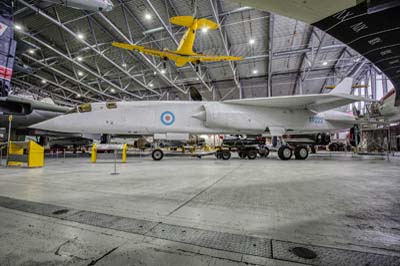
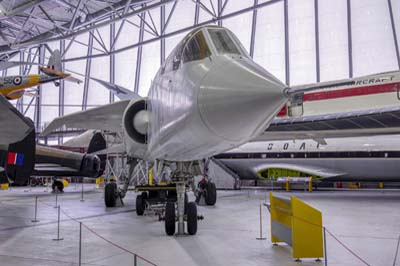
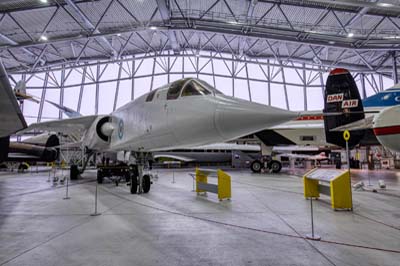
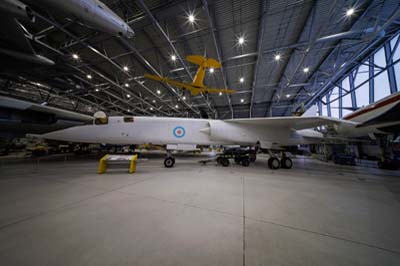
| Left to right: British Aircraft Corporation TSR 2 (XR222). This controversial aircraft was designed from 1957 as a very high-speed low-level strike aircraft. The first prototype (XR219) first flew in September 1964. Testing continued with impressive results for six months attaining a speed of Mach 1.2. The project however was cancelled in April 1965 in favour of the General Dynamics F-111 which was later cancelled as well. The aircraft on display never actually flew and is one of only two that survive, the other XR220 is at the Royal Air Force Museum at Cosford. |
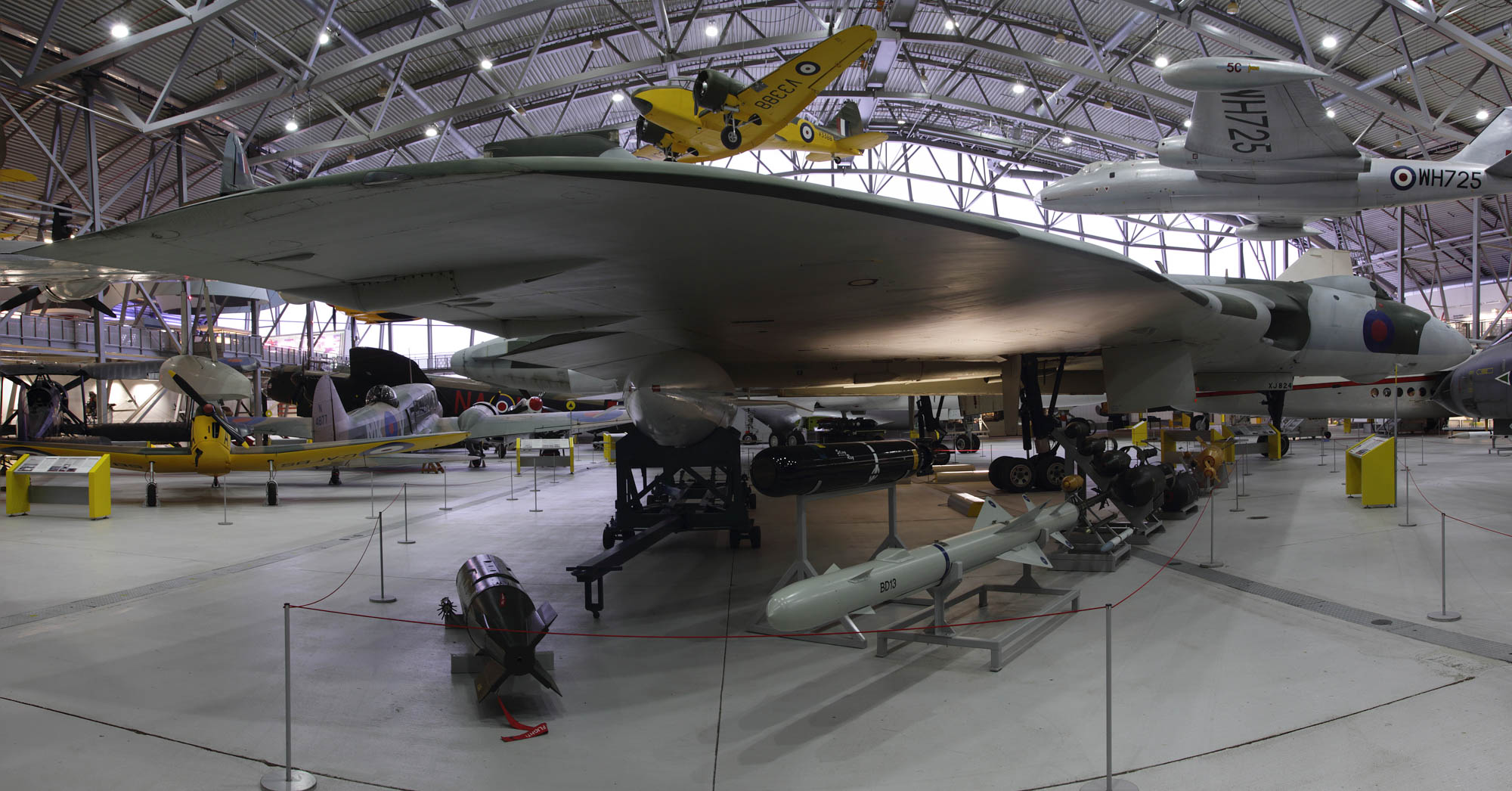
| Panoramic image of Avro Vulcan B.2 (XJ824) |
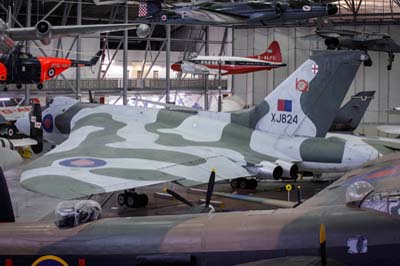
| Left to right: Avro 698 Vulcan B.2 (XJ824). |
| Left to right: English Electric Lightning F.1 (XM135 'B'). |
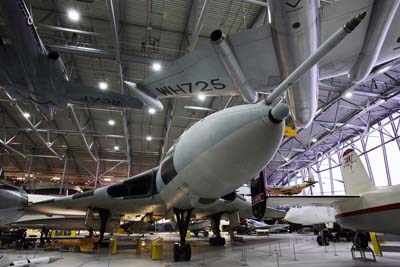
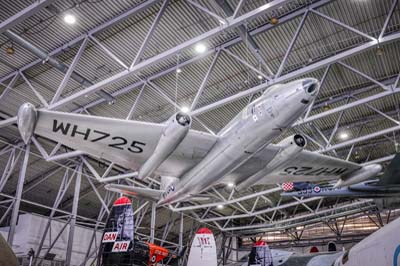
| Left to right: English Electric Canberra B.2 (WH725). The B.2 variant was the first production Canberra entering service with the RAF in 1951. |
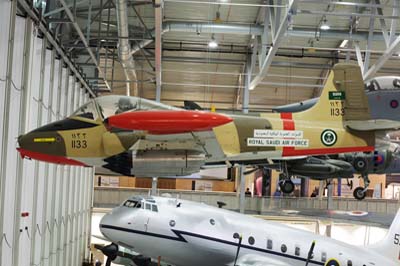
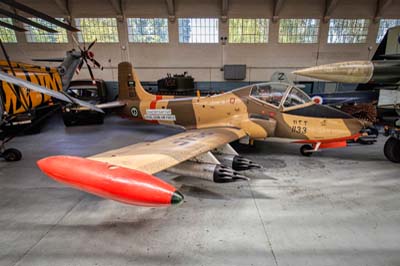
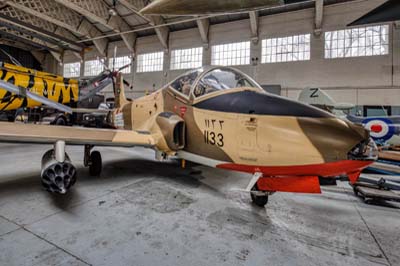
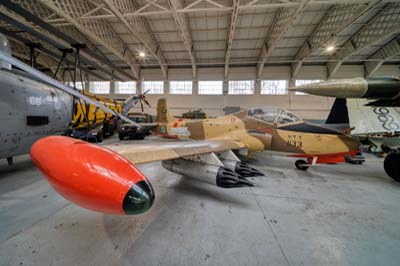
Left to right: British Aircraft Corporation 167 Strikemaster Mk80A (1133 registered G-BESY). It arrived at the museum in April 2000. At one time it was hanging from the roof of the AirSpace hangar, but was removed in 2013 and put into storage. It is one of 47 Strikemasters were delivered to the Royal Saudi Air Force (RSAF) between 1968 and 1977. It has been moved into storage in hangar 4.
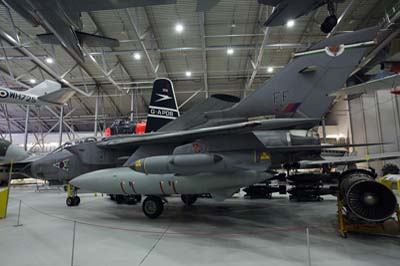
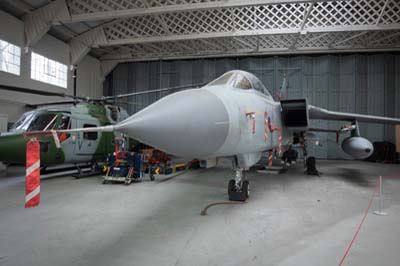
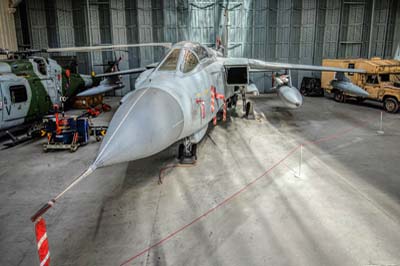
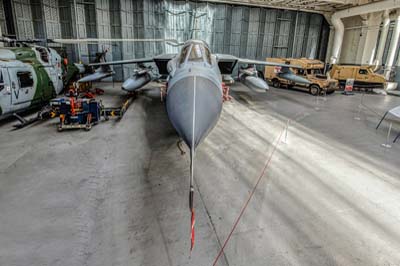
Panavia Tornado GR.1 (ZA465 'FF') in the colours of 12 Squadron. |
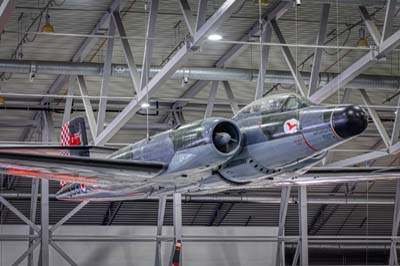
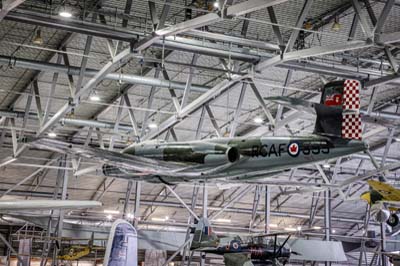
Left to right: Avro Canada CF-100 Mk.4B Canuck (18393 RCAF). The CF-100 was designed to be an all weather jet interceptor. The prototype's first flight was on January 19, 1950. The second prototype sadly crashed on the official date of delivery to the Royal Canadian Air Force (RCAF), killing both crew on April 5, 1951. Service with the RCAF continued until it's eventual retirement in 1981, 693 Canucks (Mk.1 to Mk.5) were produced in total.
This example was delivered to the RCAF in 1955 serving with 440 Squadron, 4th Fighter Wing until it was retired in 1962 and transferred to the College of Aeronautics at Cranfield. In 1975 it was flown to Duxford. |
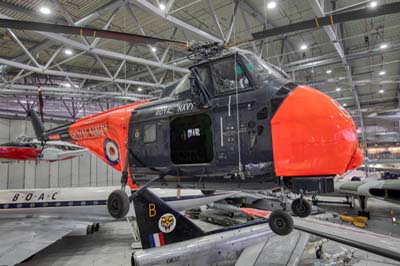
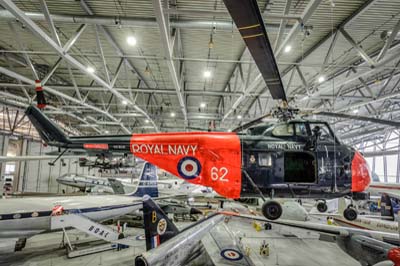
Left to right: Westland Whirlwind HAS.7 (XK936 '62').
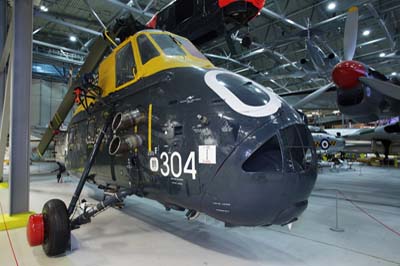
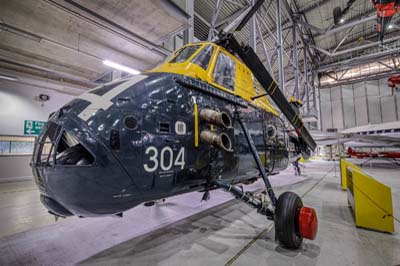
Westland Wessex HAS.1 (XS863 '304 R-04'). |
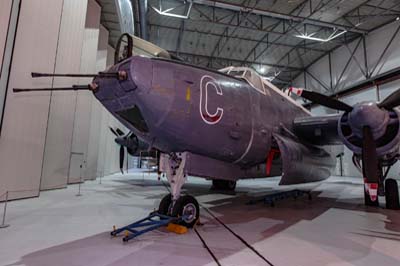
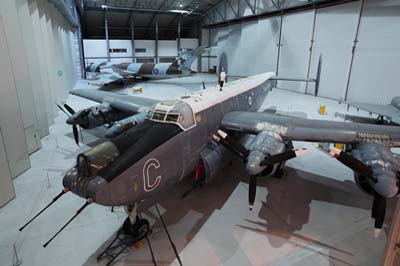
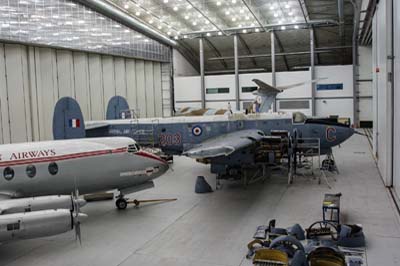
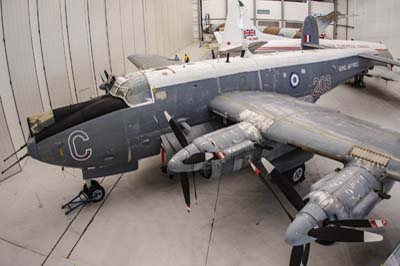
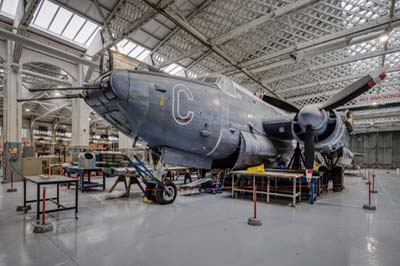
| Avro Shackleton MR.3 (XF708 'C'). This nose-wheel variant of the Shackleton was delivered in 1959 and was used for maritime reconnaissance before flying to Duxford in 1972 for the IWM. |
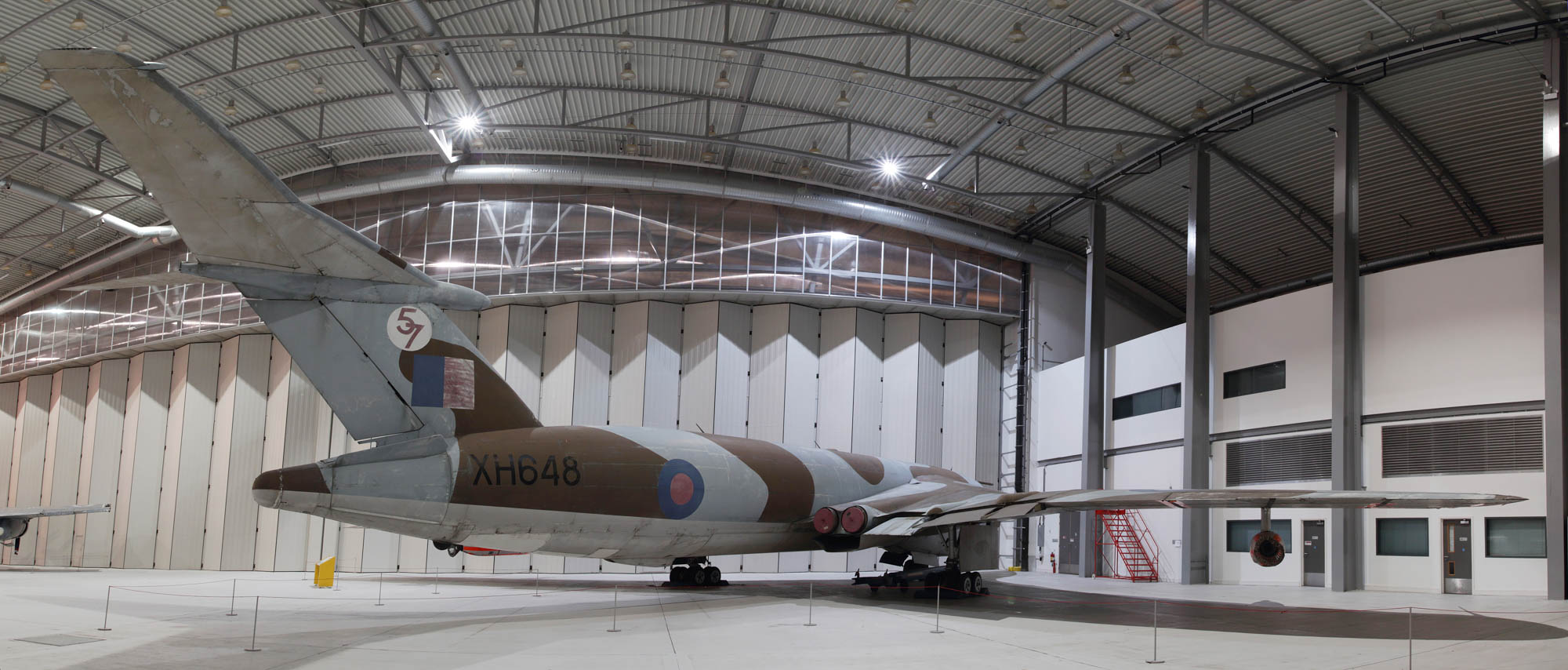
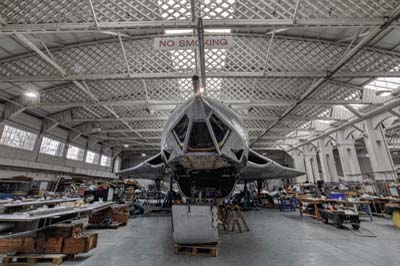
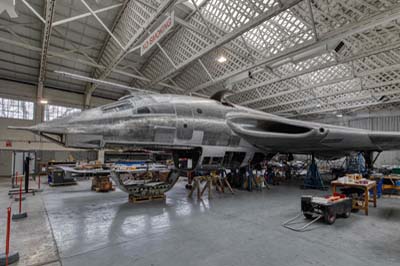
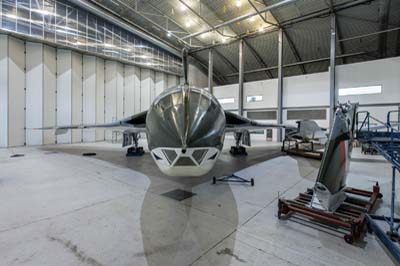
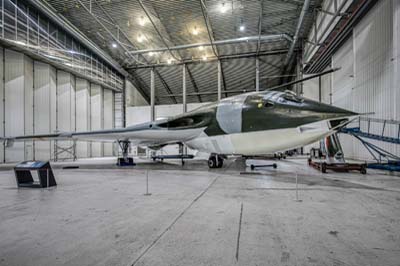
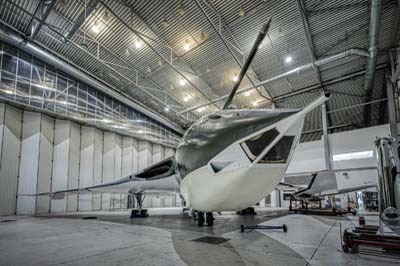
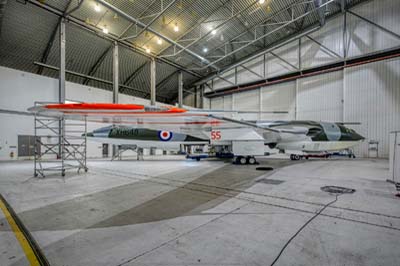
| Panoramic image of Handley Page Victor K.1A (XH648), it was in the restoration hangar 5 by 2019. |
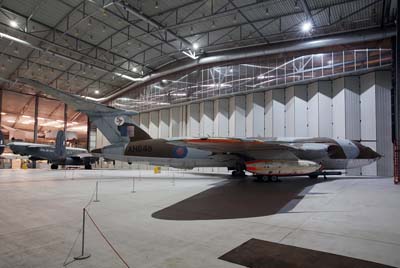
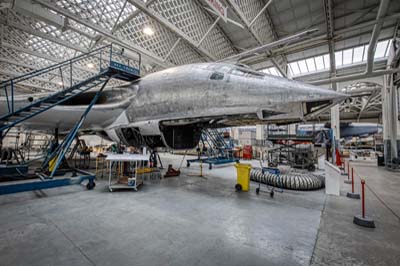
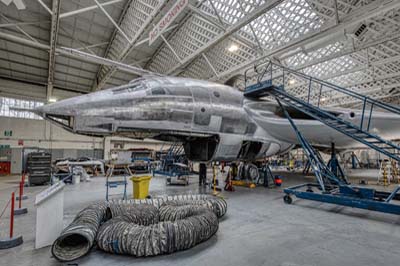
| Left to right: Handley Page Victor K.1A (XH648) in its final 57 Squadron colours, it arrived at the IWM in 1976. Only four complete Victors survive today, this K.1A and three K.2s to be seen at Cosford (XH672), Bruntingthorpe (XM715) and Elvington (XL231). |
| Hangar 2 Active aircraft, servicing and restorations. |
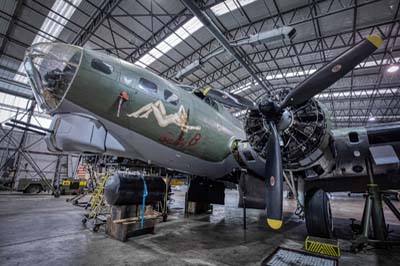
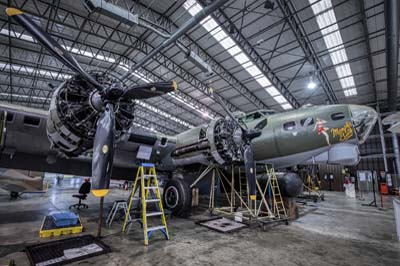
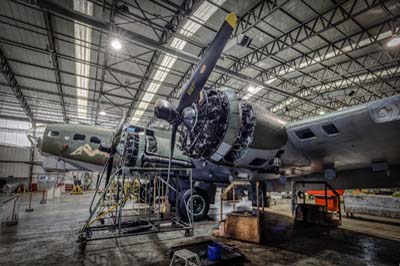
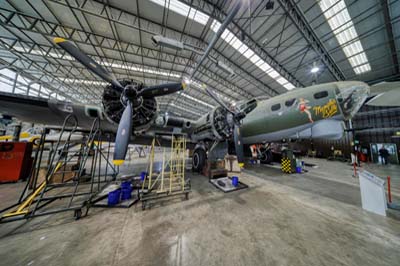
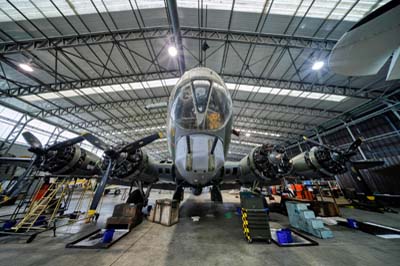
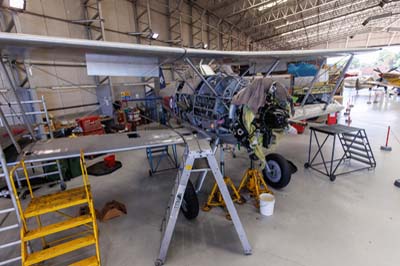
Hangar 2 houses a large fleet of flyable warbirds which are frequently flown by the OFMC and TFC and others at air shows throughout the year, most notably Duxford's Flying Legends air show held every July. On going restorations to flying condition including a Firefly and Beaufighter were in here in January 2008.
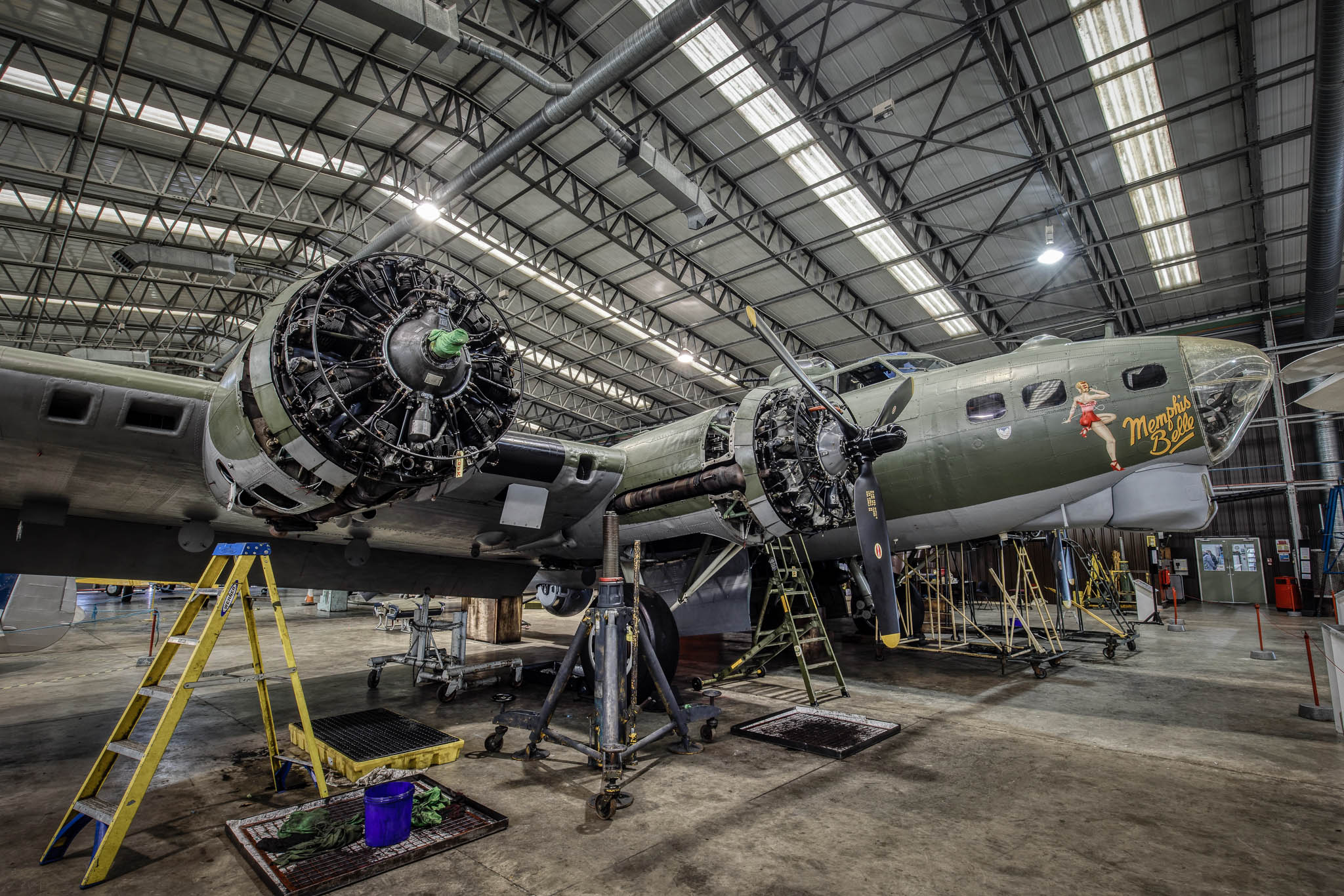
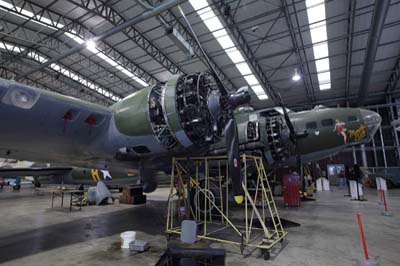
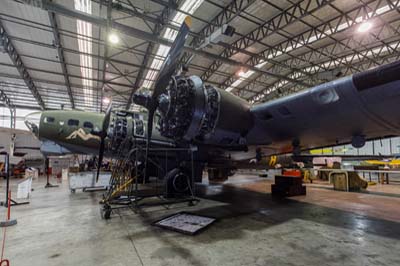
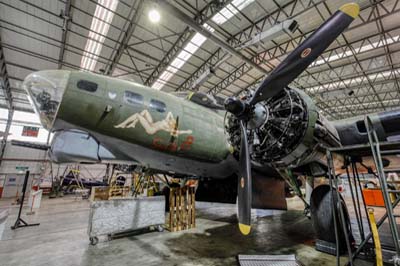
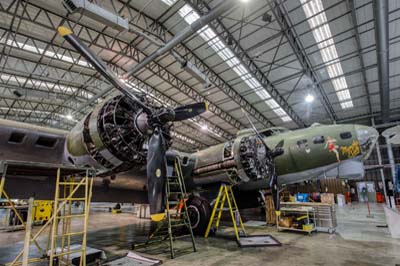
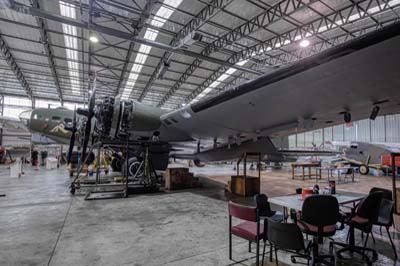
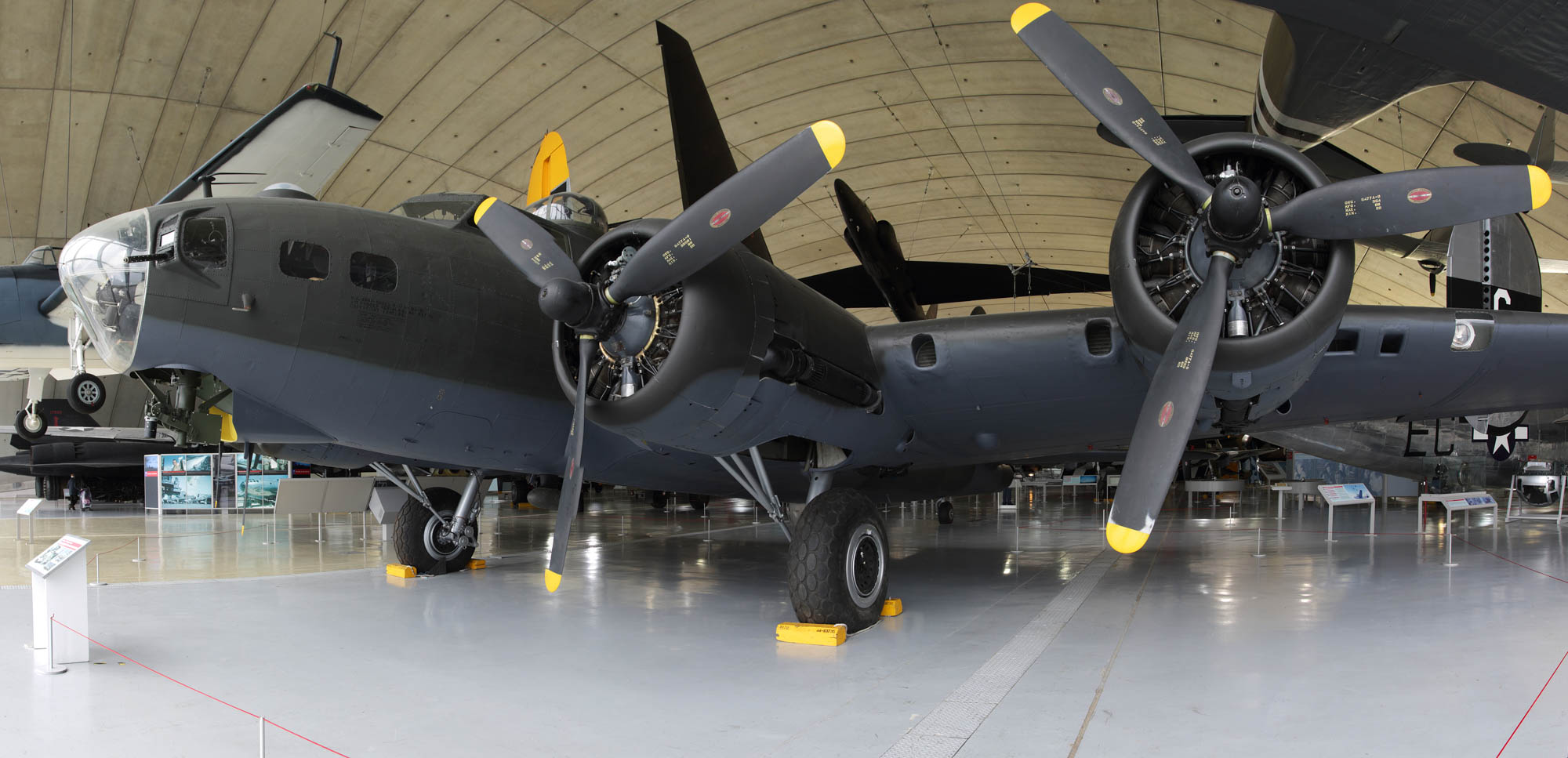
Left to right: Boeing B-17G Flying Fortress (44-85784 registered G-BEDF marked '124485 DF-A') 'Sally B' owned by Elly Sallingboe and operated by the B-17 Preservation based at Duxford under its winter maintenance. |
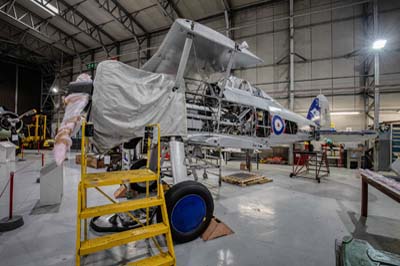
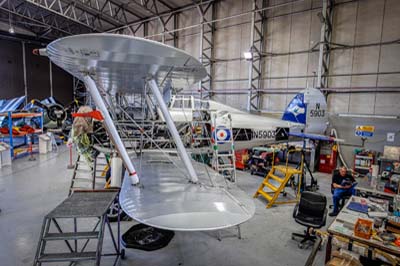
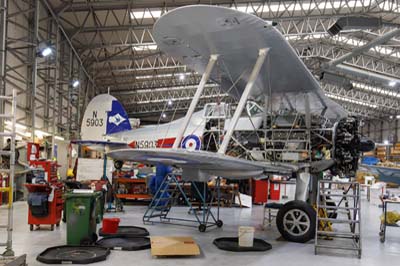
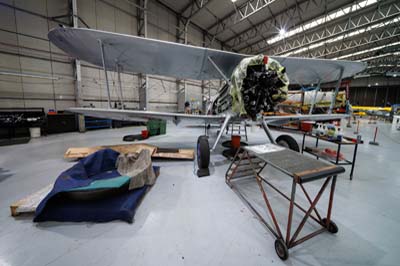
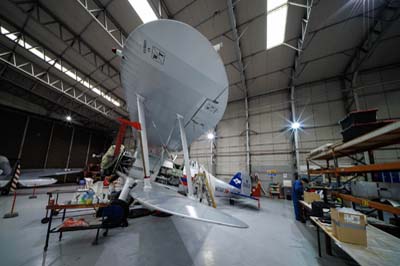
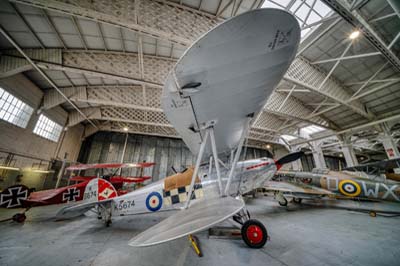
| Left to right: Gloster II Gladiator (N5903 registered G-GLAD). With the Fighter Collection under restoration. The Gladiator was the last biplane fighter when it entered service with the RAF in 1937. Unfortunately it was no match for the technologically more advanced German aircraft at the start for World War Two. |
Left to right: Hawker Sea Fury FB.11 (VX653 registered G-BUCM) The Sea Fury was the Fleet Air Arm's (FAA) last piston engine fighter, the prototype flying for the first time on February 21, 1945. From 1946 to 1952, 50 Sea Fury F.10s and 615 FB.11s were delivered.
VX653 was built in 1949 and delivered to 736 Squadron at RNAS Culdrose. After a period of repairs and storage it arrived at RNAS Lossiemouth in the 1960s until its retirement in 1969. Moved to RAF Museum, Hendon from 1972 to 1991. After which it was transferred to The Fighter Collection to Duxford for restoration to flying condition and registered G-BUCM in 1992. |
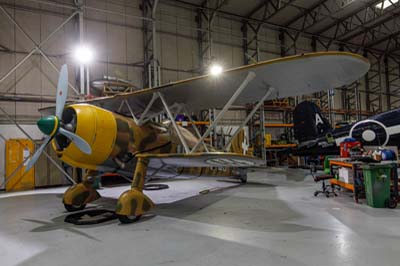
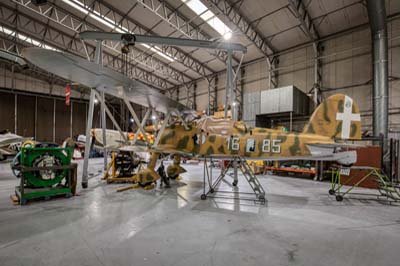
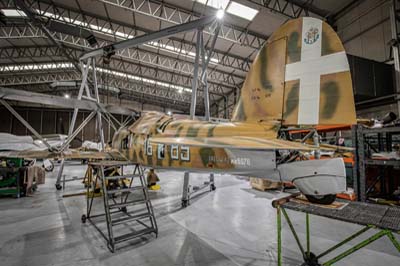
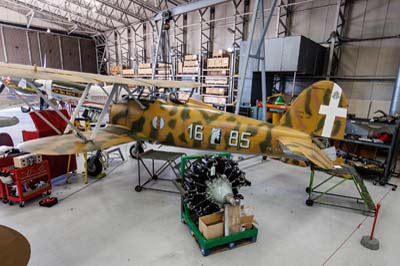
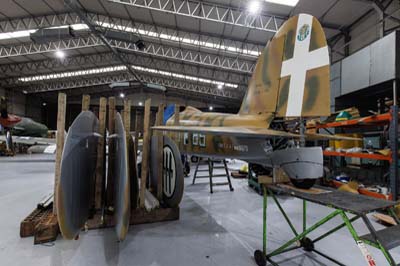
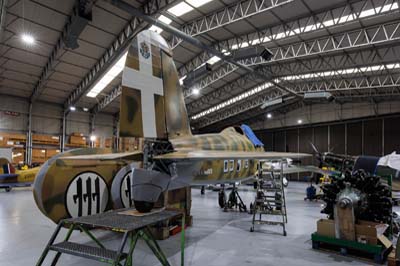
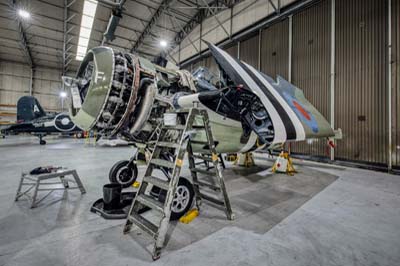
Left to right: Fiat CR.42 Falco (Fv.2542 Swedish Air Force marked as 'MM6976 16-85' registered G-CBLS) with The Fighter Collection following its 23 year restoration (partly in Italy) which was completed in the UK in 2018.
The Italian Air Force originally ordered 200 examples as primary fighters, which entered service in 1939. They were later used as night fighters and trainers ending their service career in 1950. They first saw action in southern France and were sent by Mussolini to assist the Germans in the aerial fight against Britain in 1940. The CR.42 was no match for the far superior RAF fighters and saw little action. |
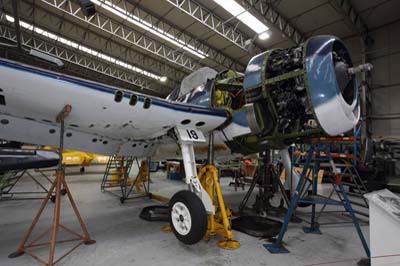
Left to right: Grumman F6F-5K Hellcat (40467 '19' registered G-BTCC) with The Fighter Collection (TFC) it is being serviced. It is painted in a US Navy scheme from its time in the Pacific during World War Two. This Hellcat is the only example flying outside the States. It was built in 1943 and flew with VF-6 (as depicted) and VF-18 before being retired with only 318 flying hours on the clock in 1944. Restoration started in 1990 at 'Planes of Fame' of Chino, California before being completed by TFC. She has a maximum speed of 380 mph and range of 945 miles.
Grumman FM-2 Wildcat (JV579 'F' registered G-RUMW and N4845V). The Royal Navy Fleet Air Arm employed Wildcats from 1940 in the fighter escort role. It has a maximum speed of 332 mph and range of 900 miles. This particular aircraft was built by the General Motors Corporation (Eastern Aircraft Division) at Trenton, New Jersey for the US Navy in 1945. Following retirement it was put on display at the Chennault Air Museum, California. This is where it stayed until 1992. Following restoration by the Yanks Air Museum and Fighter Rebuilders of Chino, California, it flew for the first time in 30 years in 1993. It was later transported by sea to the UK and onto Duxford. It is with the Fighter Collection and is currently the only Wildcat flying in Europe.
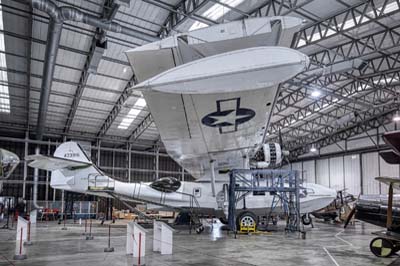
Consolidated PBY-5A Catalina ('433915' G-PBYA now with 'Miss Pick Up' nose art) was bought by Catalina Aircraft Ltd. in 2002 and is based at Duxford and operated by Plane Sailing. It was originally struck off charge from the military in Canada in 1961 after nearly 20 years with the RCAF. It was later converted to a water bomber and was registered as CF-NJF (later C-FNJF). It also operated with the Protection Civile (as F-ZBAY and F-ZBBD) in France, fighting fires during the French summers. By 1974, it had moved on Prince Albert, Saskatchewan with Norcanair for more water bombing duties. By the 1990s the water tanks had been removed and it was carrying passengers.
Supermarine Walrus I (W2718 painted as 'X9556 / S' registered G-WLRS). Built in 1940 by Saunders Roe and delivered to the Royal Navy. It is being restored by the Aircraft Restoration Company. It had been on display at the Southampton Hall of Aviation till 2006. |
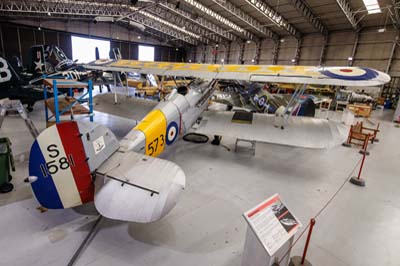
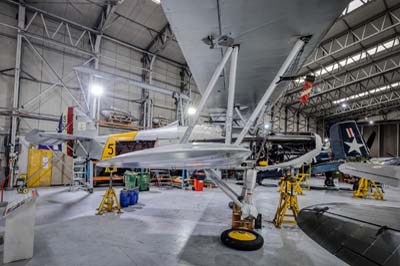
Left to right: Hawker Nimrod Mk.1 (S1581 '573' registered G-BWWK). The Nimrod was a single-seat fighter, it first flew in 1930 and went in to service with the Fleet Air Arm. However by the start of the World War Two it had been relegated to training duties. This is one of only two surviving Nimrods and the first to be returned to flying condition in 2004.
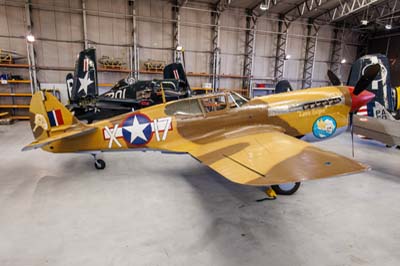
Curtiss P-40 Warhawk (41-19841 'X-17' registered VH-PIV) named 'Lee's hope' it is with The Fighter Collection. Built in 1942 41-19841 little is known of it's service history it was struck off charge in November 1943 and abandoned on the island of Espiritu Santo which is part of Vanatu in the Pacific. It was recovered in the 1970s and stored in Australia for sometime until restoration was carried out by Precision Aerospace Productions for TFC in the markings of USAAF's 85th Fighter Squadron as flown in Italy during 1944. |
| The double-bay Belfast hangars 3, 4 and 5. |
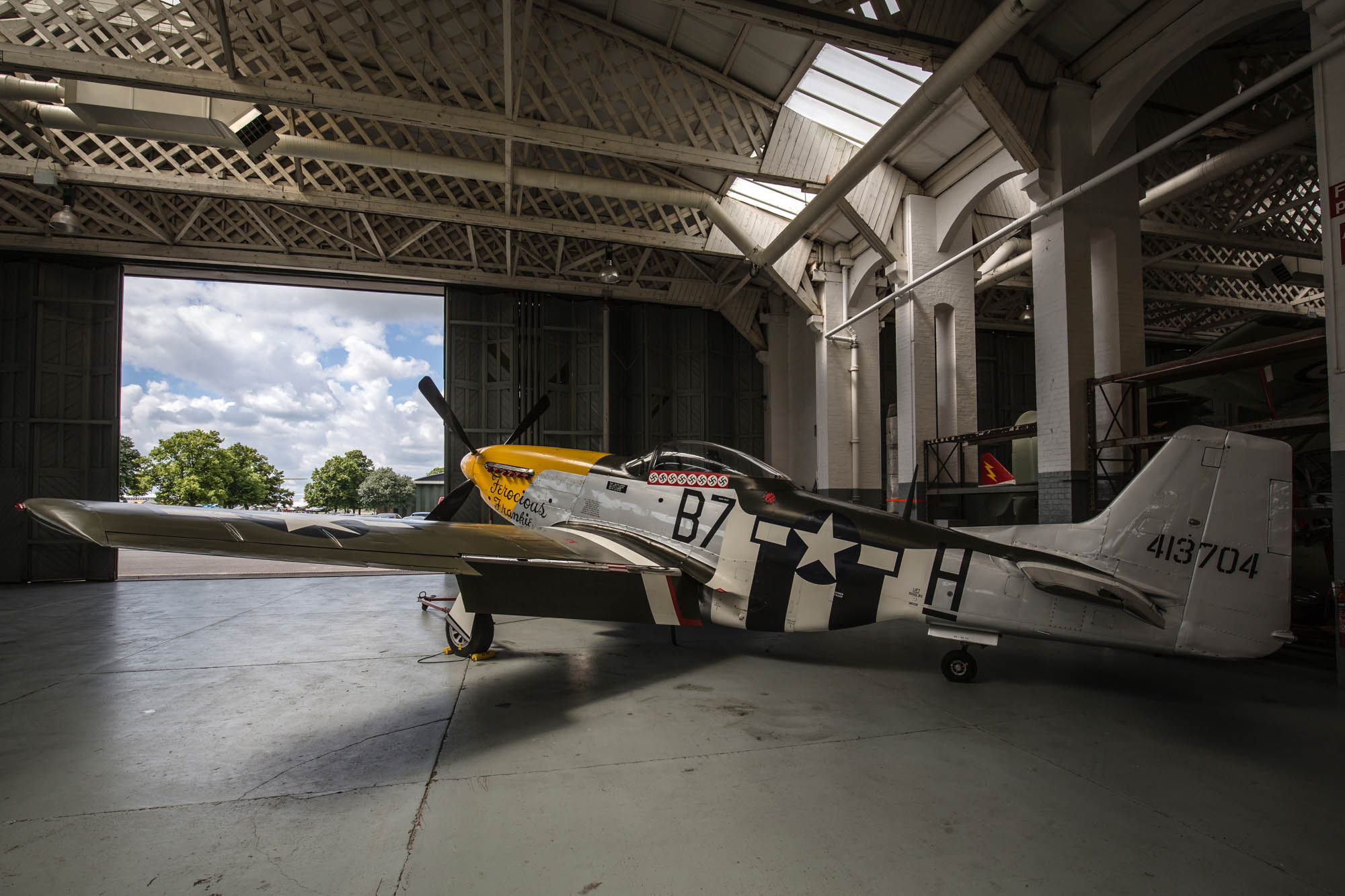
| P-51D Mustang (413704 registered G-BTCD coded 'B7-H' 'Ferocious Frankie'). The P-51D Mustang was arguably the most successful long-range escort fighter of the World War Two. The Spitfire's Merlin engine, license built by Packard in the USA, was fitted to the D model, giving it a level speed of 437 mph at 25,000 feet and a maximum dive speed of 505 mph. Its range was an incredible 2,055nm. |
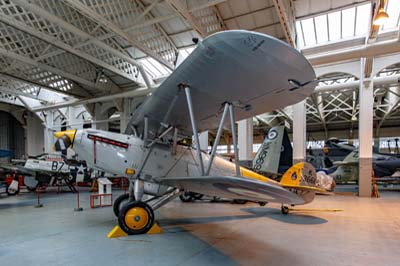
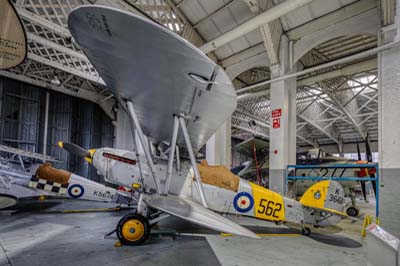
Left to right: Hawker Nimrod II (K3661 '562' registered G-BURZ) was built in 1934 and after recovery from a dump in 1972 it passed to the Royal Air Force Museum. Restoration started in 1992 before and the aircraft was acquired by the Historic Aircraft Collection (HAC) based at Duxford in 1993 and restored to flying condition in November 2006.
Hawker Hind MK.1 (L7181 registered G-CBLK). It was developed from the Hawker Hart day bomber introduced in 1931. Delivered to Afghanistan Air force in 1939, it is one of four examples found at Kabul Airport, Afghanistan in the late 1960s. Now with the Historic Aircraft Collection. |
| Left to right: Airco (de Havilland) DH.9 (E8894 registered G-CDLI). With the Historic Aircraft Collection. The DH.9 was the first purpose built stratigic bomber and one of the most produced types of World War One. The DH.9 was one of the first types of aircraft stationed at RAF Duxford when it opened as an operational airfield in 1918. E8894 was built under contract by Aircraft Manufacturing Co Ltd of Hendon in 1917. Discovered in northern India 20 years ago it was restored with an original Siddeley Puma engine to flying condition, its first flight was on May 13, 2019. It is the only World War One bomber flying in the world. |
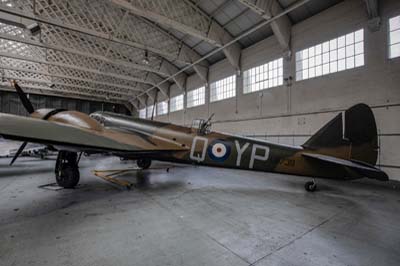
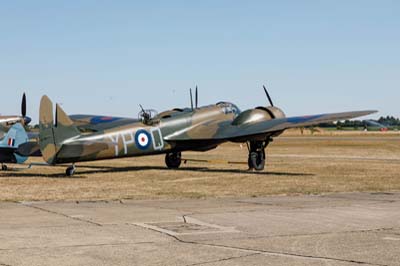
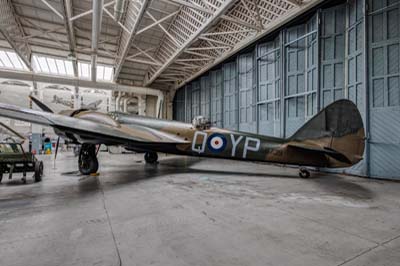
| Left to right: Bristol Blenheim Mk.I (L6739 'YP-Q' registered G-BPIV). |
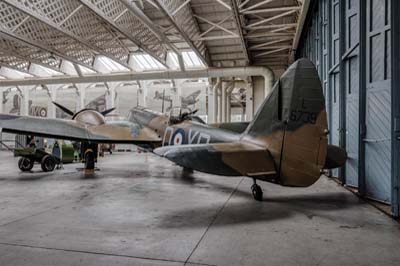
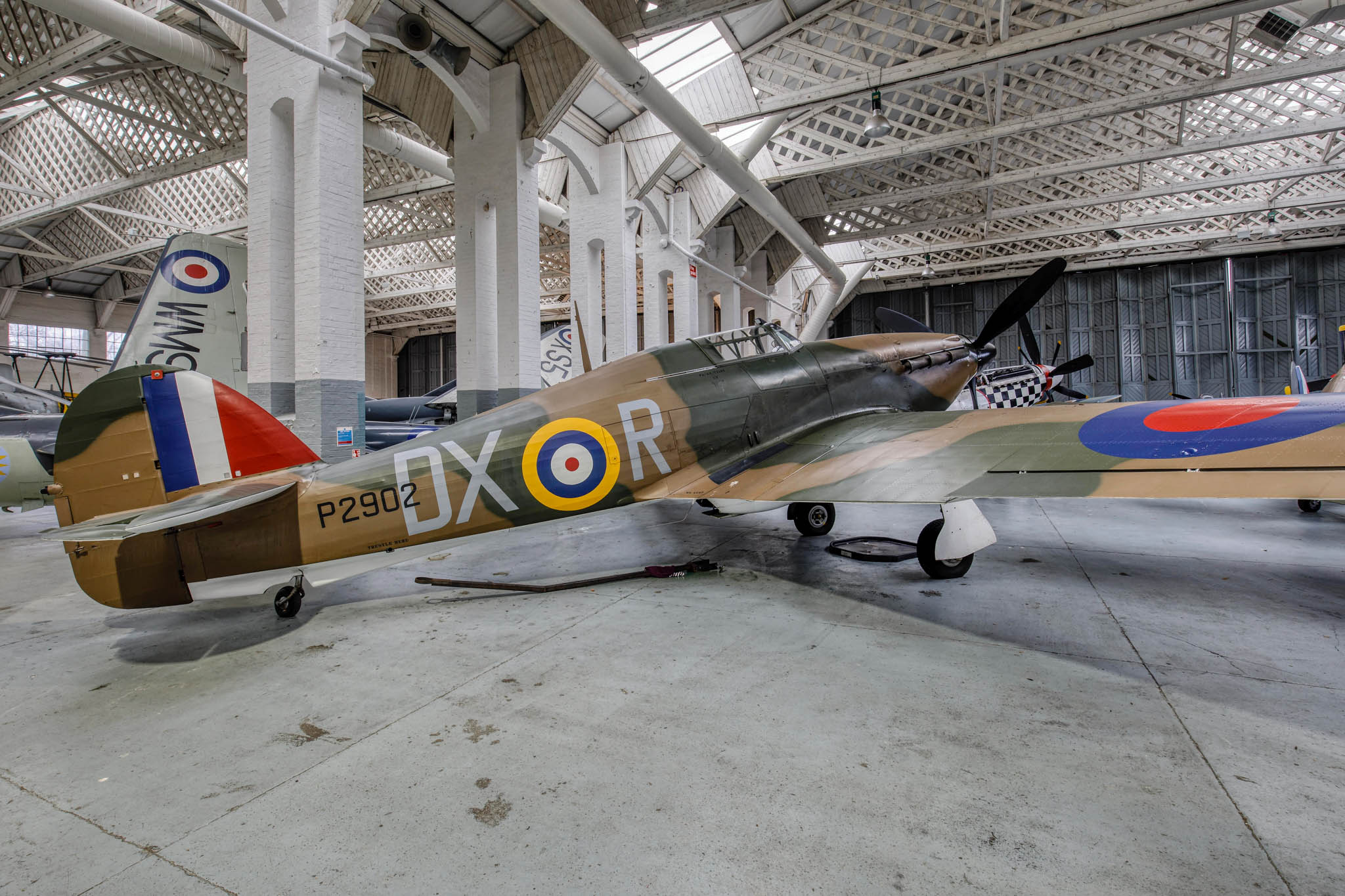
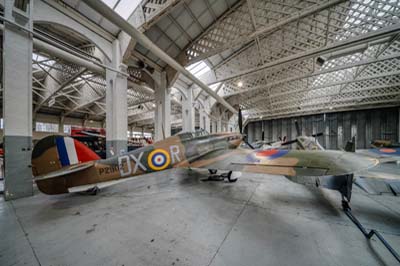
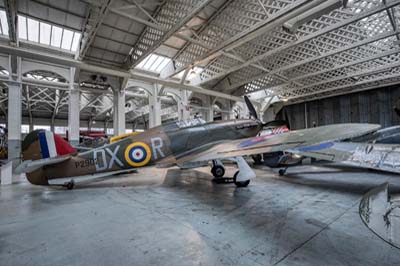
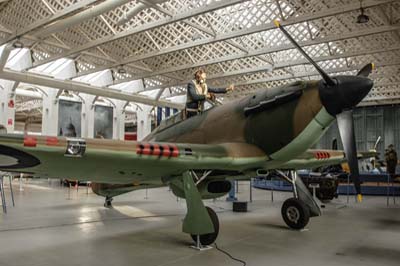
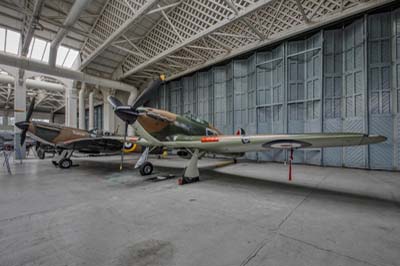
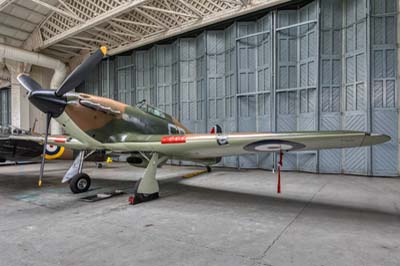
Hawker Hurricane Mk.1 (P2902 'DX-R' registered G-ROBT).
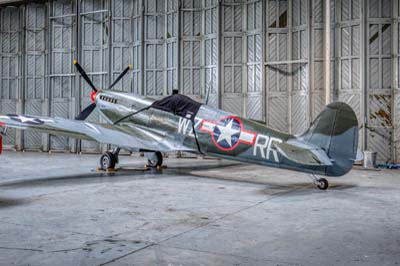
Supermarine Spitfire Mk LFXVIe (RW382 'WZ-RR' registered G-PBIX). Painted as 309th Fighter Squadron USAF PORKY II of the United States Air Force. |
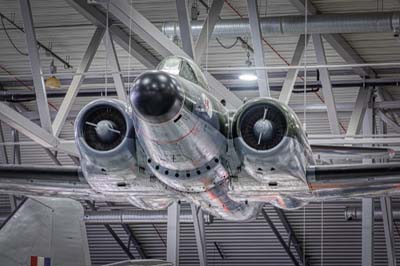
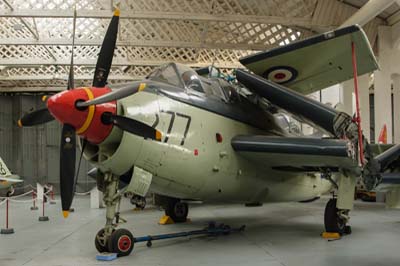
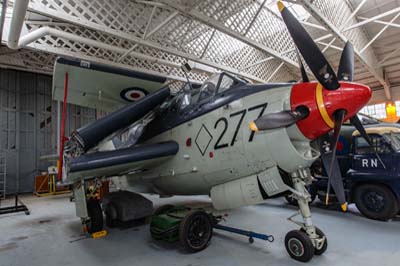
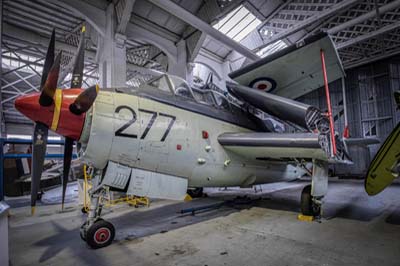
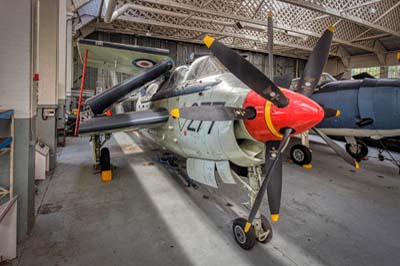
| Left to right: Fairy Gannet ECM.6 (XG797 '277'). The Gannet first flew in 1948, 346 were built serving principally with the Royal Navy from 1951 to the 1970s as anti-submarine and as airborne early warning aircraft. They were powered unusually by two Double Mamba turboprop engines mounted side-by-side and utilised two contra-rotating propellers. It arrived at Duxford in 1973 shortly after its retirement. |
Fairy Firefly TT.1 (SE-BRG ex DT989) originally served with the Royal Navy between 1944 and 1946. Later a number were converted for use as Target Tugs from 1950 to 1954 when some were sold to the Royal Swedish Navy, as was this example in 1950. It remained in service until 1964. The Aircraft Restoration Company bought two Firefly's from Sweden in 2003, the other is being restored to flying condition.
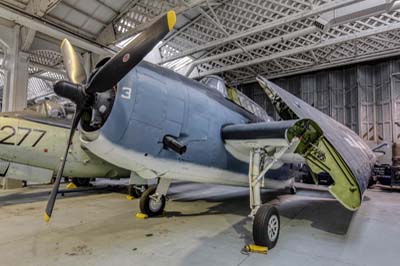
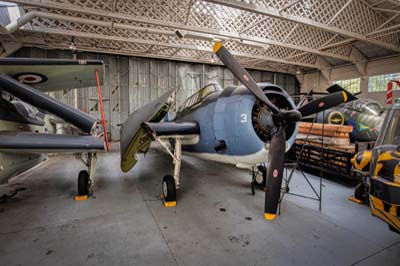
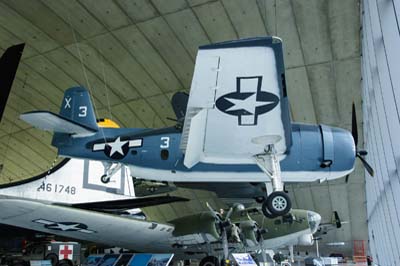
Grumman TBM-3E Avenger AS.3 (69327 'X-3' registered CF-KCG) hanging from the ceiling. It is painted to represent the Avenger flown by President George Bush when he served with the US Navy in the Pacific during 1944, it was named 'Barbara' after his wife. 9,836 Avengers were built by Grumman and General Motors (Eastern Aircraft Division) as a torpedo bomber for the US Navy to avenge the Japanese attack on Pearl Harbour. This aircraft was previously on display in the American Museum hangar.
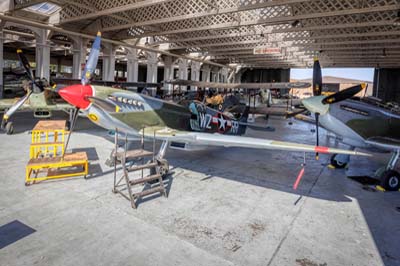
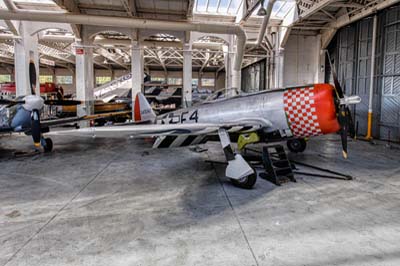
Republic P-47M Thunderbolt (45-49192 'F4-J' registered G-THUN). This 'Jug' as P-47s are affectionately known, was built in 1945 with the serial 45-49192. Following a period of storage, it was restored in 1952 and transferred to the Peruvian Air Force in 1953. It was eventually retired from military service in 1967. By 1971 it had been bought by enthusiast Ed Jurist and returned to the States. Following a succession of private owners it made its way to TFC at Duxford towards the end of 1984. TFC had previously applied serial '42-26671 / MX-X' to depict the aircraft flown by Lt Col Ben Mayo, CO of the 82nd Fighter Squadron, 78th Fighter Group when based at Duxford for the last two years of the war. |
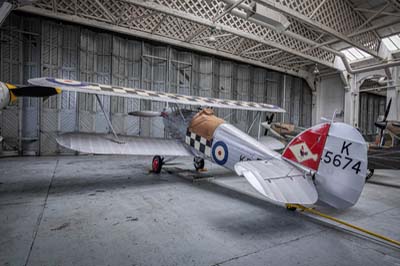
Hawker Fury 1 (K5674 registered G-CBZP) it is with the Historic Aircraft Collection. Transferred to South Africa in 1940 it was recovered from there for restoration in the UK which started in 1992, 20 years later it took to the air.
Hawker Fury FB.10 (315 IQAF painted 'SR661' registered G-CBEL). Originally with Al Quwwa al Jawwiya al Iraqiya, It is now with Anglia Aircraft Restorations Ltd. Repainted in 2016 by Air Leasing Ltd in the 1945 colour scheme of the prototype Sea Fury SR661. |
| British Aircraft Corporation 167 Strikemaster Mk80A (1133 registered G-BESY). It arrived at the museum in April 2000. At one time it was hanging from the roof of the AirSpace hangar, but was removed in 2013 and put into storage. It is one of 47 Strikemasters were delivered to the Royal Saudi Air Force (RSAF) between 1968 and 1977. |
| Hangar 4 'Battle of Britain' |
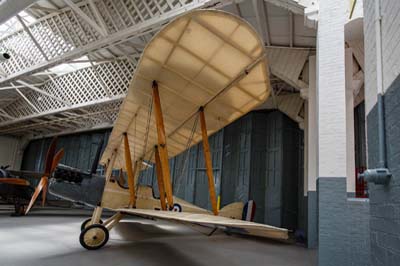
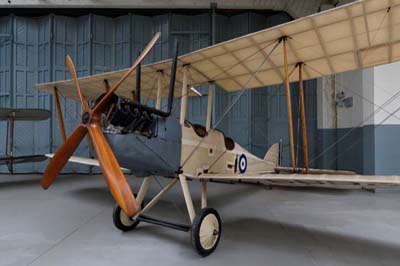
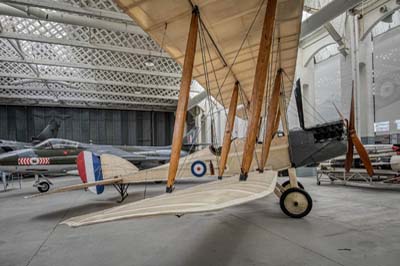
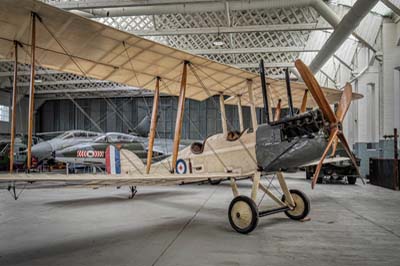
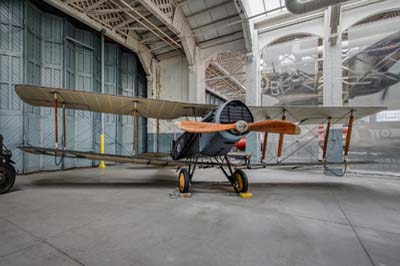
| Royal Aircraft Factory BE.2c (2699) previously at the Imperial War Museum at Lambeth, London. |
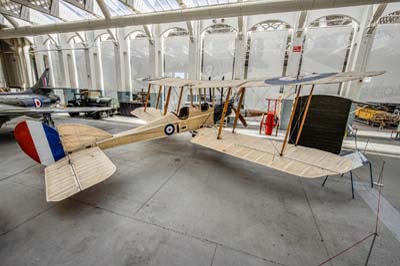
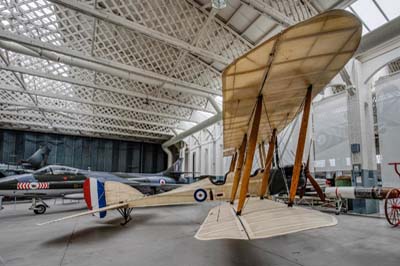
Left to right: Royal Aircraft Factory BE.2c (2699) was built by Ruston, Proctor & Co of Lincoln in 1916, by 1917 it was with No.50 Home Defence Squadron based at Dover, before serving with 51 Squadron. In 1919 it was transferred to the Imperial War Museum at Lambeth. In 2012 it was moved to IWM Duxford.
The RAF BE.2 (Blériot Experimental) was a British single-engine two-seat reconnaissance biplane which was in service with the Royal Flying Corps (RFC) from 1912 until the end of World War One. The 'Blériot' in its designation is due to Blériot types having a tractor configuration, that is having a propeller in front. Around BE.2s 3,500 were built. |
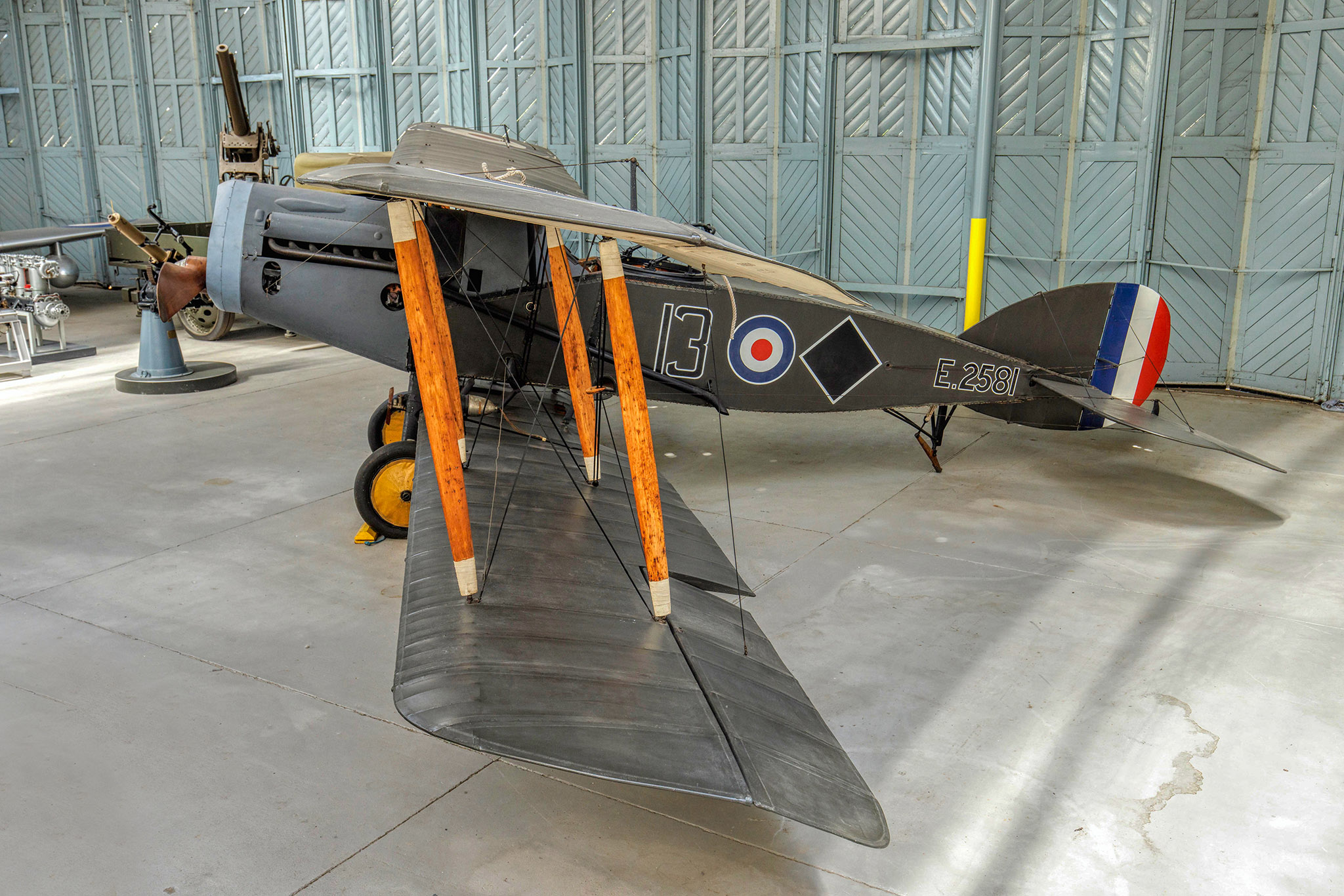 |
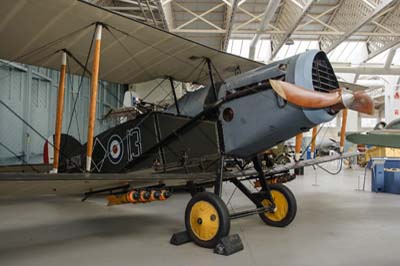
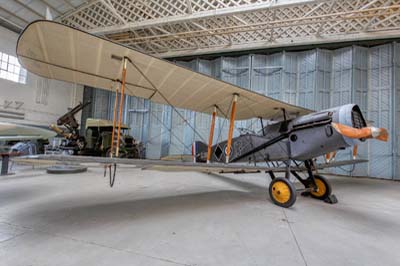
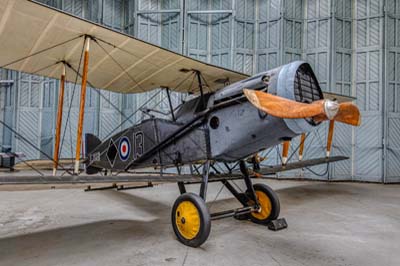
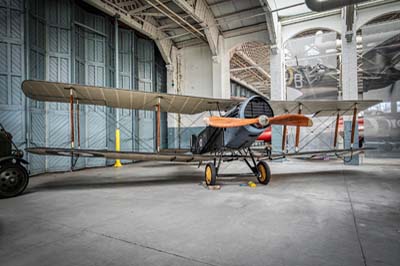
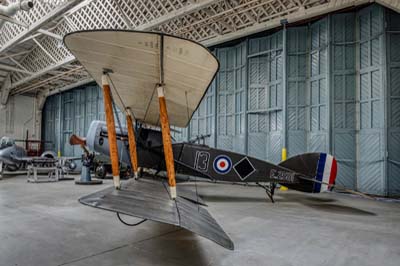
| Left to right: Bristol F.2B Fighter (E.2581 '13'). This example served with the 39 Home Defence Squadron at North Weald from 1918. F.2 operated from Duxford in the early 1920s as pilot trainers. Built by the Bristol Aeroplane Company, the prototype F.2A made its first flight in September 1916. After some modifications the F.2B went into production. It carried a pilot and observer, both of which were armed with a machine gun. Its maximum speed was 113mph (182km/h). Eventually 5,329 examples were delivered, some serving until 1932. |
 |
 |
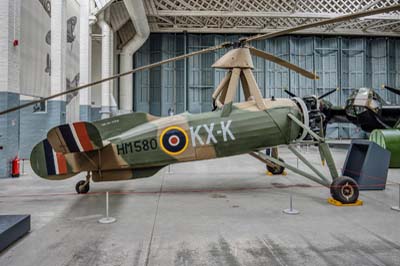 |
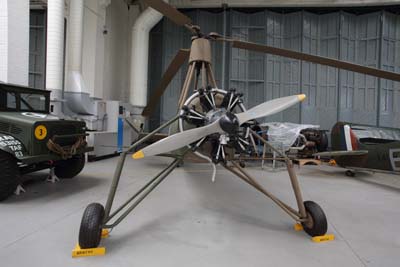
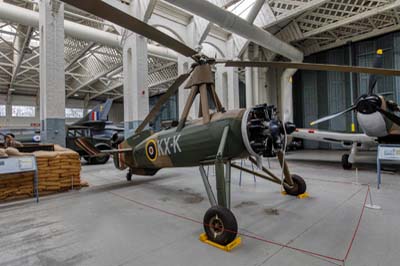
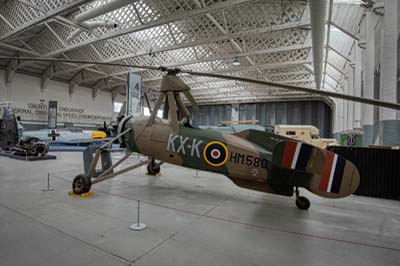
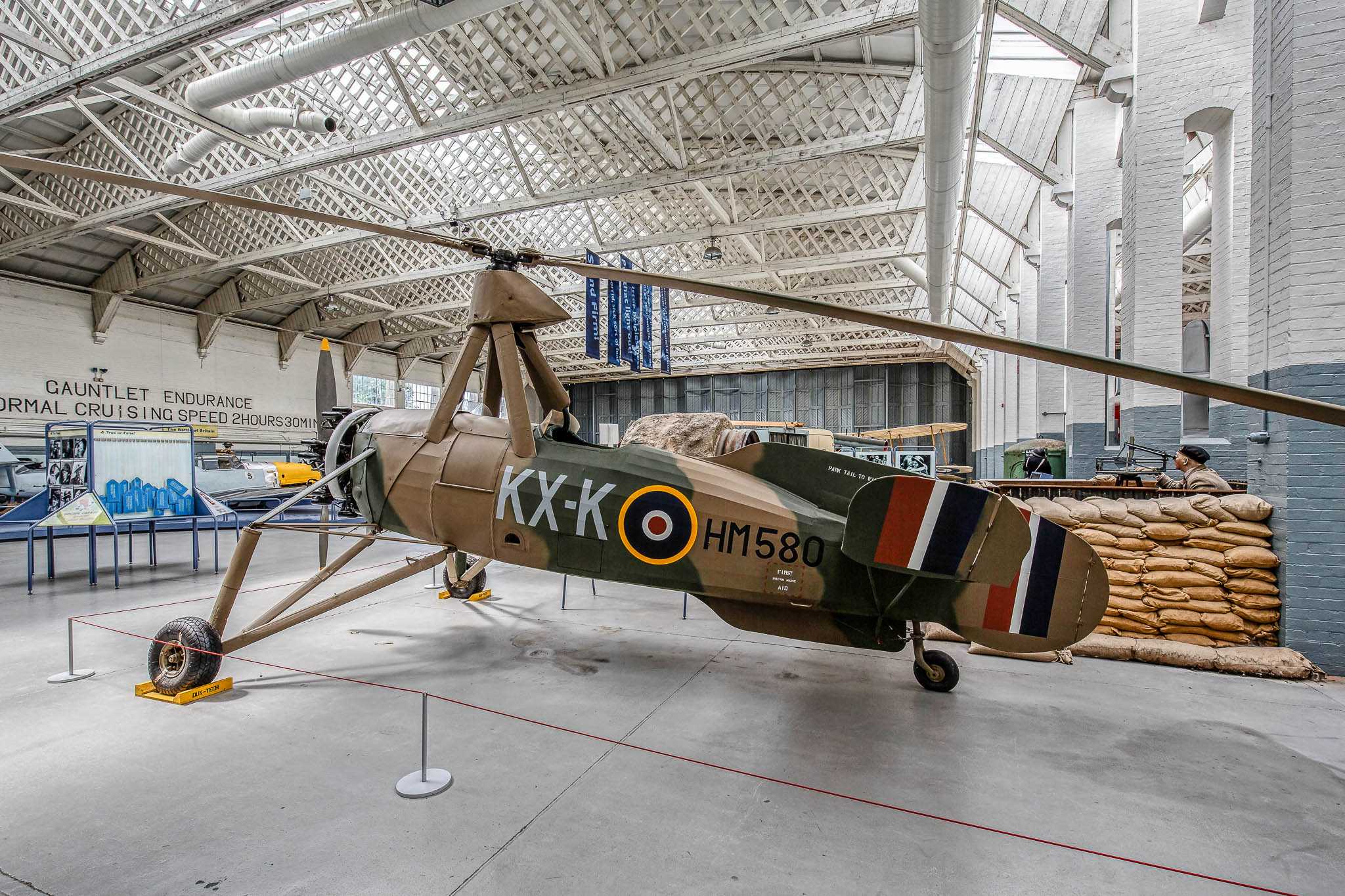
| Left to right: Avro 671 Rota I (Cierva C.30A) (HM580 'KX-K' registered G-ACUU). In 1934 Juan de la Cierva, a Spaniard, developed the C.30A autogyro. This unique aircraft was eventually license built by A V Roe & Co as the Rota 1 for the civil and military market, subsequently building 66 examples. Twelve Avro built Rota 1 autogyro's were supplied to the RAF in the mid 1930s, serving with the School of Army Co-operation at Old Sarum. They were used by 1448 (Rota) Flight at Duxford, (later reformed at Halton as 529 Squadron), in great secrecy to calibrate Britain's coastal radar stations during the war. |
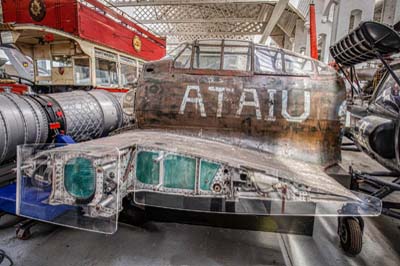
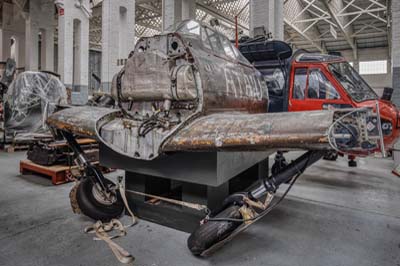
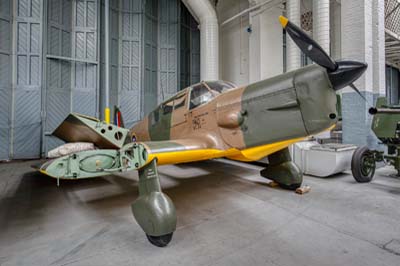
| Mitsubishi Zero A6M5 (BI-05 later marked 'ATAIU' / 'SEA') cockpit section. In service with the Imperial Japanese Navy Air Force as BI-05, before it was acquired by the Allied Technical Air Intelligence Unit (ATAIU) in 1945. By 1960 it was with the Imperial War Museum at Lambeth, it was moved to Duxford in 2013. |
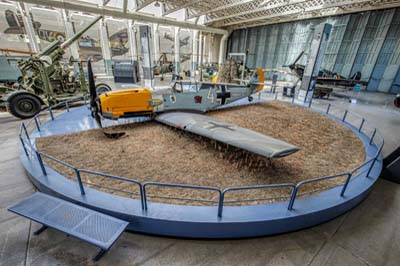
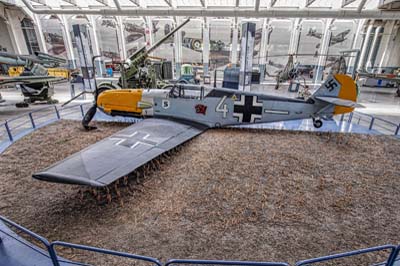
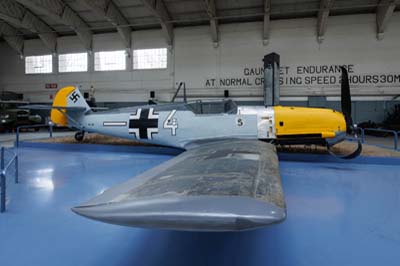
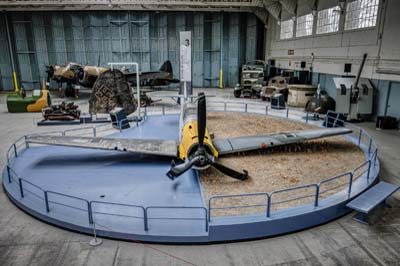
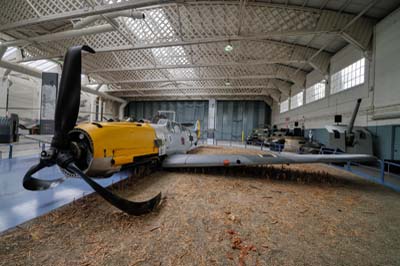
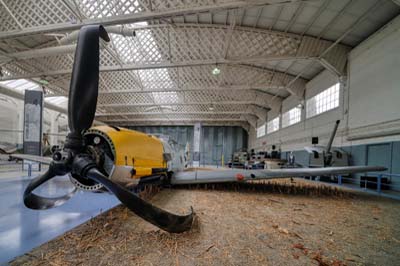
Messerschmitt Bf 109E-3 (Wk.Nr. 1190 'White 4'). Built 1939, this aircraft was operated by JG26 in France when it was shot down on September 30, 1940 by RAF Hurricanes over Beachy Head and it crash landed in a field. It was subsequently displayed across North America to raise war funds. It was returned to the UK in 1966 and put into storage. It arrived at the IWM in 1997 and put on display in 1998 as a diorama after some restoration.
The Bf 109 was one of the finest single seat fighters from World War Two with 33,000 being produced. It was designed in 1935 and performed very well during the Spanish Civil War. It was only matched by the Spitfire's and Hurricane's performance. It could out climb both and was faster than the Hurricane but not the Spitfire. Its main limiting factor was its limited endurance as it could only engage in combat over England for a few minutes. |
Left to right: Supermarine Spitfire LF9b (MH434 'ZD-B' registered G-ASJV) was built in 1943 at Vickers at Castle Bromwichand first flown by Supermarine Test Pilot Alex Henshaw. It is now with the Old Flying Machine Company.
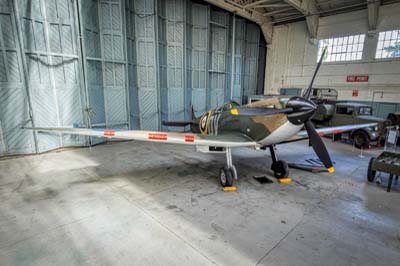
Supermarine Spitfire Mark 1a (N3200 'QV' registered G-CFGJ). Built at Southampton in 1939 it was issued to 19 Squadron at RAF Duxford in April 1940. It was force-landed on the beach at Sangatte, France on May 27, 1940. Recovered in 1986 it was put on display with V3 Museum, Fortresse de Mimoyecques in France. Moved to Duxford in 2007 it was restored by Historic Flying Ltd. and took to the air in 2014.
Hawker Hurricane I (P2902 'DX-R' registered G-ROBT).
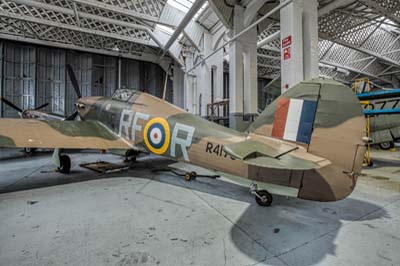
Hawker Hurricane XII (R4175 'RF-R' registered G-HURI). |
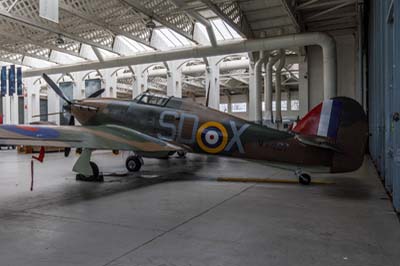
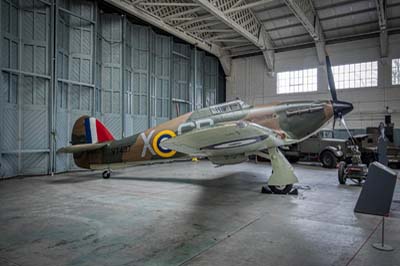
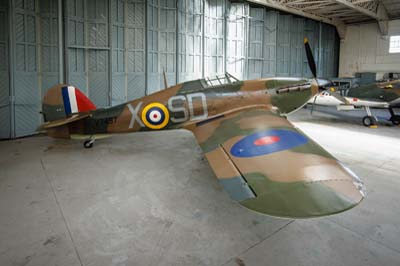
| Left to right: Hawker Hurricane Mk.1 (V7497 'SD-X' registered G-HRLI). |
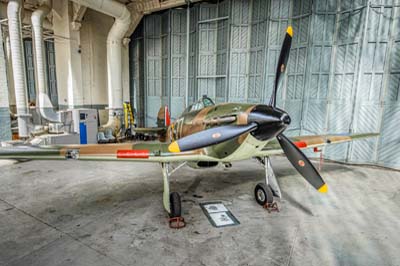
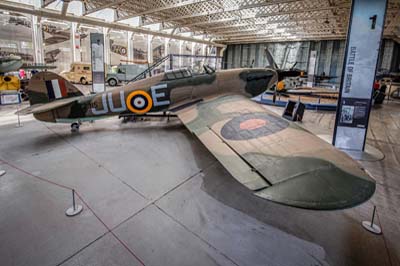
Left to right: Hawker Hurricane Mk.IIB ('Z2315 / JU-E'). The Hurricane was designed in 1934 and entered service in 1937 as the fastest fighter in service by 100 mph. By 1939 500 were in service with eventually 32 squadrons being equipped with them. Hurricanes shot down more enemy aircraft during the Battle of Britain than all the other air and ground defences combined. They later were used in North Africa and in the Far East against Japan.
The static example on display has been constructed using parts recovered from at least one crash site in Russia. Two Hurricane squadrons (310 and 242) operated from Duxford during the World War Two and were flown by Czech pilots, commanded by Douglas Bader. |
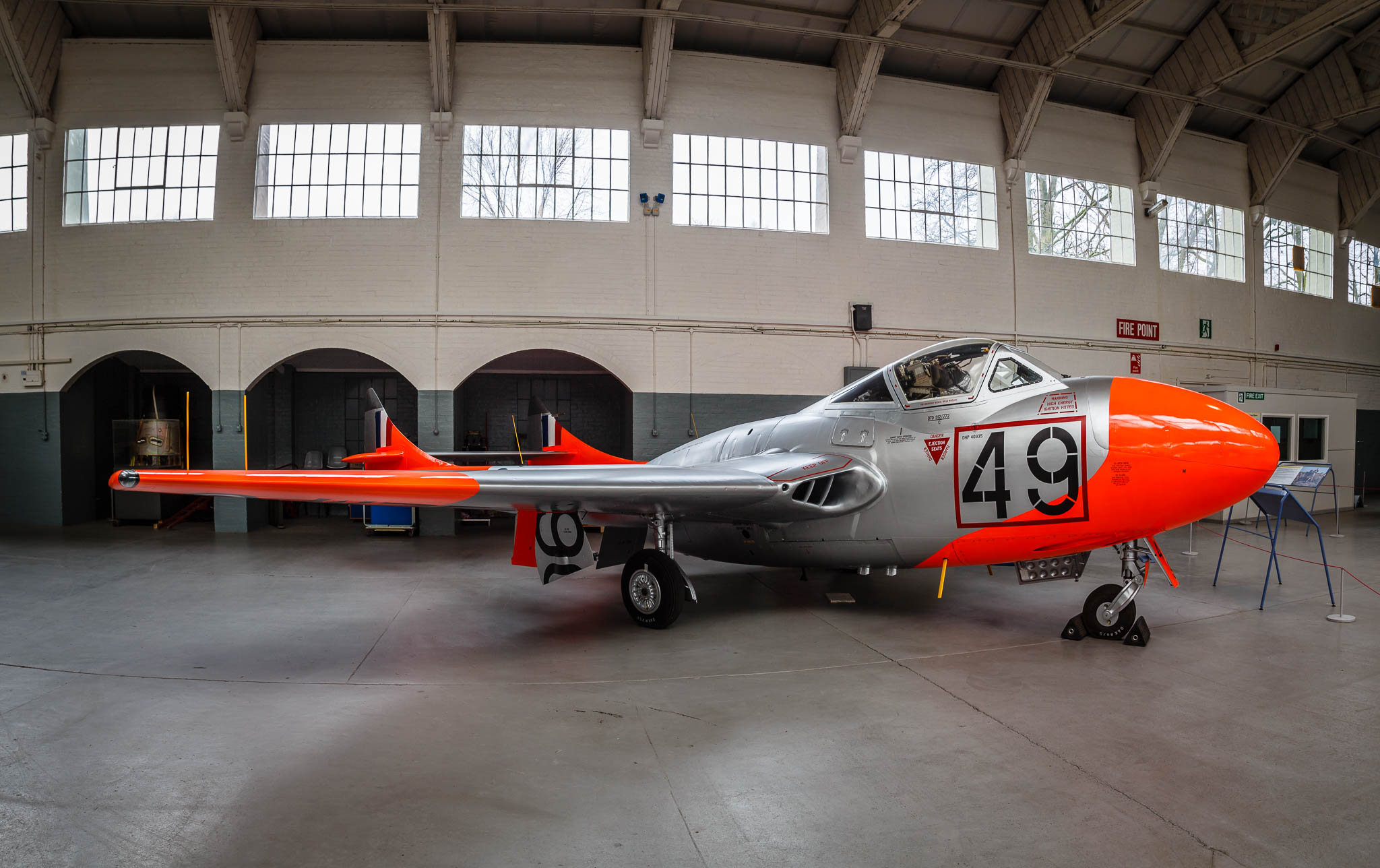
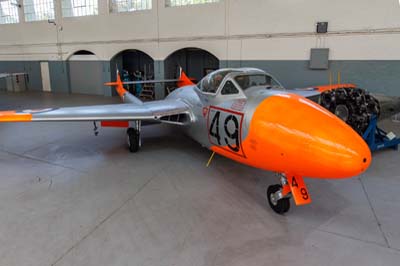
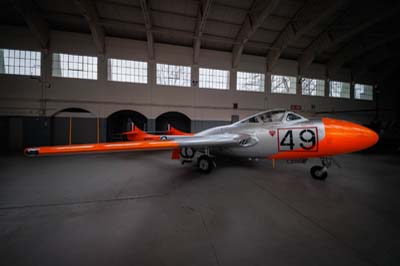
| Panoramic image of de Havilland DH 100 Vampire T.11 (WZ590 '49'). |
| Left to right: de Havilland DH 100 Vampire T.11 (WZ590 '49'). It was built at Hawarden, Wales and delivered to 228 Operational Conversion Unit at RAF Leeming in 1953. Withdrawn from service in 1963 it went into storage. Gifted to the recently formed Imperial War Museum at Duxford in 1971 it was later was restored in 2012.
The second British built jet fighter the Vampire first flew in 1943 but did not enter service until the 1946 after the World War Two was over. It was the first jet aircraft to cross the Atlantic Ocean. 3,300 Vampires were built serving in many nation's air forces. The Vampire served with the Swiss Air Force until 1990. The Vampire T.11, a jet trainer was produced from 1950 for the Royal Air Force remaining in service till 1966. |
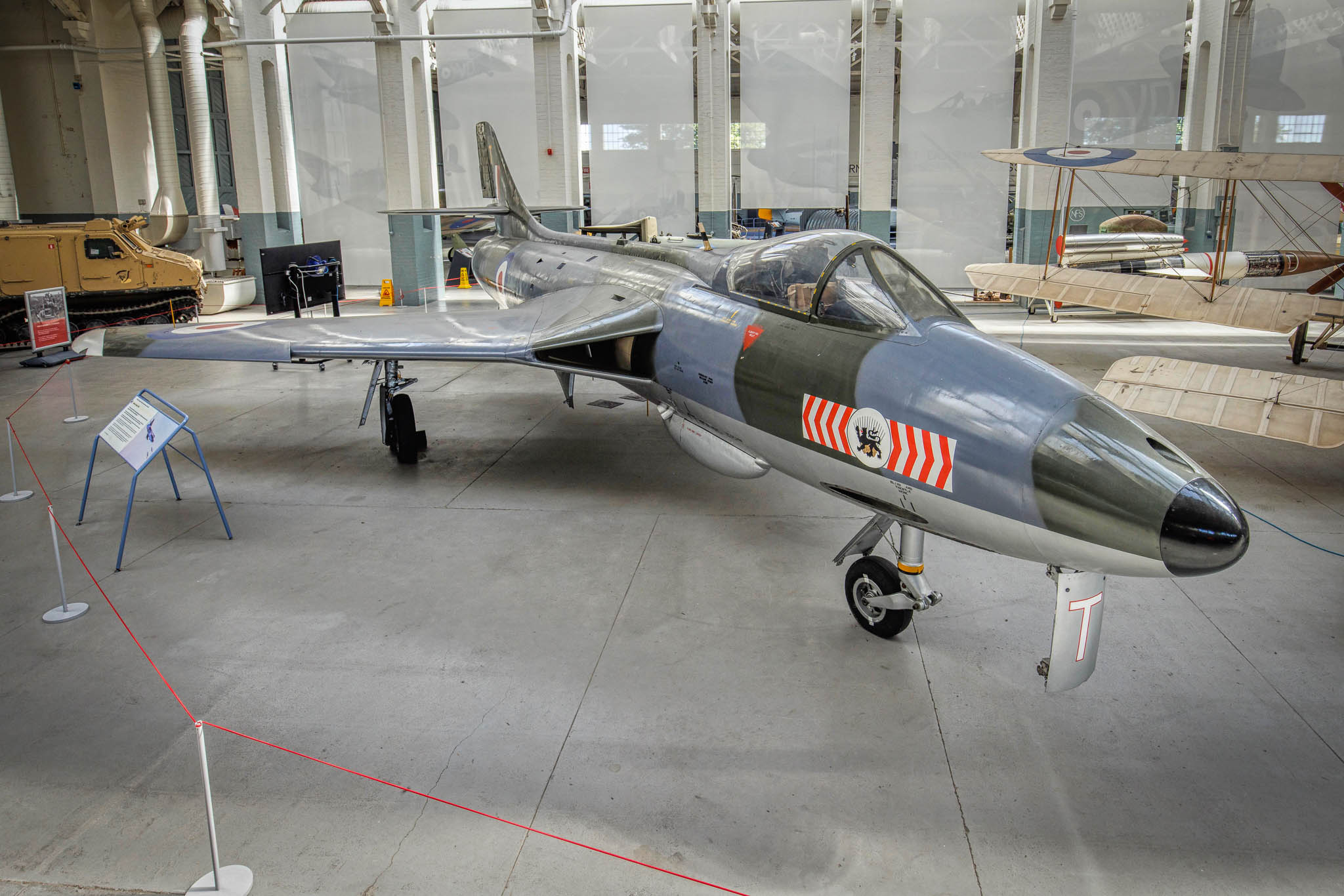
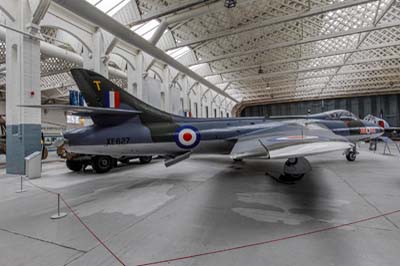
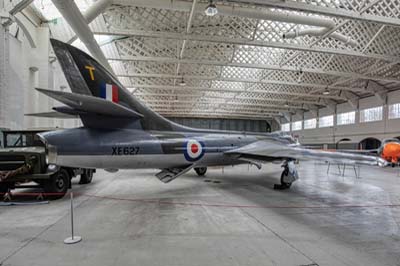
| Left to right: Hawker Hunter F.6A(XE627 'T'). |
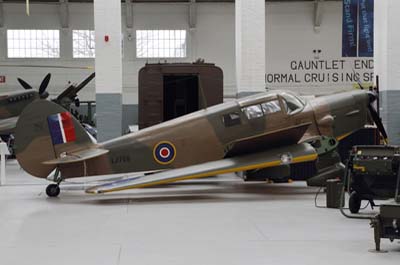
Left to right: Percival Proctor III (LZ766 registered G-ALCK).
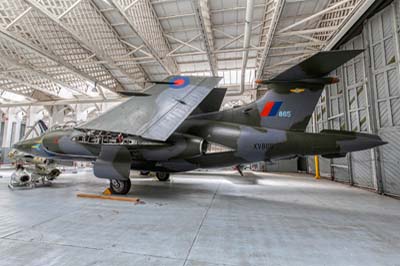
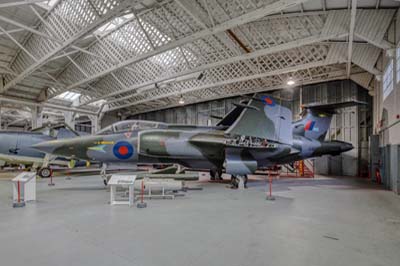
Hawker Siddeley Buccaneer S.2B (XV865 '865'). The Blackburn Buccaneer was designed for the low-level strike role and was in service with the Royal Navy from 1962 to the 1970s when they were transferred to the RAF who operated the Bucc' between 1969 to 1994. The aircraft on display is in 208 Squadron markings. |
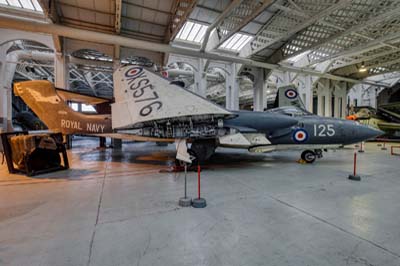
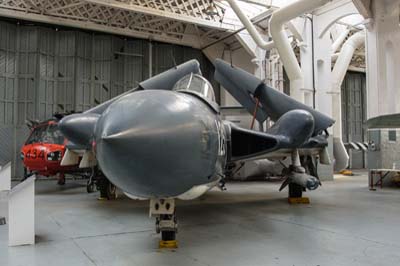
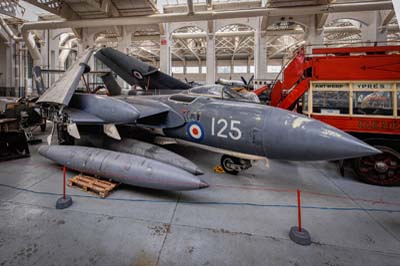
| Left to right: de Havilland DH.110 Sea Vixen FAW.2 (XS576 'E-125') of 899 Squadron. The Sea Vixen went into service as the Royal Navy's principal carrier-borne fighter in 1959. 146 were built, the last remaining in service until 1971. It arrived at Duxford in 1972. |
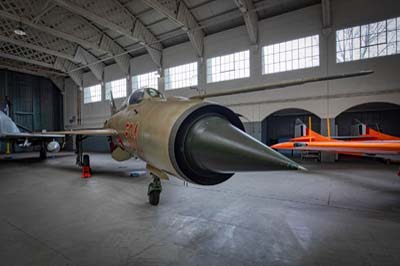
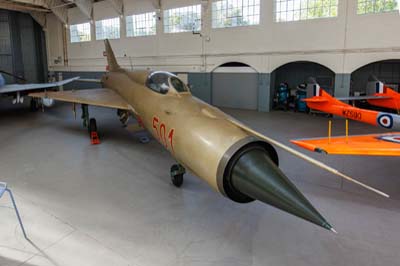
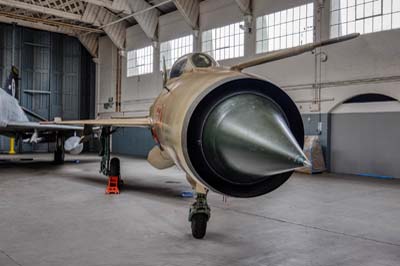
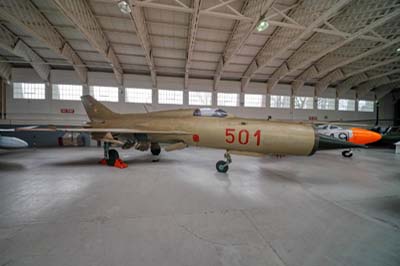
| Left to right: Mikoyan-Gurevich MiG-21PF 'Fishbed' (501) ex Hungarian Air Force. |
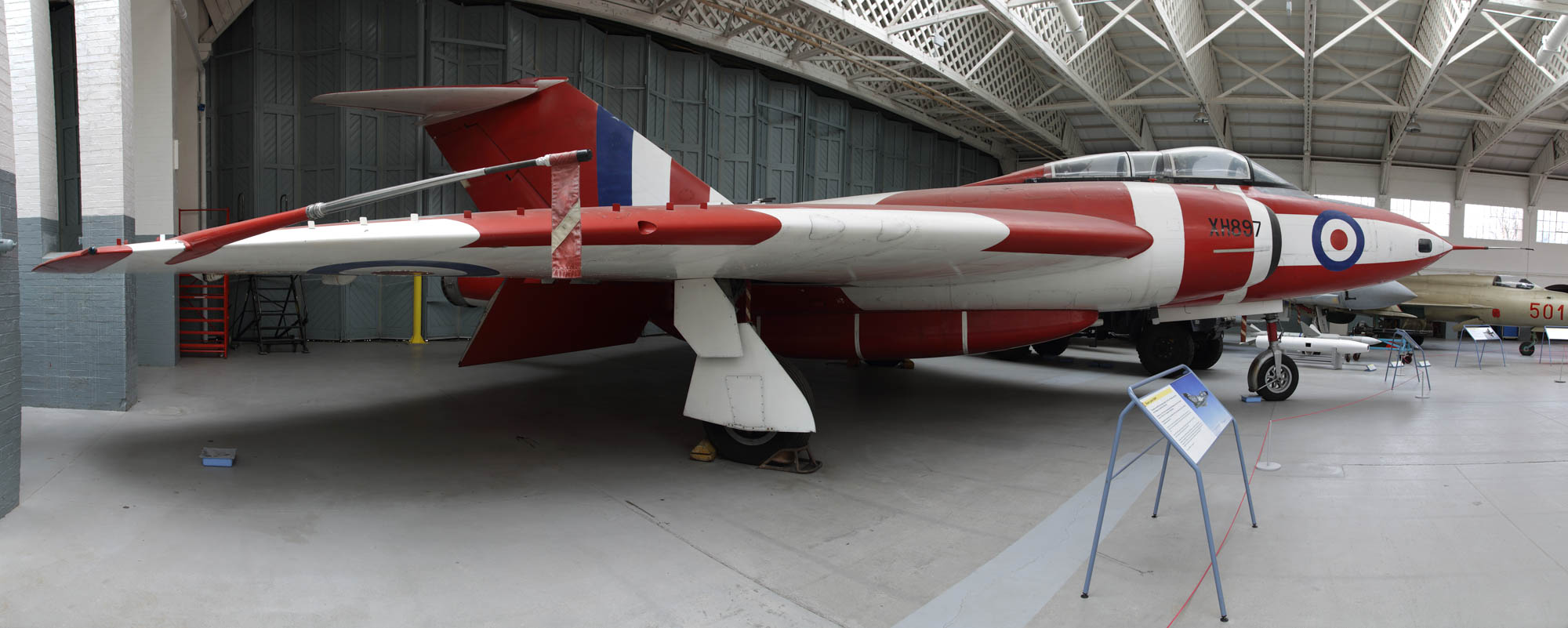
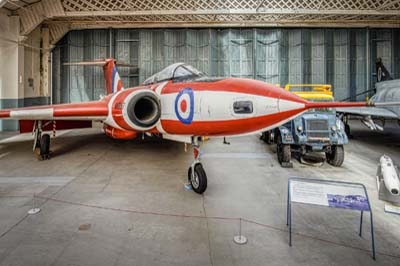
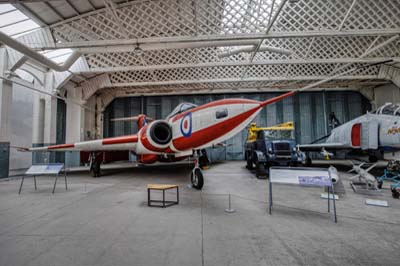
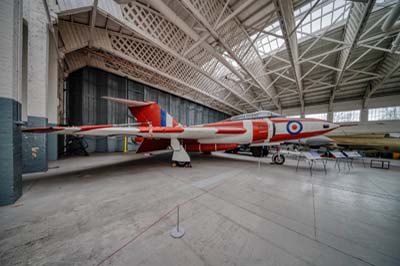
| Panoramic image of Gloster Javelin FAW.7 (XH897). |
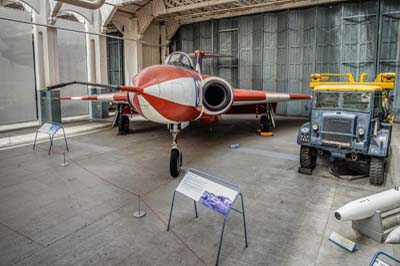
| Left to right: Gloster Javelin FAW.7 (XH897). The Javelin was the world's first twin-jet delta-wing fighter, designed to intercept bombers at high altitudes and at high subsonic speeds. |
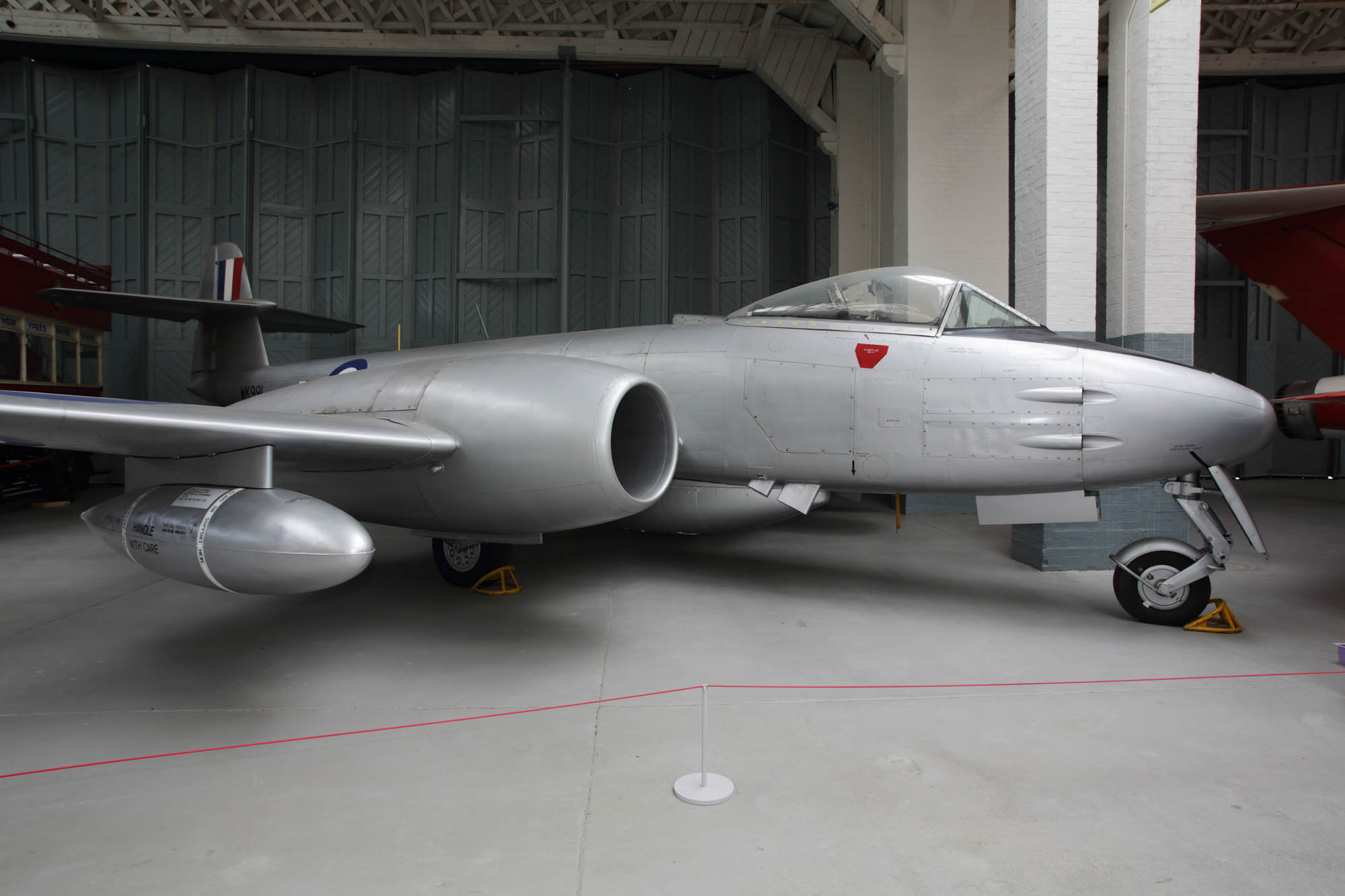
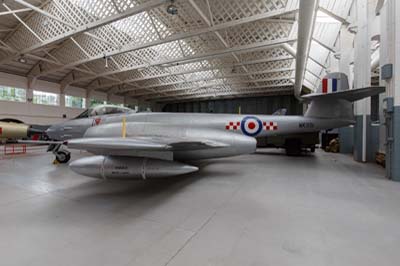
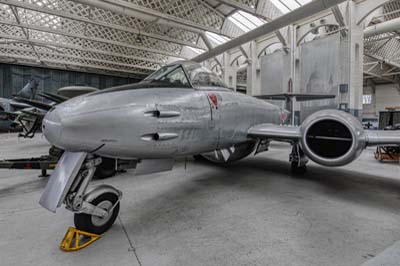
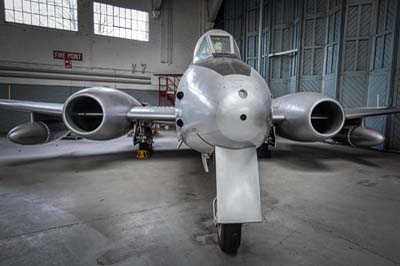
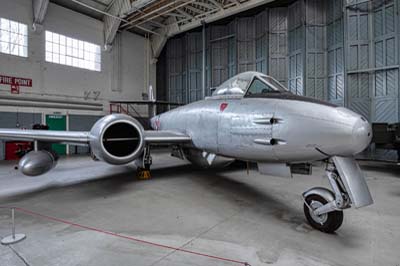
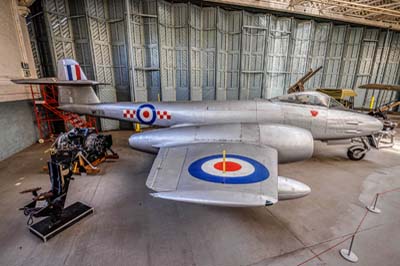
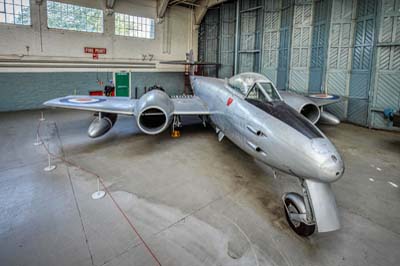
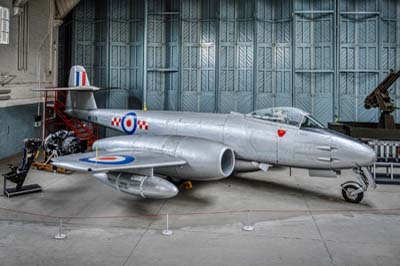
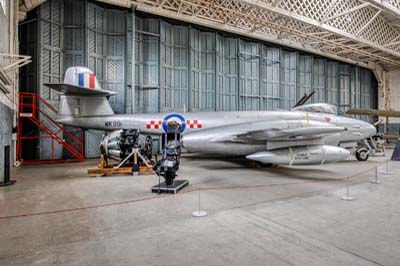
| Left to right: Gloster Meteor F.8 (WK991 later 7825M). Constructed by Armstrong Whitworth at Baginton. To Imperial War Museum at Duxford in 1963. |
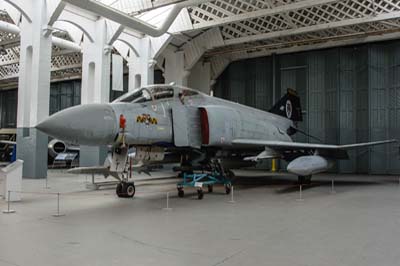
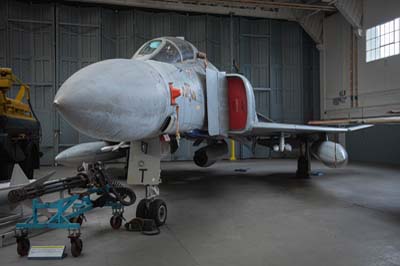
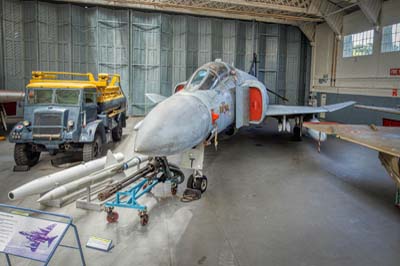
| Left to right: McDonnell Douglas F-4M Phantom FGR.2 (XV474 'T') was in service from 1969 up until its transfer to Duxford in 1992. Painted in the colours of 74 Squadron, it is now owned by the Old Flying Machine Company. |
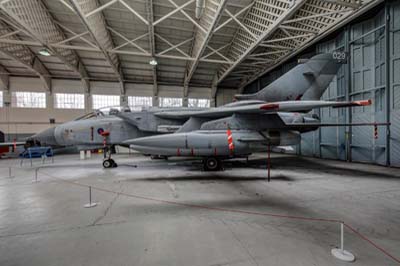
| Left to right: Panavia Tornado GR.4 (ZA469 '029'). |
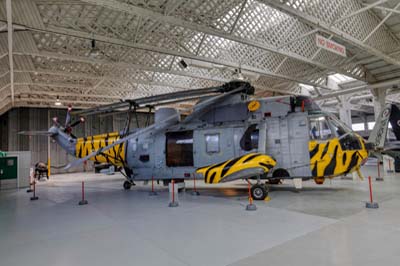
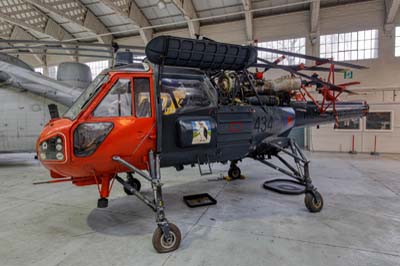
Left to right: Westland Sea King HAS.6 (XV712 '66').
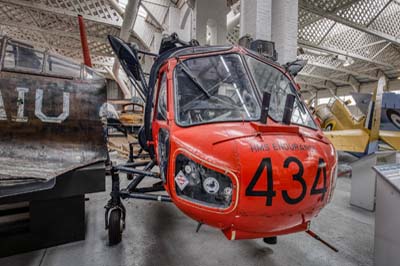
Westland Wasp HAS.1 (XS567 '434').
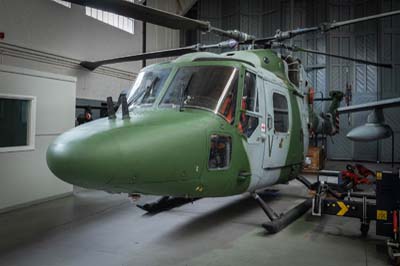
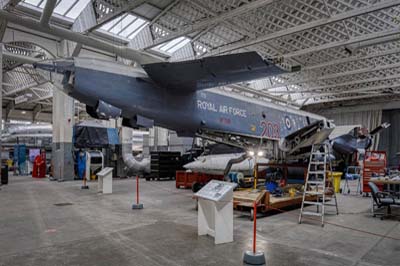
Westland Lynx AH.7 (XZ194 'V') ex AAC it arrived in 2013. |
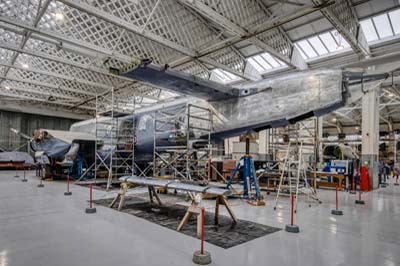
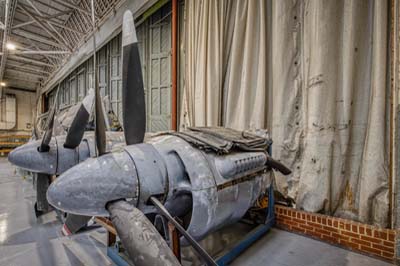
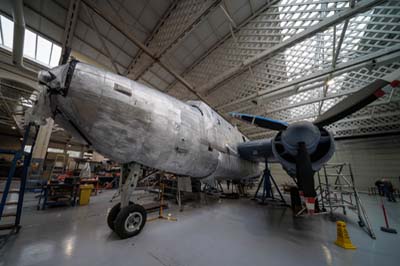
Hangar 5 'Restoration in Action'
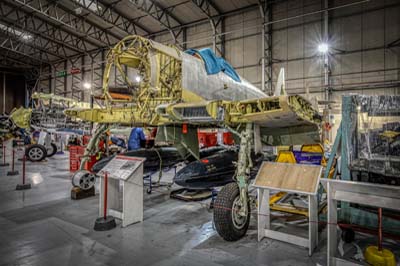
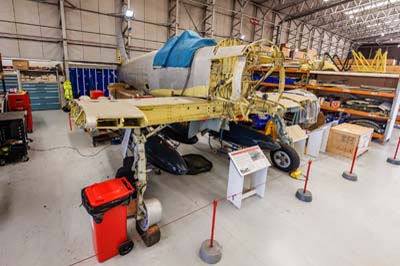
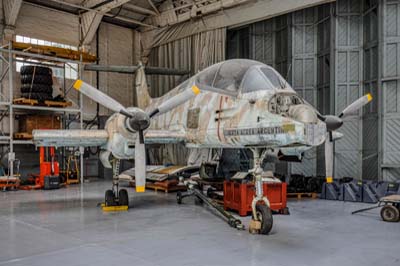
In 2008 it contained a Varsity which was being slowly restored (by 2012 dismantled outside) along with an Ambassador (by 2012 nearly fully restored). In a poor state of repair is was an ex Argentinean Pucara, USAF F-105 Thunderchief and East German Mil-24 Hind. A former Portuguese Casa 352 (Ju 52) in German markings was housed here in fine condition. |
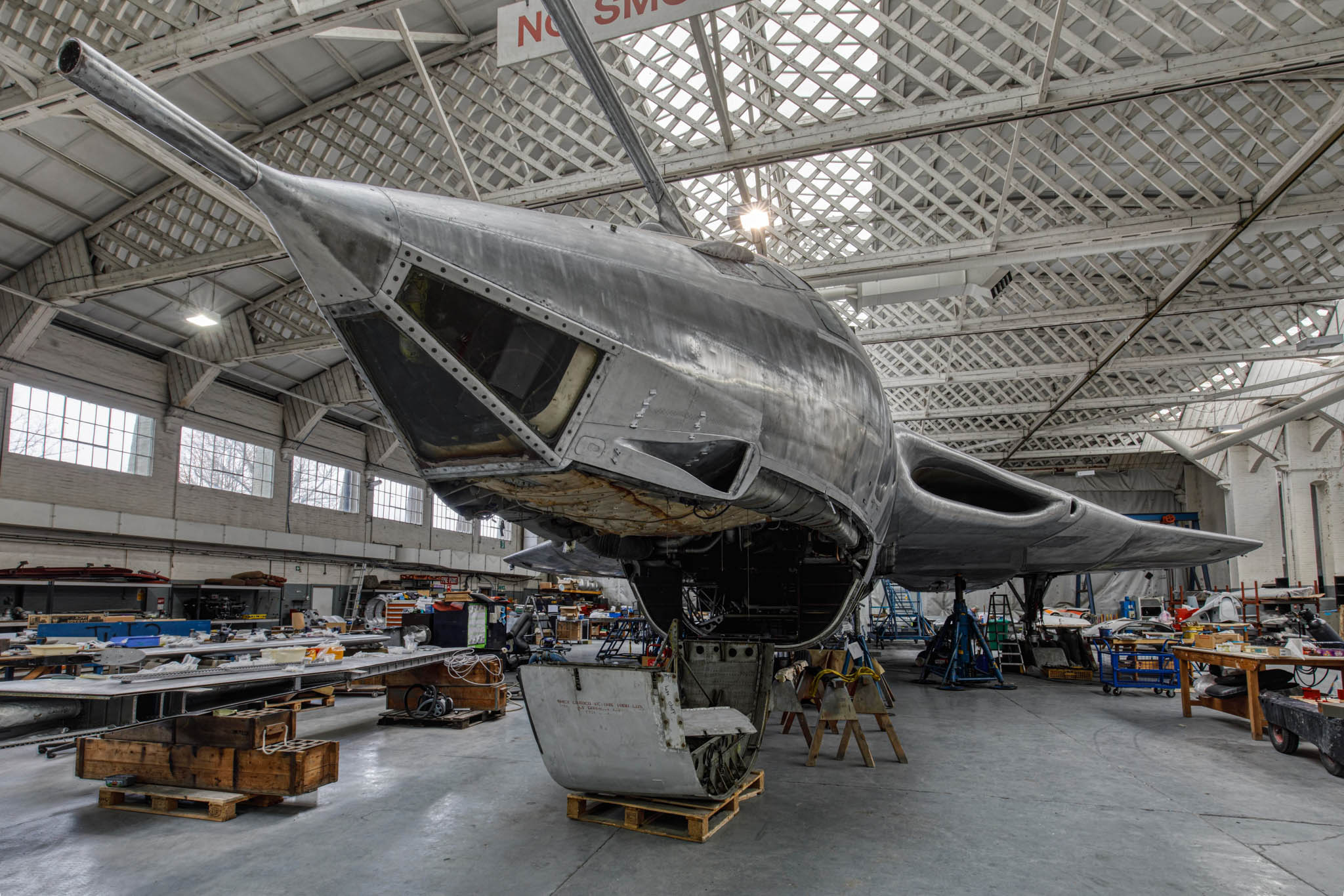
| Handley Page Victor K.1A (XH648) under restoration. |
| Left to right: Handley Page Victor K.1A (XH648) under restoration in 2020 and 2021. |
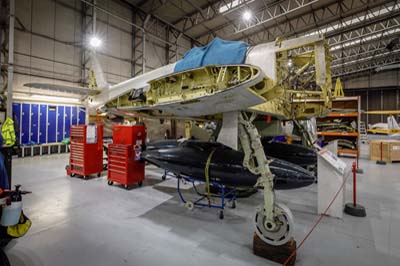
| Left to right: Handley Page Victor K.1A (XH648) was re-painted in 2022 and in August was still awaiting its tail to be attached. |
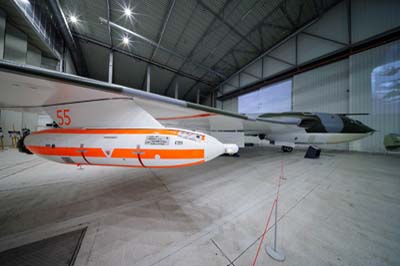
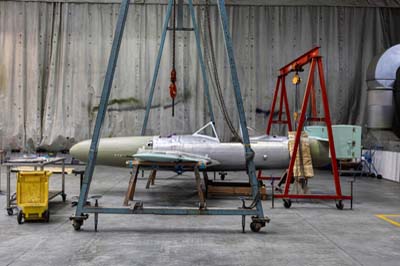
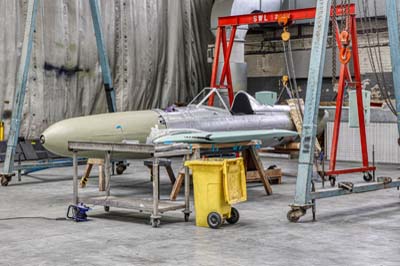
Left to right: Yokosuka MXY-7 Ohka 11 It was a purpose-built, rocket-powered human-guided kamikaze attack aircraft utilised by Japan against Allied shiping towards the end of World War Two. Previously with the Defence Explosives Ordinance School, Kent. Following its restoration it was transferred to the Imperial War Museum in Lambeth, London.
Other examples are at Pima Air Museum Arizona, Planes of Fame Museum at Chino another is at Yanks Air Museum also at Chino, California. Examples also on display at Cosford IWM and Museum of Science and Industry in Manchester. |
| Left to right: Avro Shackleton MR.3 (XF708 'C'). This nose-wheel variant of the Shackleton was delivered in 1959 and was used for maritime reconnaissance before flying to Duxford in 1972 for the IWM. |
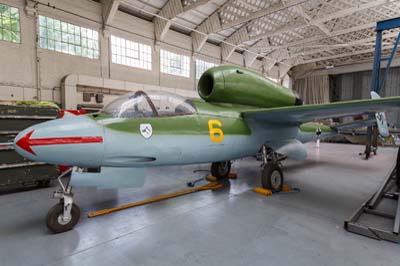
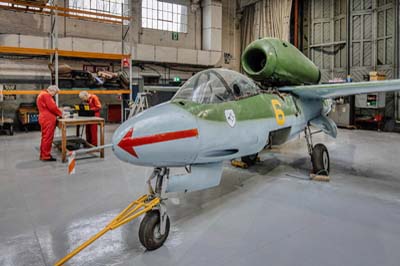
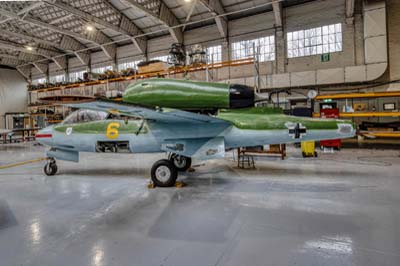
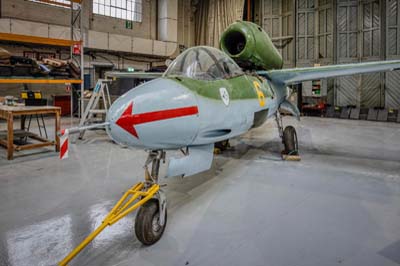
Left to right: Heinkel He 162A-2 Volksjäger (120235 'Yellow 6'). The German aircraft industry were pushed towards the end of the war to produce aircraft designs that could reverse an ever increasingly desperate situation. The He-162 jet fighter took just 69 days from initial design to its first flight. It was the first aircraft to be fitted with an ejection seat. Deliveries began in February 1945, with 200 only being delivered. Due to a shortage of supplies it was mostly built of wood. Previously on display at the Imperial War Museum in Lambeth, London.
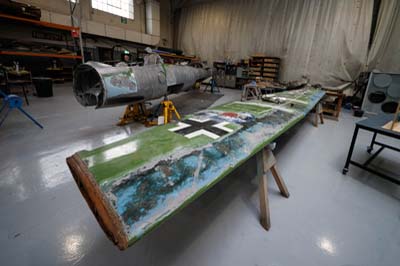
Stripped of paint by January 2024 it revealed the original Air Ministry roundals applied when it was recovered to England in 1945. |
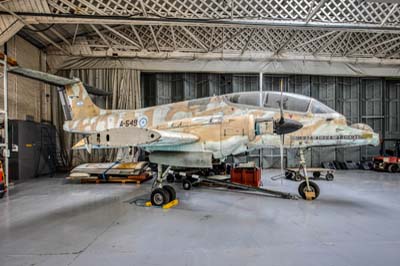
| Left to right: FMA (Fabrica Militar de Aviones) IA-58A Pucara (A-549) ex Argentinian Air Force, captured during the 1982 Falklands war. |
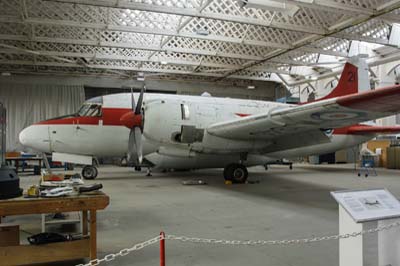
Left to right: Vickers Varsity T.1 (WJ945 '21' registered G-BEDV). One of 164 Varsity's built, it was delivered to the RAF in 1953 as a crew trainer for navigators and bomb aimers. It arrived at Duxford in 1974 and flew as G-BEDV in 1976 with the Duxford Aviation Society. It is painted in the colours of the Central Flying School when at Little Rissington and was awaiting restoration in 2012. However it was later acquired by the Cornwall Aviation Heritage Centre at St.Mawgan.
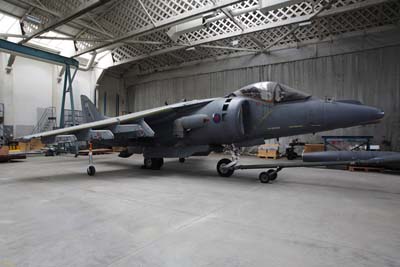
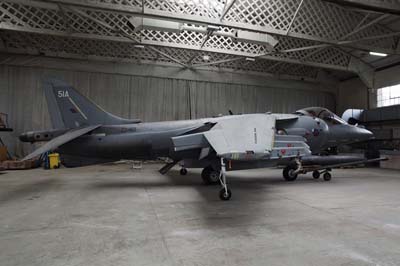
BAE Harrier GR.9A (ZD461 '51A') arrived in March 2012 for preservation from RAF Cottesmore where the type was retired in December 2010. Now on display at the Imperial War Museum in Lambeth, London. |
American Air Museum
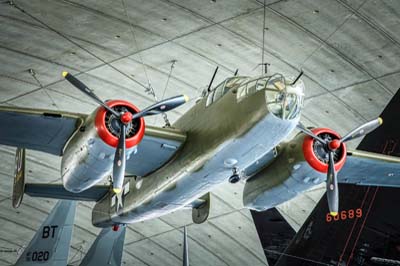
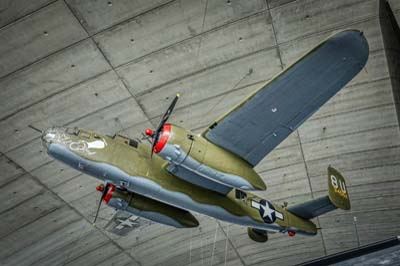
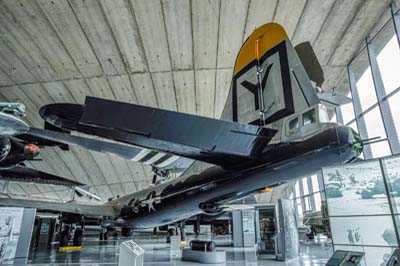
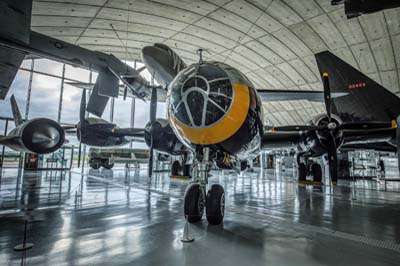
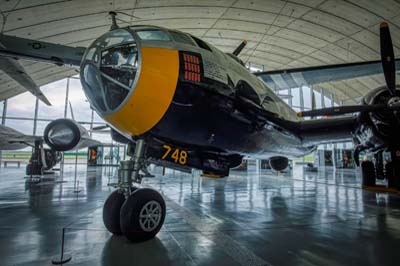
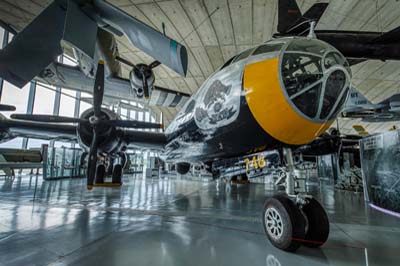
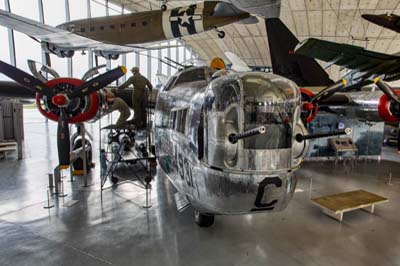
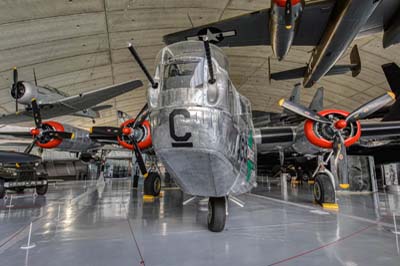
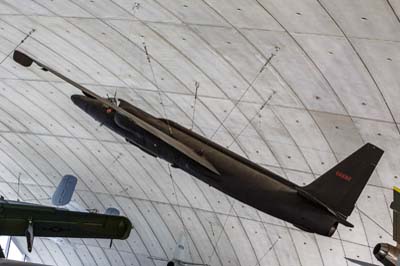
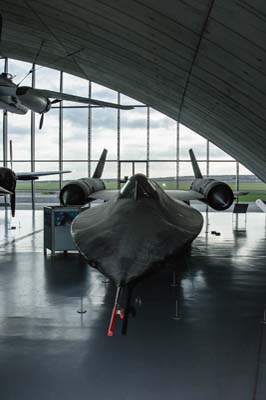
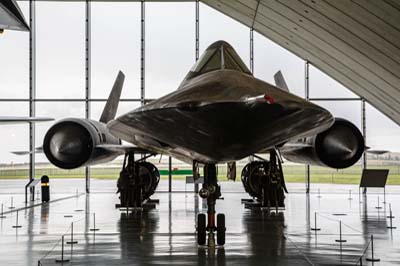
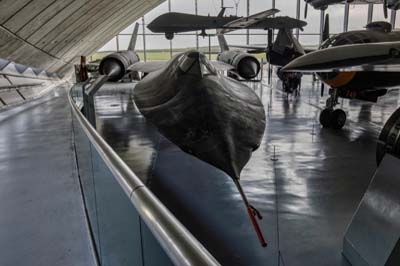
At the other end of the airfield is the very modern looking American Air Museum which stands as a memorial to the 30,000 American airmen who gave their lives when flying from UK bases in the World War Two. The museum also honours those who fought in Korea and Vietnam and in other conflicts since. The building's sleek design disguises its size. Walking around at ground level and along the sweeping aerial walkway you will be amazed to find that the building houses a B-24 Liberator, B-25 Mitchell, C-47, B-17 Flying Fortress and B-29 Superfortress from the World War Two, with a B-52D Stratofortress, SR-71 Blackbird, F-111 and U-2 from the resulting Cold War. Twelve other aircraft are again skilfully squeezed into the remaining space. The ceiling is used once more to make best use of the space and creates a dynamic 'flying' effect. |
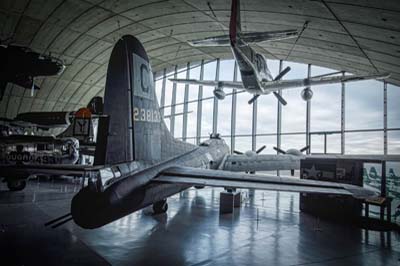
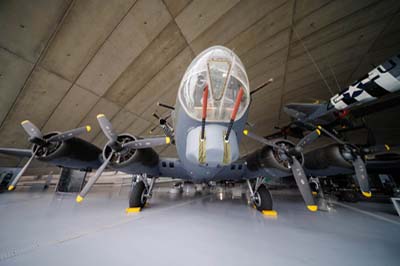
| Panoramic image of restored (in 2012) Boeing B-17G Flying Fortress. |
| Left to right: Boeing B-17G Flying Fortress (231983 'IY-G' registered F-BDRS). Over 12,600 B-17s were produced during the World War Two. |
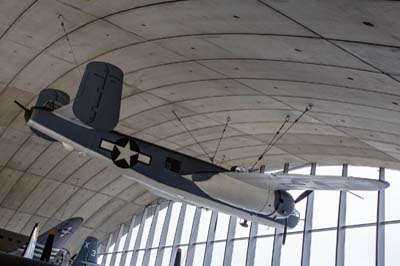
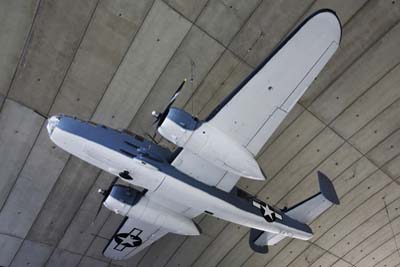
| Left to right: North American B-25J Mitchell (44-31171 US Marines in 2016 it was painted as USAFE '34064 / 8U' registered N7614C). The prototype B-25 Mitchell first flew in 1940 with initial deliveries commencing in the following year for the United States Army Air Forces (USAAF). |
Left to right: Boeing B-29A Superfortress (44-61748) It was recovered from the NAS China Lake range in 1979, restored to flying condition as G-BHDK and flown across the Atlantic, arriving at Duxford on March 2, 1980.
The B-29 first flew in 1942 and carried more bombs higher, farther, and faster than any other bomber of World War II. Of the 3,970 B-29s built, around 26 complete B-29s survive today, 24 in the US. |
Left to right: Consolidated B-24M Liberator (44-51228 '493') inscribed 'Dugan' to represent a Liberator based at Wendling, Norfolk, with the 392nd Bomb Group. It was actually built by the Ford Motor Company at their Willow Run plant, Michigan and is possibly the last Liberator in service with the USAF. Redesignated as an EZB-24M it was used for ice research, finally retiring to Lackland Air Force Base, Texas in 1956. It was transferred to Duxford in 1999.
Grumman TBM-3E Avenger AS.3 (69327 'X-3' registered CF-KCG) hanging from the ceiling. It is painted to represent the Avenger flown by President George Bush when he served with the US Navy in the Pacific during 1944, it was named 'Barbara' after his wife. 9,836 Avengers were built by Grumman and General Motors (Eastern Aircraft Division) as a torpedo bomber for the US Navy to avenge the Japanese attack on Pearl Harbour. This aircraft has now been moved to another hangar.
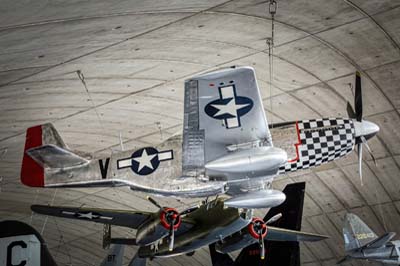
North American P-51D Mustang (44-73979 marked as '411631 / MX-V'). |
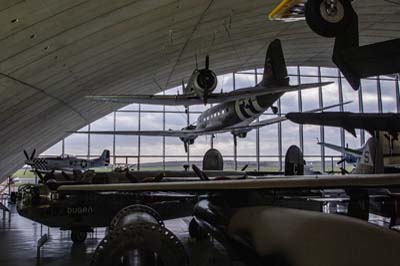
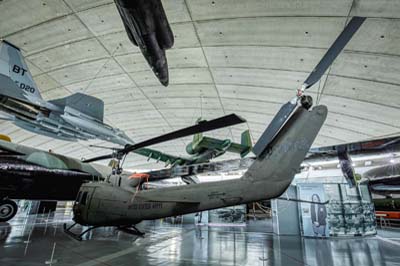
Left to right: General view of the AAM looking out from the back towards the large semi-circular glass frontage with a Douglas C-47A (315509 'W7-S' registered G-BHUB) suspended from the ceiling with a composite AT-6 Texan beside it.
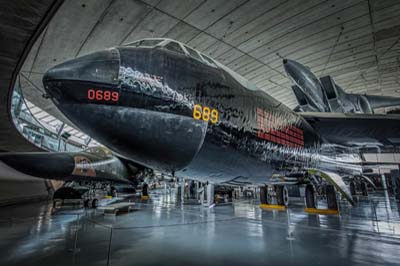
Boeing B-52D Stratofortress (56-0689) was operated by the 28th BW and 7th BW.
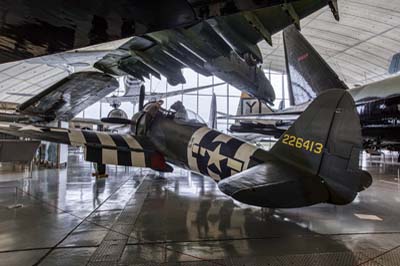
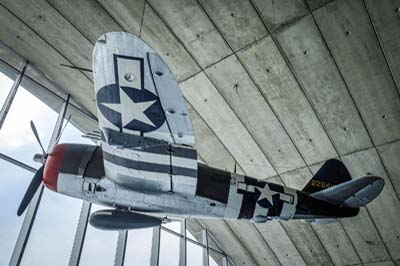
Republic P-47D Thunderbolt (226413 'ZU-N' registered N47DD) painted to represent a 78th FG aircraft when based at Duxford during the World War Two which were to be replaced by P-51 Mustangs. The prototype Thunderbolt first flew in May 1941 entering service the following year, eventually 12,956 were constructed. |
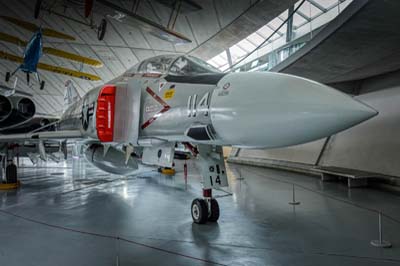
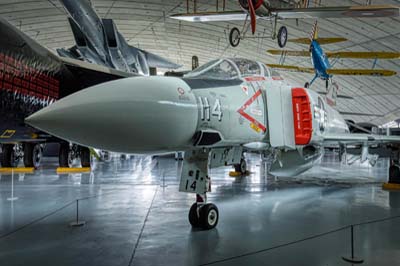
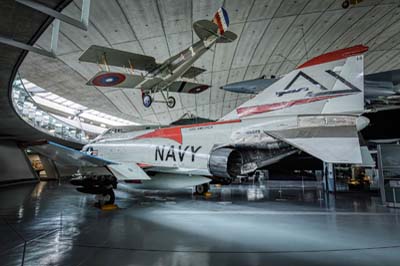
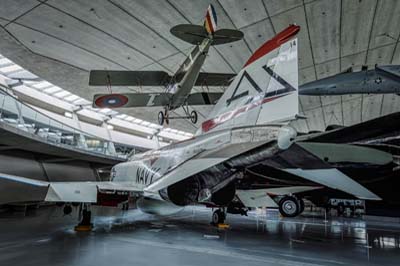
| Left to right: McDonnell Douglas F-4J Phantom II (155529 'AJ-114' previously ZE359). Delivered in 1968 to the US Navy later transferred to the RAF as ZE359 in 1984. Delivered to Duxford in 1991. |
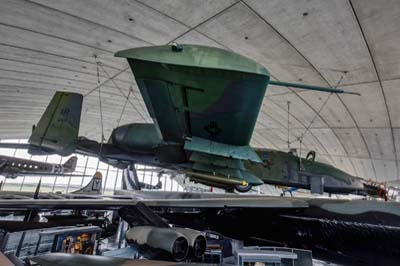
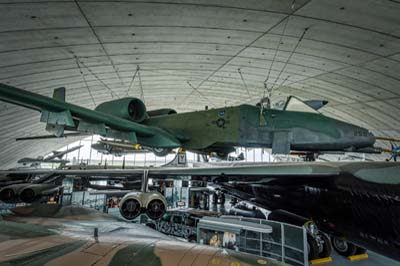
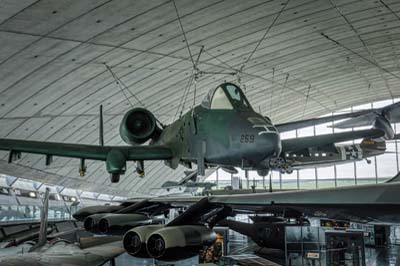
| Left to right: Fairchild A-10A Thunderbolt II (77-259 'AR'). |
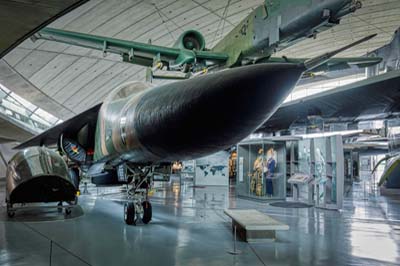
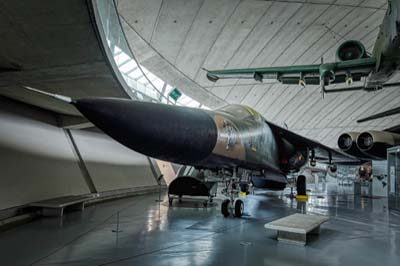
Left to right: General Dynamics F-111E (67-0120 'UH') ex 20th TFW based at Upper Heyford. As photographed in 1993 at RAF Finningley just before it was retired from service.
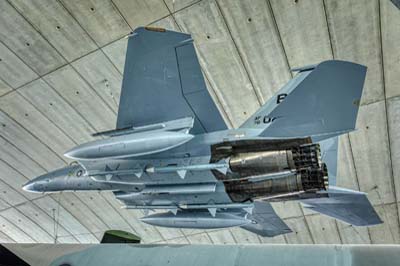
McDonnell Douglas F-15A Eagle (76-0020 'BT') was with 36th TFW based at Bitburg in Germany.
Bell UH-1H Iroquois (72-21605) ex United States Army. |
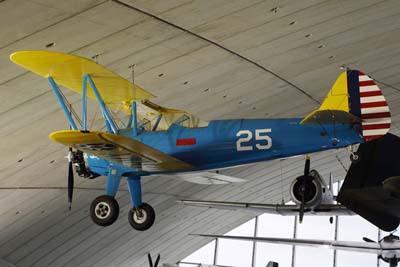
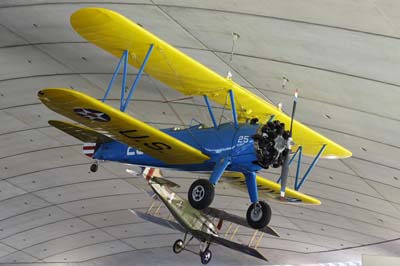
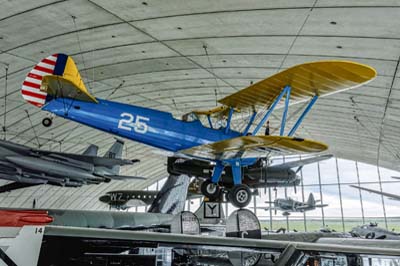
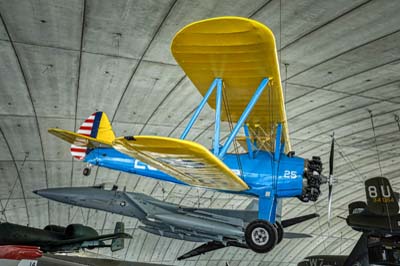
| Left to right: Boeing PT-17 Stearman Kaydet (41-8169 '25'). The PT-17 first entered service in 1936. They were used by the USAAF and US Navy as the N2S, a total 6,110 of all variants of Stearman were built. The aircraft on display at the American Air Museum was previously used by Evergreen Aviation Services. A replica Spad is in the background. |
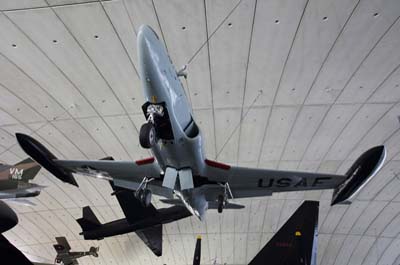
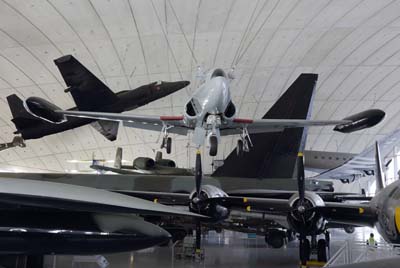
Left to right: Lockheed T-33A Shooting Star (51-4286 ex French Air Force). Developed as a jet trainer for the US Air Force the T-33A was developed from the single-seat P-80 (later F-80) Shooting Star, 4,992 T-33s were built and supplied to many air forces around the World, some under the Military Aid Program of the 1950s. The example on display was built in 1951 and supplied to France under MAP and returned under the terms of the agreement to USAF in 1978.
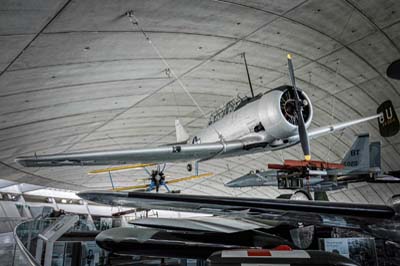
North American AT-6 Texan IIb (42-12471). |
Left to right: Lockheed U-2C (56-6692). The U-2 on display was originally a U-2A and first flew in October 1956. Operated by the Central Intelligence Agency it flew on spying missions over the Soviet Union and China. Its final flight was in December 1987.
Lockheed SR-71A Blackbird (64-17962). Flying at Mach 3 or 2,000mph the Blackbird is certainly the most impressive aerial reconnaissance aircraft ever built. From the 1980s SR-71s were operated from RAF Mildenhall and the one on display is the only one to be found outside the US, since they were finally retired in favour of spy satellites in 1999. |
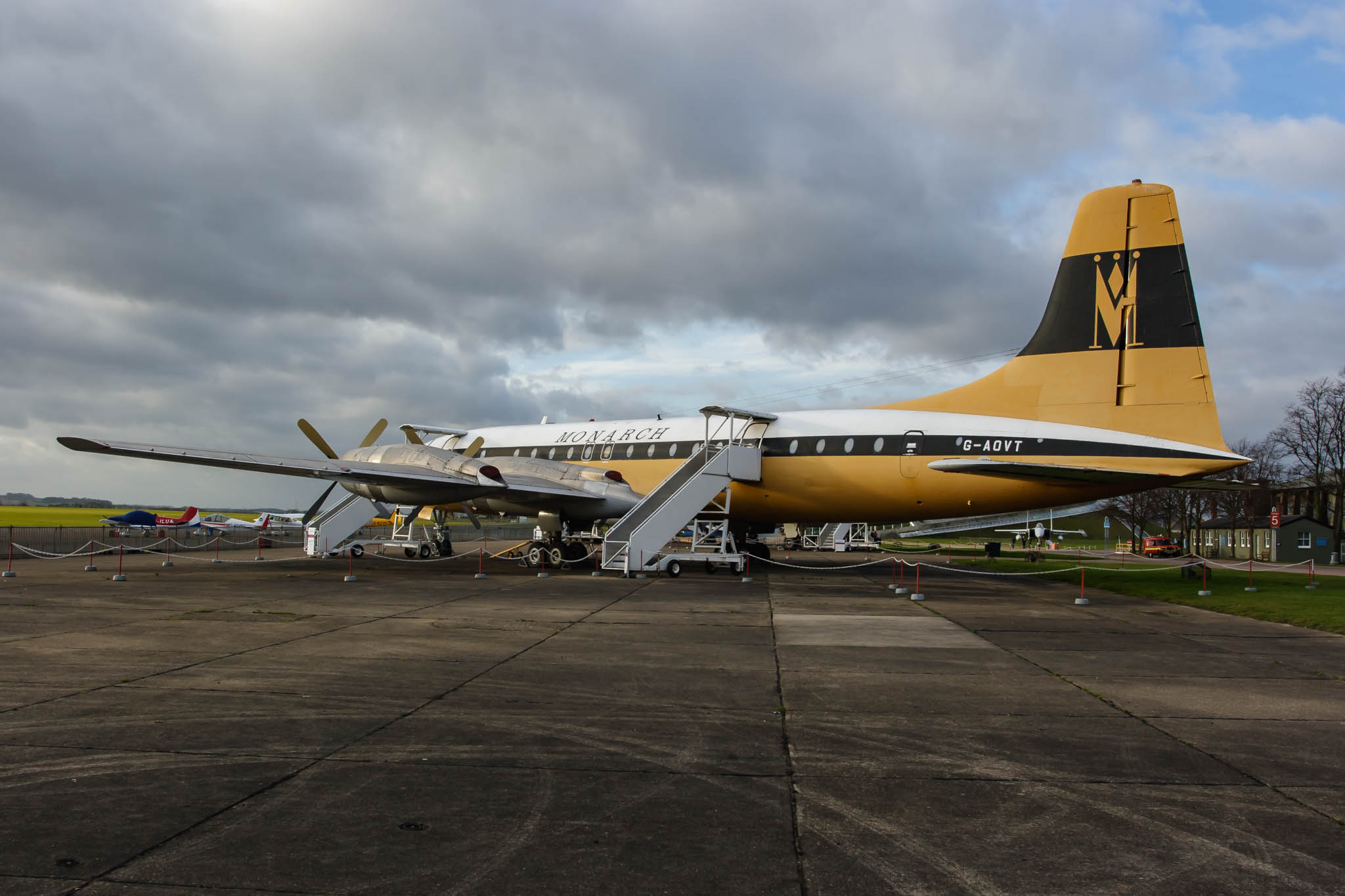
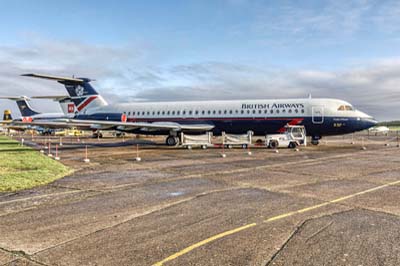
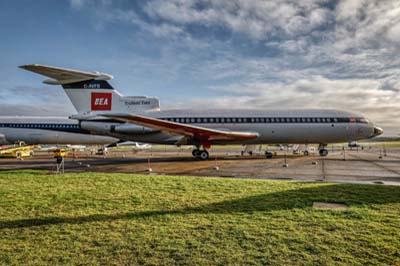
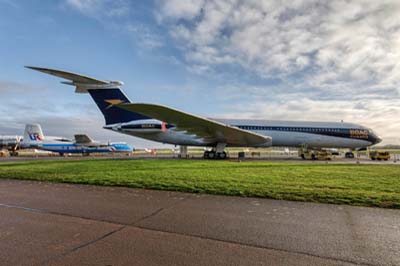
Outside and braving the elements are a fleet of Britain's finest home produced airliners dating from the 1960s to the 1970s. These are Britannia, Super VC-10, Trident 2 and BAC One-Eleven.
Above: Bristol Britannia 312 (G-AOVT) was delivered to BOAC in 1959 and later operated principally with British Eagle and Monarch Airlines and in whose colours it has been restored. |
Left to right: Bristol Britannia 312 (G-AOVT).
Handley Page Herald 201 (G-APWJ).
Vickers Viscount 701 (G-ALWF) was delivered in 1953 to British European Airways and in whose original colours it has been restored. It later flew with Channel Airways and finally Cambrian Airways before being retired in 1971. |
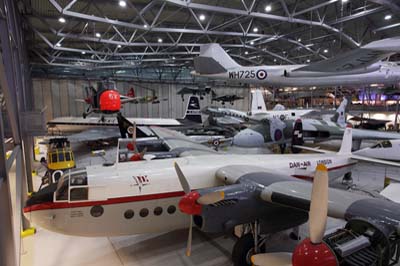
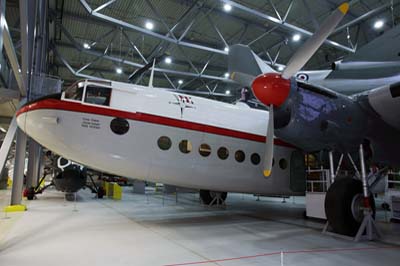
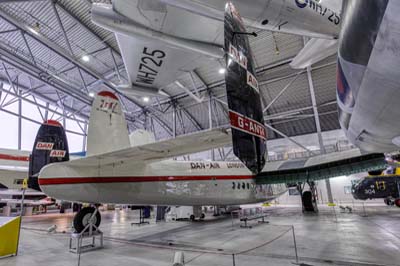
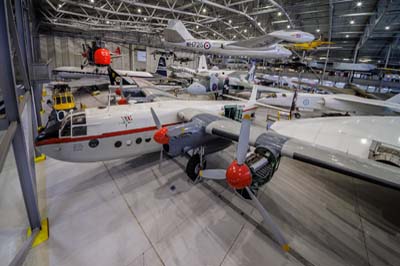
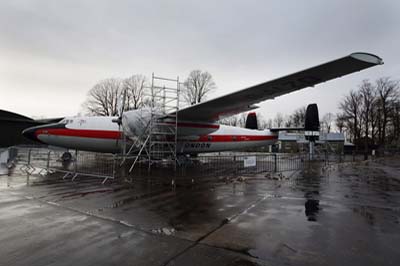
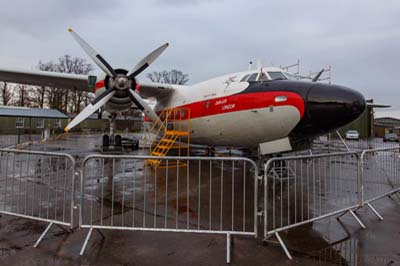
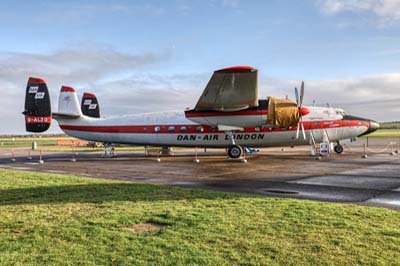
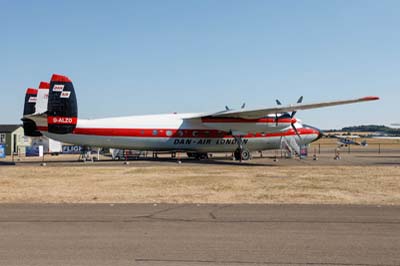
| Left to right: Airspeed AS.57 Ambassador 2 (G-ALZO) recently restored by the Duxford Aviation Society in the colours of Dan-Air London. |
Left to right: BAC One-Eleven (G-AVMU).
Hawker Siddeley Trident 2E (G-AVFB).
Vickers Super VC-10 (G-ASGC). |
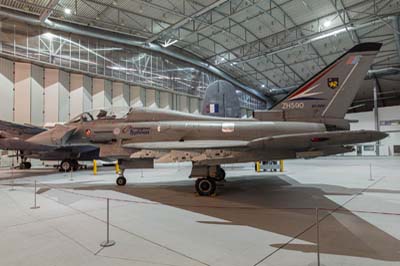
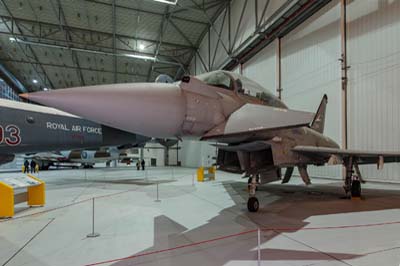
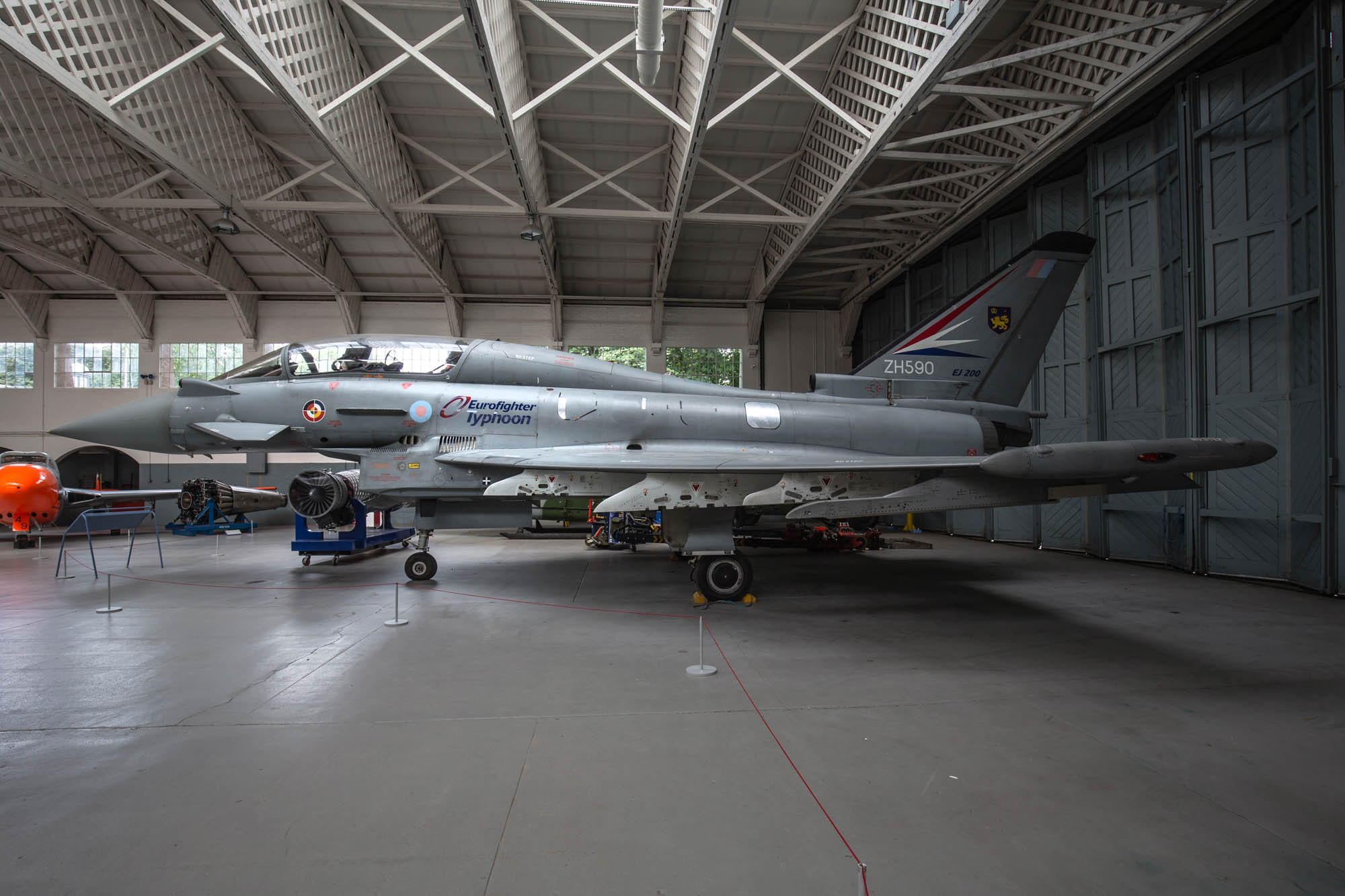
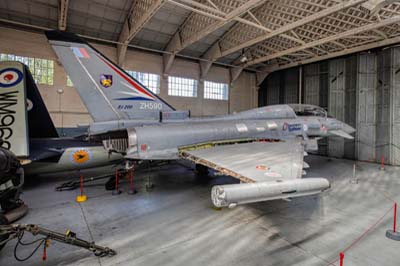
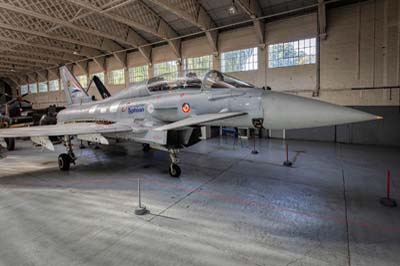
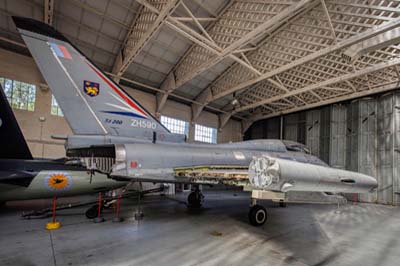
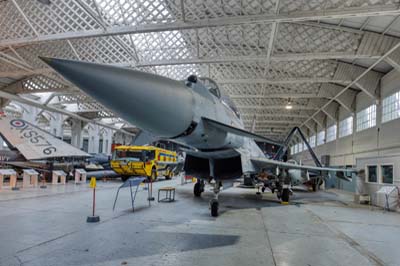
| Left to right: Eurofighter EF-2000 Typhoon T.1 (ZH590 c/n DA4) BAE Systems two-seat prototype. In December 2023 it was transferred to RAF Cosford as a ground training aid. |