Montreal Aviation Museum
MacDonald Campus, McGill University
Montreal, Quebec
September 2026
|
| Founded in 1998 by aviation enthusiast Godfrey Stewart Pasmore, the Montreal Aviation Museum (MAM) is a volunteer-run, federally chartered non-profit organisation. Housed in the historic 'Old Stone Barn' at McGill University's Macdonald Campus in Sainte-Anne-de-Bellevue, Quebec, the museum preserves the civil and military aviation heritage of Quebec and Canada. Renovation of the heritage building known as the 'Old Stone Barn' began in 1999 as the new home of the Canadian Aviation Heritage Centre. Volunteers undertook extensive work, including clearing the silos, installing bathrooms, walls and electrical systems, and replacing the roof. The building has continued to be renovated and maintained, preserving its historic character while providing space for the museum to grow. The building continued to be extensively renovated up to October 2026. |
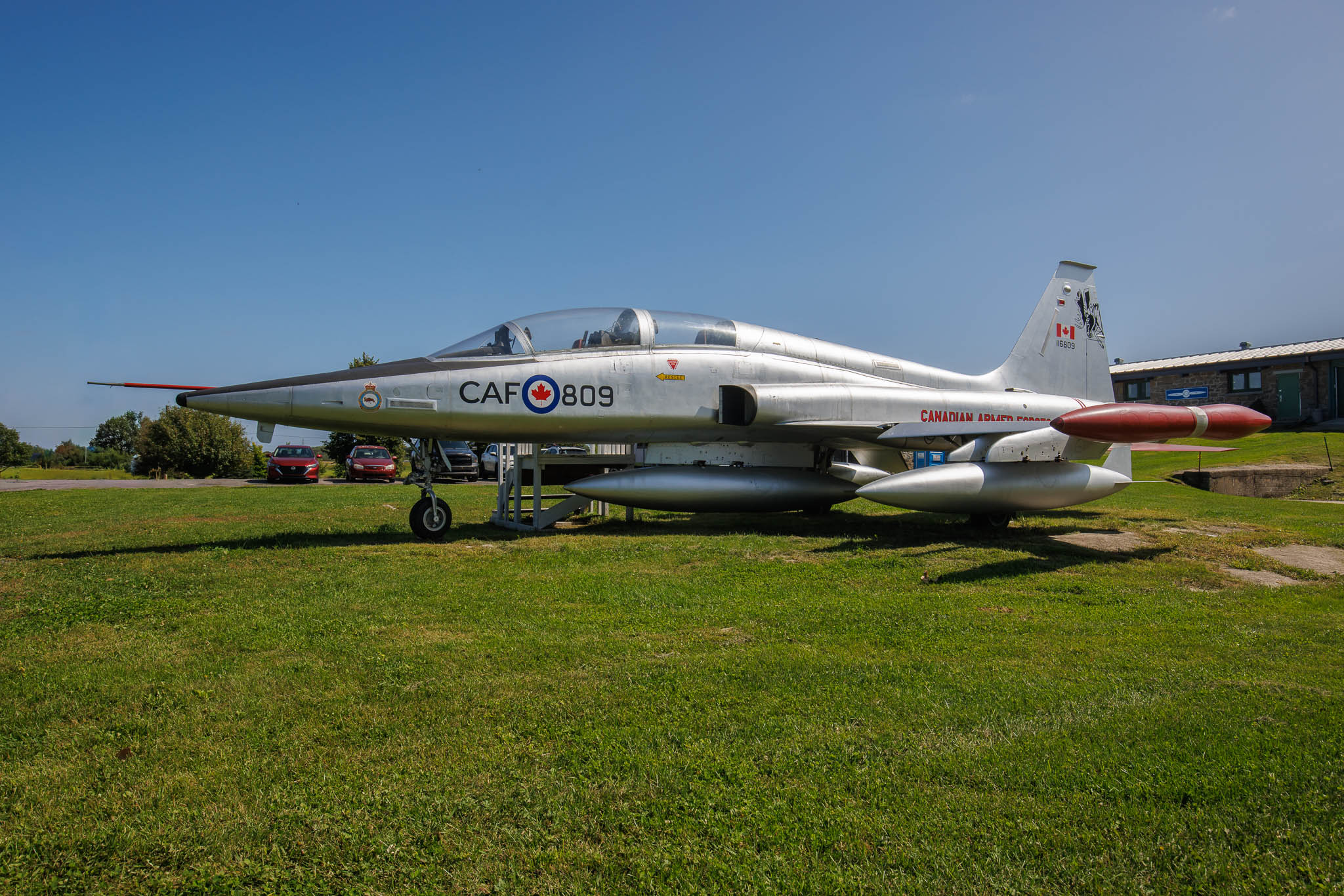 |
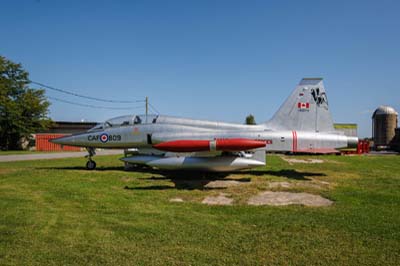
Left to right: Canadair CF-116D Freedom Fighter (116809) ex RCAF. Delivered to CFB Cold Lake, Alberta, the aircraft was withdrawn from active service in 1994. It subsequently spent many years on display at the Canadian Forces Logistics Museum (Royal Canadian Ordnance Corps Museum) at Longue Pointe Garrison in Montreal.
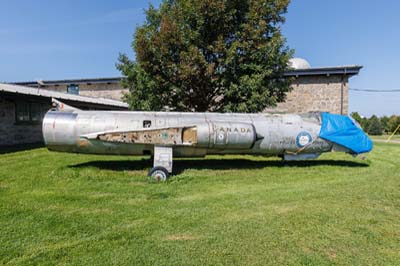
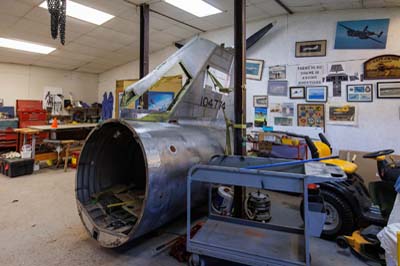
Canadair CF-104A Starfighter (104774) previously preserved at CFB Valcartier in Quebec, acquired in 2020 for restoration. |
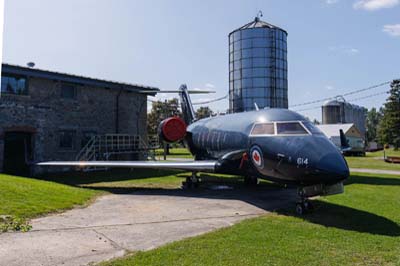
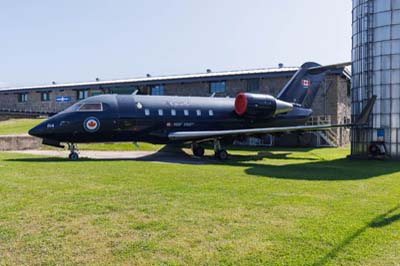
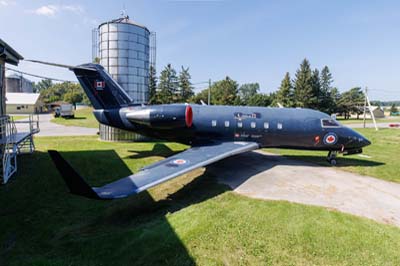
| Left to right: Bombardier CC-144 (CC-144B) Challenger (144614). Volunteers spent two years reassembling the Challenger after it was transported from CFB Trenton. |
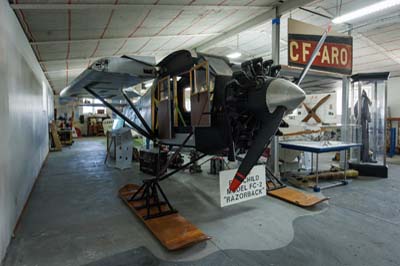
Left to right: Fairchild FC-2 (Replica 'G-CAIH'). The Fairchild FC-2 was an advanced early 'bush plane', featuring an enclosed heated cabin, folding wings and interchangeable wheels, floats or skis. Canadian Vickers built 12 aircraft under licence from Fairchild Aviation Corporation in New York. Designed for versatility, the FC-2 pioneered airmail services and was widely used for aerial photography, with a specially designed downward-facing camera. The MAM's aircraft is a volunteer-built replica representing an FC-2 flown by Hubert Pasmore, father of museum founder Godfrey Pasmore, while working for Fairchild Aerial Surveys of Canada in Quebec.
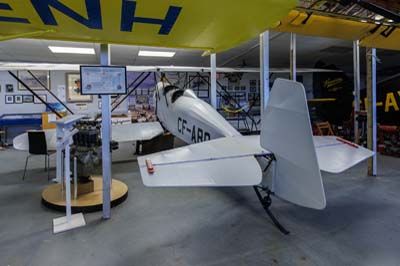
Curtiss-Reid Rambler (CF-ABO). The Curtiss-Reid Aircraft Company was formed in December 1928 after the Curtiss Aeroplane and Motor Company acquired the Reid Aircraft Company of Montreal. The new company continued development of the Rambler, a Canadian biplane designed as a trainer and sport aircraft. Although intended mainly for civilian use, the Rambler was evaluated by the RCAF as a basic trainer, which purchased a small number. Production totalled 45 aircraft in several variants.
Rambler CF-ABO was registered on April 5, 1929, but was severely damaged in a stall during approach at Cartierville, Quebec, on October 6, 1930.
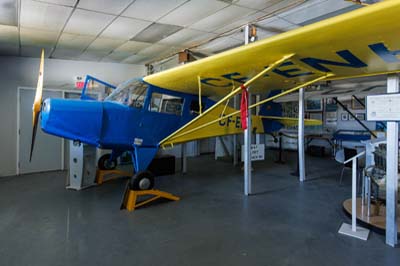
Fleet Model 80 Canuck (CF-ENH) from 1947.
|
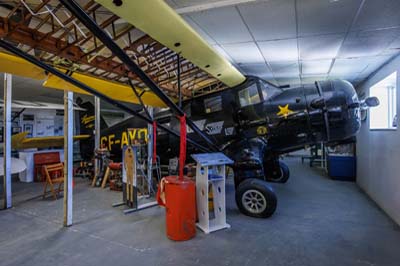
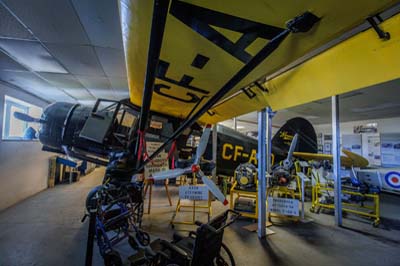
Left to right: Noorduyn Norseman Mk.VI (CF-GYY c/n 427 painted as 'CF-AYO') acquired 2019 and restoration completed 2024. The original CF-AYO which crashed in 1952 is at the Canadian Bushplane Heritage Centre in Sault Ste. Marie, Ontario.
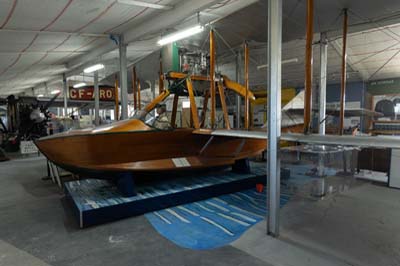
The Curtiss Seagull (unknown) was a two-seat flying boat developed from the Curtiss MF trainer used by the US Navy during World War One. Improved for the civilian market, it was regarded as one of the best single-engine flying boats of its class, but sales were limited by the availability of cheaper surplus aircraft. Only a small number were built.
This aircraft was manufactured in 1920 by Curtiss Aeroplane and Motor Company. Named Eleanor III, it was used by American explorer Alexander Hamilton Rice during an expedition through northwestern Brazil in 1924-1925. Following the expedition, Rice donated it to the Science Museum in London in 1926. Damaged by a German bomb during World War Two, it was exchanged with Canada's National Aviation Collection in 1968 for the nose section of a Douglas Dakota. Restored in 1974, it remained on display in Ottawa until 2024, when it was donated to the this museum.
|
 |