|
|
|
|
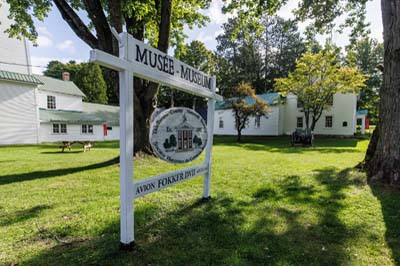
| Lac-Brome Museum Knowlton, Quebec September 2026 |
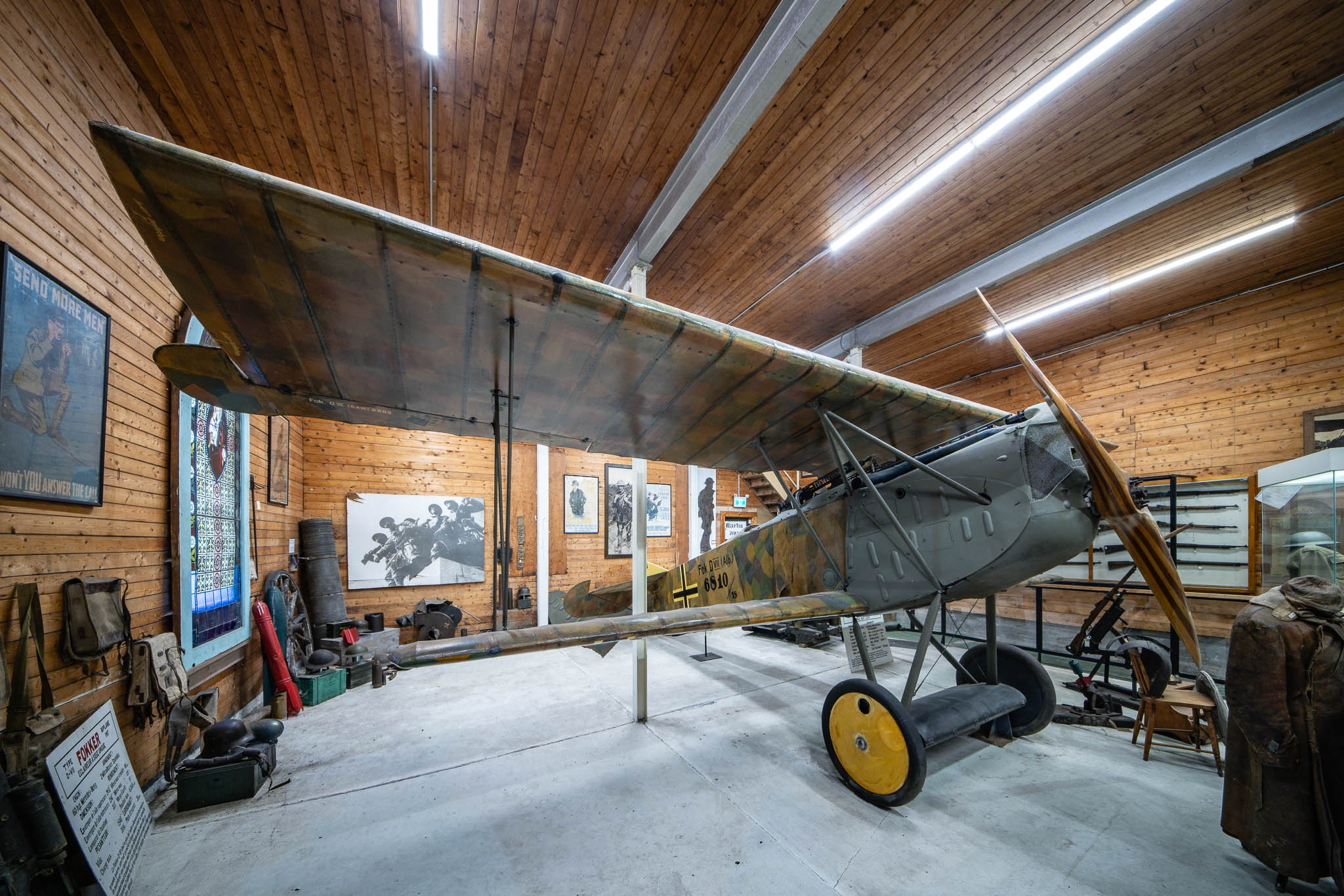 |
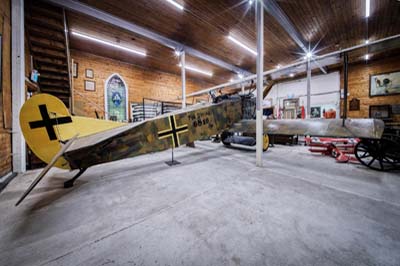
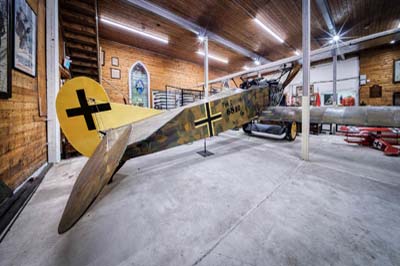
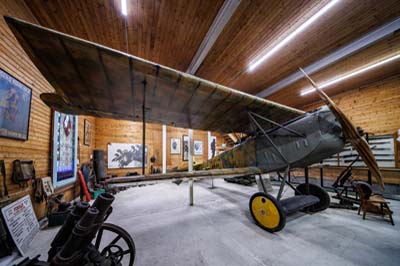
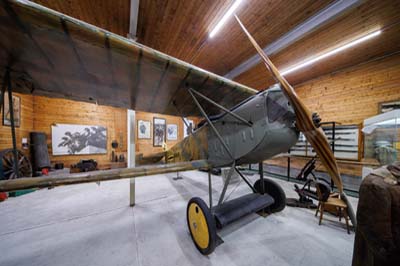
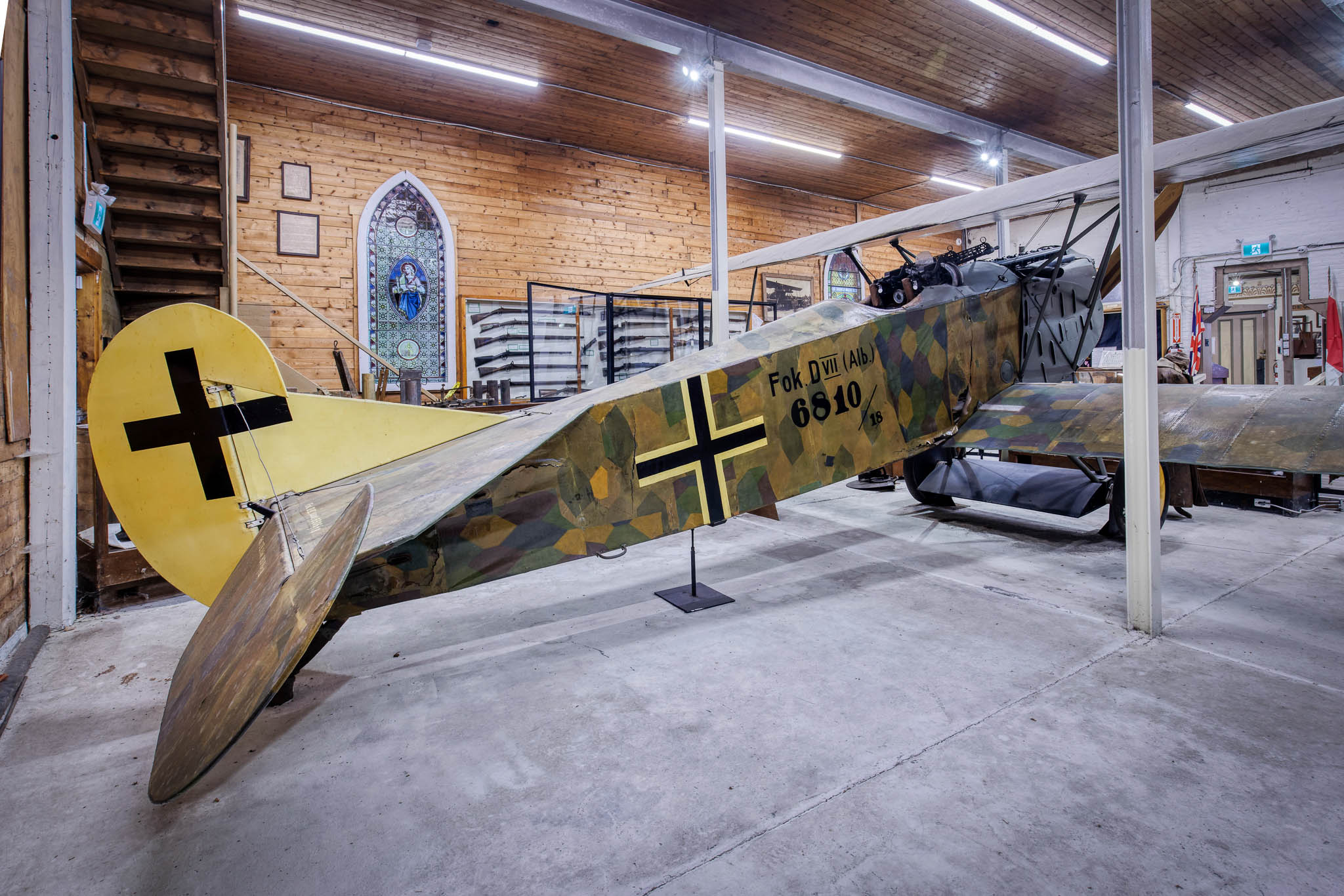
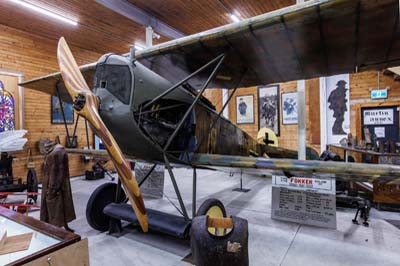
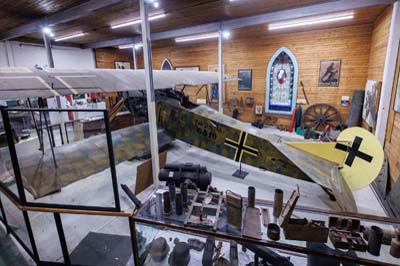
Following the November 11, 1918, Armistice, the aircraft was shipped from Feltham, England, on March 12, 1919, to Camp Borden, Ontario, for storage. After being displayed at several universities, it was acquired by the Brome County Historical Society for $112.50, with the purchase arranged by George G. Foster, Senator of Brome and a former student of Knowlton Academy. It was shipped to Knowlton on May 27, 1920. Foster also helped establish a war museum in the Town of Lake Brome, with the building inaugurated on August 26, 1921, by Canadian Prime Minister Sir Robert Borden. Following construction of the Martin Annex, the Fokker D.VII was reassembled and installed for display. In 1923, an employee accidentally cut through the aircraft's fabric while sweeping the floor. As the damaged covering continued to deteriorate, the aircraft was sent to the military base at Trenton, Ontario, for repairs. It is thought that the original fabric was varnished during this work. To preserve its authenticity, specialists repaired the covering using refurbished fabric matched to the four colours supplied by the Smithsonian National Air and Space Museum in Washington, DC. This distinctive repair became known as the 'Knowlton Pattern'. Following a brief period at the Canadian War Museum in Ottawa, the Fokker returned to Knowlton in 1963 and was installed in the Martin Annex, where it remains on public display. Although remarkably original, the aircraft incorporates components from several other Fokker D.VIIs, including the cowling, ailerons, tailplane and elevator. Different identification numbers, including 6810, 8504, 8502, 6506 and 8318, reveal their origins. Such interchange of components was common practice when these aircraft were in service. |
 |
 |
 |
 |
 |
 |
 |
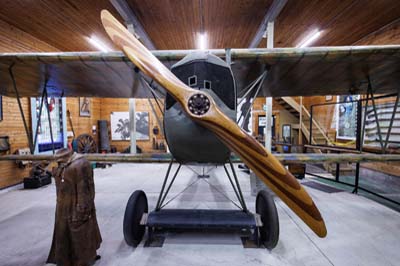 |
| Fokker D.VII (6810/18) was built under license by Albatros at Johannisthal southeast of Berlin in 1918. 6810/18 fell within the 250 production serial block numbering 6650/18 to 6899/18. Johannisthal was Germany's first commercial airfield, it opened on September 26, 1909, |
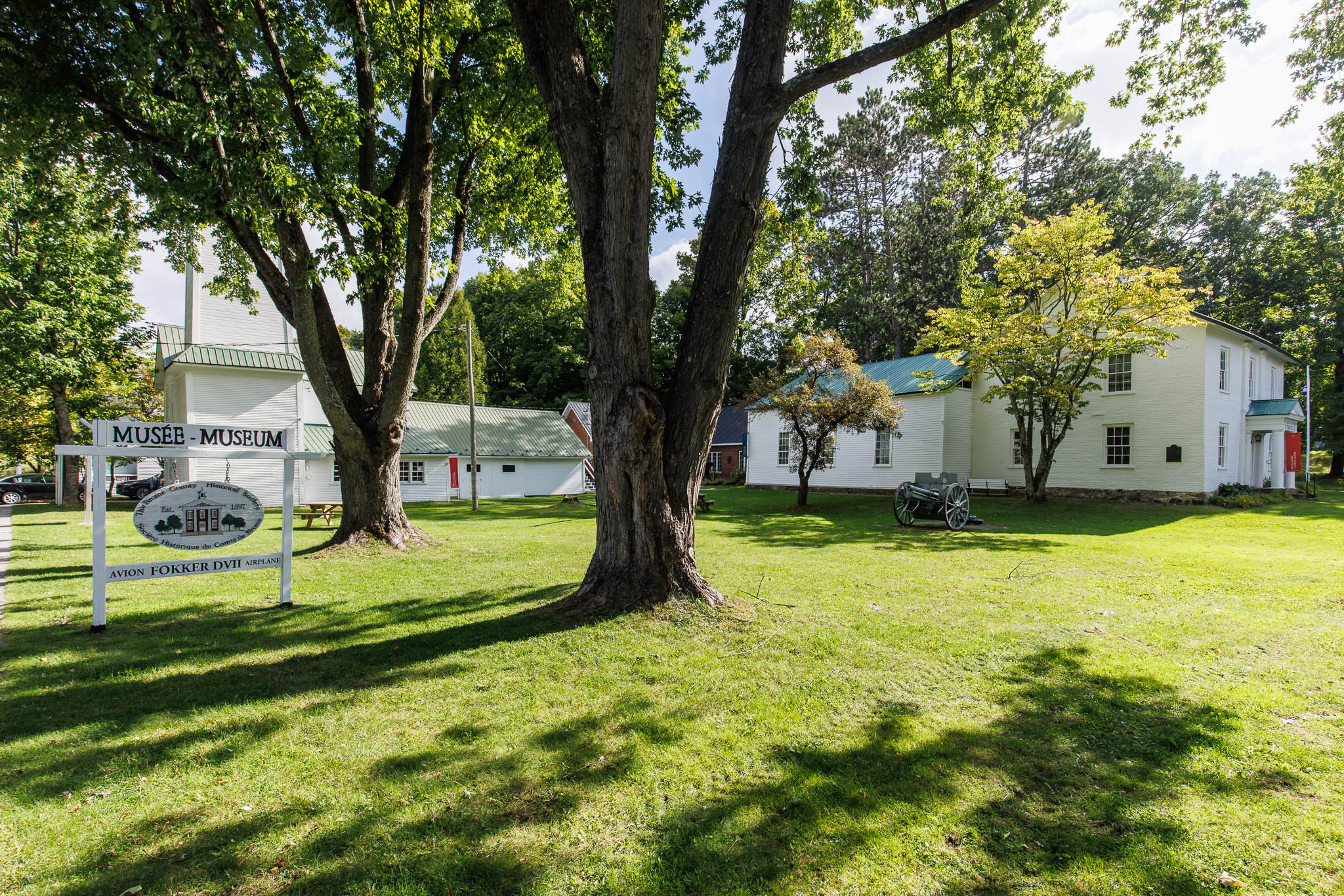 |
| The Fokker D.VII is displayed in the Martin Annex, one of several historic buildings at the museum. This very small building was specifically constructed to house the rare World War One aircraft. The room is little larger than the aircraft itself, making it difficult to obtain a wide view. The Martin Annex is attached to the rear of the Old Academy. The Fokker D.VII's exceptional manoeuvrability made it a formidable opponent, and by January 1918 it was widely regarded as one of the best fighter aircraft of World War One. Its effectiveness was such that the Fokker D.VII was specifically named in the Armistice of November 11, 1918, which required all examples to be surrendered to the victorious Allied powers. Only seven Fokker D.VIIs are known to survive today, the other six are preserved at: Fokker D.VII (4635/18 'U.10') Smithsonian National Air and Space Museum, Washington, DC, USA. Fokker D.VII (5796/18) Musée de l'Air et de l'Espace, Le Bourget Airport, Dugny, Paris, France. Fokker D.VII (8417/18 and 9207M) Royal Air Force Museum, Hendon, United Kingdom. Fokker D.VII (Swiss Air Force 640) Flieger Flab Museum, Dübendorf, Switzerland. Fokker D.VII (10347/18) Canada Aviation and Space Museum, Ottawa, Canada. Fokker D.VII ('266' c/n 2523) Nationaal Militair Museum, Soesterberg, Netherlands. Fokker D.VII (serial unknown, marked '4404/18') Deutsches Museum, Munich, Germany. On a five-year loan to the Nationaal Militair Museum in Soesterberg, starting from July 2025. |
 |