Golden Age Air Museum
Grimes Airfield, Bethel, Pennsylvania
October 2025
|
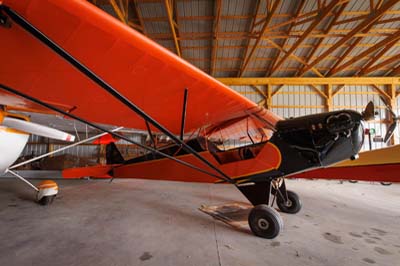
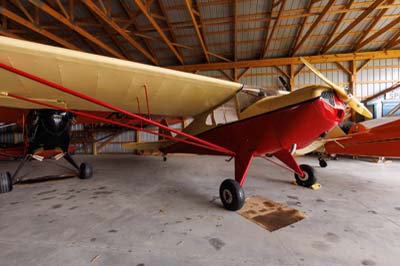
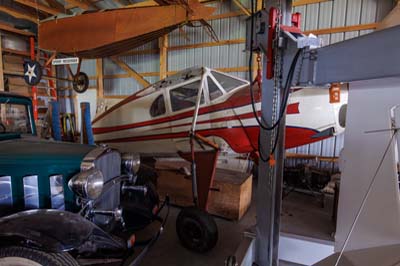
The Golden Age Air Museum is a living, non-profit museum devoted to preserving the spirit of aviation's "Golden Age", the vibrant decades of the 1920s and 1930s between the two world wars. Founded in 1997, the museum's skilled craftsmen and volunteers continually restore vintage aircraft in full view of visitors, using traditional techniques once employed by early builders. By 2013, the collection had grown to nearly three dozen airplanes, including restorations and a replica SPAD XIII built on-site.
Grimes Airfield
Built in 1946 by local businessman Walter Grimes, the airfield has been in continuous operation ever since. Designed as a showcase for small airports, it features two 3,000-foot runways across 160 acres and hosted everything from Piper Cubs to DC-3s. Originally built to expand Grimes's flight training, charter, and maintenance business, the airfield remains an integral part of the museum.
I thoroughly enjoyed my visit, from the warm welcome to the opportunity to freely explore the hangars and witness history being brought back to life. |
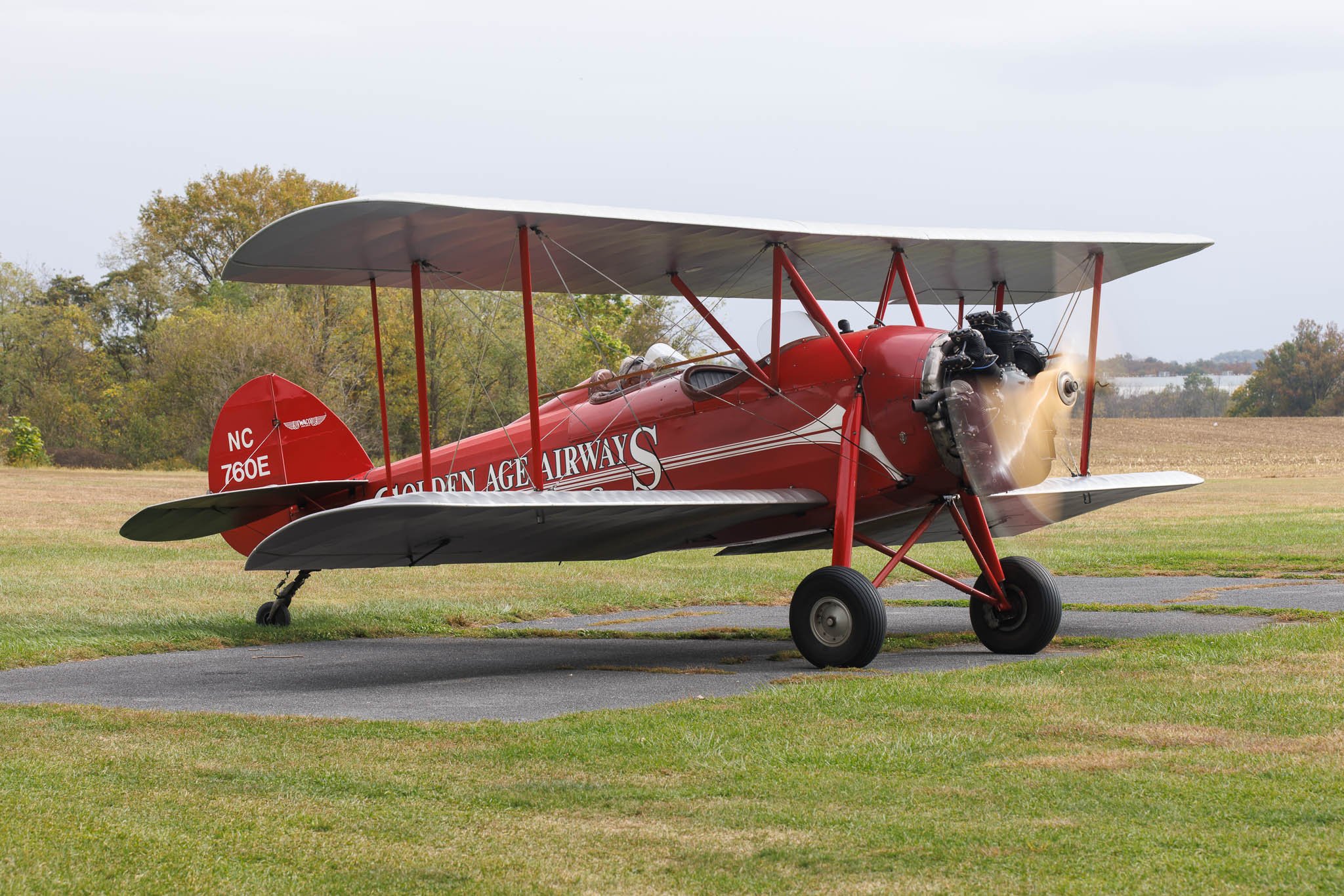 |
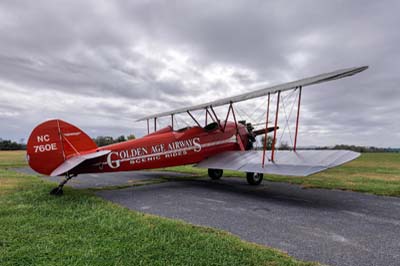
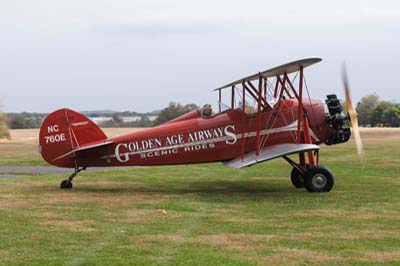
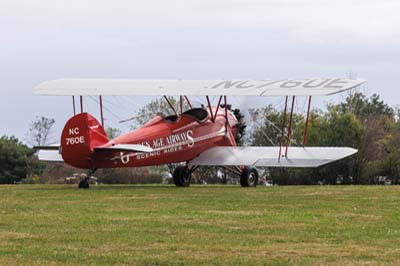
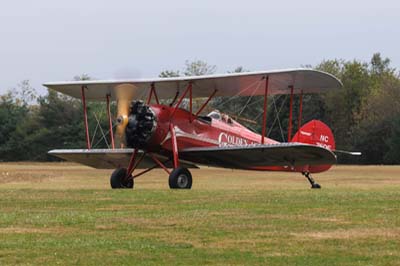
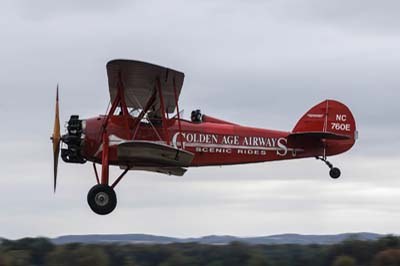
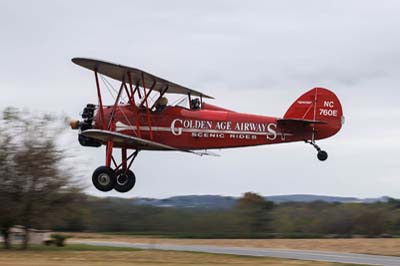
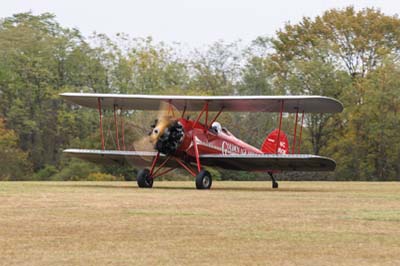
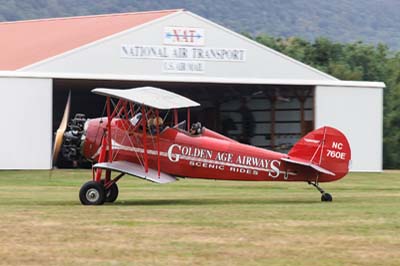
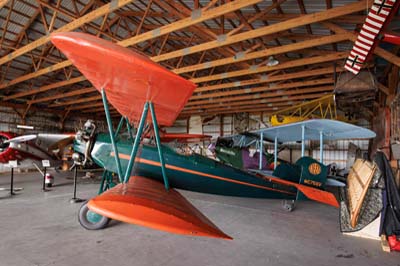
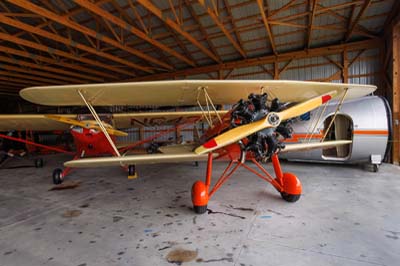
| Left to right: Waco GXE (NC760E ex N4453Y) from 1929. The Waco GXE was a 1928 variant of the Waco 10, an open-cockpit, three-seat biplane, distinguished by its Curtiss OX-5 engine. Waco's designation system changed at the time, and the GXE was the new designation for the Model 10. In Waco's designation system, The "G" stands for a straight wing (as opposed to a taperwing), the "X" for the specific engine type, and the "E" for its designation as the 10th model from the company. |
 |
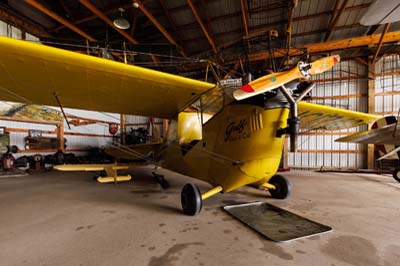
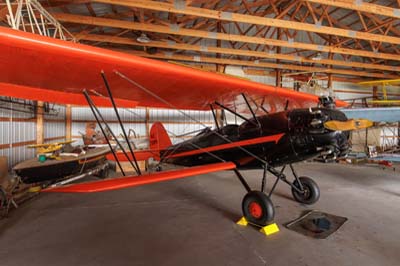
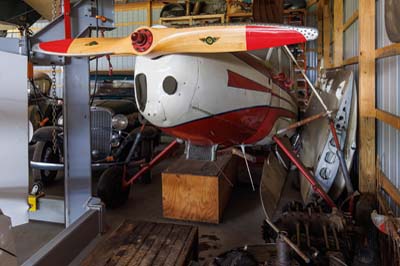
Velie Monocoupe 70 (NC6731 c/n 134), it was a well-known light aircraft from the 'golden age' of aviation, recognized for its enclosed cabin, side-by-side seating, and Velie M-5 radial engine. Designed by Don Luscombe and manufactured by Velie, it was among the first successful airplanes created specifically for private pilots. Gaining a notable share of the 1928 market, the Monocoupe 70 featured a wood-frame fuselage and fabric-covered wings. The Velie Monocoupe production spanned from 1927 to 1929.
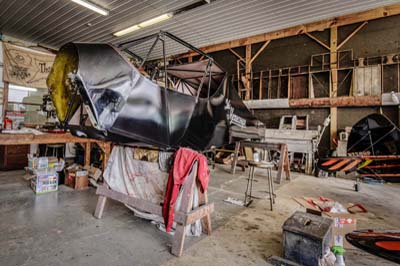
The museum's Velie Monocoupe 70 was donated by "Breity" Breithaupt in 2007. This iconic airplane had previously been the centerpiece of the Antique Airplane restaurant in Reading, Pennsylvania. Breithaupt restored the aircraft in the early 1960s and flew it just a handful of times before suspending it in his restaurant, where it remained for more than forty years. Today, it is one of the few remaining Model 70s preserved in airworthy condition. It is undergoing restoration, which included re-canvassing—the process of replacing the aircraft's fabric covering. This is a common practice for vintage light aircraft originally built with a fabric skin stretched over a metal or wooden frame, helping to preserve both their structure and authentic appearance.
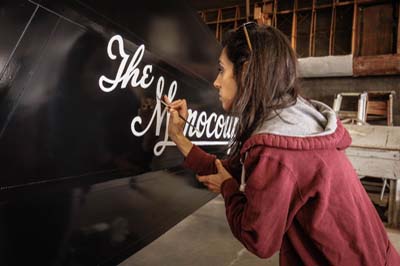
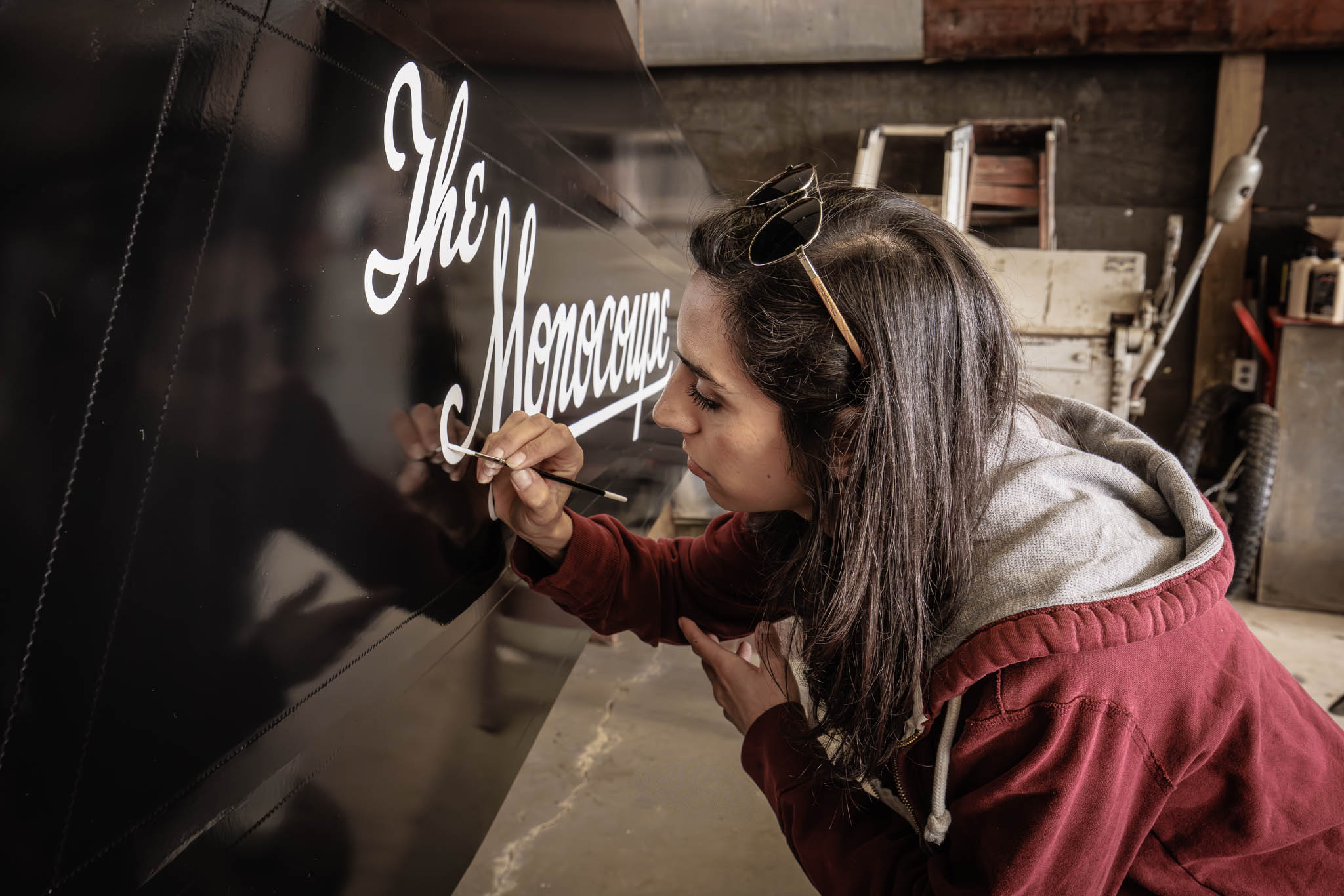
I met Bethany, a volunteer, in the restoration hangar as she carefully hand-painted the elegant inscription "The Monocoupe" on the aircraft's fuselage. Her steady hand and quiet focus were fascinating to watch. Pleased by my interest, she kindly let me photograph her at work. Later, to my surprise, she gave me a small piece of the original stripped fabric, on which she had painted a miniature version of the same logo by hand, a thoughtful and memorable gesture.
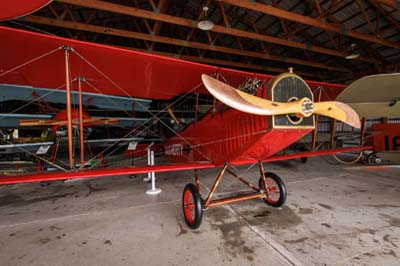
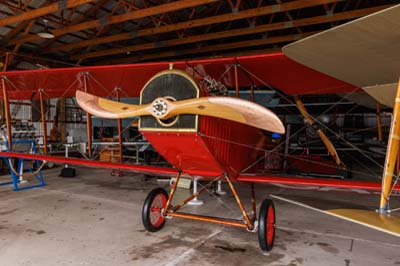
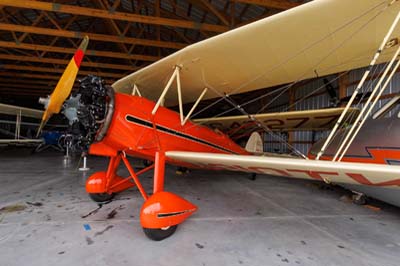
Curtiss JN-4D 'Jenny' (8047). The Jenny series was the most widely produced United States aircraft from 1917 through the 1920s. While it served as a primary trainer for the US Army Air Service during World War One, the Jenny became even more popular in the 1920s for barnstorming and carrying airmail.
The JN-4D model, on display, was the definitive version of the Curtiss JN series. Introduced in 1917, shortly after the United States entered World War One, it was one of several improvements Curtiss made to his aircraft design. Notably, the JN-4D replaced the earlier control wheel with a control stick to operate the ailerons, which were now located only on the upper wings.
The museum's Curtiss JN4D, which had not flown since the 1920s, has been restored to its original condition. Its paint scheme recreates the markings of Earl S. Daugherty, a well-known barnstormer and Hollywood pilot from Long Beach, California. Around 35 Curtis Jennys survive today from a total of 6,813 built.
|
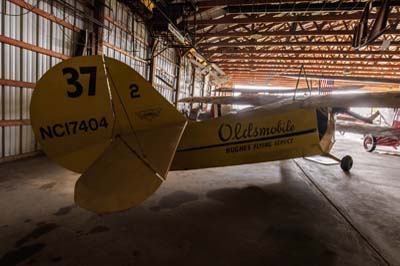
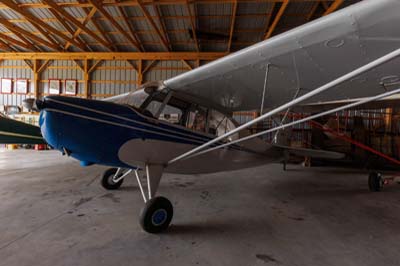
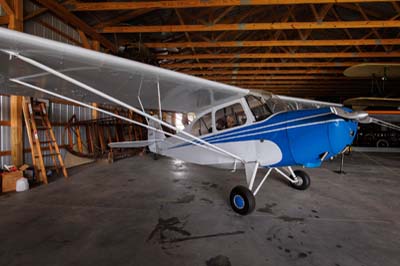
Left to right: Aeronca C-3 (NC17404 '37-2'). The C-3, affectionately nicknamed the "Flying Bathtub," was produced by the Aeronautical Corporation of America from 1931 to 1937. Developed from the earlier Aeronca C-2, the C-3, introduced in 1931, added a passenger seat alongside the pilot, making it more practical for two occupants. Production ended in 1937 when the design no longer complied with updated US airworthiness standards. Of the roughly 400 to 440 C-3s built, around 30 still survive today. A British-built version, the Aeronca 100, saw limited production, with just 24 aircraft constructed under license. Only 3 Aeronca 100s have survived.
This Aeronca C-3 was originally owned and flown by aviator Howard Hughes in the late 1930s as part of the Hughes Flying Service. For airshows, Hughes famously demonstrated the aircraft by taking off and landing from a specially modified Oldsmobile sedan, with both the plane and the car prominently displaying the Oldsmobile sponsorship. The aircraft was restored by museum volunteers in 2005 and later donated to the museum by the late Dr James McCord.
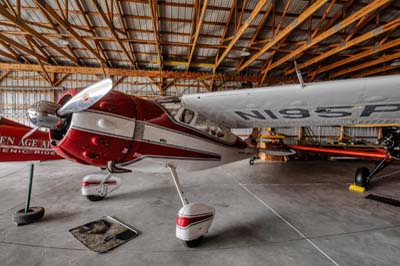
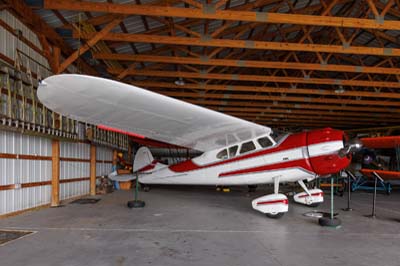
Cessna 195 Businessliner (N195PD) from 1950. The Cessna 195 was a premium, all-aluminum, radial-engine aircraft, first flown in 1945 and produced from 1947 to 1954, with 1,180 built. Designed as Cessna's vision of the modern corporate airplane, it offered spacious seating for five adults and was the last US-produced cabin-class aircraft powered by a radial engine.
This Cessna 195 was originally purchased new by the Big Chief Drilling Company of Oklahoma for corporate use. After changing hands multiple times, it was severely damaged in a takeoff accident in 1980 and left abandoned. Acquired in 1985, it underwent a meticulous four-year restoration to return it to its current condition.
|
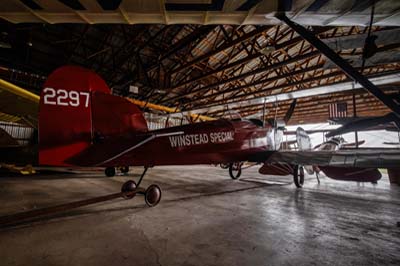
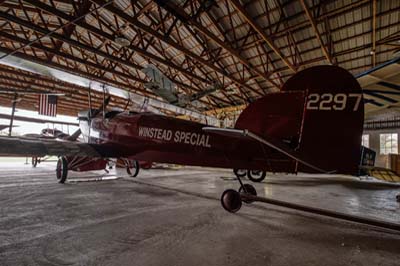
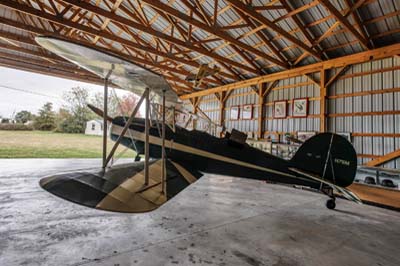
Left to right: Winstead Special (N2297). It was built by brothers Carl and Guy Winstead in Wichita, Kansas, and quickly became a star of the barnstorming era. Originally used for flying circus acts, air racing, and barnstorming, it gained fame in the late 1920s when Carl Winstead flew it with the Flying Aces Air Circus, featuring legendary wing walker Jessie Woods performing daring stunts on its wings.
Throughout the 1930s, the aircraft changed hands several times before making its final flight in 1937 and entering long-term storage. In the mid-1990s, the museum acquired the Winstead Special and embarked on a meticulous four-year restoration, returning it to its original flying circus configuration and capturing the thrill of its barnstorming heyday. It was the only example built.
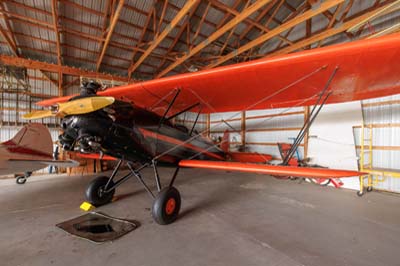
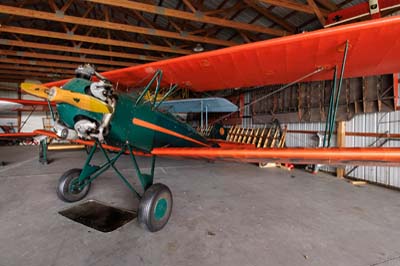
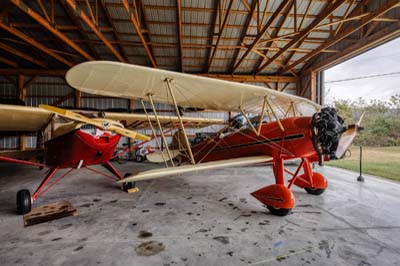
Bird CK (NC726N). Built in 1931 in Brooklyn by the Bird Aircraft Corporation (formerly Brunner-Winkle), the CK series was the company's third-generation biplane, originally designed around the Curtiss OX-5 engine. It was designed for barnstorming and passenger rides. Accommodating a pilot and up to three passengers via a fold-out jumpseat, it stood out with an upper wing twice the size of the lower and impressive efficiency, carrying equal or greater loads than competitors on half the horsepower of its predecessors.
NC726N is part museum's collection since 2001, this airplane thrilled passengers with sightseeing rides until 2008 and remains meticulously maintained in airworthy condition. |
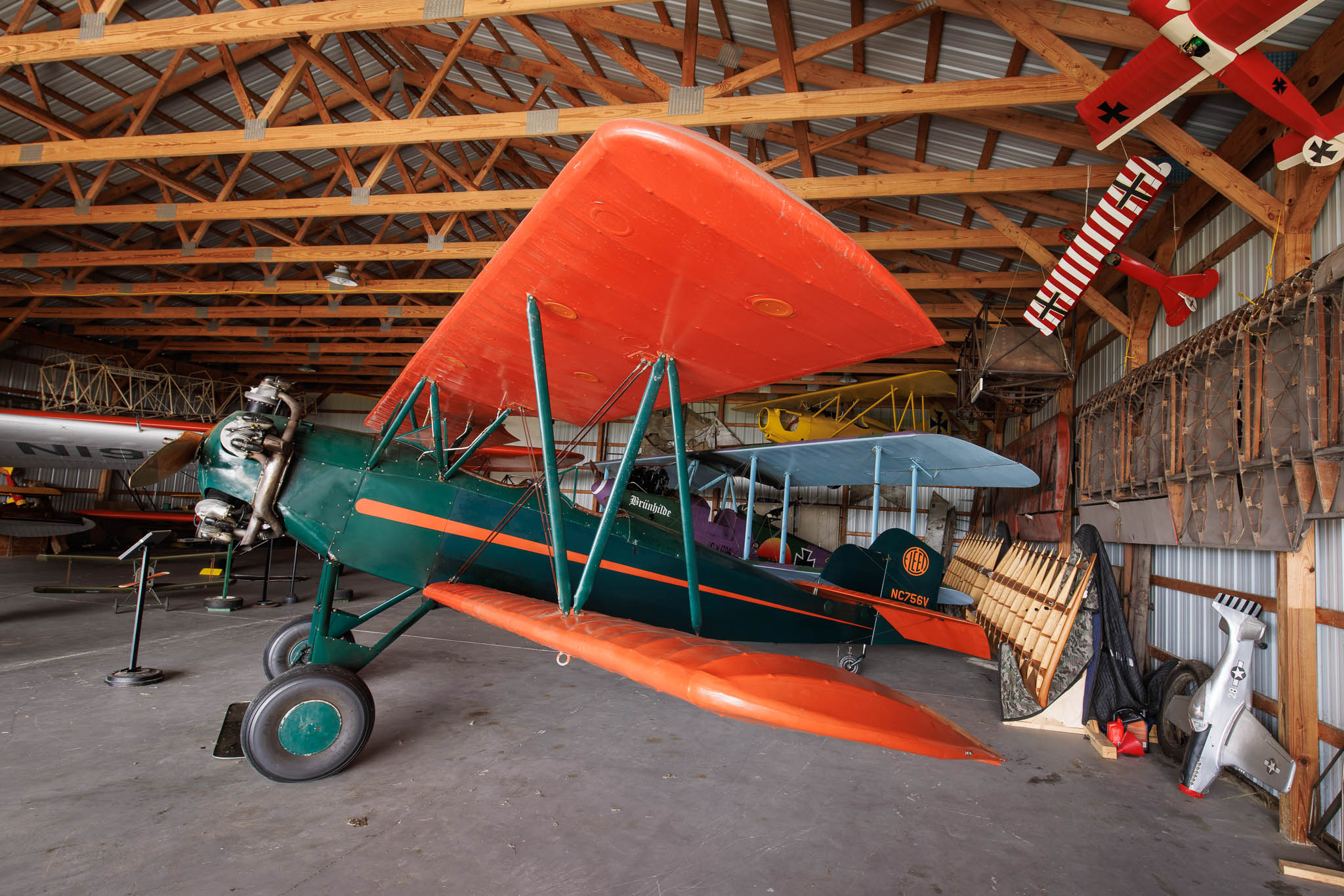 |
| Left to right: Fleet Model 7 (NC756V). Fleet Aircraft was a Canadian manufacturer of aircraft from 1928 to 1957. In the 1930s, Fleet Aircraft produced the single-engine, two-seat Model 7 series—known as Fawn I (7B) and Fawn II (7C), as primary trainers for the RCAF. Built in Fort Erie, Ontario, these aircraft were praised for their excellent handling and ruggedness, helping raise Canadian pilot standards. A total of 31 Model 7Cs were built, with 43 Model 7Bs and 7Cs in service by 1939. The Fawns, along with the Fleet Finch, trained thousands under the British Commonwealth Air Training Plan and remained in RCAF service until 1947. |
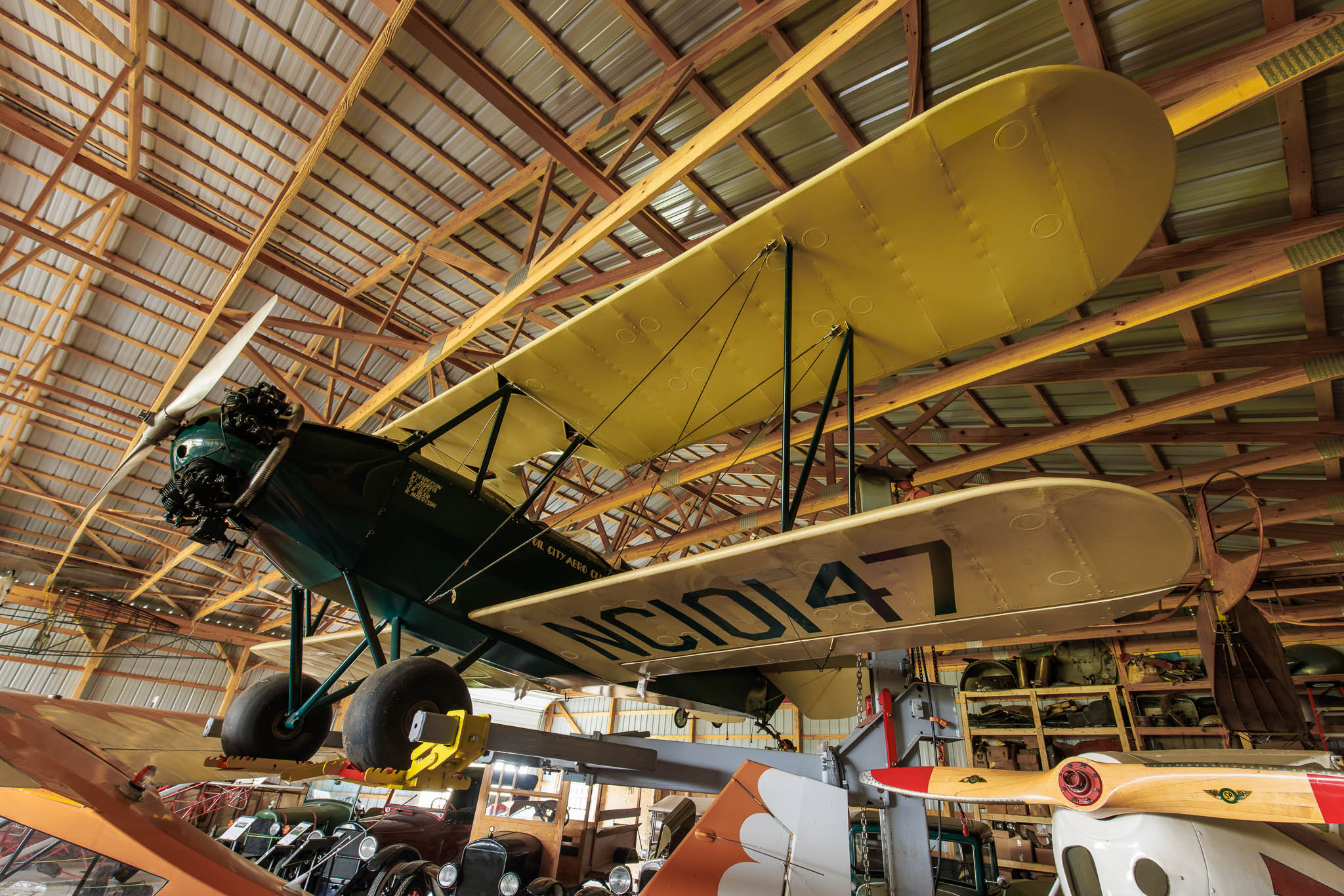 |
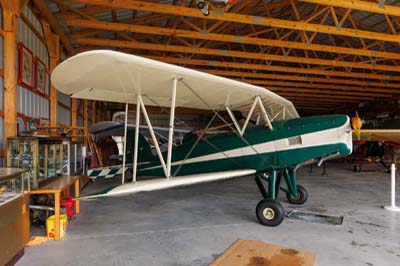
Left to right: Franklin Sport 65 Model A (NC10147) inscribed 'Oil City Aero Club'. The Franklin Sport was a two-seat sport and training biplane built in the United States in 1930. Production ended in 1933 when Franklin Aircraft ceased operations.
Taylor E-2 Cub (NC10147 c/n 54). The Taylor Cub, designed by C. Gilbert Taylor, was created as a small, lightweight, and simple utility aircraft and became the predecessor of the Piper J-3 Cub. In 1930, under Taylor's leadership, the Taylor Aircraft Company began producing the two-seat, low-powered E-2 Taylor Cub, selling 22 units in 1931 at a price of $1,325. The production models used Continental A-40-2 engines, later upgraded to A-40-3, and were built from 1931 to 1936. When Clarence Gilbert Taylor left in 1935 to form what became Taylorcraft, William T. Piper bought Taylor's shares and renamed the company Piper Aircraft Company in November 1937. The aircraft then continued production as the Piper Cub, becoming one of the most famous light aircraft in history.
Today, seven E-2 Cubs are known to survive, with five still airworthy of the 353 constructed. The museum's example was acquired in 1990 after 50 years in storage, its restoration to original condition took three years.
Taylorcraft BC-12D (NC43277) from 1946. The Taylorcraft B is an American light, single-engine, high-wing monoplane with side-by-side seating for two. Built in large numbers by the Taylorcraft Aviation Corporation of Alliance, Ohio, it became a popular general aviation aircraft during the late 1930s and early 1940s.
|
Left to right: Stampe & Vertongen SV-4C (F-BCXG c/n 441). Jean Stampe, a Belgian World War I pilot, co-founded Stampe & Vertongen Aircraft in Antwerp in 1923. Initially Tiger Moth dealers, they began designing their own biplane trainer in 1933. Eight SV-4 prototypes were built in the 1930s, and production resumed after World War II. Alfred Renard rejoined the team, with Société Stampe et Renard in Belgium producing the SV-4B and SNCA du Nord in France producing the SV-4C.
F-BCXG was withdrawn from service in 1965 at Montargis, France. Its remains have now arrived at the museum, awaiting potential restoration.
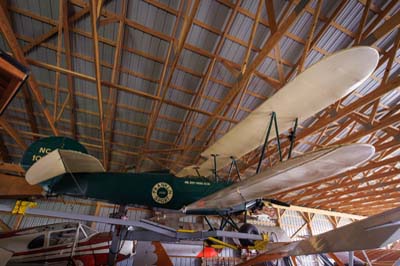
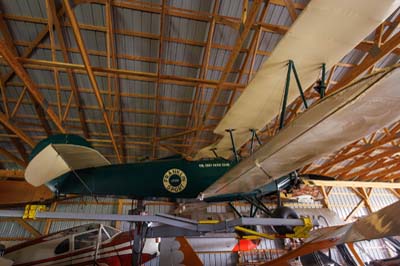
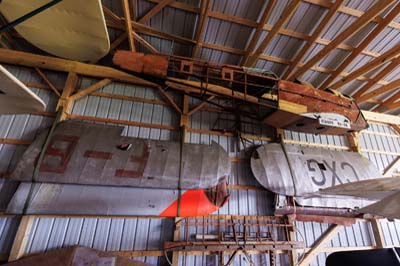
The Sperry Messenger (suspended above) from 1919, is a single-seat American biplane designed by Alfred V. Verville for the US Army Air Service and built by the Sperry Aircraft Company. Designated M-1 and MAT by the USAAS, about 50 were produced along with a civilian two-seat Sport Plane variant between 1920 and 1926. Notably, the Messenger became the first aircraft to make in-flight contact with an airship.
Fairchild 24R () from 1937 awaiting restoration. |
Left to right: Williams-Waco RTO (N810TW) from 1987.
|
| Left to right: Aeronca 7AC Champion (N1885E) from 1946. A tandem-seat trainer and personal aircraft first flown in 1944 and built by Aeronca from 1945 to 1951. Designed by Ray Hermes, it became popular, with over 7,200 produced, and was powered by a 65-hp Continental engine.
|
Left to right: Great Lakes 2T-1A (N75M). The Great Lakes Biplane was a small, two-seat aircraft developed in Cleveland, Ohio, for training and aerobatics, with its first flight in March 1929. The design proved a success, with 262 built before production ended in 1933 due to the Great Depression. Its popularity endured, leading to reintroductions in the 1970s and again in 2011 by WACO Classic Aircraft. This particular aircraft is a modern reproduction, manufactured in 1971.
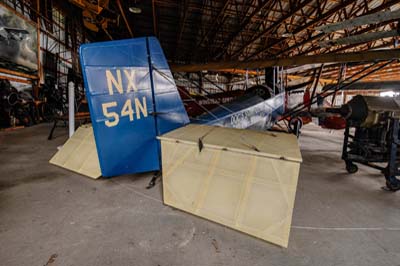
Pietenpol B4-A Air Camper (NX54N). The Pietenpol Air Camper was designed by Bernard H. Pietenpol in 1929 as an affordable, do-it-yourself homebuilt aircraft, famously powered by a converted Ford Model A engine. Featured in the 1932 Flying and Glider Manual with the promise, "You can build her for $500," the plans enabled amateur builders to create their own aircraft, while Pietenpol himself built only a few for customers. Over 60 different engines have been adapted to the design, which remains largely unchanged from the firewall back.
Remarkably, nearly a century later, Pietenpol's grandson still sells the plans—allowing anyone to build this classic plane today for just $75. This particular Air Camper, built in 2005 from the original plans, but is powered by an authentic 1932 Ford Model A engine. |
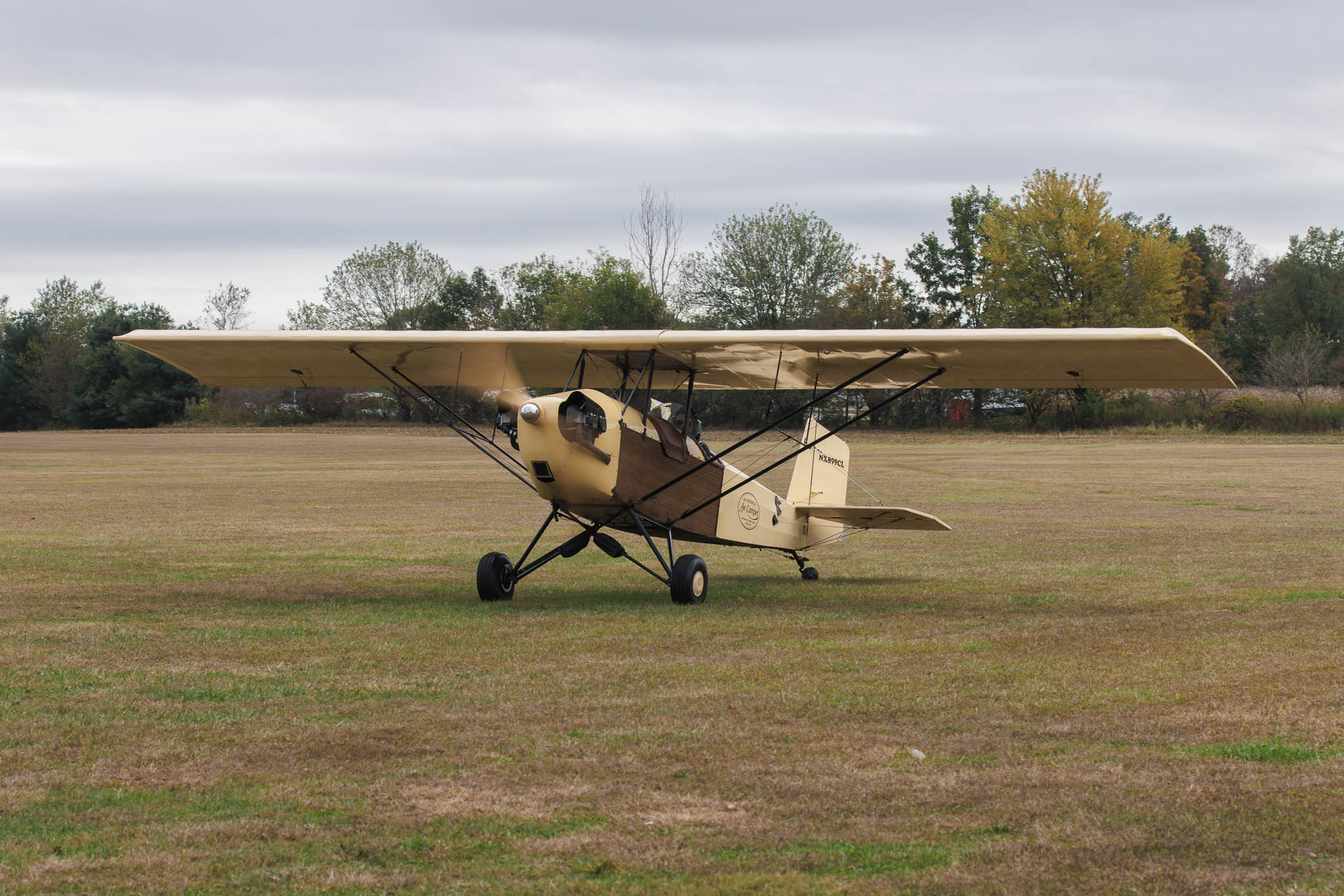 |
| Left to right: Pietenpol Air Camper (NX899CL) was visiting from a nearby farm strip. |