Frontiers of Flight Museum
Dallas Love Field Airport, Texas
February 2019
|
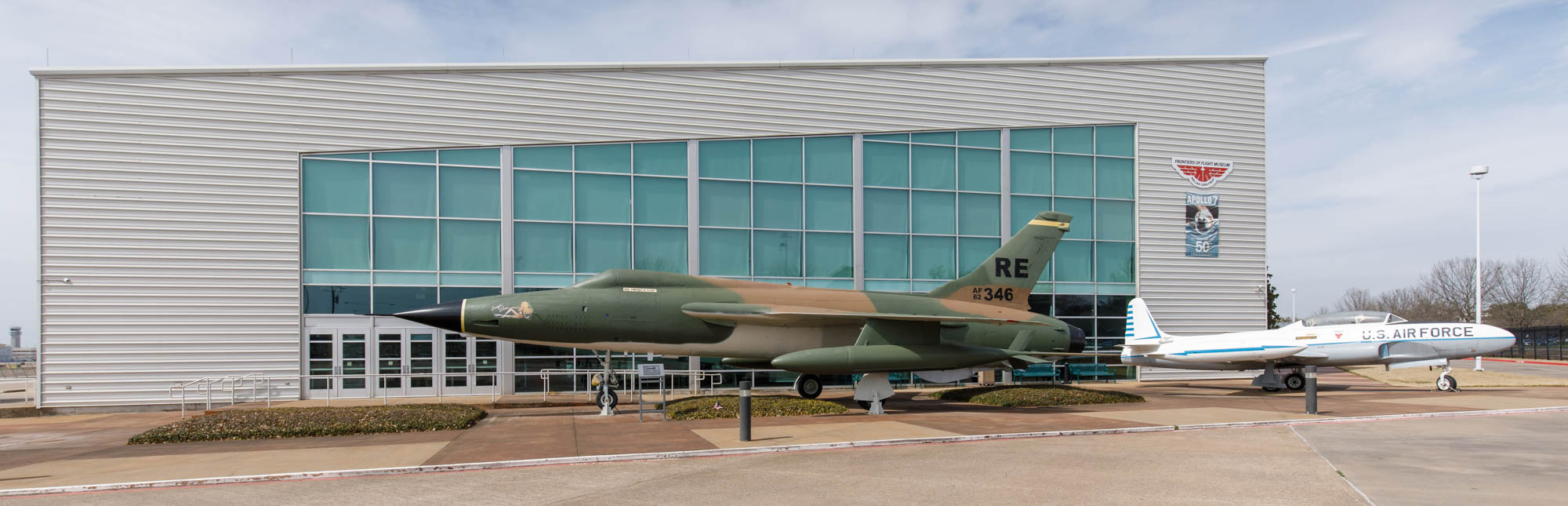
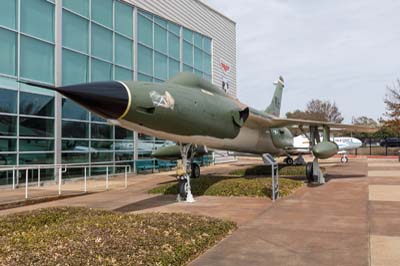
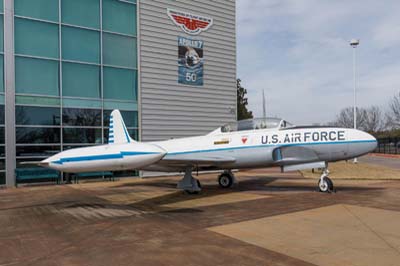
| Republic F-105D Thunderchief (62-4346 'SH') and Lockheed T-33A Shooting Star (56-1767) outside the museum building |
Left to right: Republic F-105D Thunderchief (62-4346 'SH'),
Lockheed T-33A Shooting Star (56-1767),
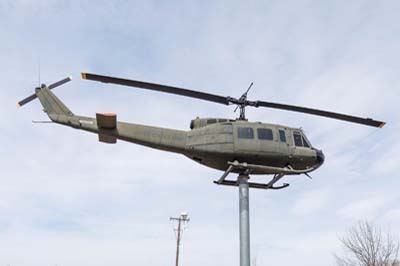
Bell UH-1H Iroquois (66-16977) US Army,
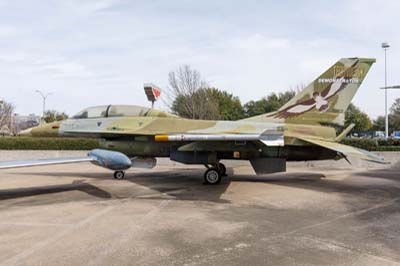
General Dynamics F-16B Fighting Falcon (75-0752). |
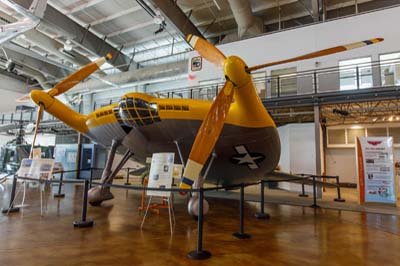
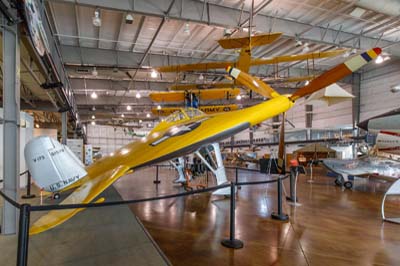
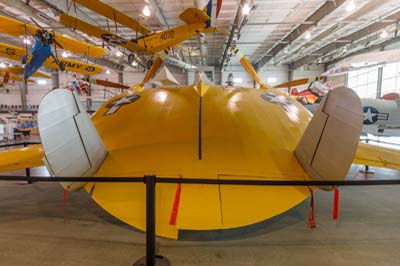
| Left to right: Vought V-173 'Flying Pancake' (02978) built in 1942 for the US Navy. |
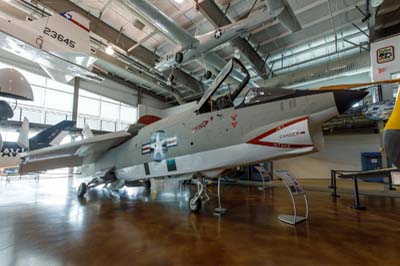
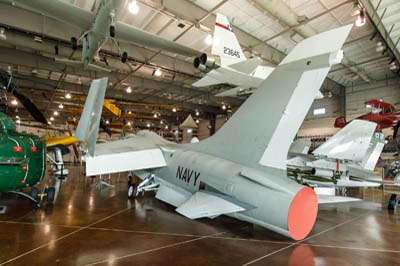
Left to right: Vought RF-8G Crusader (146882),
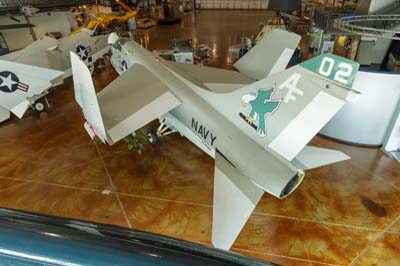
Vought A-7B Corsair II (154502 'AF-02'),
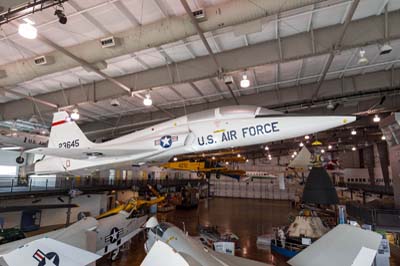
Northrop T-38A Talon (62-3645). |
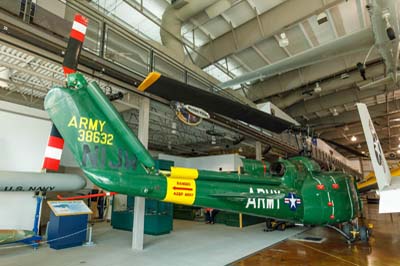
Left to right: Bell TH-1L Iroquois (38632 registered N7UW),
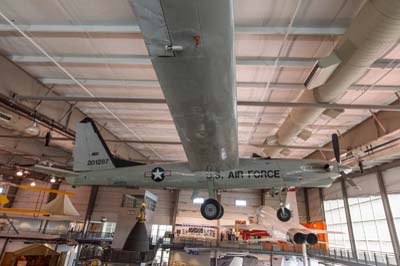
Vought XQM-93A (72-01287 registered N5592S),
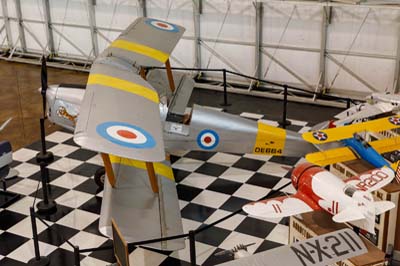
de Havilland DH.82A Tiger Moth (DE664 registered VH-PCC). |
 |
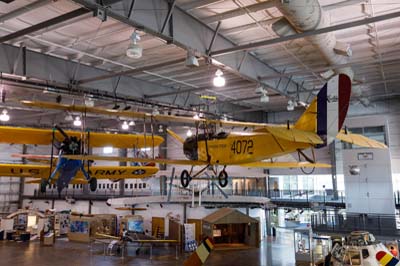 |
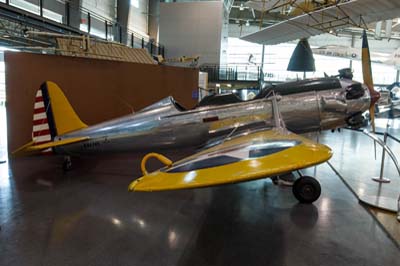
Left to right: Ryan PT-22 Recruit (41-20923 registered N46745),
Curtiss JN-4D Jenny (4072 Registered N3769). The Curtiss JN 'Jenny' is a series of biplanes built by the Glenn Curtiss Aeroplane Company of Hammondsport, New York, later the Curtiss Aeroplane and Motor Company, produced as a training aircraft for the US Army and US Navy. Production began in 1915 and became North America's most well known aircraft of World War One, training 95% of student pilots in the US and Canada. A Jenny was used for the world's first radiotelephony from one aircraft to another and from ground to air and vice versa in test conducted in July and August 1917. Also, a Jenny was the first utilised for the US Air Mail in May 1918.
The JN-4D model, on display, was the definitive version of the Curtiss JN series. Introduced in 1917, shortly after the United States entered World War One, it was one of several improvements Curtiss made to his aircraft design. Notably, the JN-4D replaced the earlier control wheel with a control stick to operate the ailerons, which were now located only on the upper wings. |
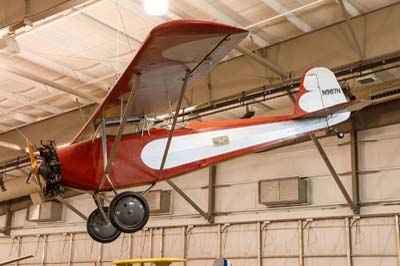
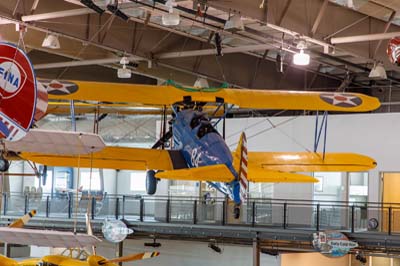
Left to right: Texas-Temple Sportsman (N987N),
Boeing Stearman PT-17 Kaydet (41-8888 '84' registered N62228).
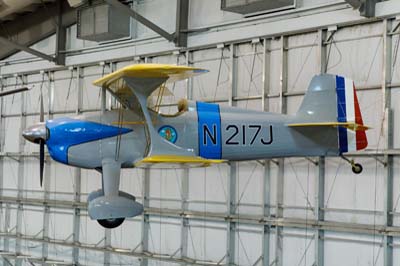
Meyer Little Toot (N217J) built from 1958. |