The Military Museums
Calgary, Alberta
August 2026
|
| Formerly the Air Force Museum of Alberta, 'The Military Museums' is now the home to eight separate museums including the Naval, Army and Air Force Museums of Alberta, and the Air Force Cold War Museum. |
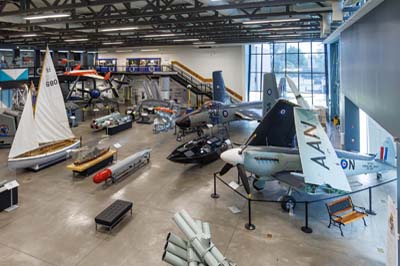
Left to right: Inside and outside the main museum building.
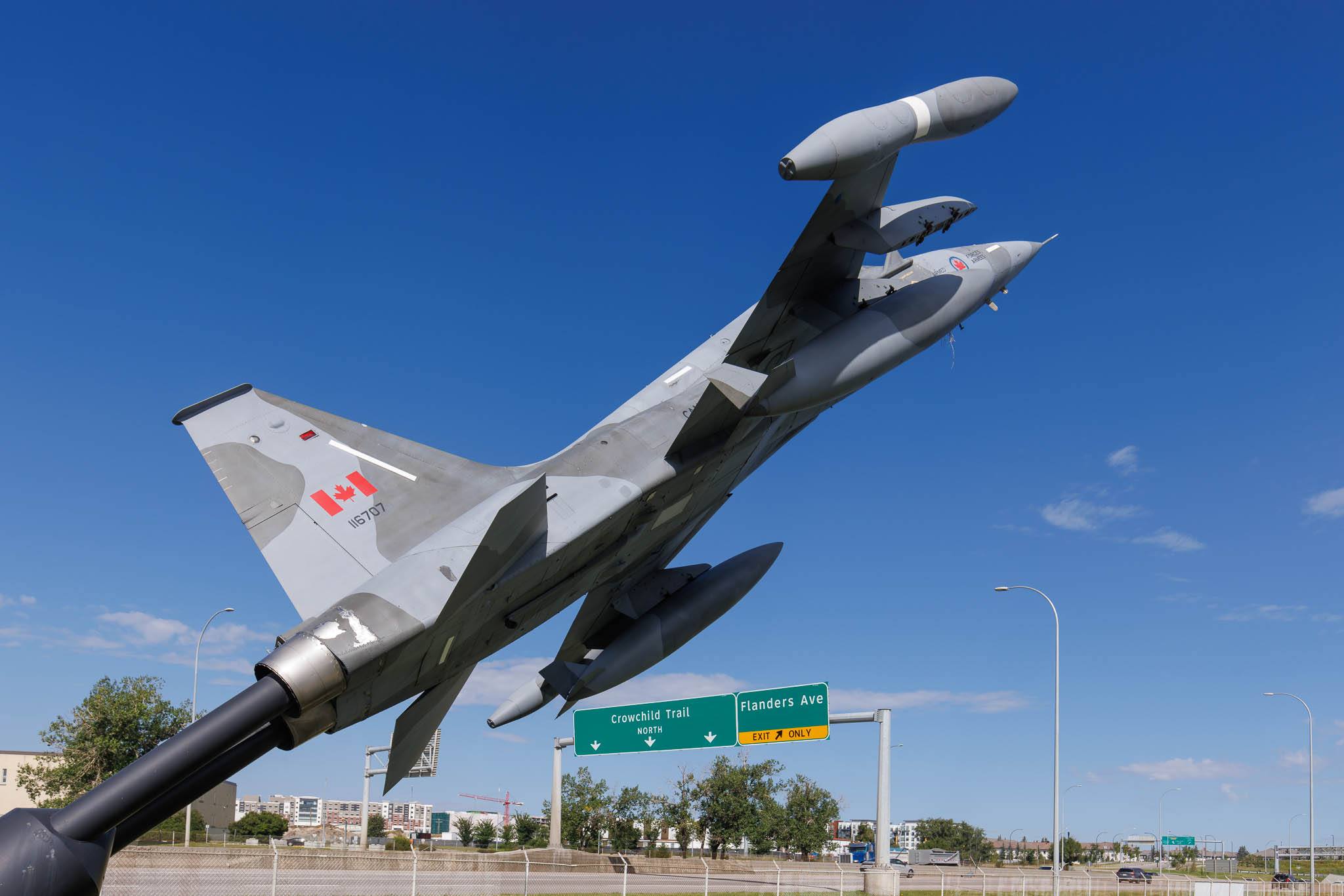
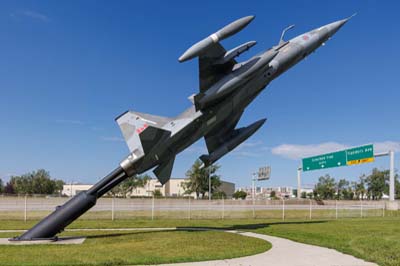
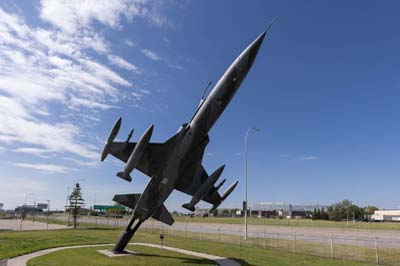
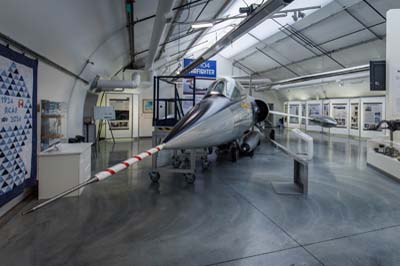
Northrop CF-5A / CF-116A(AUP) Freedom Fighter (116707) ex Canadian Armed Forces. |
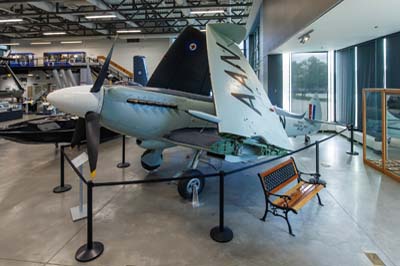
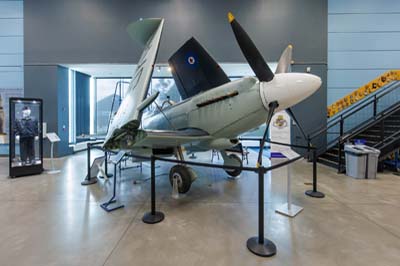
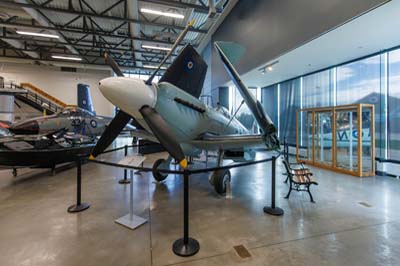
| Left to right: Supermarine Seafire FXVc (PR451 'AA-N'). Fairey Firefly PR451 served with No. 803 and No. 883 Squadrons of the Royal Canadian Navy before being struck off strength in 1947 after sustaining minor carrier landing damage aboard HMCS Warrior. It was later used as a ground instructional airframe and then as a gate guard at HMCS Tecumseh in Calgary, where it was incorrectly marked as PR425 and survived a serious fire. Rescued and fully restored, PR451 was returned to its correct VG-AA-N markings and preserved indoors as a museum aircraft. |
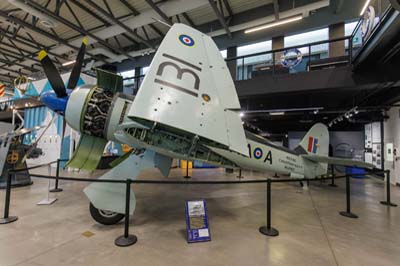
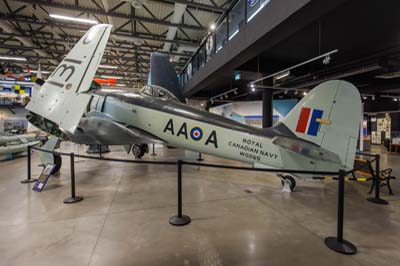
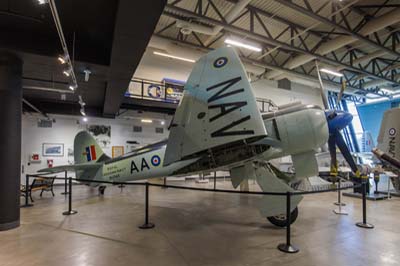
| Left to right: Hawker Sea Fury FB.11 (WG565 'AA-A') ex Royal Canadian Navy. Built in 1948 by Hawker Aircraft Limited at Kingston, United Kingdom, the aircraft was accepted by the Royal Canadian Navy in May 1948. It served with several squadrons, including 883 Squadron, later redesignated VF 871, from HMCS Shearwater in Dartmouth, Nova Scotia. On April 1, 1957, it was delivered to Calgary for use as a ground instructional airframe at the Southern Alberta Institute of Technology. |
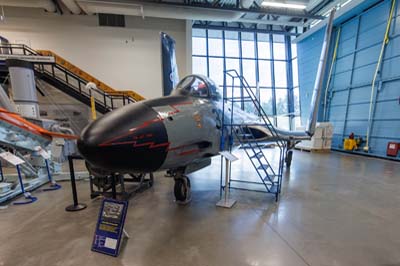
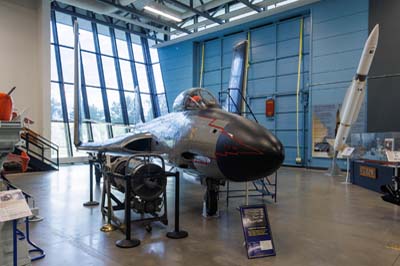
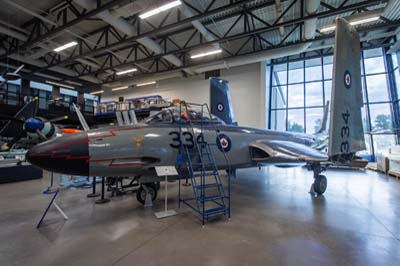
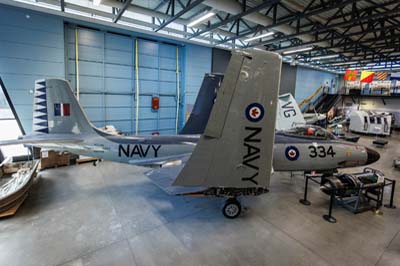
| Left to right: McDonnell F2H-3 Banshee (126334 '334'). The Banshee was the only jet fighter operated by the Royal Canadian Navy from an aircraft carrier. Canada requested 60 new aircraft but instead received 39 second-hand US Navy examples, which Canadian maintainers rebuilt and returned to service. Canadian Banshees achieved the country's best fighter interception record and, in 1959, became the first Canadian aircraft to fire air-to-air missiles operationally, destroying five drones over the Irish Sea. Twelve aircraft were lost in service, with eight Canadian aircrew killed. The final Banshee squadron disbanded in September 1962, marking the end of Canada's carrier-based fighter era. |
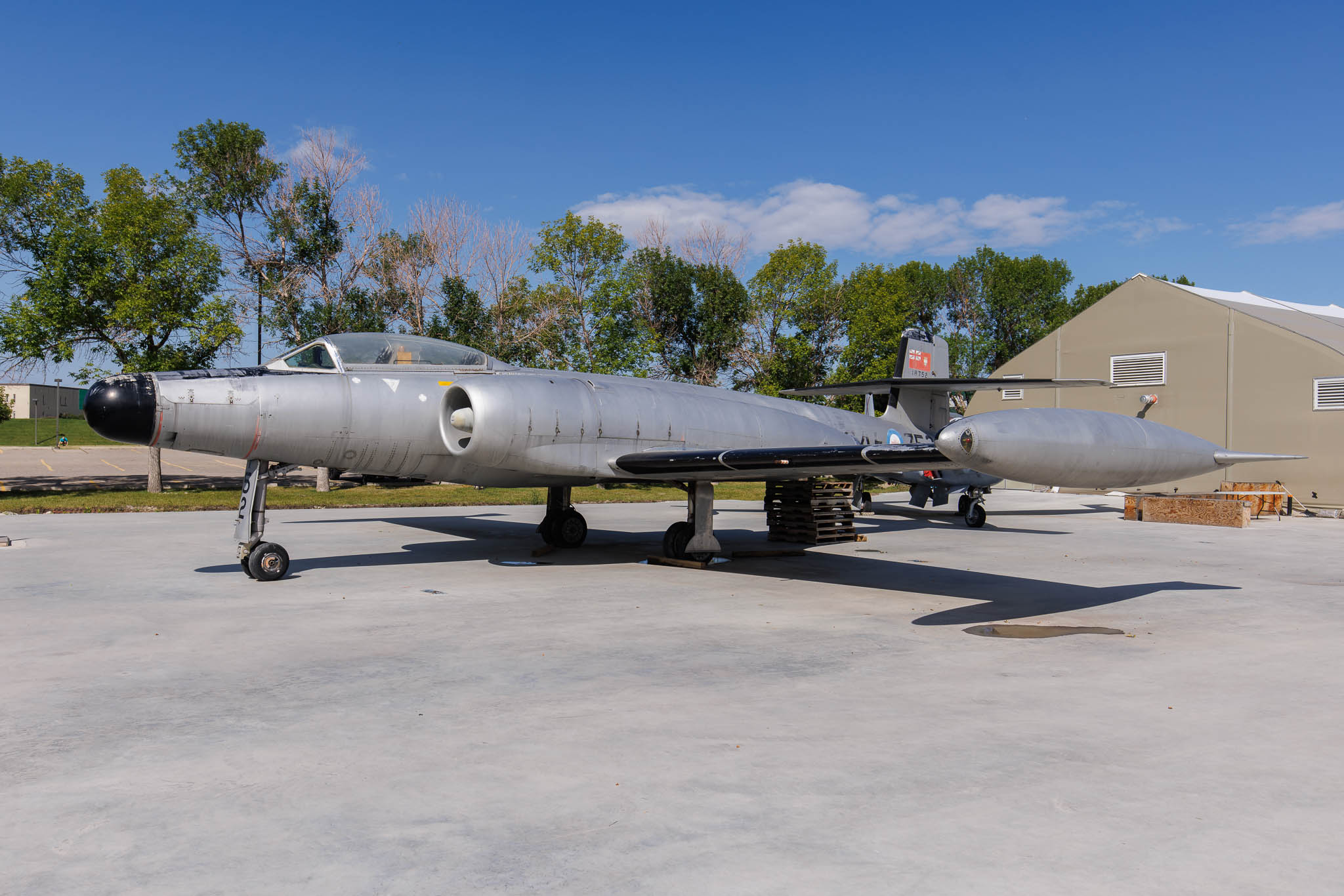 |
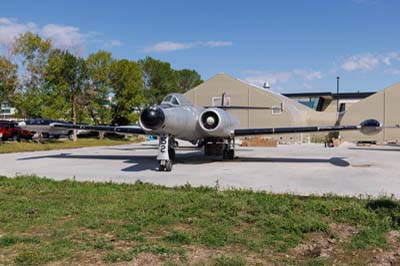
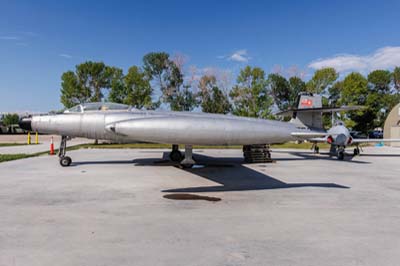
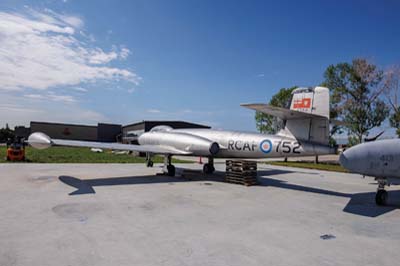
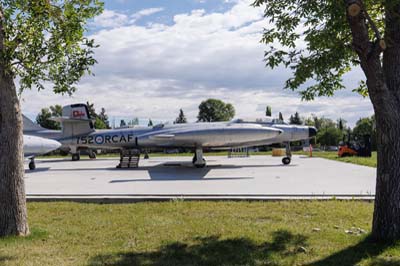
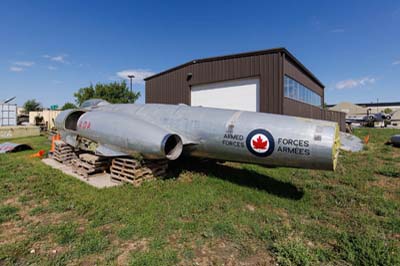
Left to right: Avro Canada CF-100 Mk.5 Canuck (18752 '752'). The CF-100 was developed as a long-range, all-weather jet interceptor for the RCAF, making its first flight on January 19, 1950. Production aircraft were powered by the Canadian-developed Orenda engine. On December 18, 1952, test pilot Squadron Leader Janusz Zurakowski took a CF-100 to Mach 1.10 in a dive, making it the first straight-wing jet to achieve controlled supersonic flight. Introduced in 1952, the CF-100 served with the RCAF throughout the Cold War, undertaking NATO and NORAD duties as well as training, reconnaissance and electronic warfare. Belgium was the only export operator. From 1961, the CF-100 was gradually replaced in the interceptor role by the CF-101 Voodoo.
18752 was delivered to the Royal Canadian Air Force (RCAF) in 1958, the aircraft was later used as a training and instructional airframe. It was retired from active use in October 1983 and placed in storage at Mountainview in 1980. It was moved to Ottawa for preservation in 1983, relocated to Borden in 2024, and moved here in 2026. |
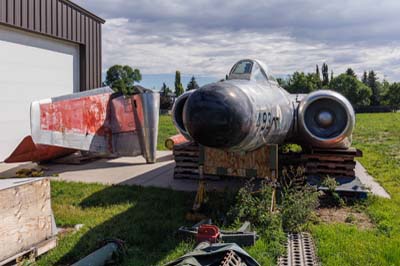
| Left to right: Avro Canada CF-100 Mk.5D Canuck (100493 '493') ex RCAF. Previously operated by units such as No. 414 (Electronic Warfare) Squadron before being retired and placed on static display at the Base Borden Military Museum at CFB Borden in Ontario. |
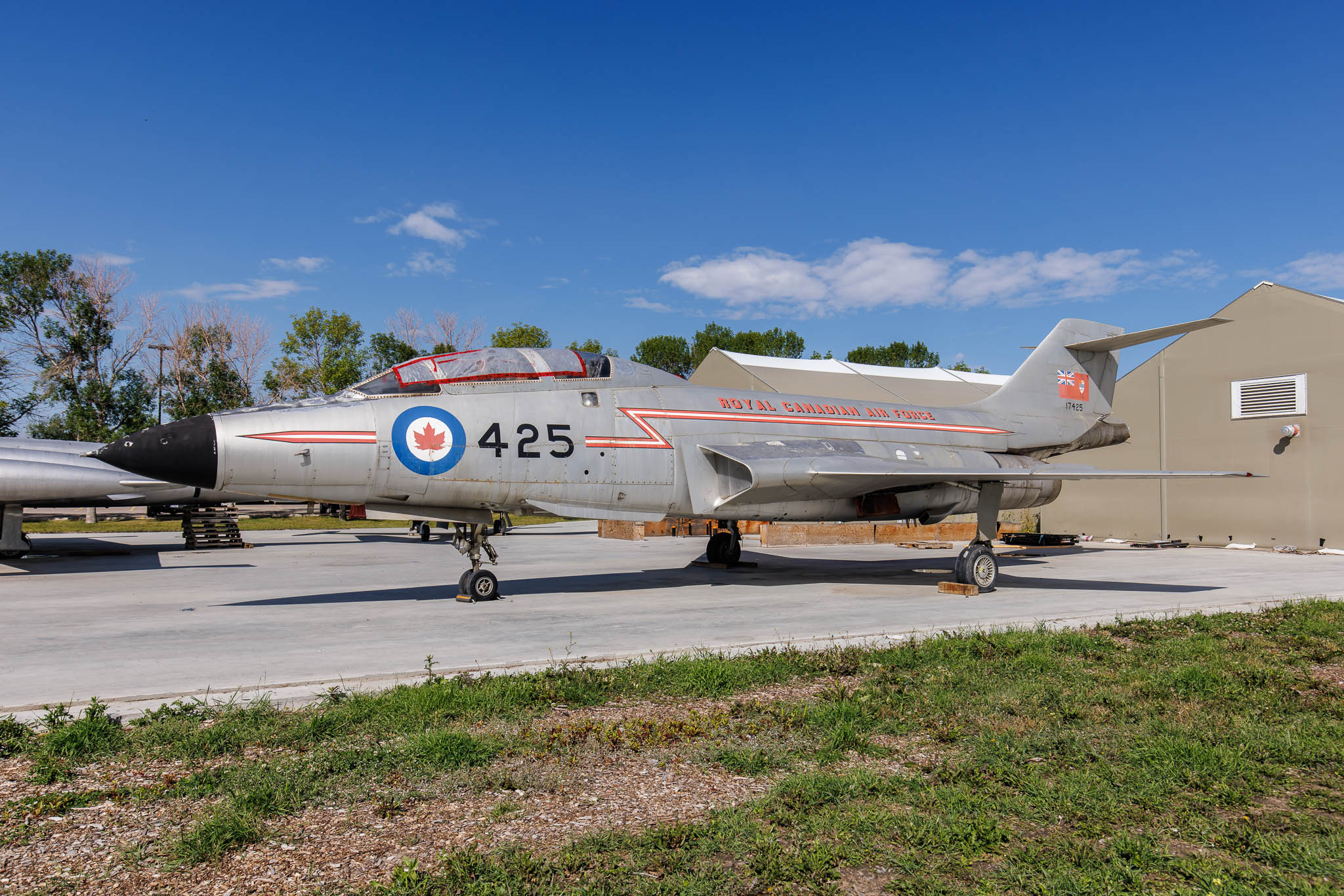 |
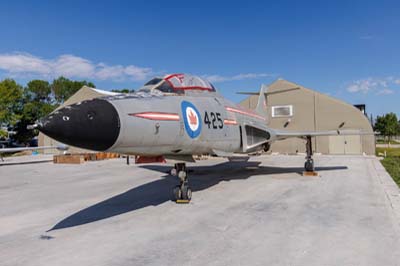
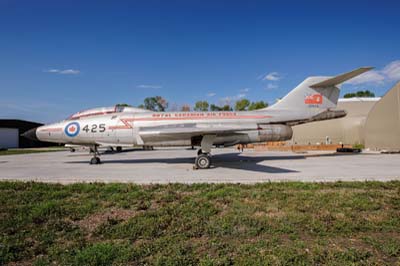
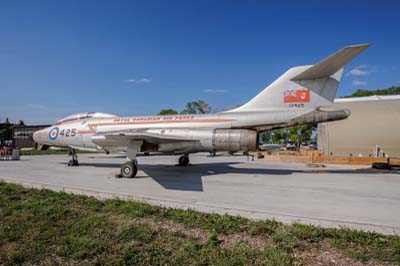
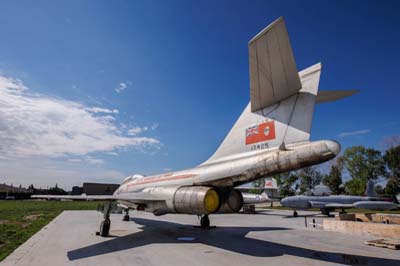
Left to right: McDonnell CF-101B Voodoo (57-0359 later 101032 marked '17425 425'). The two-seat F-101B Voodoo was developed from the single-seat F-101 interceptor, featuring a lengthened fuselage, improved weapons system and more powerful Pratt & Whitney engines. Following the cancellation of the Avro Arrow in 1959, Canada selected the Voodoo as its replacement interceptor. Sixty-six nearly new aircraft were acquired in 1961, replacing the CF-100 with five operational squadrons and an Operational Training Unit. In the early 1970s, Canada's Voodoos were exchanged for lower-time US aircraft equipped with improved missile systems. The fleet was gradually replaced by the CF-18 Hornet from the early 1980s, with most Voodoos retired by the end of 1984. A total of 479 F-101Bs were built between 1957 and 1961 for the US and Canadian Armed Forces.
101032 was built as an F-101B Voodoo for the US Air Force in 1957, this aircraft was transferred to the Canadian Armed Forces on October 8, 1970. It served with 425 and 409 All Weather Fighter Squadrons, including the 1972 'Alouette Reds' demonstration team, before being struck off charge in May 1984. After more than 25 years on display at the Alberta Aviation Museum in Edmonton as '17425', it was later relocated to Calgary on loan. |
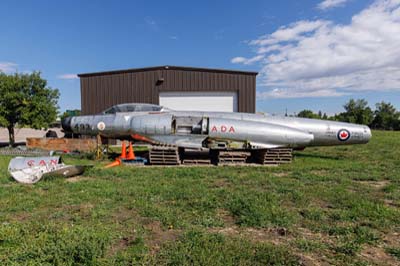
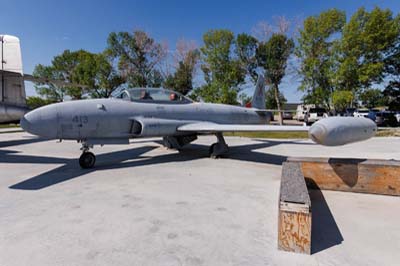
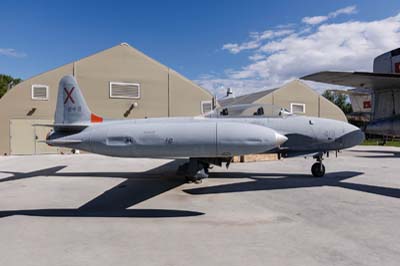
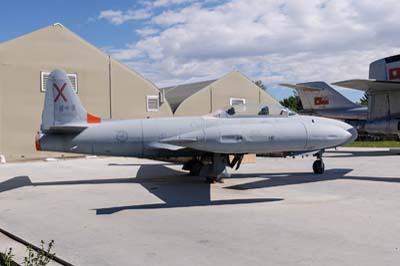
| Left to right: Canadair Silver Star Mk.3 (133413 'X 413') ex Canadian Armed Forces. Previously displayed at the Cold Lake Museum. |
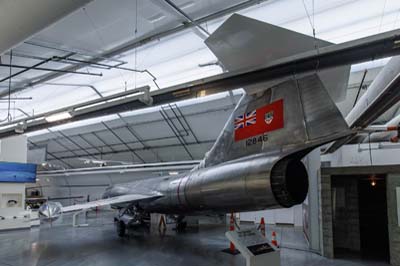
Left to right: Lockheed CF-104 Starfighter (104846 '846' marked 12846). Taken on strength on July 4, 1963, with serial 12846, the aircraft was reserialled 104846 in June 1970. It was subsequently transferred to the Royal Danish Air Force as R-846, entering service with Eskadrille 726 at Aalborg Air Base in May 1972. In 2011, it was purchased by a private owner in Maine, USA, before being acquired by the Air Force Museum Society of Alberta in 2012.
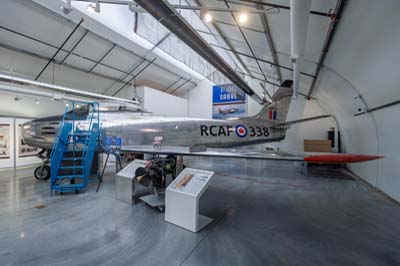
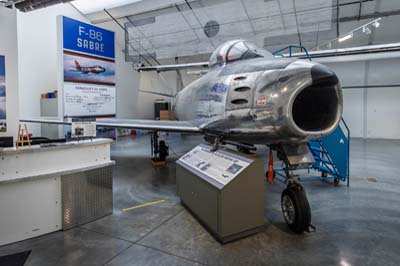
Canadair Sabre Mk.5 (23338 '338' registered N4689N). Built by Canadair, the aircraft entered RCAF service in 1954 and served primarily with No. 416 Squadron 'Cougars', including the RCAF Tactical Flight. After retiring from military service in the 1960s, it was sold to Tracor Flight Systems in Mojave, California, where it spent decades as a chase aircraft, target tug and aggressor aircraft for training.
Acquired in 2014, it was fully restored and returned to its original polished bare-metal RCAF markings. |
 |
 |
| Left to right: McDonnell Douglas CF-188A Hornet (188719 '719') ex Canadian Armed Forces. |