The Hangar Flight Museum
Calgary, Alberta
August 2026
|
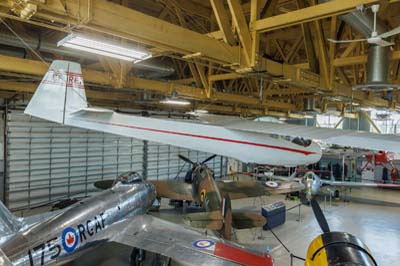
The museum (formerly known as the Aero Space Museum of Calgary) is housed in two hangars, one is an historic World War Two British Commonwealth Air Training Plan (BCATP) hangar, the other is of a canvas and steel construction. Unfortunately, for photographers the main hangar is very cluttered.
The British Commonwealth Air Training Plan (BCATP).
The BCATP was one of the largest aviation training programmes of World War Two, training more than 130,000 Allied aircrew in Canada, principally from Canada, Great Britain, Australia and New Zealand.
Canada offered vast open spaces, favourable flying conditions and, most importantly, distance from the fighting in Europe. The programme trained pilots, navigators, bomb aimers, wireless operators, air gunners and flight engineers, ultimately providing almost half of the aircrew who served with the RAF, Fleet Air Arm, RAAF, RCAF and RNZAF during the war.
The agreement called for almost 50,000 aircrew to be trained each year, including 22,000 from Great Britain, 13,000 from Canada, 11,000 from Australia and 3,300 from New Zealand. Elementary training was normally completed in each aircrew member's home country before they travelled to Canada for advanced instruction.
The first Canadian training course began on April 29, 1940, with 166 recruits. The programme expanded rapidly, with 701 hangars and 176 new locations constructed. Between 1940 and 1943, Canada built 88 primary and 88 relief airfields, while existing municipal and regional airfields were incorporated into a network of 231 training locations across the country.
The BCATP ended on March 31, 1945. By then, 131,553 trainees, including 49,808 pilots, had graduated. The Canadian government contributed approximately $2 billion towards the programme's total cost of $2.25 billion, making the BCATP one of Canada's largest wartime undertakings.
BCATP Hangars
The 701 hangars constructed at 231 locations from the start of World War Two specifically for the programme were never intended to survive for 80 years. Nevertheless, remarkably, many still exist in one form or another.
Their distinctive roofs and structural supports feature exceptionally long, heavy timber beams, meticulously milled from Douglas fir trees transported from British Columbia. With steel in short supply, builders used prefabricated wooden trusses and heavy timber frames instead. Construction crews could erect the complete wooden framework of a standard hangar in less than eight hours, while the exterior walls were clad in cedar wood shingles. |
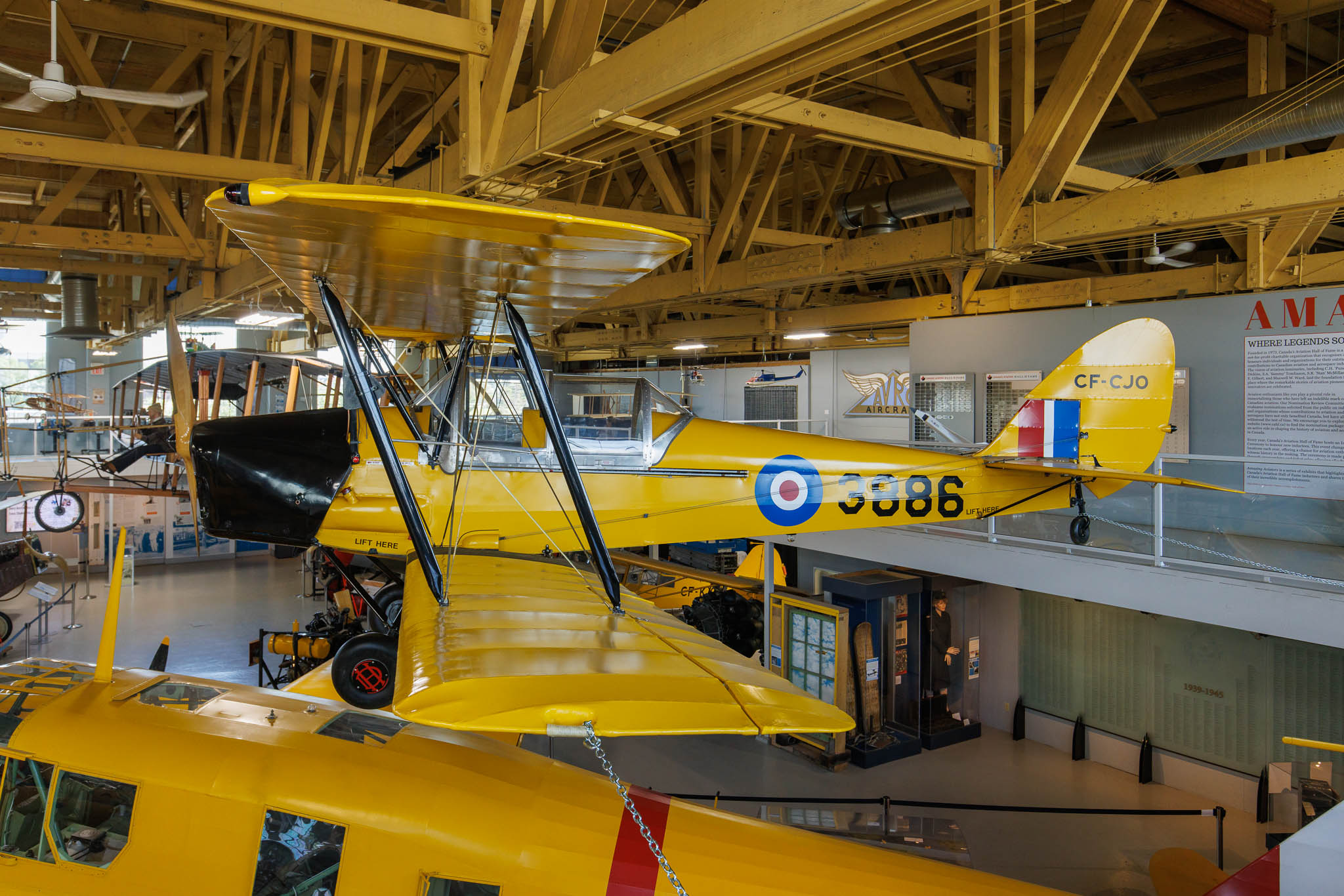 |
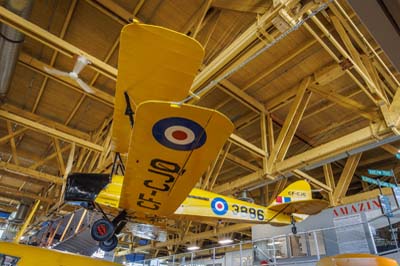
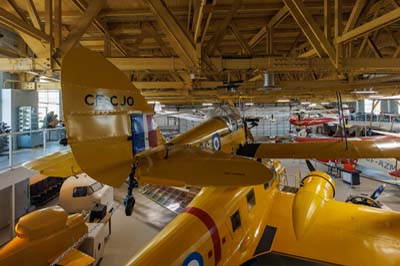
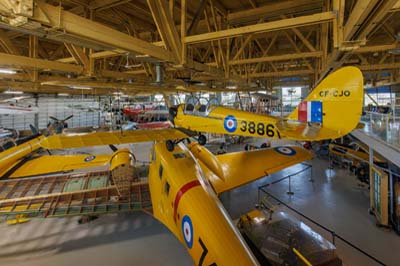
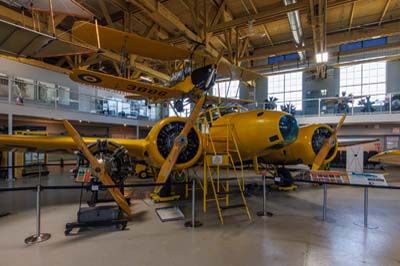
| Left to right: de Havilland DH-82C Tiger Moth (3886 registered CF-CJO). Built as c/n 1547 in early 1942, the aircraft was taken on strength by the RCAF on March 4, 1942, as RCAF 3886. In July 1945, it was transferred to the Royal Canadian Flying Clubs Association's No.2 Training Command and registered CF-CJO. The aircraft's remains were acquired by the Reynolds-Alberta Museum in Wetaskiwin in 1950. Acquired again in 1998, restoration and replication work began in 2000 and was completed in 2003. |
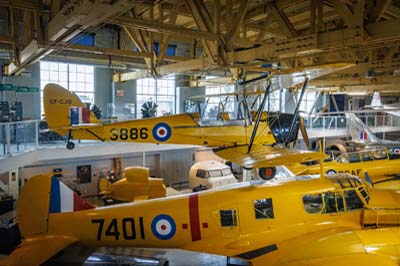
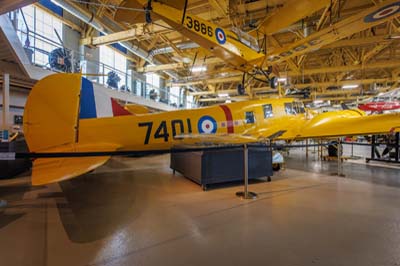
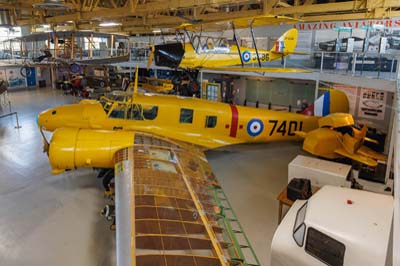
| Left to right: Avro Anson V (12587 marked '7401') The Anson Mk V was built in Canada by MacDonald Brothers Aircraft Limited specifically for the BCATP. Unlike the earlier British-built metal-and-fabric variants, the Canadian Mk V featured a streamlined moulded-plywood fuselage, conserving scarce wartime metal while reducing weight and improving performance. The type served primarily as a multi-engine navigation and wireless operator trainer during and immediately after World War Two. |
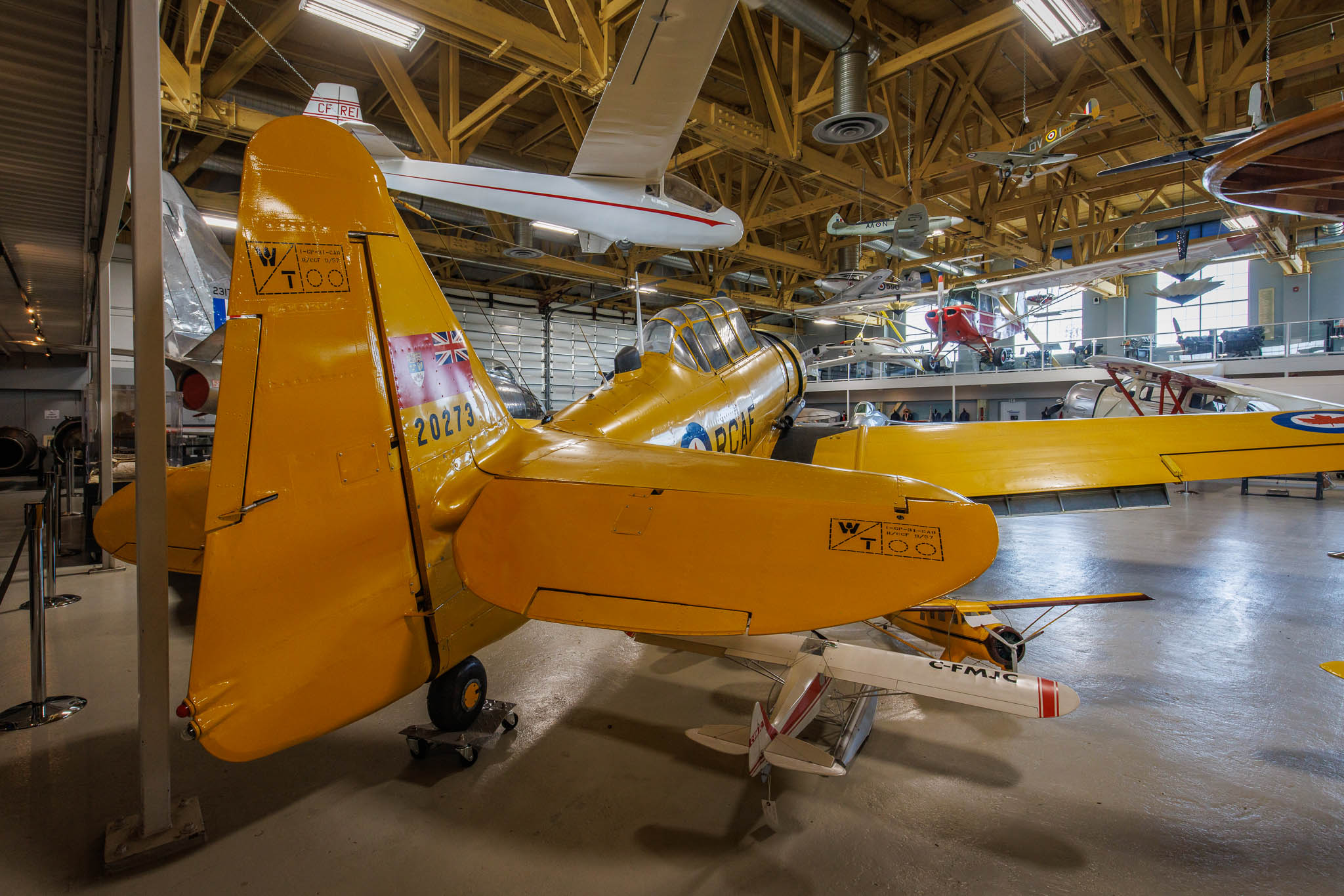
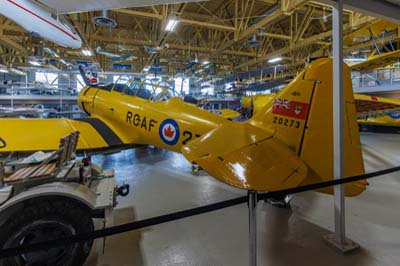
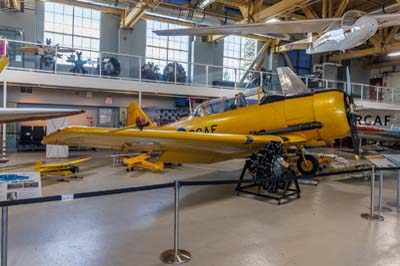
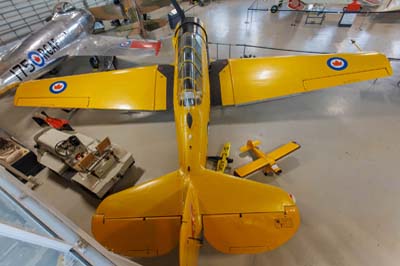
Left to right: Canadian Car and Foundry Harvard IV (20273 '273'), taken on strength by the RCAF on April 25, 1952. It spent its active service career operating out of No. 4 Flying Training School (FTS) in Penhold, Alberta, before being designated as military surplus on October 27, 1964.
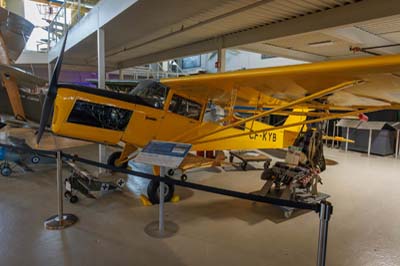
Taylorcraft Auster T.7 (16691 registered CF-KYB) Delivered to the RCAF in 1946. It is one of only three existing Mk.VII Austers remaining in North America. |
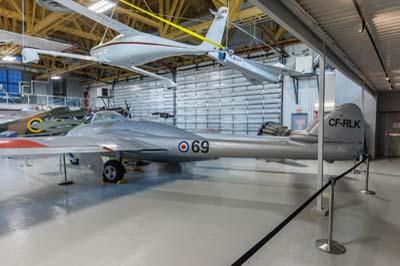
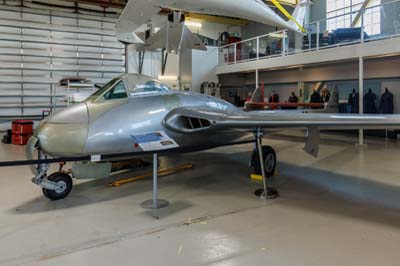
| Left to right: De Havilland Vampire F.3 (17069 '10' registered CF-RLK) Built by the English Electric Co, it was assigned the RAF serial VP770, but was never applied. It was taken on strength by the RCAF in the early to mid-1950s, it operated out of RCAF Station Downsview, Ontario, serving with No. 400 (Auxiliary) Squadron and No. 411 (Auxiliary) Squadron. |
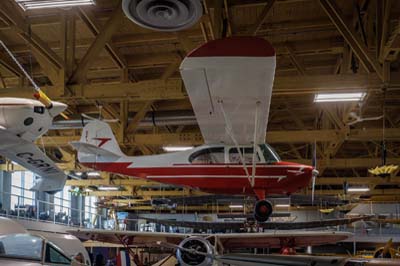
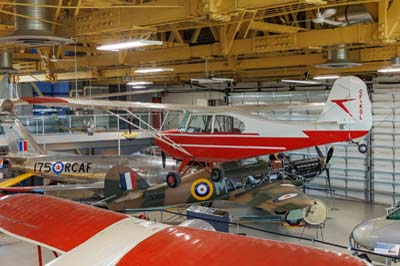
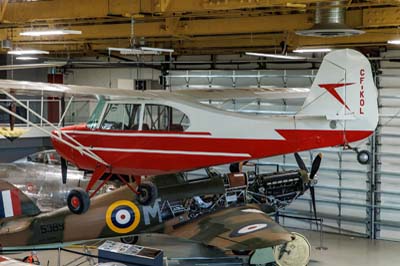
Left to right: Aeronca Champion (CF-KOL) from 1946. Donated to the museum in 2016 by a farming family from Medicine Hat.
Cherokee II (CF-REI c/n 1) an homemade glider kit built in 1962. |
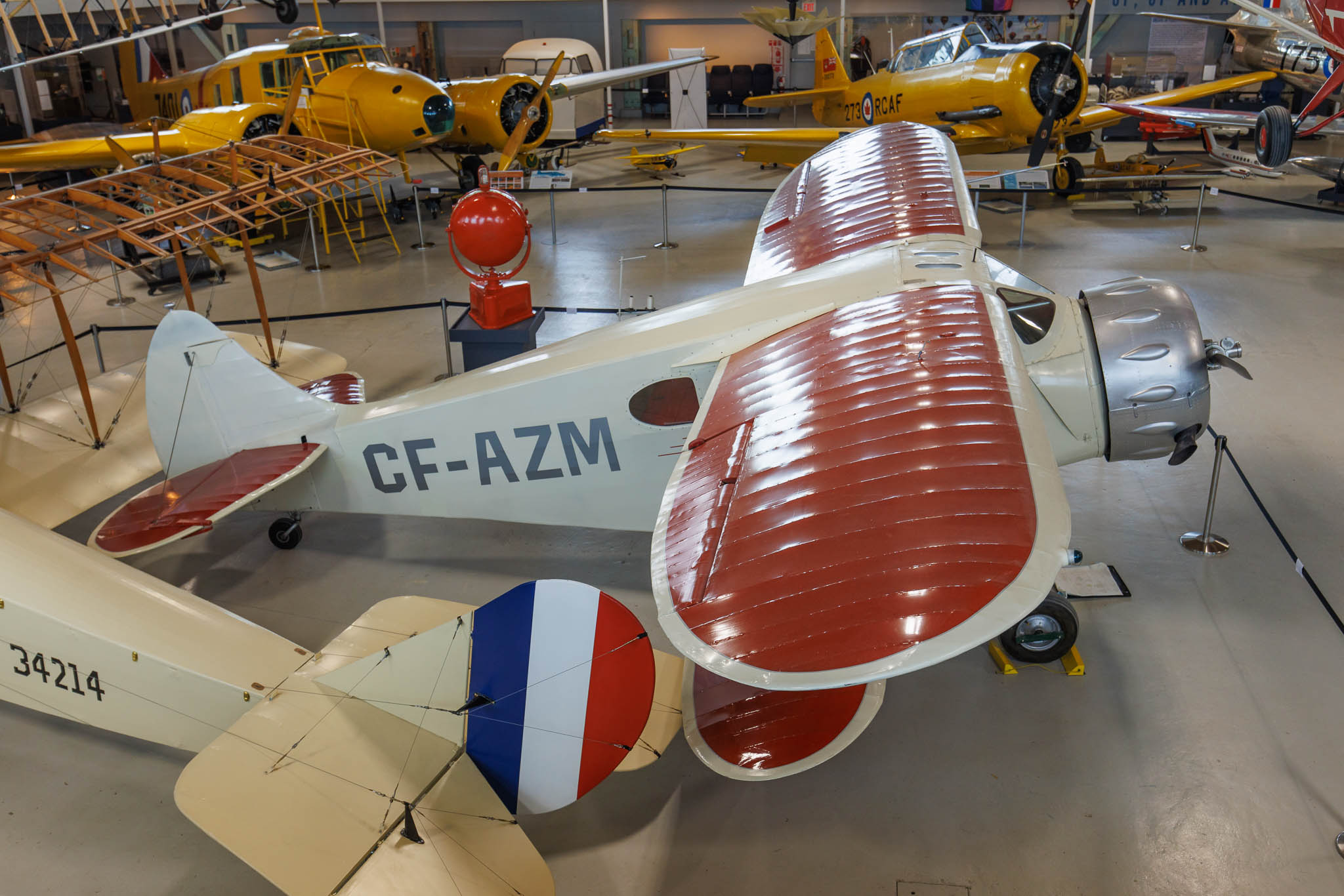
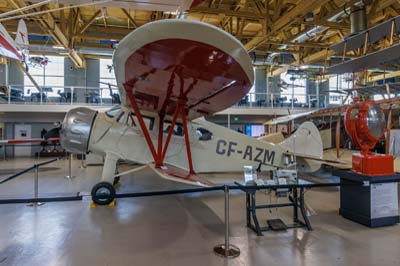
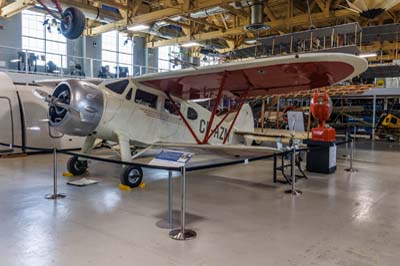
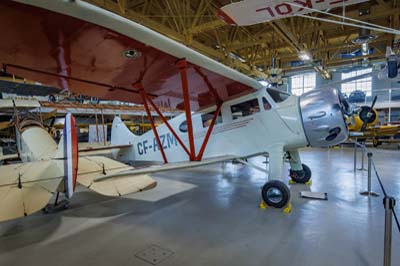
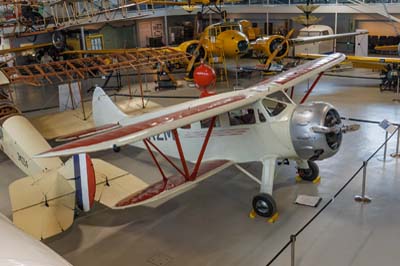
| Left to right: Waco EQC-6 Custom (CF-AZM) from 1936. Donated to the museum in August 1995 by Earle Flemming from Boundary Bay (Delta, British Columbia). |
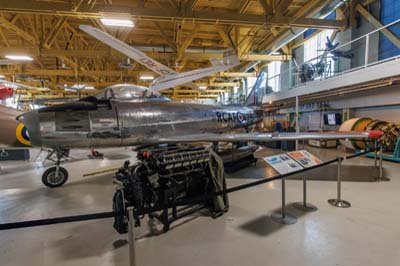
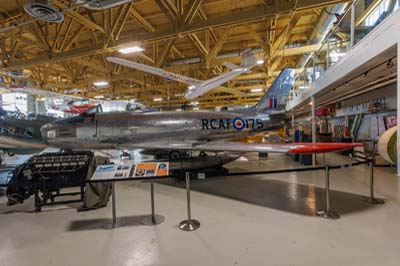
Left to right: North American F-86A Sabre (47-0606 marked '23175 '175') ex USAF. This F-86 served as a chase plane at Edwards Air Force Base in California, trailing legendary high-speed rocket planes like the Bell X-1 and the Douglas D-558-II Skyrocket. Chuck Yeager and Pete Everest are known to have flown this actual aircraft.
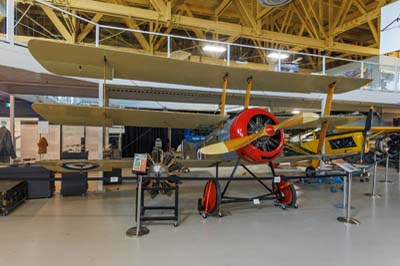
Sopwith Triplane ('N6302'). A highly accurate replica. Working strictly from original Worls War One blueprints, Stan Green, an aeronautics instructor at the Southern Alberta Institute of Technology (SAIT) and later museum restoration staff and volunteers following his passing, completed the aircraft. The meticulous build was finished in June 2000. Its engine has been run successfully, rendering it theoretically flyable. |
 |
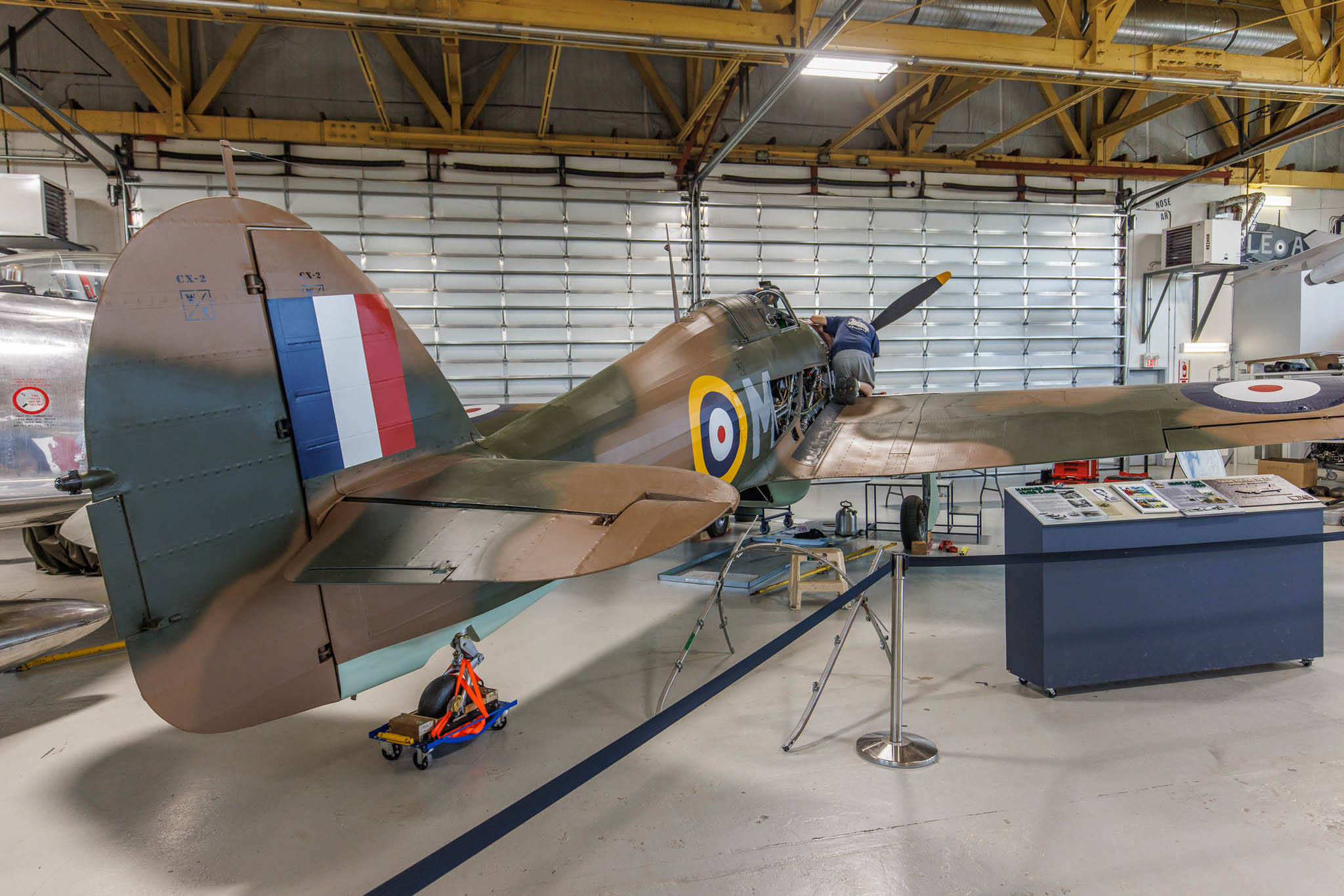 |
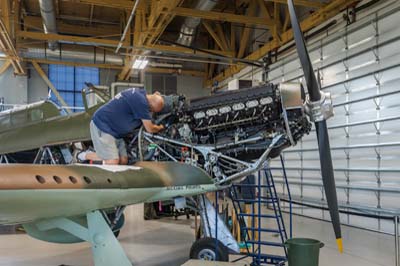
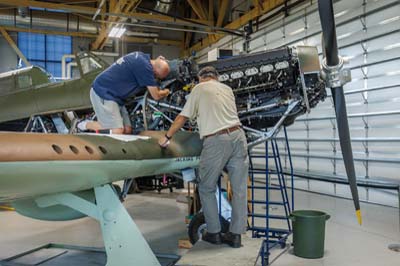
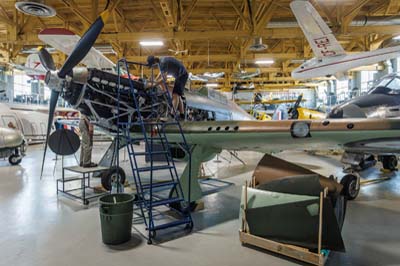
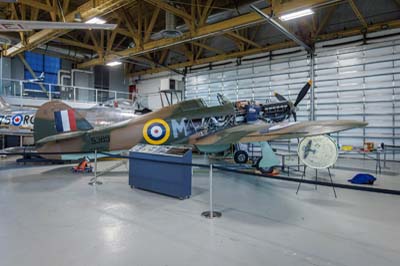
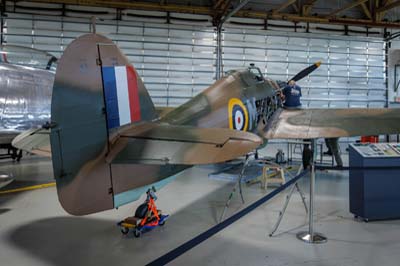
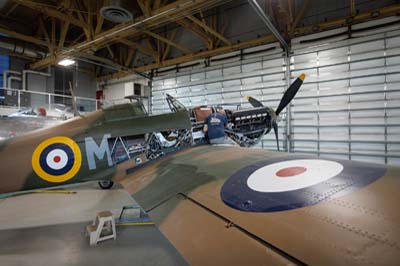
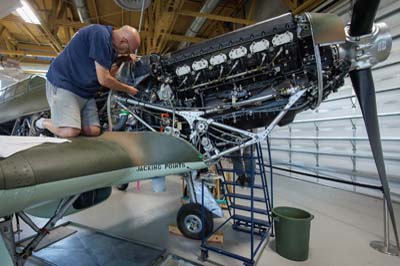
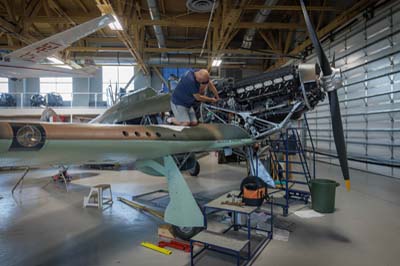
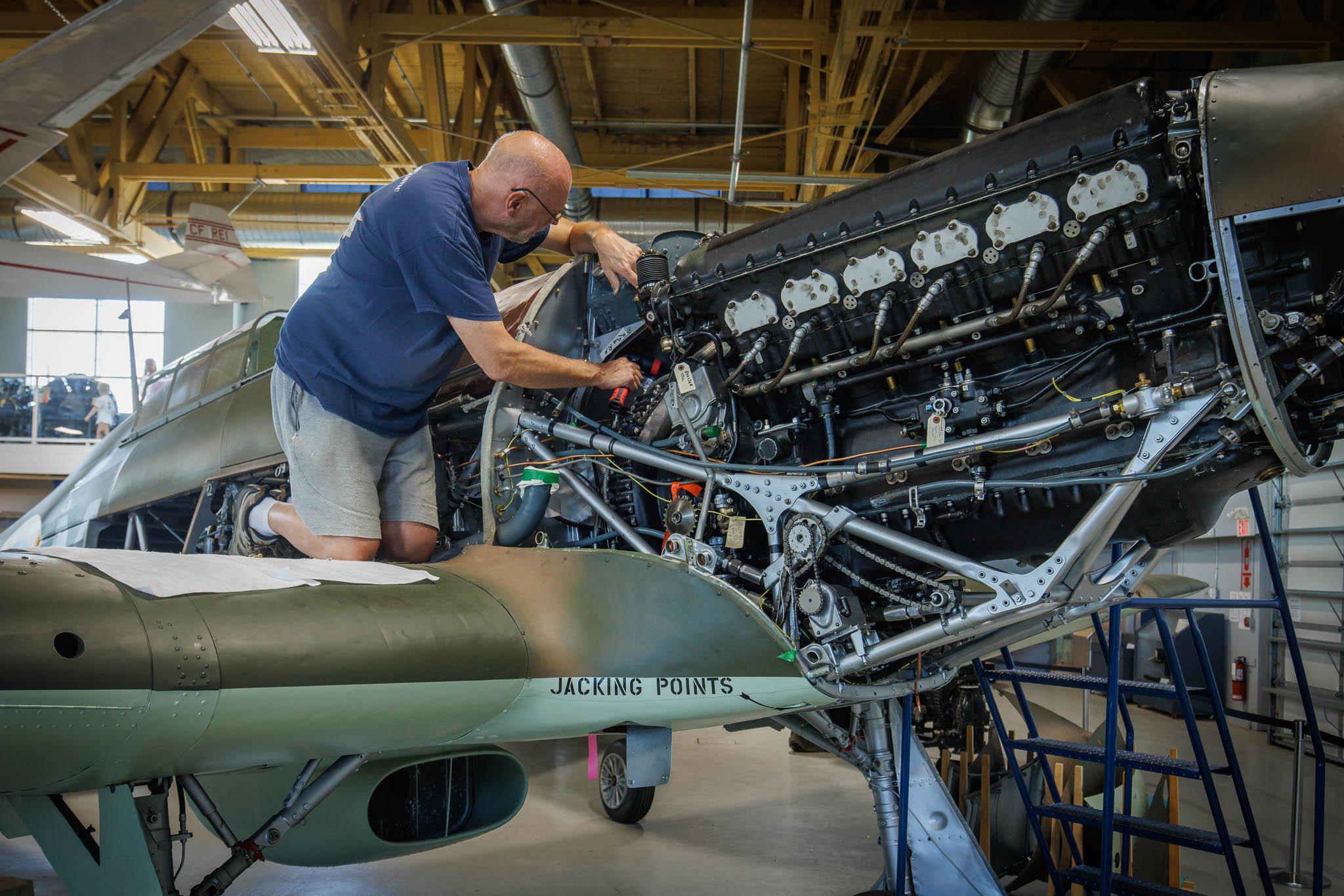
Left to right: Hawker Hurricane Mk.XII (5389 'M') was built in 1942 by Canadian Car and Foundry (CanCar) at Fort William, Ontario, now Thunder Bay. CanCar produced more than 1,400 Hurricanes under the direction of Chief Aeronautical Engineer Elsie MacGill.
After training at Calgary, the aircraft joined 133 Squadron at Lethbridge, Alberta, where it was used for pilot familiarisation. It later moved to Boundary Bay, British Columbia, for aerial reconnaissance and coastal defence exercises. In late 1944, 5389 was transferred to 135 Squadron at Patricia Bay and subsequently to Yorkton, Saskatchewan, where it was involved in operations against Japanese Fu-Go fire balloons, which were designed to carry incendiary bombs across the Pacific to North America. After World War Two it was transferred to War Assets Corporation and subsequently sold to a farmer in Saskatchewan.
One of the first aircraft acquired by the Air Museum of Canada, the Hurricane later became part of the City of Calgary collection. Following the museum's closure in 1971, it was displayed at the Calgary Planetarium before stewardship passed to the Aero Space Museum of Canada.
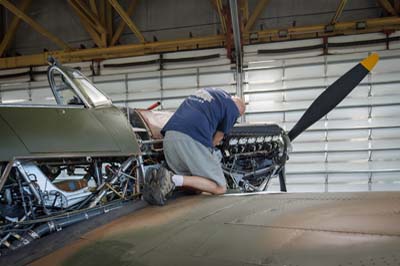
A major restoration began in 2012 at Historic Aviation Services in Wetaskiwin, undertaken by the Calgary Mosquito Society. Completed in late 2019, the aircraft returned to Calgary in November after more than 25,000 hours of restoration work. Its Merlin engine has since been run for eight hours and is being prepared for further testing ahead of a planned test flight, although the restored warbird will remain on static display at the museum. 5389 is one of only four restored Hurricanes in Canada. |
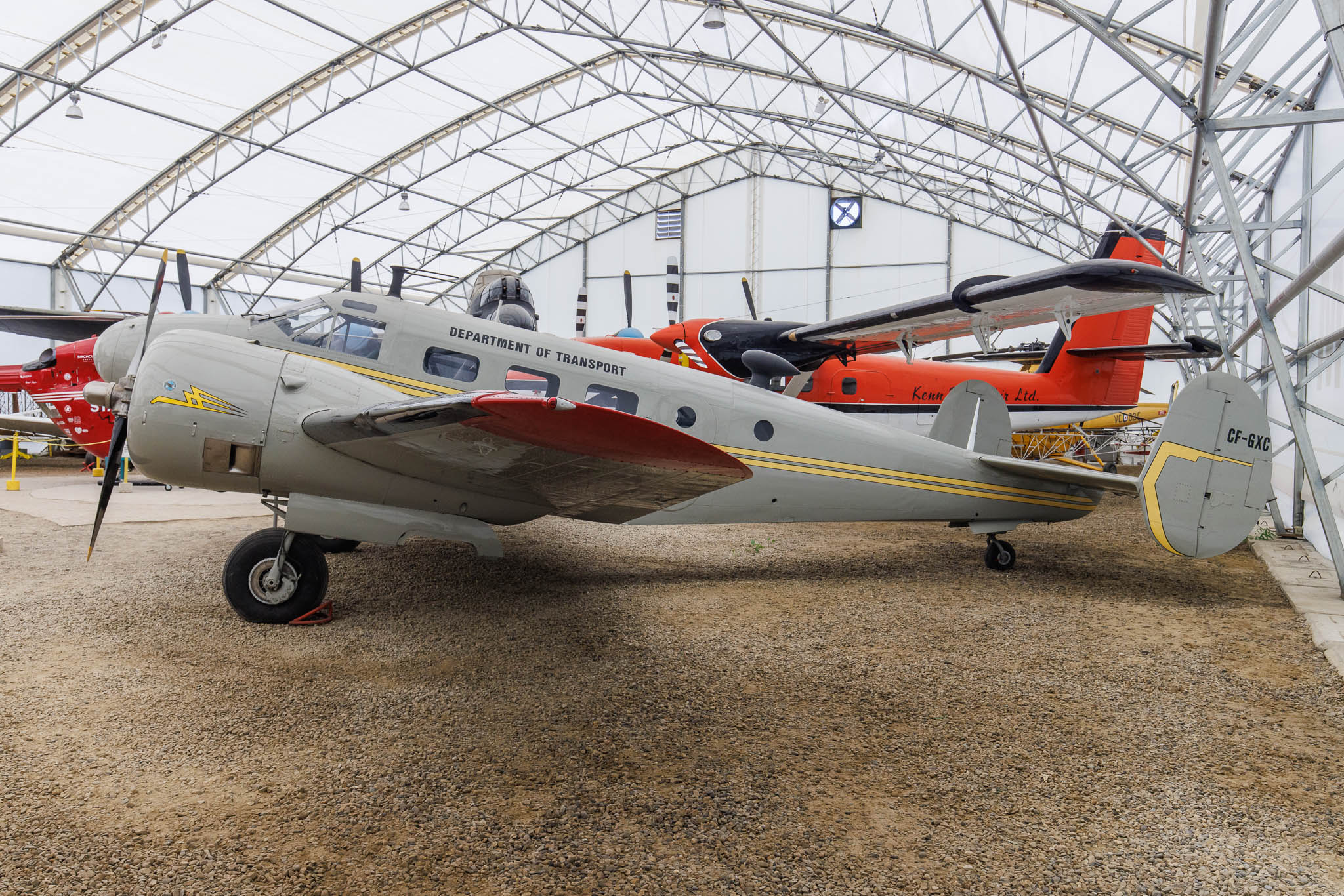 |
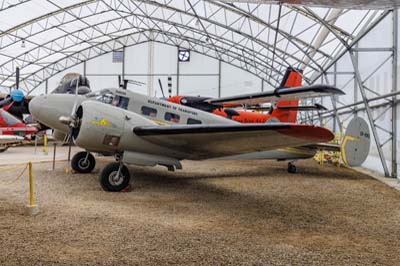
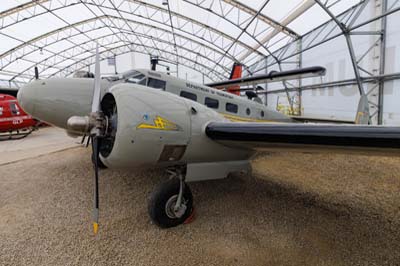
| Left to right: Beechcraft D18S Expeditor 3NM (2333 registered CF-GXC) ex RCAF. |
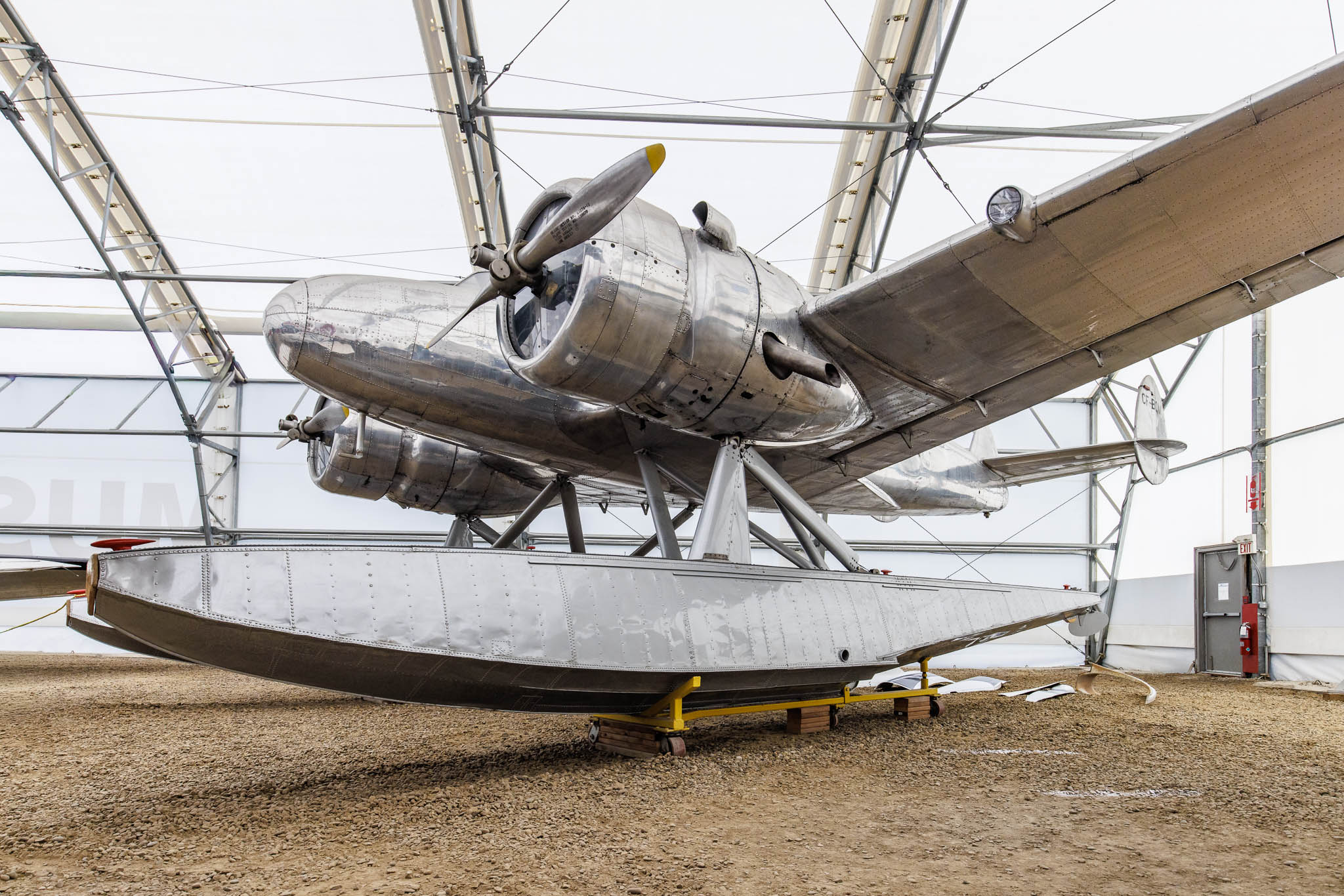 |
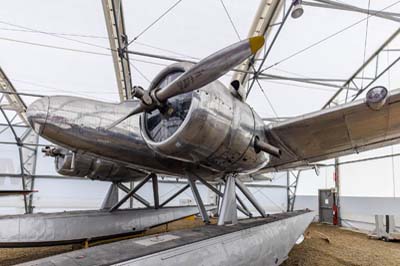
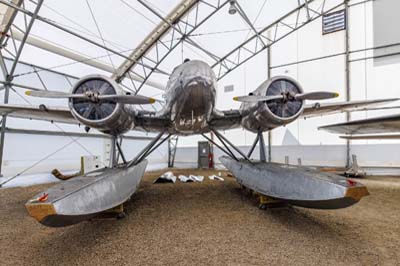
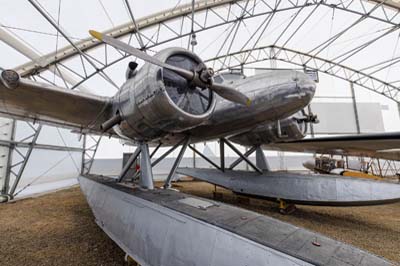
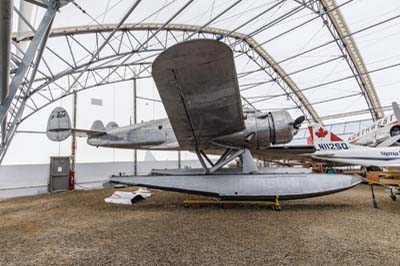
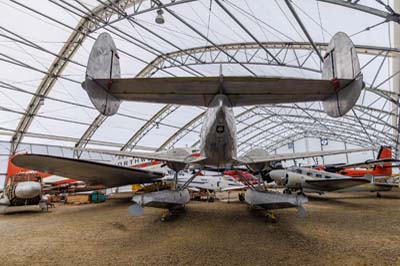
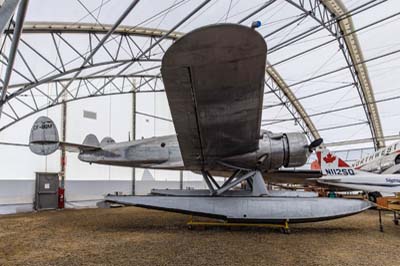
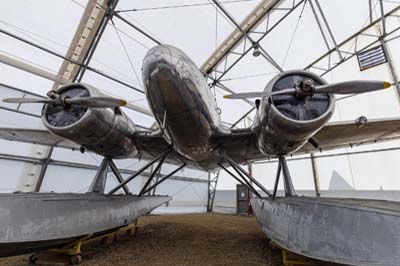
Left to right: Barkley-Grow T8P-1 (CF-BQM c/n 8) one of eleven built. The first model was rolled out in April 1937 by the Barkley-Grow Corporation of Detroit, Michigan. The aircraft could be operated on wheels, skis or floats, depending on the season and conditions. In 1939, one example was used in an attempt to make the first non-stop flight from New York to Lima, Peru, while another accompanied Admiral Byrd on his third Antarctic expedition in 1939-40, helping map large areas of the frozen continent.
CF-BQM was built in 1940 and initially flown by Aviation Hall of Fame member Lee Britnell for Mackenzie Air Service in Edmonton. It subsequently flew with several Canadian operators, including Pacific Western Airlines, Canadian Pacific Airlines, Parson Airways, Sioux Airways, Northland Airlines Ltd and Associated Airways.
The aircraft was eventually found in Quebec by museum founder Roy Staniland, who flew it on floats to Chestermere Lake, Calgary, in 1979 before donating it to the museum for restoration. |
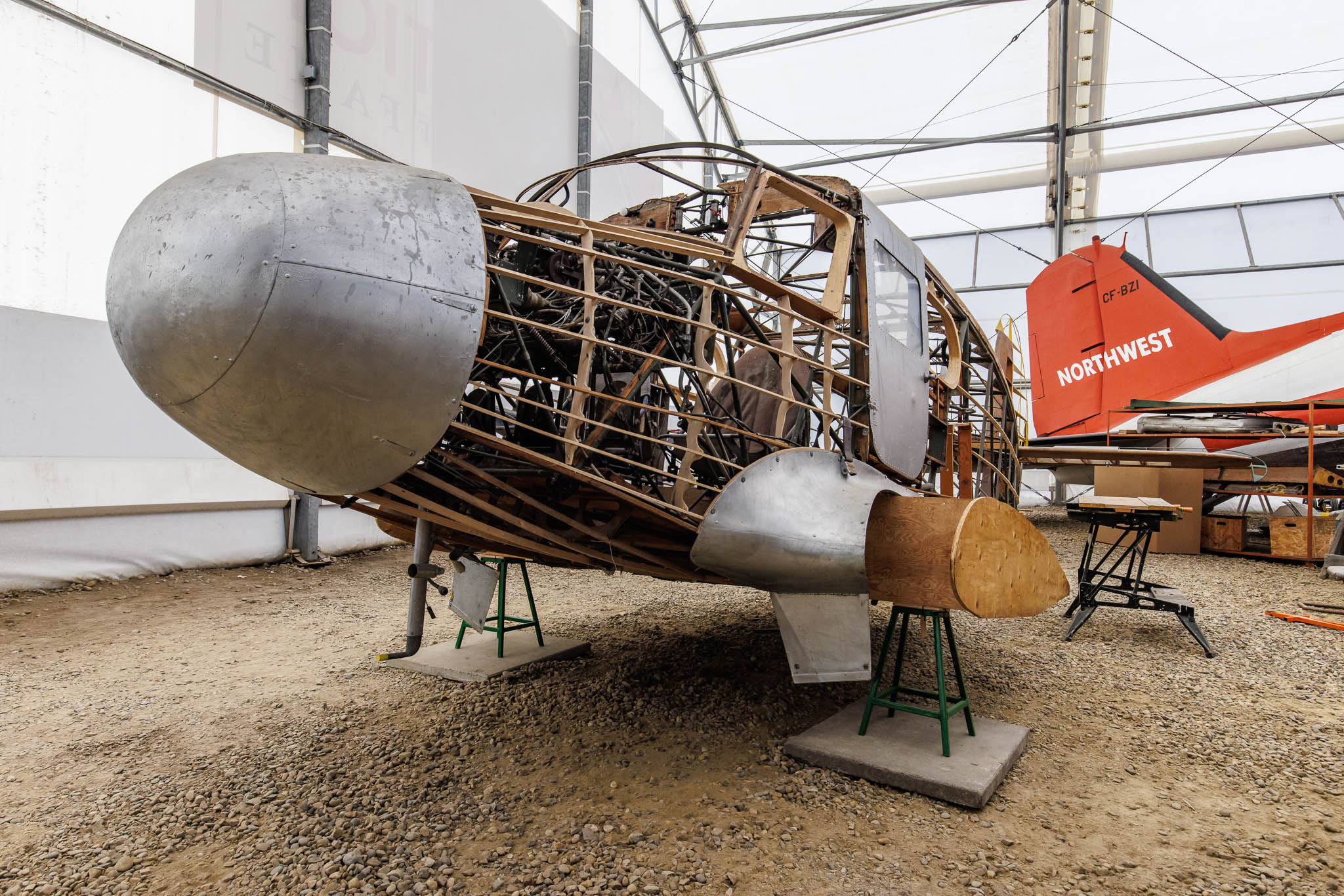 |
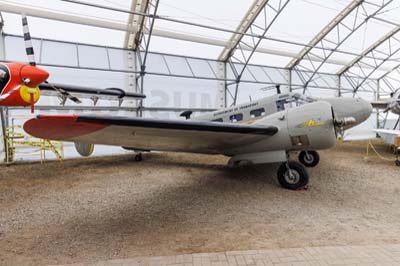
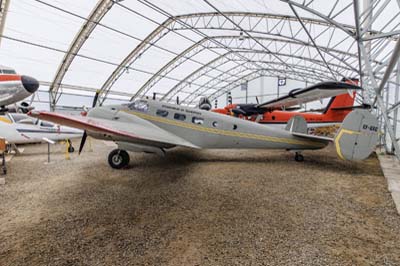
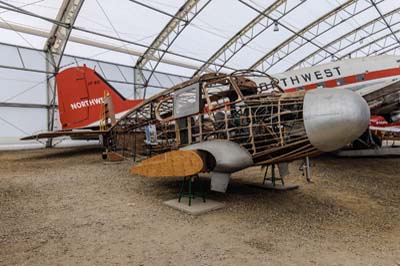
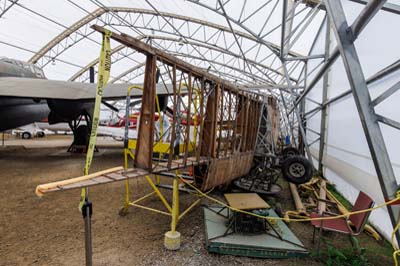
Left to right: Cessna T-50 Crane Mk.1 (serial unknown to museum). The Cessna T-50 prototype, the company's first twin-engine aircraft, first flew on March 26, 1939 as a light transport before being adapted for military use. Known in the United States as the Bobcat, the RCAF named it the Crane. Cessna produced around 5,400 UC-78, AT-8, AT-17 and T-50 aircraft, with 826 delivered to the RCAF between January 1941 and mid-1943.
The United States was still neutral when the RCAF ordered its Cranes and could not legally deliver military aircraft directly to foreign countries. American crews therefore flew the aircraft to the Canadian border, where they were pushed across before being collected by Canadian crews for onward delivery.
The Crane became an important BCATP trainer, particularly in Western Canada, serving at Service Flying Training Schools across the country. In southern Alberta, examples operated from Lincoln Park, Calgary, Claresholm and Vulcan, primarily training pilots destined for multi-engine bomber operations.
The Crane remained in RCAF service until 1949, when many were struck off as Crown Assets. Often sold for as little as $25, numerous aircraft ended up on farms, where they were used as chicken coops or broken up for scrap. This largely forgotten chapter forms an important part of Western Canadian aviation history.
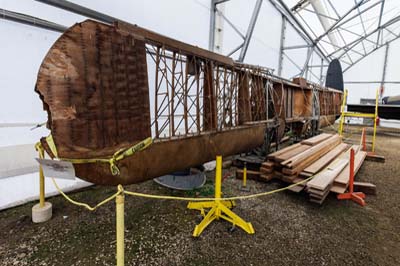
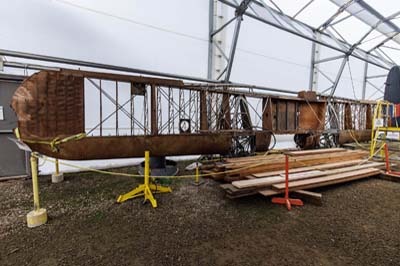
The Crane's wing structure was built around laminated spruce spars, thin plywood ribs and spruce truss members. Apart from reducing weight, this construction made the aircraft relatively inexpensive to produce and maintain. Plywood leading edges and wingtips provided additional structural strength. The museum's example is displayed with its fabric covering removed, revealing the remarkably lightweight spruce construction.
Eight T-50 Cranes survive in Canada, each preserved by a different museum, while three additional examples survive in the United States.
Above also reported elsewhere as Cessna Bobcat UC-78 (43-7502). |
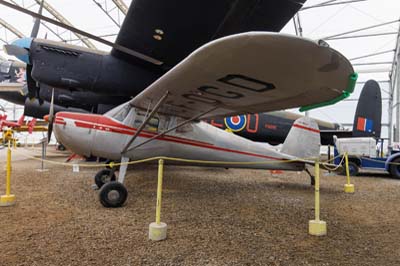
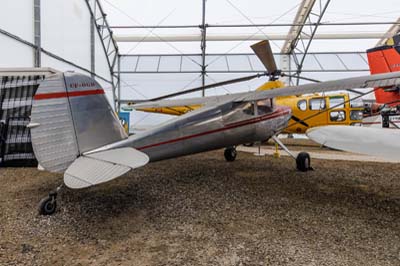
Left to right: Cessna 140 (CF-OGD) from 1946.
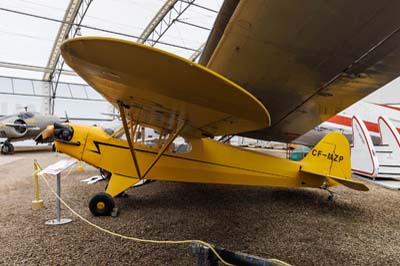
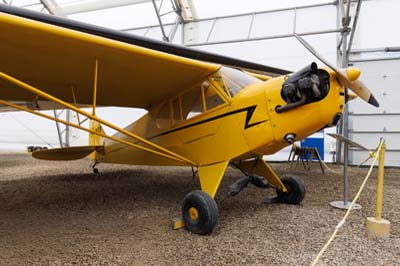
Piper J3C-65 Cub (CF-MZP) from 1945. |
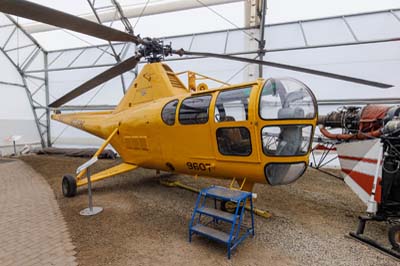
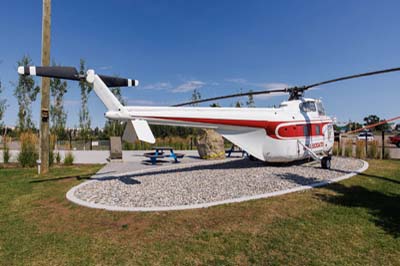
Left to right: Sikorsky S-51 (9607 'VC-GBC') ex RCAF. The RCAF operated these units primarily for search and rescue (SAR) operations, training, and utility purposes. The S-51 was the first helicopter to operate out of RCAF Station Cold Lake.
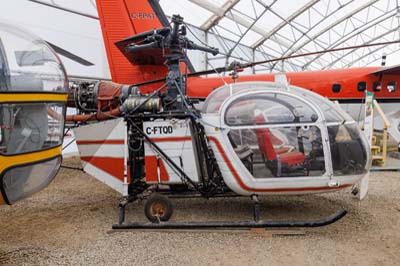
Sud Aviation SA318C Alouette II (CF-TQD) built in France in 1966 it was flown by the Canadian Coast Guard from 1966 to 1990 based out of Victoria, British Columbia.
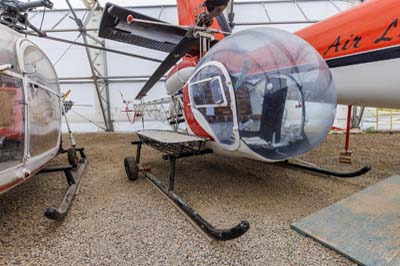
Bell 47G (CF-NHH) from 1965. |
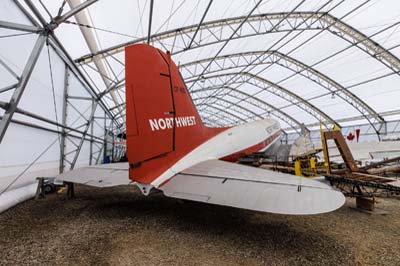
Left to right: Douglas C-47A Skytrain (42-108960 registered CF-BZI) ex USAAF. Built by Douglas Aircraft Company in Oklahoma City. It was taken into service by the United States Army Air Force (USAAF) during World War Two.
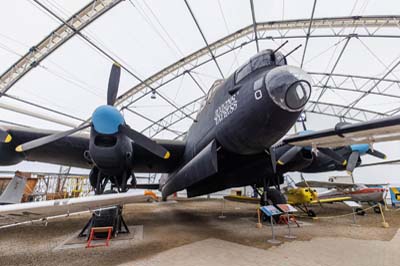
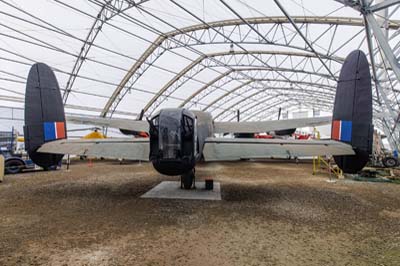
Avro Lancaster BX (FM136 'WL-O' marked 'KB895'). Built in May 1945 by Victory Aircraft in Malton, Ontario. The painted as 'KB895' it is tribute to 'Lady Orchid', a famous Canadian-built Lancaster that served with No. 434 (Elephant) Squadron RCAF during World War Two and successfully completed numerous operational missions. |
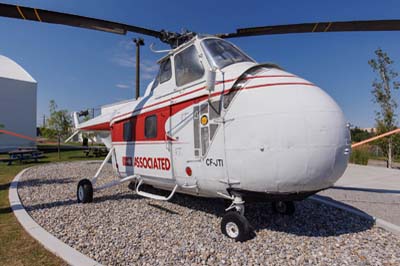
Left to right: Sikorsky S-55B (9628 registered CF-JTI) ex RCAF.
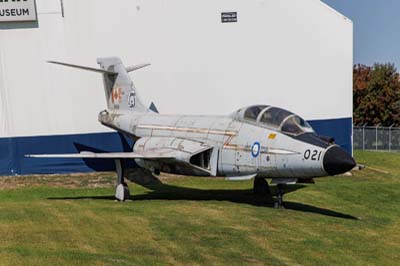
McDonnell CF-101B Voodoo (101021 '021') The two-seat F-101B Voodoo was developed from the single-seat F-101 interceptor, featuring a lengthened fuselage, improved weapons system and more powerful Pratt & Whitney engines. Following the cancellation of the Avro Arrow in 1959, Canada selected the Voodoo as its replacement interceptor. Sixty-six nearly new aircraft were acquired in 1961, replacing the CF-100 with five operational squadrons and an Operational Training Unit. In the early 1970s, Canada's Voodoos were exchanged for lower-time US aircraft equipped with improved missile systems. The fleet was gradually replaced by the CF-18 Hornet from the early 1980s, with most Voodoos retired by the end of 1984. A total of 479 F-101Bs were built between 1957 and 1961 for the US and Canadian Armed Forces.. |