Czech Air Force participate in their first Tactical Leadership Program (TLP)
Florennes Air Base, Belgium for TLP 2006-4
July 2006
|
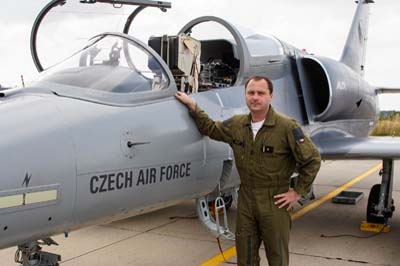 Philip Stevens reports: The Czech Air Force is the latest NATO country to attend a Tactical Leadership Program (TLP) course for the first time. Held at Florennes Air Base TLP (2006-4) was the fourth of six annual courses running from June 19 to July 14. The Czech Air Force had two pilots participating in Aero L-159A Alca with a further two aircraft flying in a supporting role. The pilots are from 21st Tactical Air Base (21 Základna Taktickeho Letectva -21.zTL) at
Cáslav.
Philip Stevens reports: The Czech Air Force is the latest NATO country to attend a Tactical Leadership Program (TLP) course for the first time. Held at Florennes Air Base TLP (2006-4) was the fourth of six annual courses running from June 19 to July 14. The Czech Air Force had two pilots participating in Aero L-159A Alca with a further two aircraft flying in a supporting role. The pilots are from 21st Tactical Air Base (21 Základna Taktickeho Letectva -21.zTL) at
Cáslav.
In an exclusive interview with Czech Air Force TLP Detachment Commander Major Petr Tomanék (see above) and 21 z.TL Squadron Commander, he said his two pilots were finding the course very challenging, flying against very experienced F-16 pilots. Major Tomanék an air force pilot since 1992, was flying in the air support role as 'Red Air' against the 'Blue Air' TLP pilots.
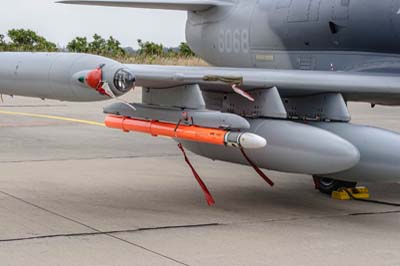
I asked Major Tomanék, in flying the L-159 did they have any problems fitting the AIS pods and how familiar were they of AACMI type training? He said, "The L-159 was built in the Czech Republic but has a United States engine and computer avionics, an Italian Radar. Perhaps 95% of the aircraft uses Western equipment, so fitting the AIS pods was not a problem. We first flew AACMI type missions for the first time in 2004 in Turkey and later in Norway and have learned a lot from the debriefings." He went on to say as this was the TLP for the Czech Air Force, the offer of two courses for the price of one was very well received. With more than half the course completed he was full of praise for the TLP staff. Col. Minne has 110 full time TLP staff at Florennes from all signed up members. Would they be attending again, he hoped so, but that was a decision to be made later?
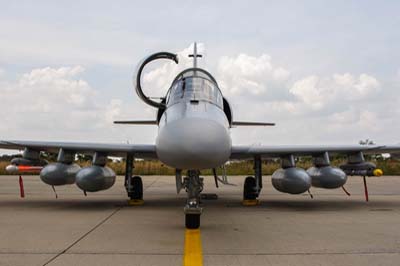
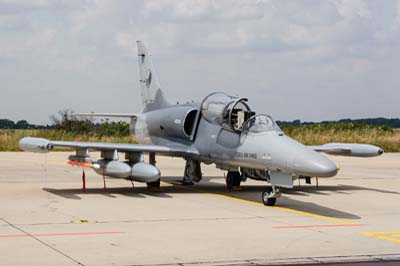 The objectives of the TLP is to provide realistic tactical flying training, to promote international operability, practice NATO procedures whilst developing tactical leadership skills. The four-week courses comprise of around 24 aircraft flying 15 missions, which increase in complexity as the course progresses.
The TLP dates back to 1978, it's founding nations were Belgium, Canada, Germany, Holland, Great Britain and the United States. Originally it was just an academy and did not involve any flying and was held at Jever Air Base, Germany. It was decided in 1988 to move from Jever to Florennes when the 15 flying mission courses were started. Although Canada withdrew from the TLP set-up in 1997, when they closed their bases in Europe, other nations have been eager to join. In 1996 Italy and Denmark signed up to be joined by Spain in 2002.
The considerable costs of running the courses are shared amongst the eight NATO nations, based on the number of flying slots committed to. However non-member nations, such as Greece, Turkey and Portugal, are offered slots which they pay for on a slot by slot basis. This year of the 144 slots available 36 have been taken up by non-member nations. Of the total cost of 5.37 million Euro in 2006, non-member nations will contribute 1.27 million Euro. A guest flying slot currently costs 42,844 Euro. During my briefing TLP Commandant ACO, Col. 'Mike' Minne of the Belgian Air Component, explained that TLP is not a school but additional training. He went on to say, "TLP is not like squadron training with missions of one, two or four aircraft, but involves much larger missions, including the E-3 AWACS, which is here all week." Pilots are worked very hard, the twelve-hour days are very demanding. Apart from the 15 missions there are 50 hours of classroom academics during the 19 days of the course. Attending pilots must be able to operate as COMAO commander, be combat mission ready, able to flight lead a 2-ship and have at least 500 hours on their aircraft. Col. Minne said, "a third of the attending pilots have been to war and still find
the course challenging."
 The missions are structured to train NATO flying personnel in planning and executing Combined Air Operations (COMAO). Missions are flown over Belgium, Germany, France and the UK. Air to air refuelling (AAR) is used to extend missions and is conducted over the North Sea. Low-level flying although included on the course has been reduced in recent years. Night flying forms part of the wintertime courses, when it is dark enough to night-vision goggles (NVG) to be effective. Flying is often dictated by the weather, on the day of my visit the Czech Air Force was not able to fly. With thunder storms forecast over Belgium the sortie was moved to the North Sea and required AAR, which the Czech aircraft were not equipped. No live ammunition is used on the course; chaff and flares are though.
Pilots are not given their mission details till 08:00 on the day; using Time Sensitive Tasking (TST) based on new intelligence. For my day on base TLP aircraft were tasked with a Tactical Air Support for Maritime (TASMO) mission, which was to attack a ship in the North Sea.
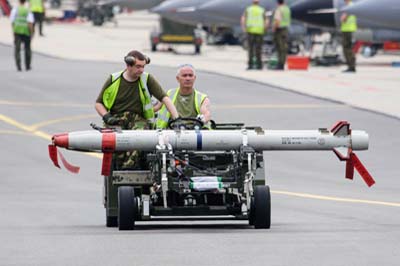 One of the most important aspects of TLP courses is the 'Autonomous Air Combat Manoeuvring Instrumentation' (AACMI) system. Aircraft are fitted with an Airborne Instrumentation Sub-system (AIS) Pod, which is essentially an electronic pod that transmits a package of information regarding the flight of the aircraft, such as altitude, speed, heading, G and angle of attack etc. All these data are received on the ground for analysis. It is possible to follow air to air combat in real time very accurately within 15 feet (4.6m) and when the flight has ended the data is used extensively during debriefing. A PC based mission planning system call Falcon View is also used. The AIS pod is in effect an AIM 9 shell packed with electronics.
What is the future of TLP? Col. Minne said, "Since 2003 we have been looking for another base to operate from, offering better weather and less restricted flying. Albacete Air Base in Spain has been discussed but as yet nothing has been signed." I was told that it would take a further three years to build the infra-structure once the final decision had been made. Now that Poland and Hungary were flying NATO style modern jets, they were being encouraged to follow the Czech's and attend the TLP. (It was announced in April 2007 that the TLP will move to Albacete once building has been completed. The last TLP missions will be flown from Florennes at the end of 2009 or early 2010). |
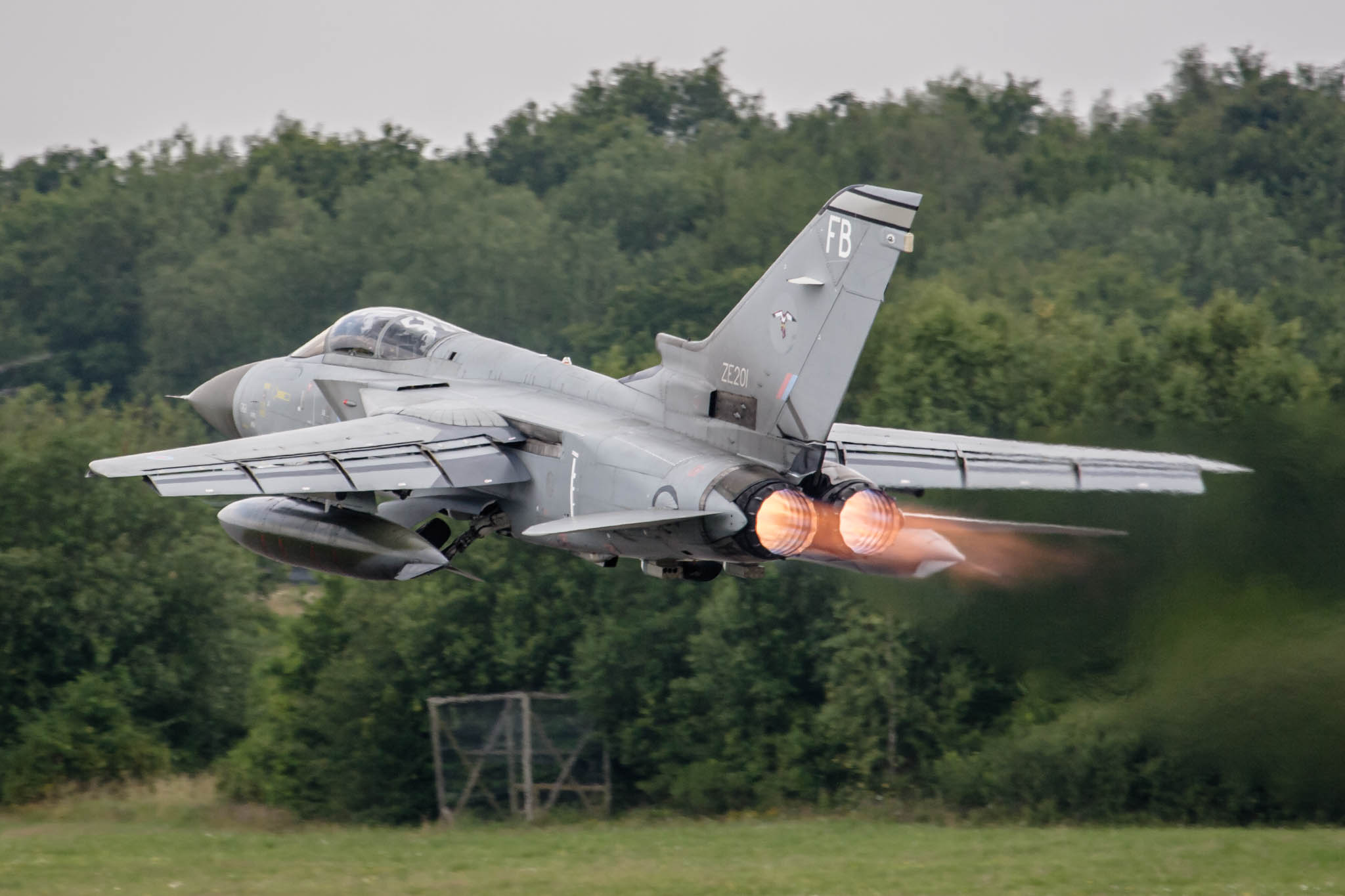 |
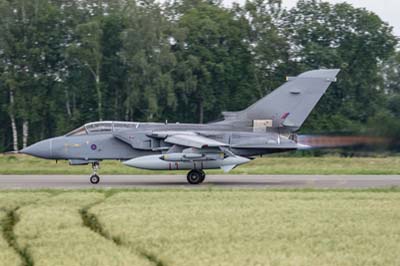
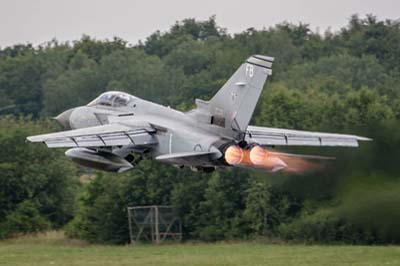
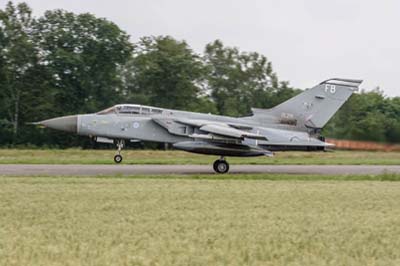
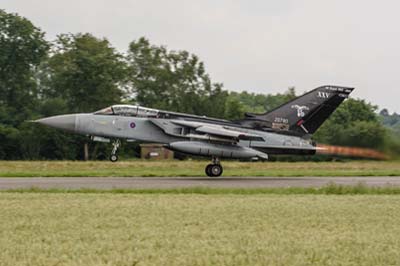
RAF Tornado F.3 (ZE201/FB) of 25 Squadron departs Florennes.
|
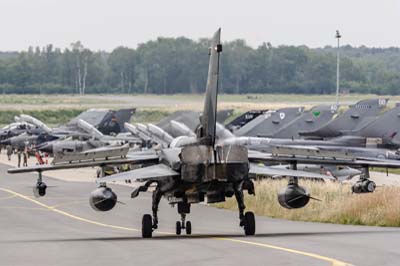
 TLP Course 2006-4 (The participants)
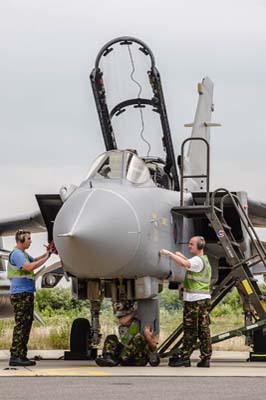
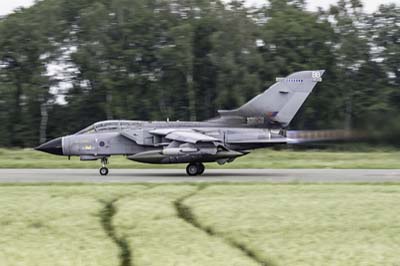
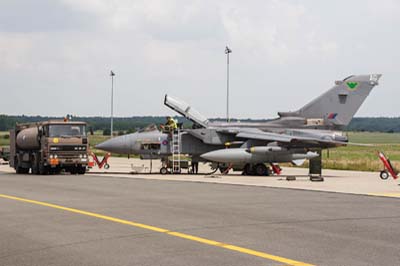
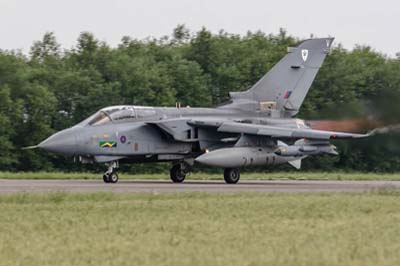
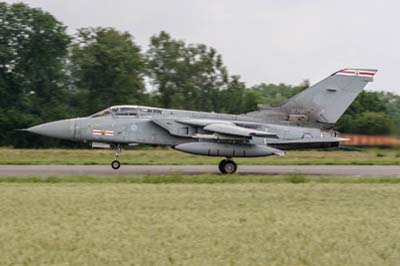
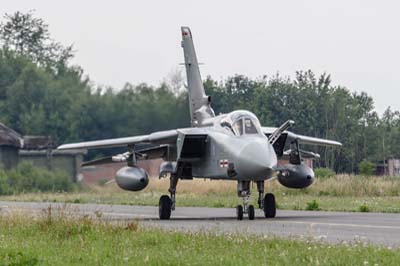
4x Tornado GR.4 Royal Air Force
2x Tornado F3 Royal Air Force
2x L-159A Alca Czech Air Force
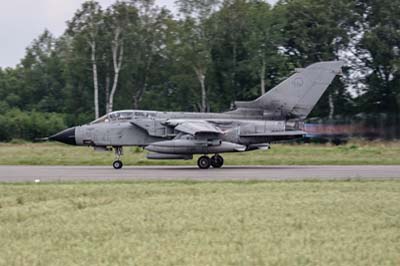
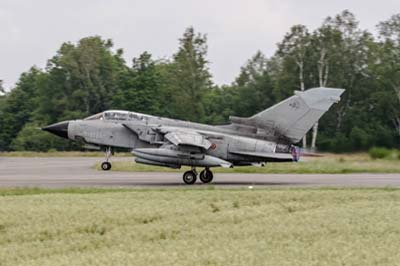
2x Tornado IDS Italian Air Force
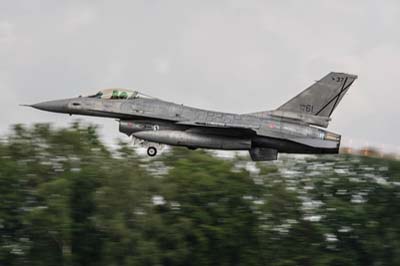
2x F-16A Fighting Falcons Italian Air Force
3x Tornado IDS German Air Force
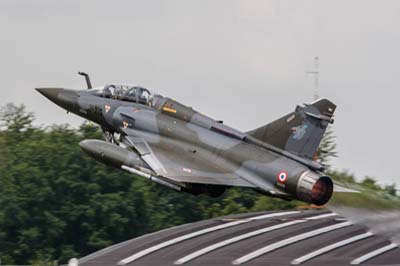
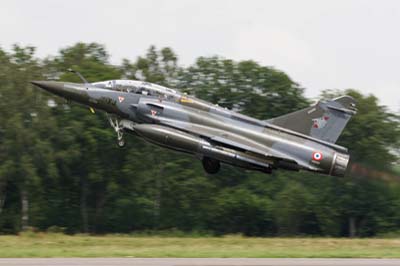
2x Mirage 2000D French Air Force
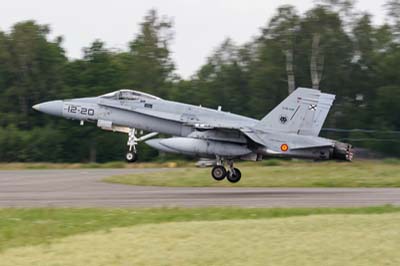
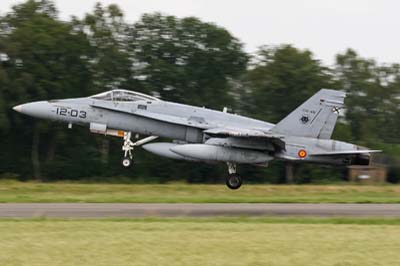
2x EF-18A Hornets Spanish Air Force
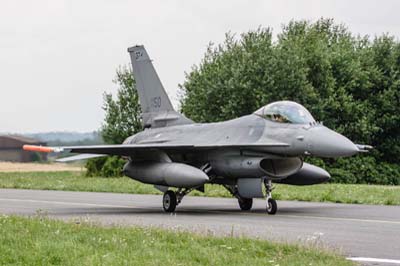
2x F-16CG Fighting Falcons USAFE
2x F-15E Strike Eagles USAFE
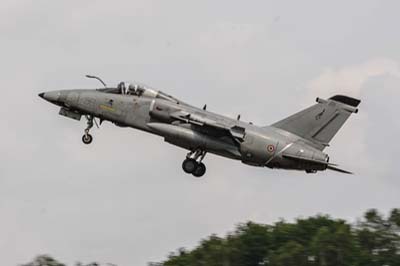
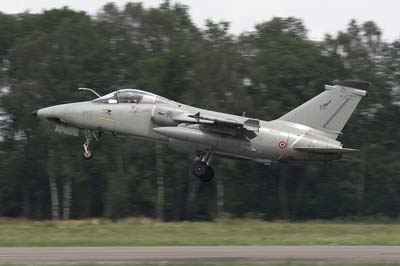
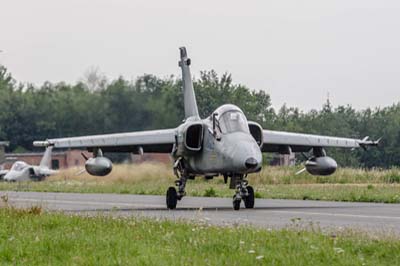
2x AMX Italian Air Force
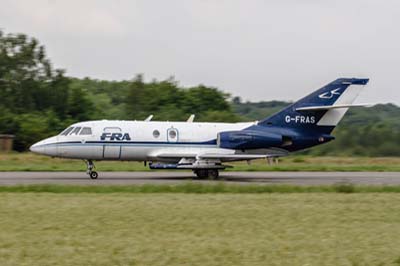
In addition to the aircraft and pilots on the course a number of additional supporting aircraft were involved including;
An E-3 and a Dassault Falcon 20ECM both flying out of Florennes. |
| Italian Air Force - Aeronautica Militare Italiano (AMI) |
| Left to right: Tornado IDS's (MM7041/6-41 and MM7058/6-11) of 6 Stormo and Aeritalia AMX's (MM7186/51-56 and MM7175/51-45) of 51 Stormo. |
| Left to right: AMX's return and F-16A Fighting Falcons (MM7261 and MM7250) of 37 Stormo. |
| Spanish Air Force - Ejército del Aire (EdA) |
| Left to right: EF-18A Hornets (C.15-62/12-20 and C.15-45/12-03) of Ala 12. |
| Left to right: Tornado GR.4 (ZA473 uncoded, ZA588 'BB' in 14 Squadron marks and ZA546 'AG' in 9 Squadron marks) |
| Left to right: Tornado F.3 (ZE201 'FB' and ZG780 in special anniversary marks) of 25 Squadron. |
| Left to right: Tornado GR.4A (ZG709 'V') in 13 Squadron marks and Tornado F.3 (ZE785) of 41 Squadron return after days mission. |
| German Air Force - Luftwaffe |
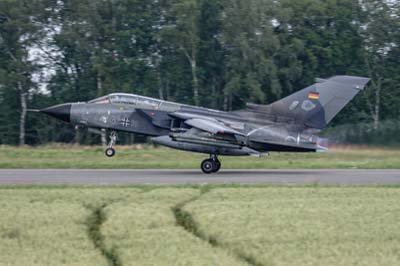
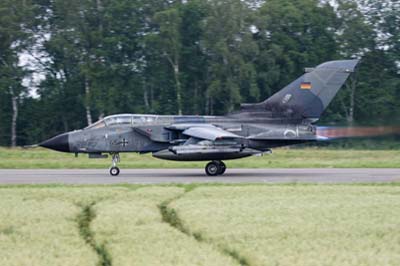
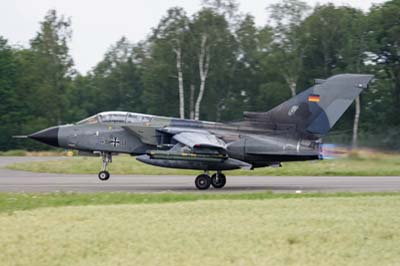
| Left to right: Tornado IDS's (46+18, 45+37 and 46+11) of JBG 33. |
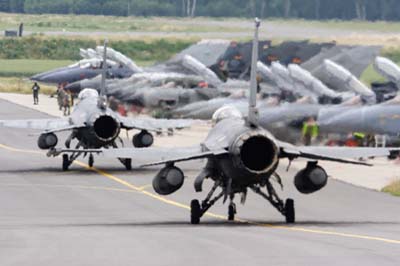
| United States Air Force Europe (USAFE) |
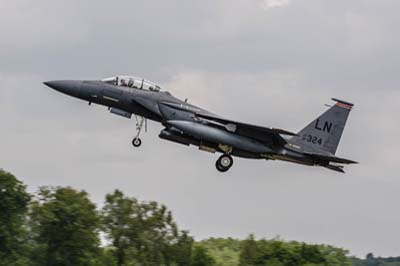
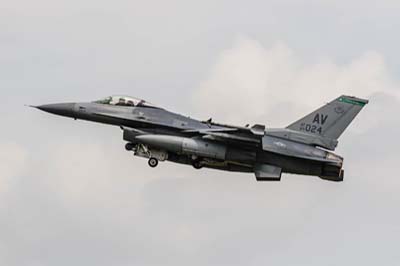
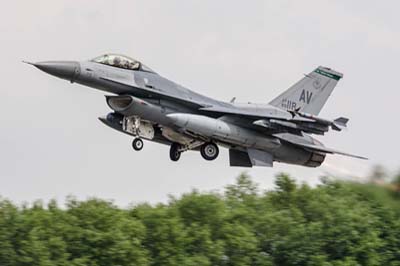
| Left to right: F-15E Strike Eagle (91-0324 'LN') of 494FS, 48FW and F-16C (89-2024 'AV' and 89-2118) of 31 FW from Aviano AB in Italy. |
| French Air Force - Armée de l'Air (Adl'A) |
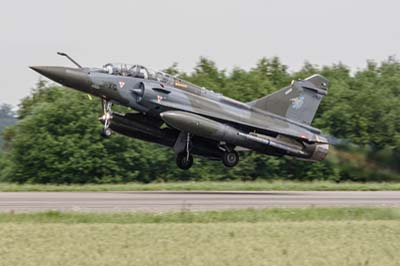
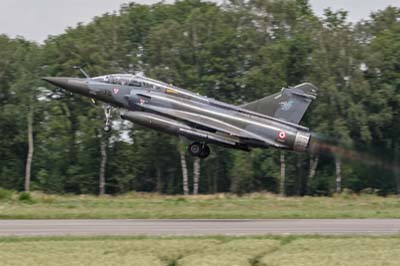
| Left to right: Mirage 2000Ds (613 '3-XG' and 602 '3-XJ') of EC03.003. |
I would like to thank Col. Minne and his staff for making my day interesting as well as assisting me for my photographic requests and to providing the interviews necessary for the text.
Philip Stevens July 2006. |