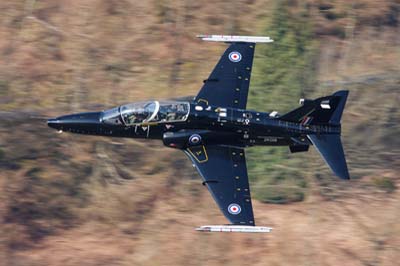
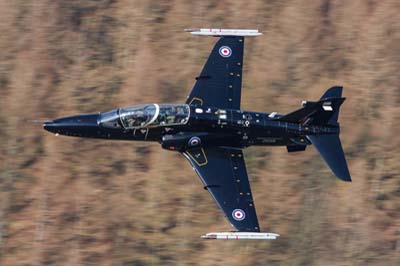
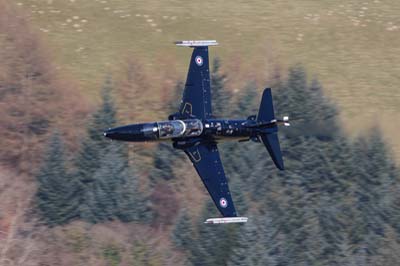
In Action
4 Flying Training School, 19(Reserve) Squadron - RAF Valley
Disbanded
|
On November 24, 2011 RAF Valley 19(Reserve) Squadron, the unit formerly responsible for fast jet tactical weapons training was disbanded and 4(Reserve) Squadron was reformed to take its place.
Previously;
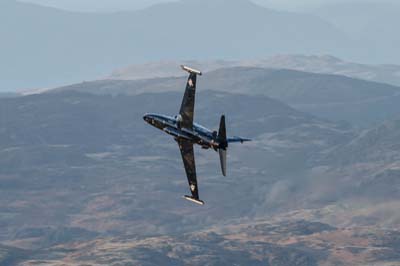
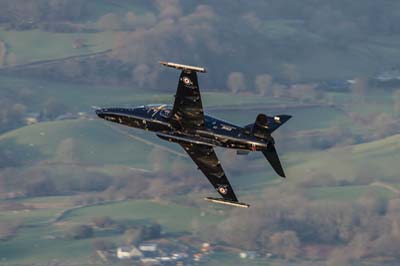
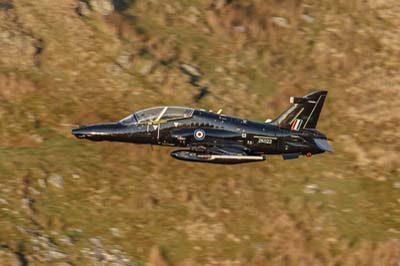
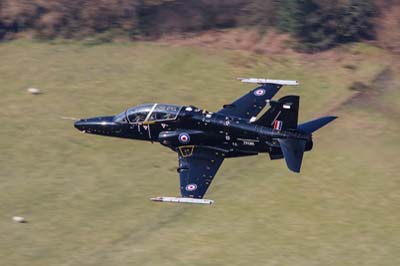
19(R) flew from RAF Valley in Anglesey, North Wales, the home of 4 Flying Training School (4 FTS) also known as the fast-jet ATTU (Advanced Training and Tactics Unit). At Valley there are two flying training roles; that of advanced flying training with 208(Reserve) Squadron and tactical weapons training with 4(Reserve) with the Hawk T.2 and previously as 19(Reserve) Squadron with the Hawk T.1.
Each year the staff instructors are responsible for around 100 students as part of 208(R) Squadron's training syllabus (phase one) in three parallel 20-week courses flying the Hawk T.1. 208(R) Squadron's role is to train pilots the fundamental skills of flying fast-jets. Aided by the instructors, students must demonstrate that they are able to fly the aircraft in all weather conditions day and night and with great accuracy. Students should progress to close and tactical formation flying, followed by navigational-training sorties, some of which are at low-level.
On passing phase one, students will pass on to 19(R) Squadron for the Tactical Weapons course (phase two), flying in the Hawk T.1A. Students with 19(R) will learn how to use the Hawk as a weapons platform, flying in tactical formations at low-level to attack targets. Students will basically learn; how to drop bombs, strafe targets and the basics of air-to-air combat. To complete a course a successful student will have planned, briefed and led a pair of Hawks to attack a target. They also fly with the threat of being 'bounced' by a staff instructor simulating an attack by an enemy fighter. Following completion of this course, graduates will be assessed for single or two seat operations for a move onto an Operational Conversion Unit (OCU), before being assigned a frontline squadron. It is generally accepted that the most gifted pilots will be posted to single seat aircraft. 20 students throughout the year are transferred to NATO flying training at Cold Lake or Moose Jaw in Canada.
Around five students will be diverted or 'creamed' off from the OCU course to become instructors. These 'creamies' as they are known will either go to Linton-on-Ouse on the Tucano or remain at Valley for a further three years to instruct on the Hawk, before moving on to an OCU.
Training is also provided to exchange officers and foreign and Commonwealth officers. As the Indian Air Force has ordered 66 Hawk Mk.132 from BAE Systems, they have set up the Hawk Synthetic Training Facility (HSTF) at RAF Valley. 75 Indian Air Force pilots previously undertook flying training as part of the 41 month program, which started in July 2004. |
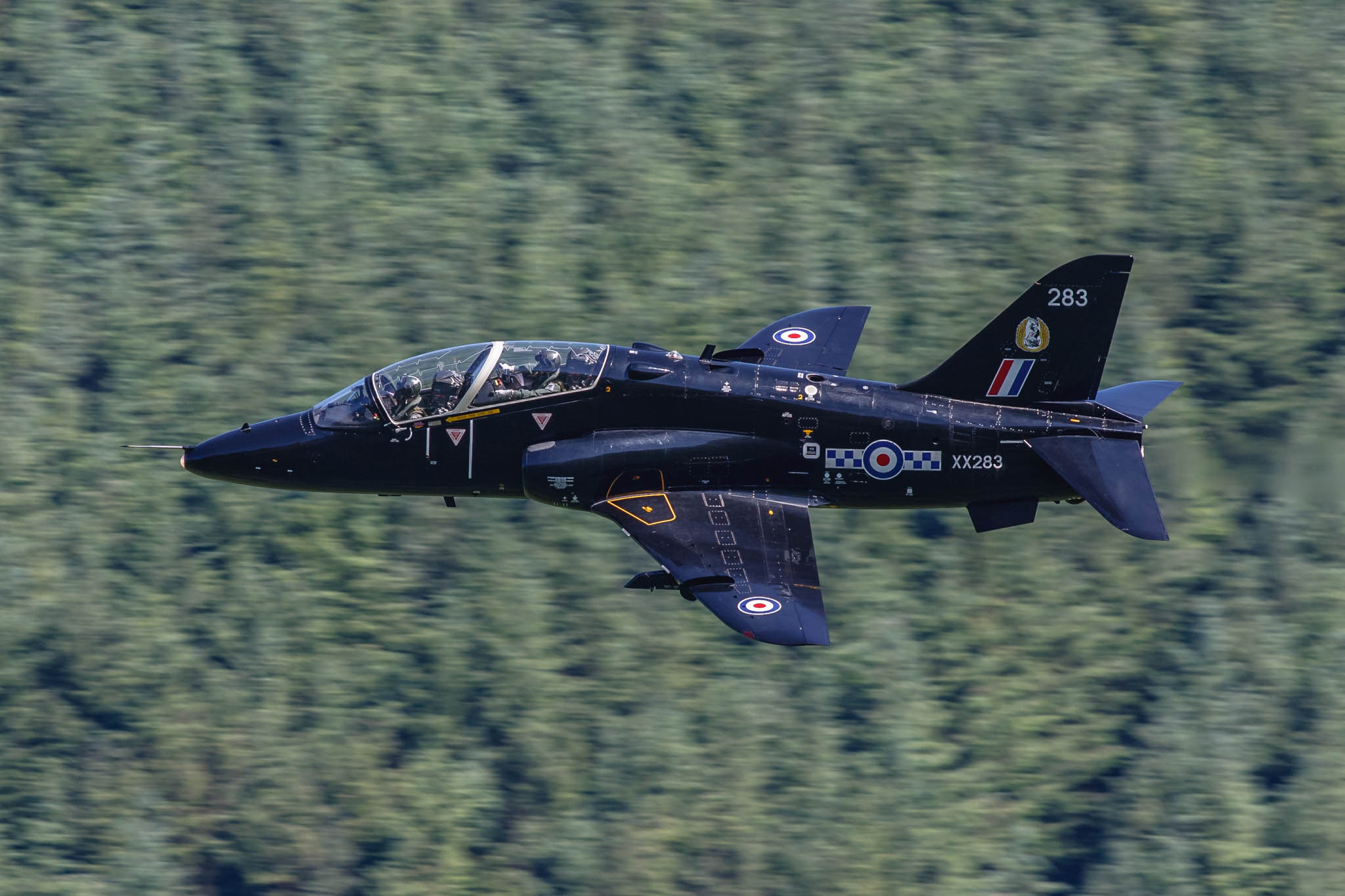 |
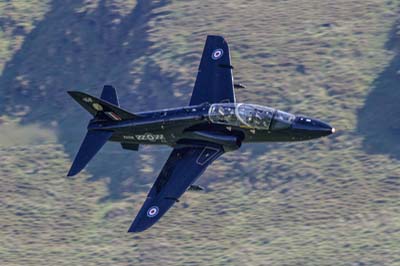
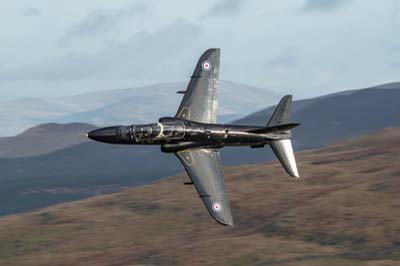
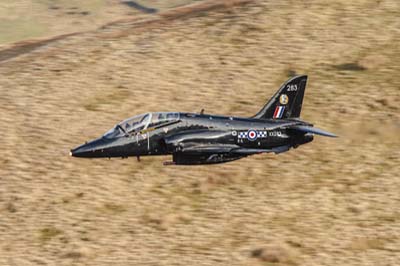
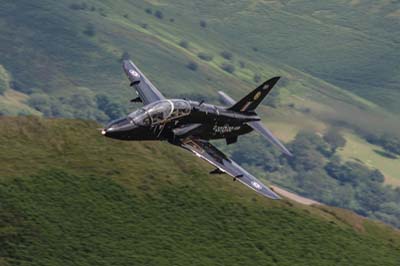
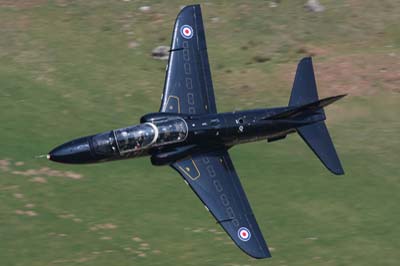
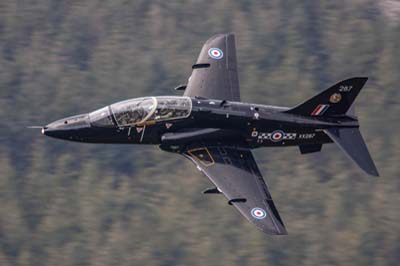
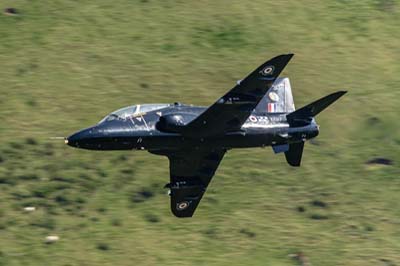
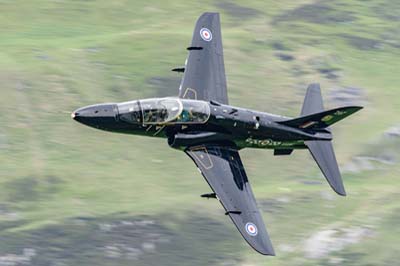
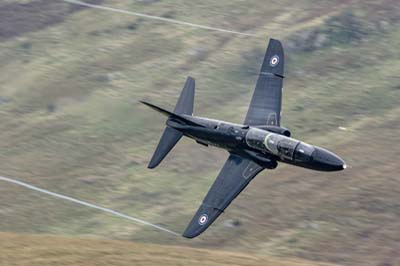
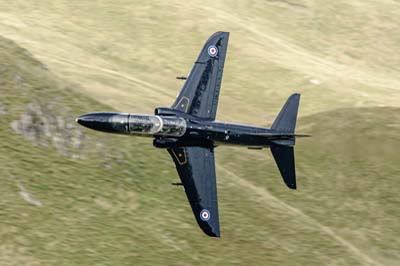
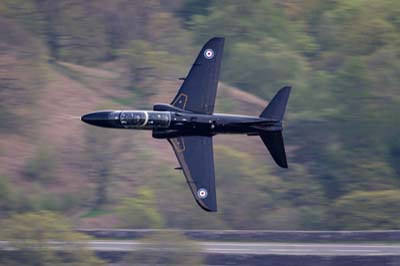
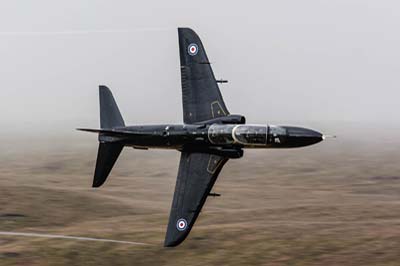
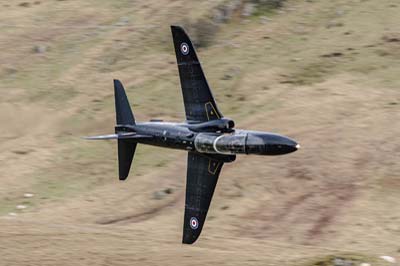
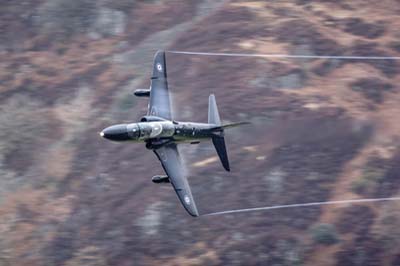
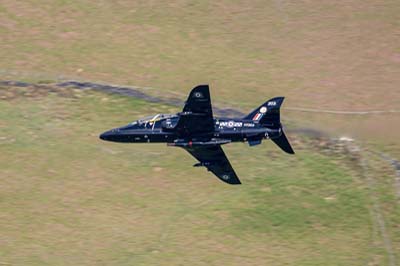
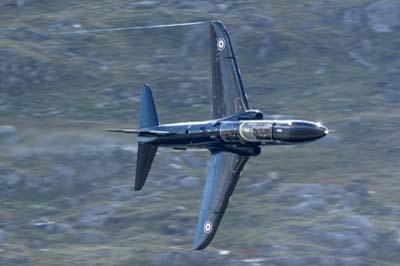
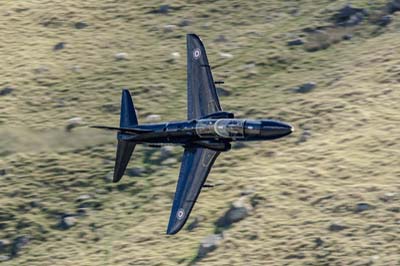
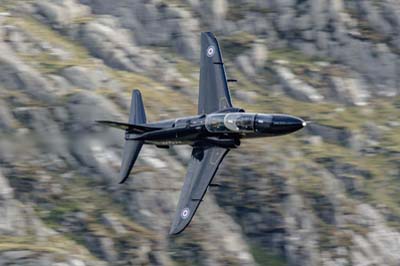
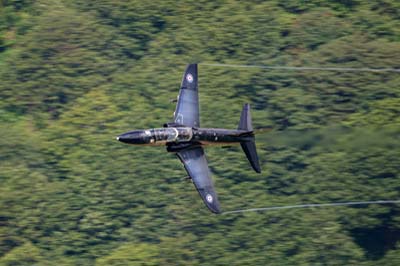
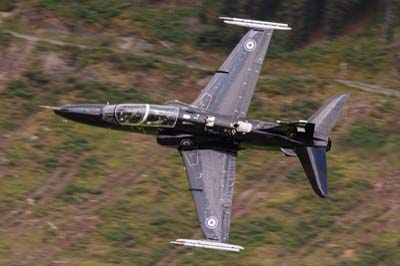
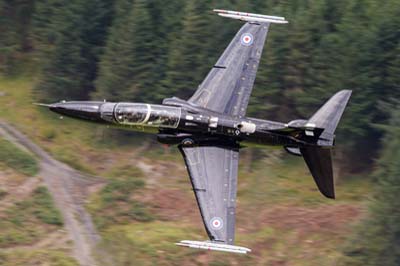
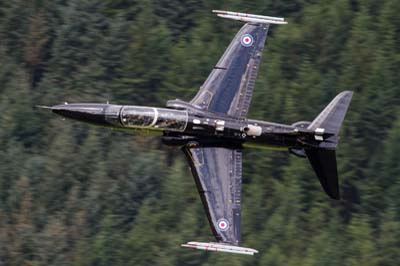
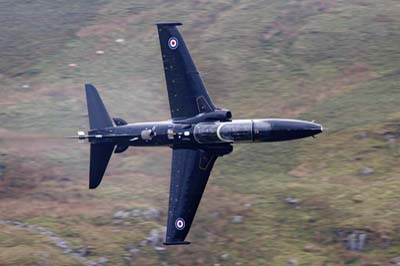
| Hawk T.1 (XX283) flying through the Loop in June 2009. |
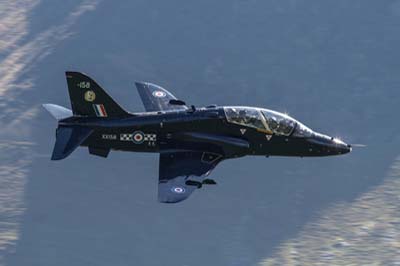
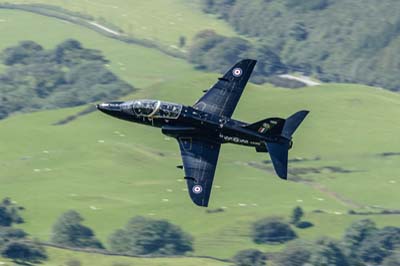
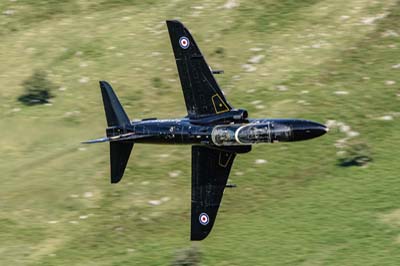
| Left to right: Hawk T.1 (XX158) in August 2011. |
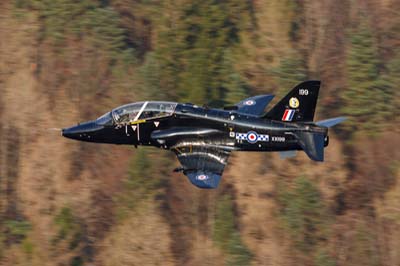
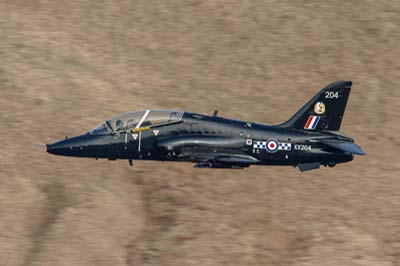
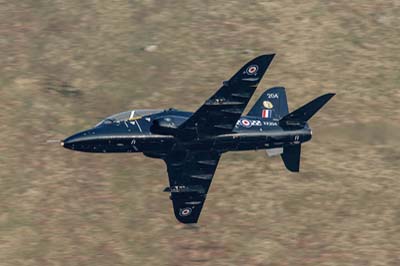
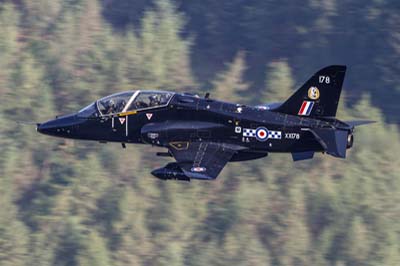
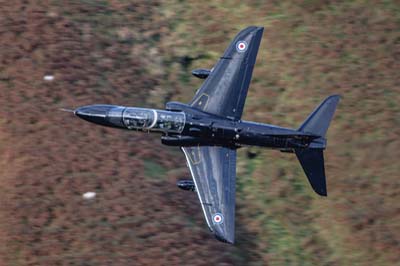
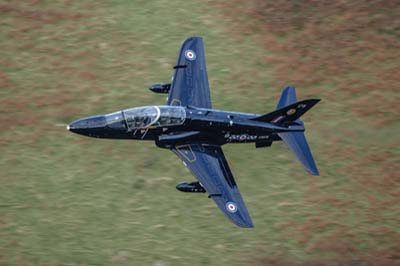
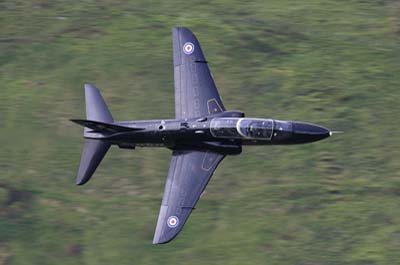
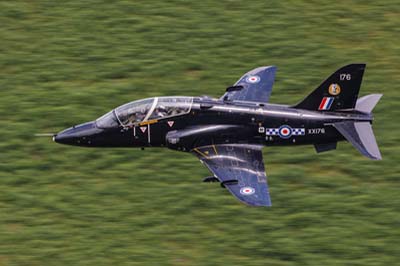
| Left to right: Hawk T.1A (XX199 and XX204) in March 2011 through Cumbria, by August XX199 was in 208(R) Squadron markings. Hawk T.1 (XX178) still in 19(R) Squadron markings it is carrying a CBLS (Carrier, Bomb, Light Stores) pod under each wing, it is also fitted with a 30mm Aden Mk.4 Cannon pack in April 2011. |
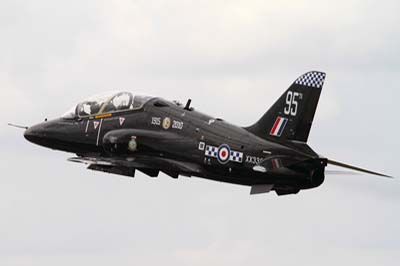
Left to right: Hawk T.1 (XX338) 19(R) Squadron 95th Anniversary 1915-2010 scheme at RIAT 2010.
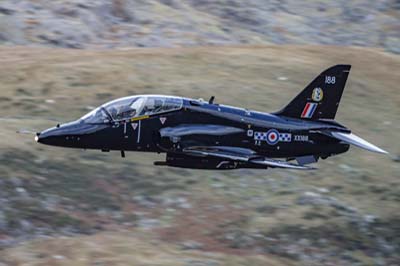
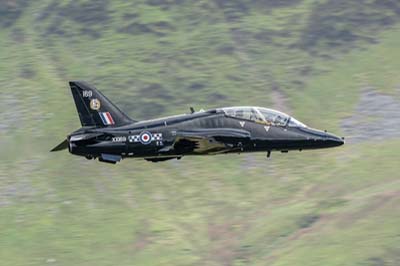
Hawk T.1 (XX188) with a 30mm Aden Mk.4 Cannon pack in October 2010.
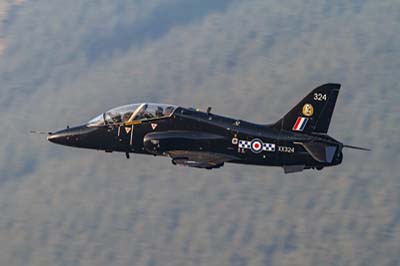
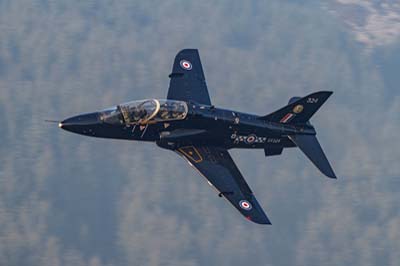
Hawk T.1 (XX324 x2) in March 2011. |
Left to right: Hawk T.1W (XX178) was unusually carrying a CBLS (Carrier, Bomb, Light Stores) pod under each wing through the 'Loop' in October 2009.
Hawk T.1W (XX283) with a 30mm Aden Mk4 Cannon pack in December 2009. |
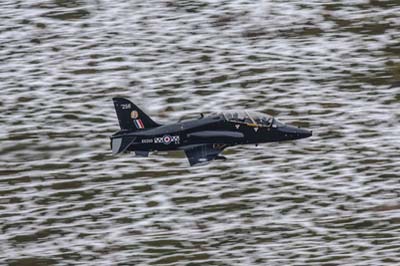
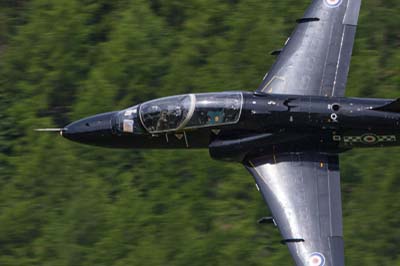
| Left to right: Hawk T.1W (XX313) in June 2008. Hawk T.1 (XX256) in mid Wales in February 2009. Hawk T.1s (XX189 and XX176) in July 2009. |
| Left to right: Hawk T.1A (XX199) and Hawk T.1W (XX312) in July 2007. Hawk T.1As (XX201 and XX287) in May 2008. |
| Left to right: Hawk T.1As (XX317 and XX287) through the 'Loop' in June 2007. Hawk T.1 (XX169) through mid-Wales in October 2007. Hawk T.1A (XX189) in August 2007. |
Left to right:
Hawk T.1A (XX303) turning at the end of the valley in the Lake District on May 11, 2006.
Hawk T.1 (XX250) flying just below the low cloud on April 6, 2006 in mid Wales.
Hawk T.1 (XX169) through the 'Loop' in March 2007 and again in May 2007. |
Left to right: A Hawk T.1 during Prince of Wales Trophy low-level navigation competition, May 2005.
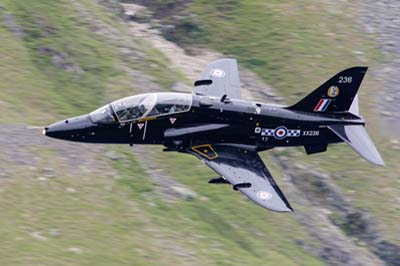
Hawk T.1W (XX236) passing through the Lake District in June 2005.
Hawk T.1W (XX176) on the way to the bombing range, it is fitted with CBLS (Carrier, Bomb, Light, Store) units under each wing in March 2007. The CBLS are sometimes fitted for training sorties to show the student the differences of the handling and higher fuel consumption with stores fitted.
Hawk T.1W (XX203) is fitted with a 30mm Aden Mk4 Cannon pack. The gun can carry 120 rounds of ammunition and
has a rate of fire of 1200 rounds per minute. It is used by 19(R) Squadron for strafing practice on the range at RAF Pembrey Sands on the South Wales coast or for Air to Air firing at a banner towed by another Hawk. |
| Left to right: Hawk T.1 (XX237) and two images of Hawk T.1A (XX317) in September 2006 in the A5 pass. Hawk T.1W (XX239) pulling 'G' around 'Loop' on July 13, 2004. |
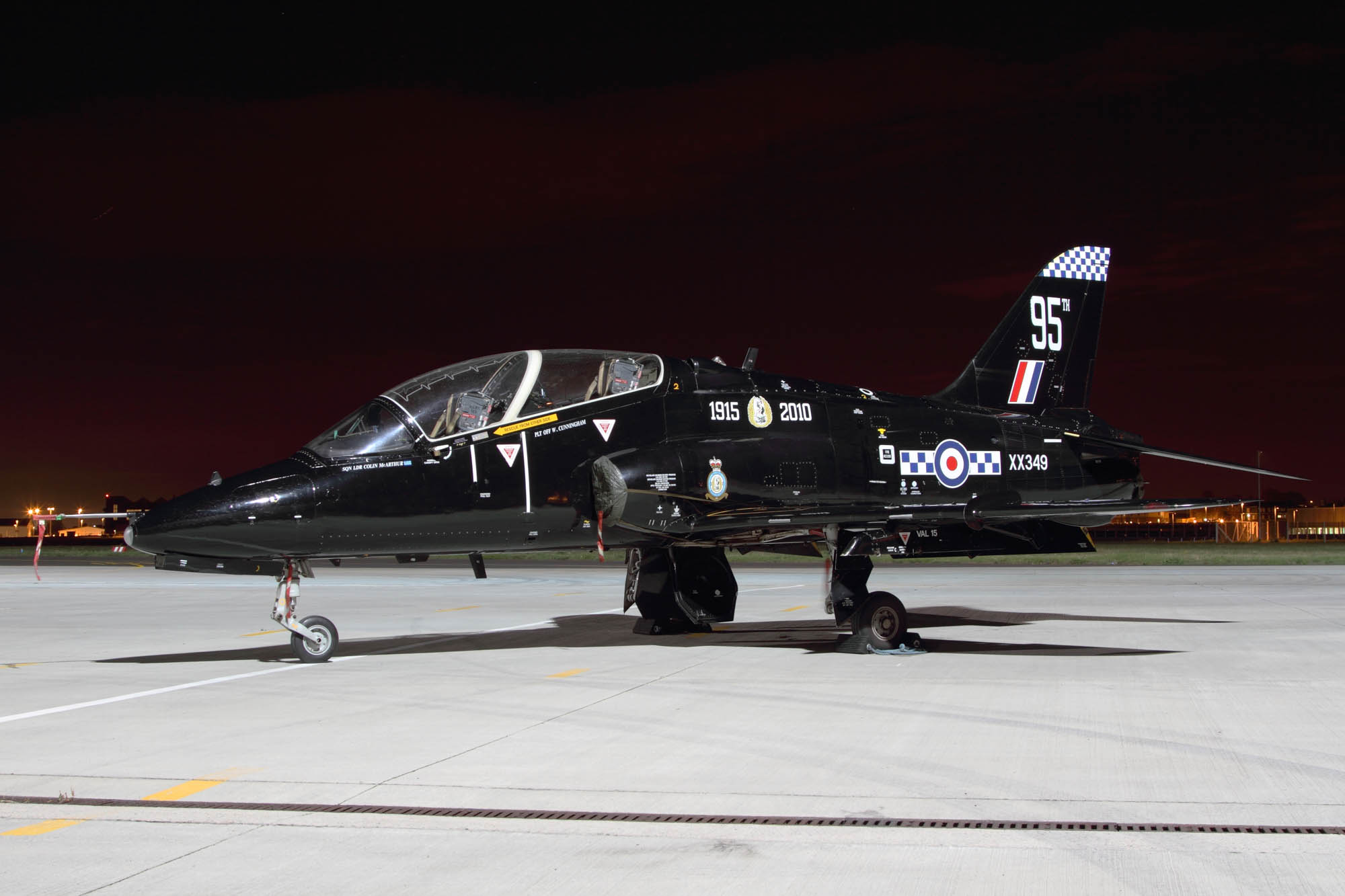
| Hawk T.1W (XX349) in 95th Anniversary 1915-2010 scheme visiting Northolt in September 2010 |
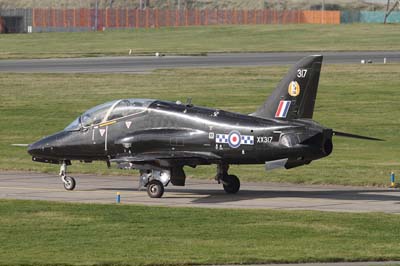
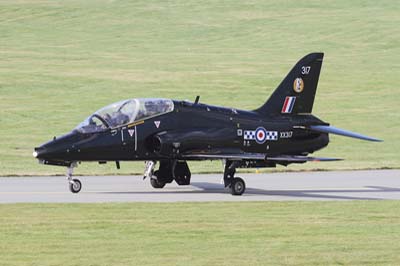
| Left to right: Hawk T.1 (XX317) at RAF Valley in October 2011. |
| 19(R) Squadron and the new Hawk T.2 |
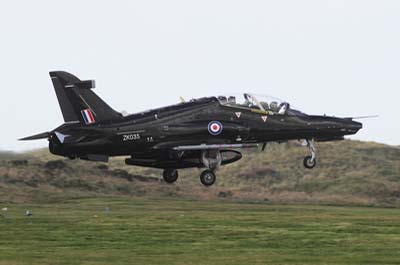
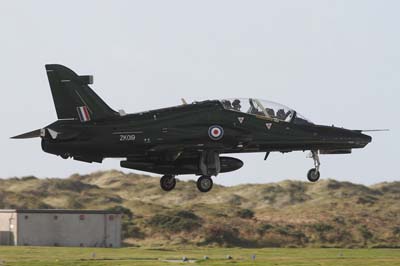
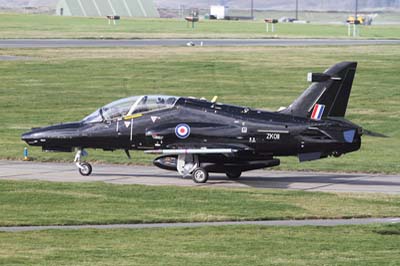
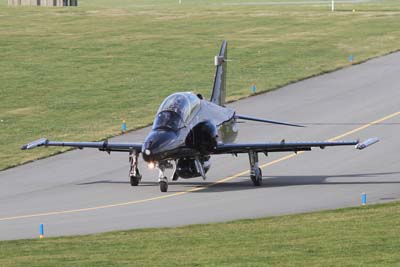
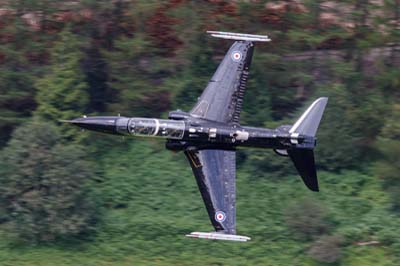
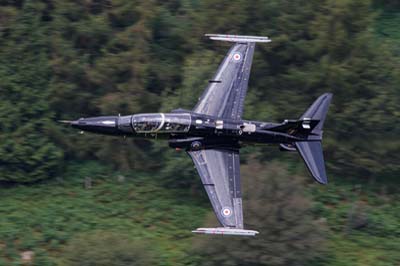
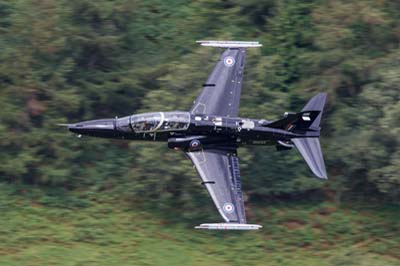
| Left to right: Hawk T.2s (ZK035, ZK019 and ZK011) unmarked of 19(R) Squadron at RAF Valley in October 2011. |
| Left to right: First of a pair of Hawk T.2s (ZK035) unmarked of 19(R) Squadron in August 2011. |
| Left to right: Hawk T.2 (ZK025 and ZK036) in August 2011. |
| Left to right: Hawk T.2 (ZK022) of 19(R) Squadron they have just moved up from 20 to 90 hours per week on the Hawk T.2 seen in December 2009. |
| Left to right: Hawk T.2 (ZK018) of BAE Systems during a low-level training flight for a 19(R) instructor in preparation for the Hawk T.2 to enter service with the RAF at Valley, seen in March 2009. |