RNAS Predannack
Cornwall
July 2003 and July 2008
|
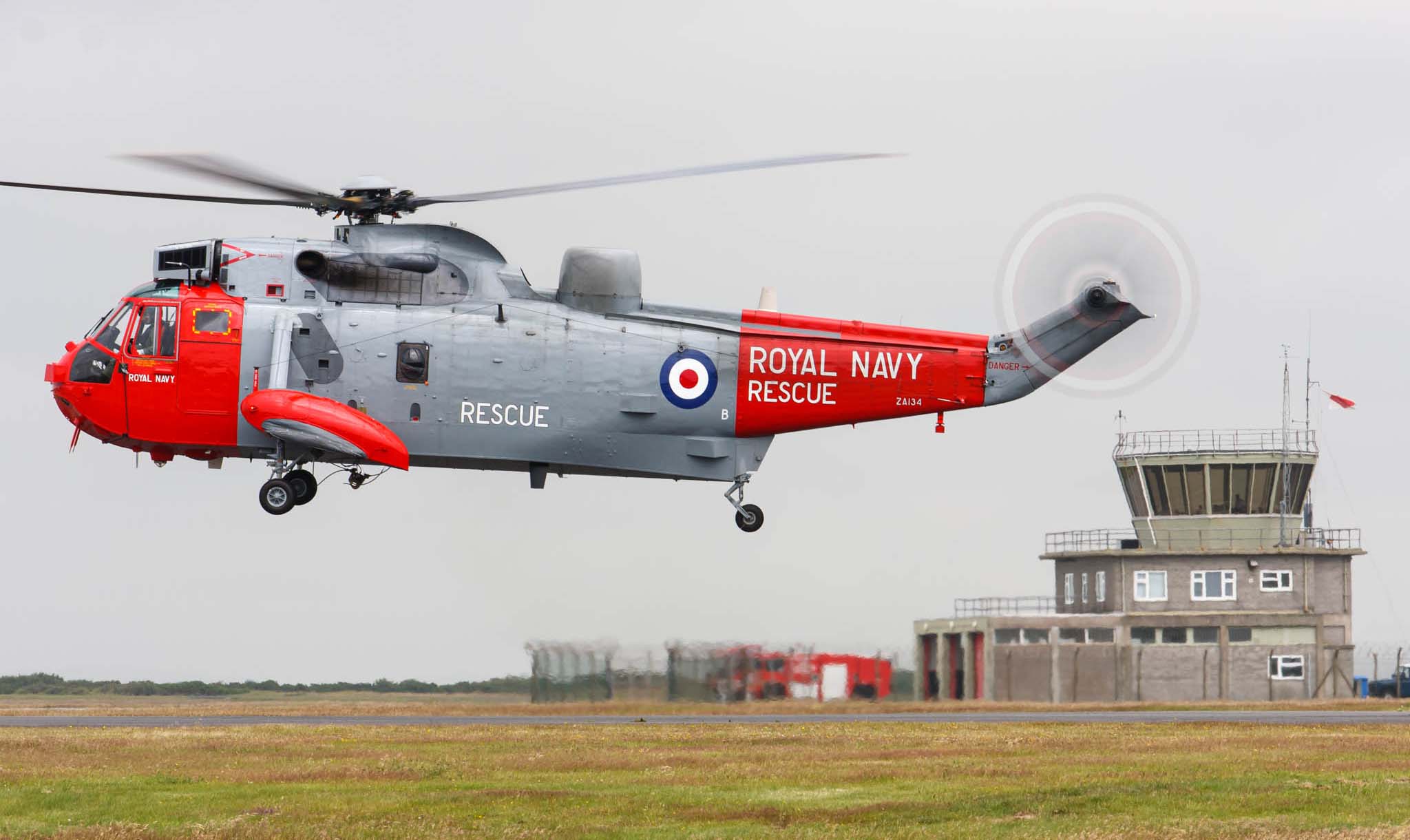
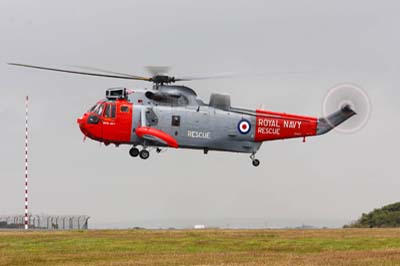
Sea King HU.5 (ZA134) of 771 Naval Air Squadron (NAS) based at RNAS Culdrose,
hovering in front of the control tower and at the end of one of the four runways at Predannack airfield. |
An official weekday visit in July 2008
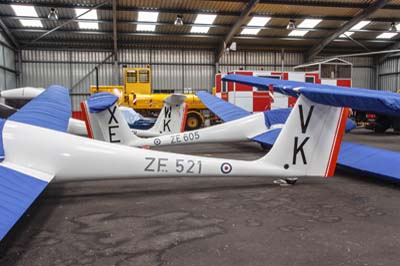
RAF Predannack in Cornwall was built during World War Two and continues today as a relief airfield and satellite for Royal Navy Air Station (RNAS) Culdrose, the Fleet Air Arm's largest helicopter base which is situated six miles away to the north. Taken over by the Royal Navy in 1958 RNAS Predannack is now primarily used for helicopter pilot training. It has a fully operational control tower, four runways and a weather radar. The airfield is also used by the 626 Volunteer Gliding School (VGS) which have been based here since 1991 and currently winch launch Grob Viking T.1 gliders. |
| Left to right: Grob Viking T.1s in the 626 VGS hangar and Sea King HU.5 (ZA134). |
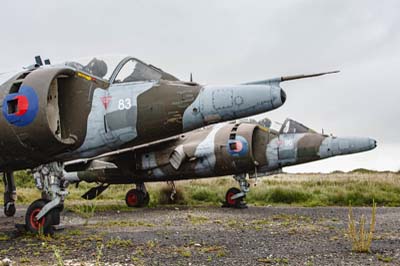
| At the southern end of the airfield is the training area for the Royal Naval School of Firefighting which moved here in 1971. They usually have between 15 and 20 airframes at its disposal for personnel rescue practice training. A separate pan area is used to ignite large quantities of fuel from time to time for firefighting training. The redundant airframes which are brought here by road, tend to linger here for a few years before being tendered for scrap and subsequently replaced. During my visit in 2003 I found 15 airframes (see below) five years later there were 18, only four or five having been present at both visits. |
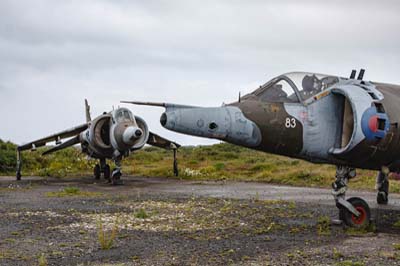
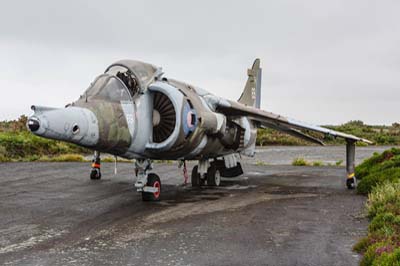
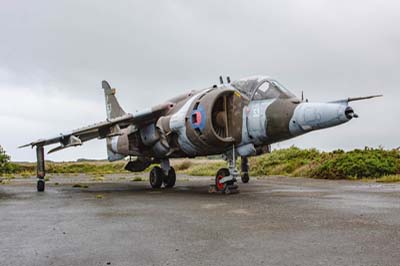
| Left to right: Harrier GR.3s (XV783 'DD83' with XZ996 'DD96', XV783 'DD83', XZ969 'DD69' and XV753 'DD53') all formally with RNSFDO at Culdrose. |
| Royal Naval School of Flight Deck Operations (RNSFDO), which is part of the School of Aircraft Handling (SAH) at nearby Culdrose were using amongst other airframes a number of Harrier GR.3s. Following the withdrawal of the Sea Harrier in 2005 they accepted around a dozen examples to replace the older Harriers which were subsequently used to replenish the firefighting training aircraft here at Predannack. |
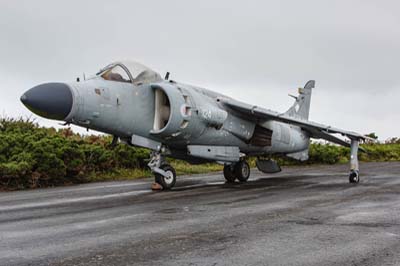
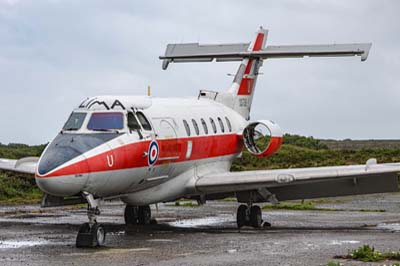
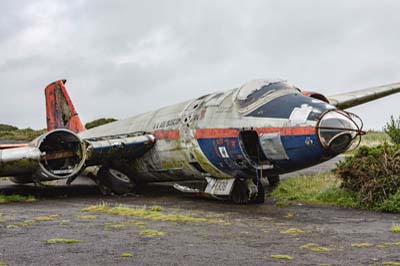
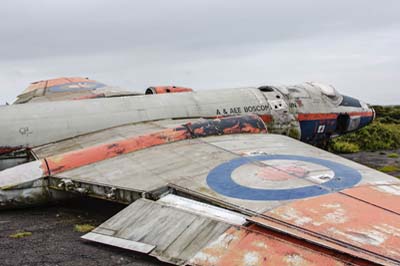
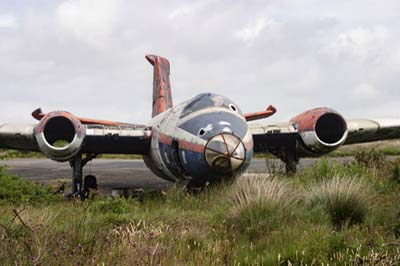
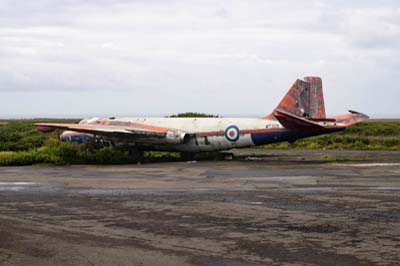
| Left to right: The only Sea Harrier FA.2 (ZD581 '124'), Dominie T.1 (XS738 'U' later 9274M) and former A & AEE Canberra B(I).6 (WT308). |
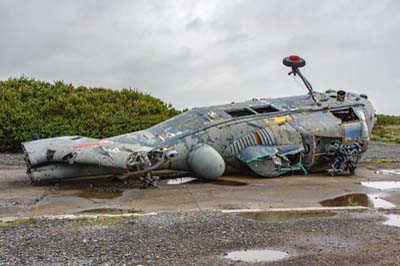
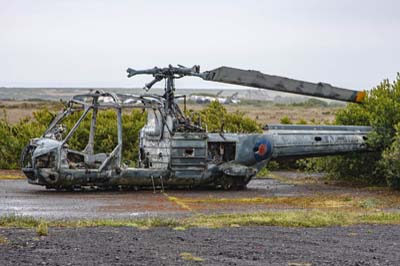
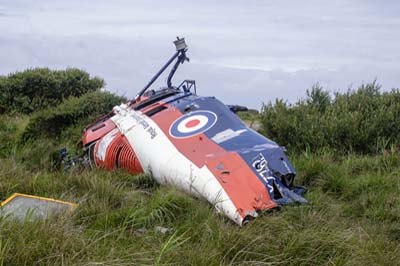
Some of the helicopters are on their sides making it very difficult to get decent photographs of them.
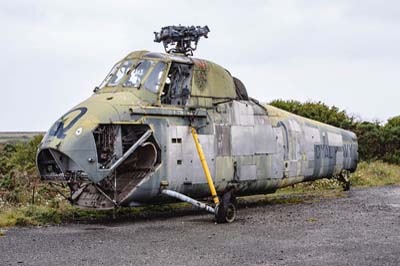
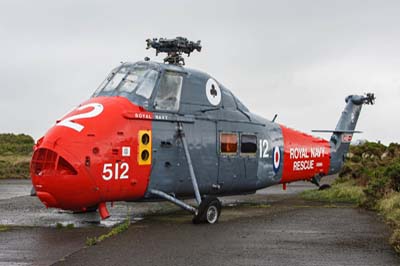
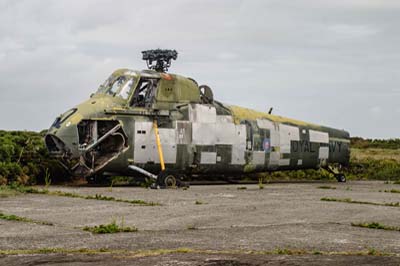
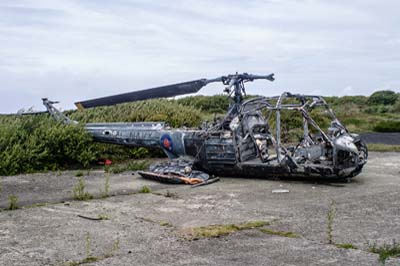
Left to right: Wessex HAS.3 (XP137 'DD-711') its former colours of yellow and blue are now showing through the olive drab which was applied while with the RNSFDO at Culdrose. Wessex HU.5 (XS516 'YQ'), Wessex HAS.1 (XS885 '512') and Wasp HAS.1 (XS529). |
A weekend walk in 2003, to see some old friends
Walking in the hills and along coastal paths of England and Wales is one of my favourite pastimes. In 2003 and not by accident I found myself in a graveyard of assorted airframes on Predannack airfield. The public footpath path which follows the coast of Devon and Cornwall happens to go through the airfield, which has been designated a Site of Special Scientific Interest (SSSI) and is half owned by English Nature. |
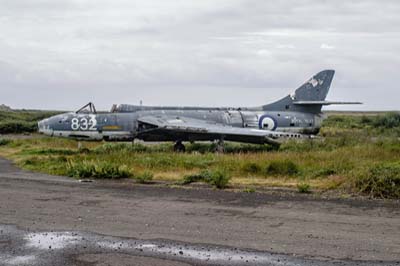
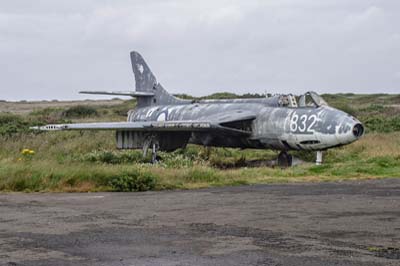
The helicopters present in 2003 consisted of ten or so Wessex (HAS.1/HU.5) plus a Wasp and Sea King. The fixed wing aircraft found were a Jetstream, Harrier and Hunter.
Left to right: Former A & AEE Canberra B(I).6 (WT308) and Wessex HU.5s (XT762 ex RAE and XS516 'YQ'). |
| Left to right: ex Royal Navy FRADU Hunter GA.11 (XE668 '832') and ex Royal Navy Wasp HAS.1 (XS529). |
| My walk along the bridle path was at the weekend and I found the airfield to be relatively quiet, but not deserted. The firefighting training area is quite some distance away from the runways and helicopter manoeuvring areas, which are only used during the week and no attention was given to me as I wondered around. Be aware that poisonous snakes (Adders/Vipers) consider the airfield their home and so care should be taken not to step on one. |