Exercise 'ELITE 2007'
Manching Air Base
Germany
June 14-28, 2007
|
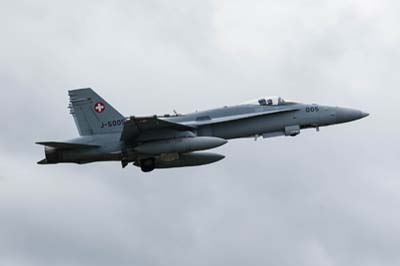
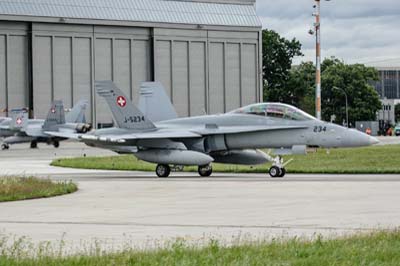
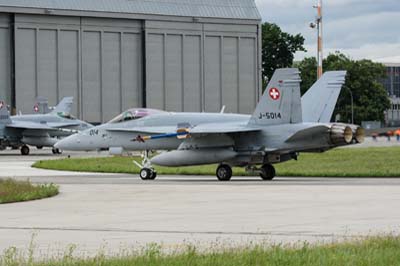
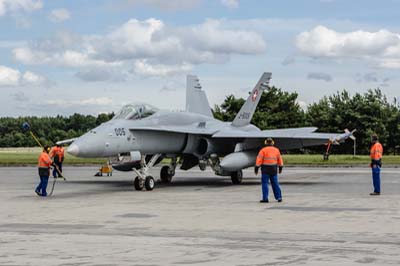
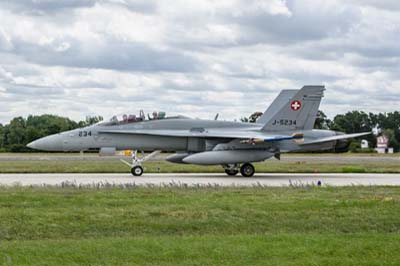
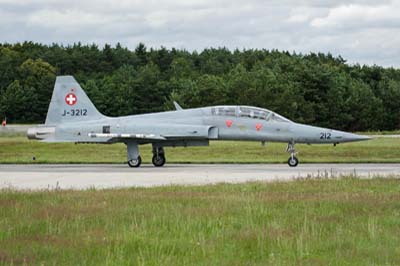
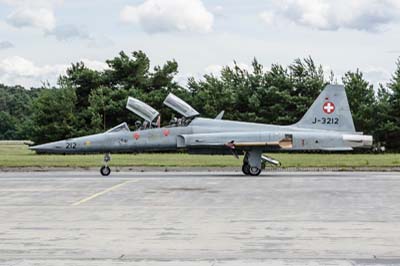
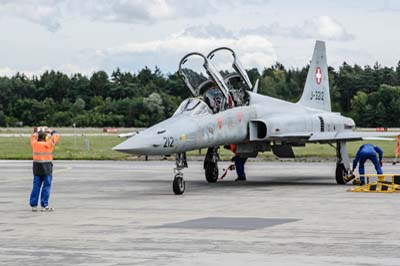
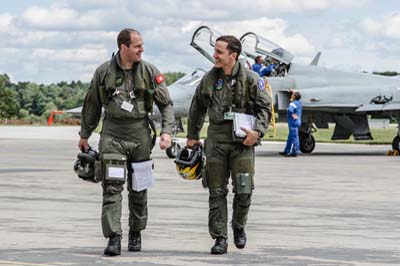
 The Swiss Air force were based at Manching throughout ELITE, due to the limited space at Lechfeld. Lt Col A Miescher, Swiss Air Force F/A-18C Hornet pilot, described the three distinct missions the Swiss AF flew.
Firstly they flew against specific threats such as the 'Skyguard' system operated by the Austrian's. Flying at high speed and at low-level, initially at 1,000 feet Above Ground Level (AGL), then down to 500 feet in the main training sector and descending down to just 230 feet over the range.
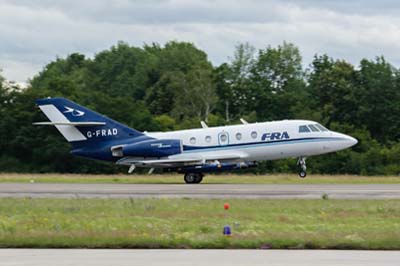
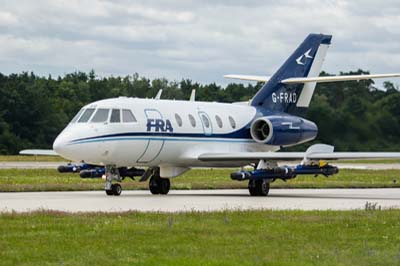
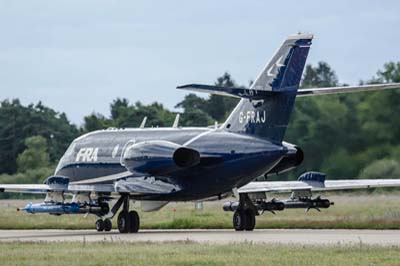
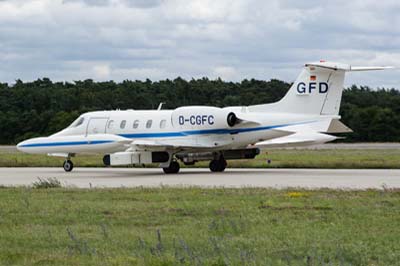
The second mission is COMAO, where they play the 'sweep' or the front element, to clean the airspace to ensure the SEAD bombers of the strike package can follow without coming under an air-to-air threat. They are supported by AWACS (French or NATO E-3s), air-to-air refuelling (AAR) and the civilian operated jammers of Flight Refuelling (FRA) with Dassault Falcon (Mystere) 20Cs and Gesellschaft für Flugzieldarstellung (GFD) with Lear Jets.
The third mission opposite the second and involves flying against the COMAO and strike package. Here they are on their own, supported only by Air-to-Air Refuelling (AAR) which takes place over northern Germany. AAR is not specifically part of the ELITE program but helps the Swiss simulate modern air power type missions. These missions are almost two hours in duration with one hour on station.
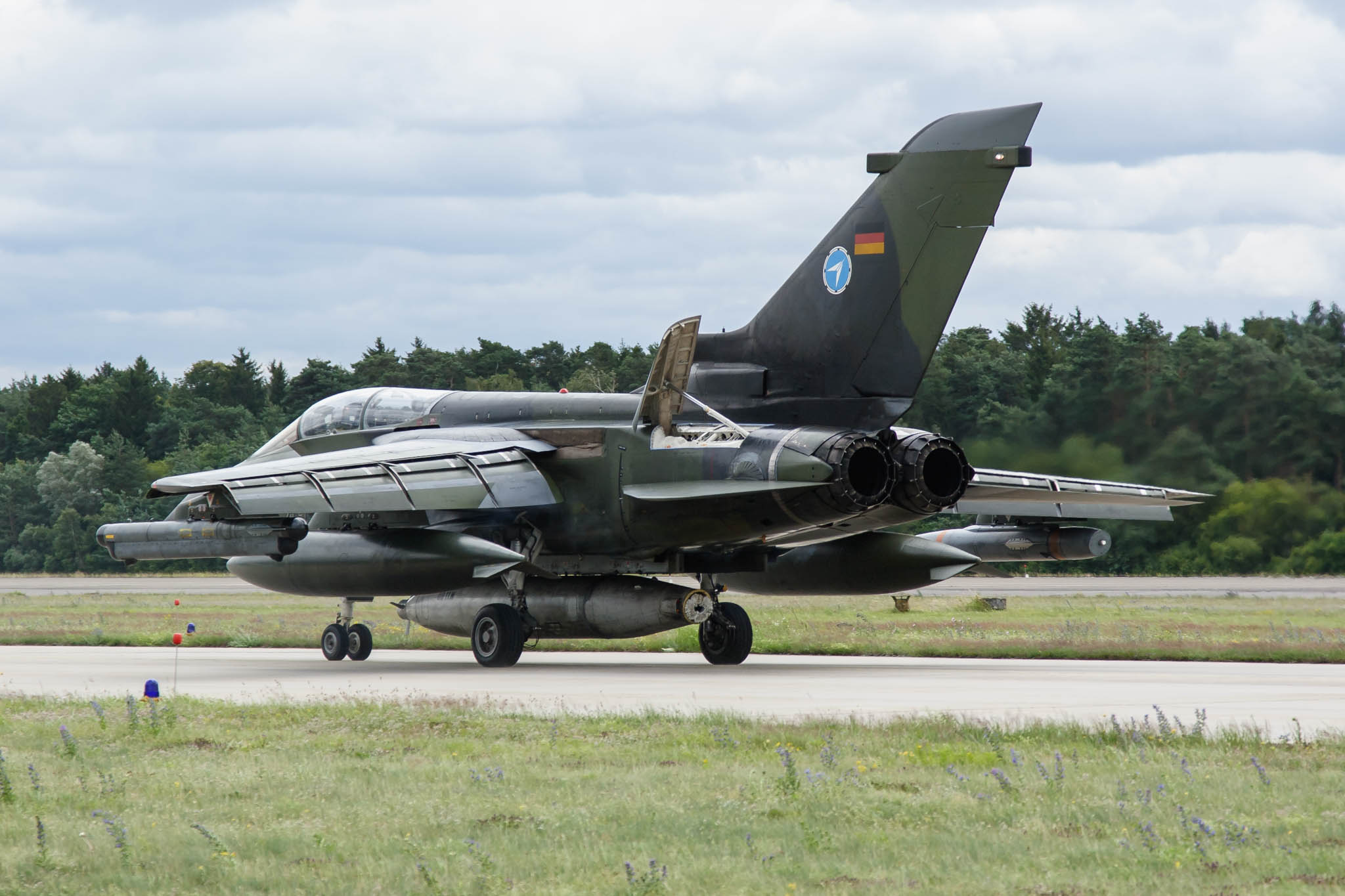
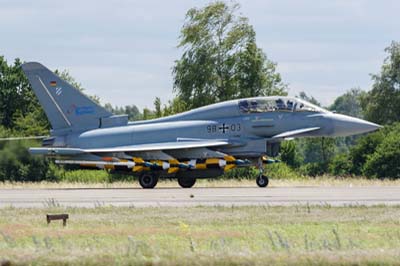
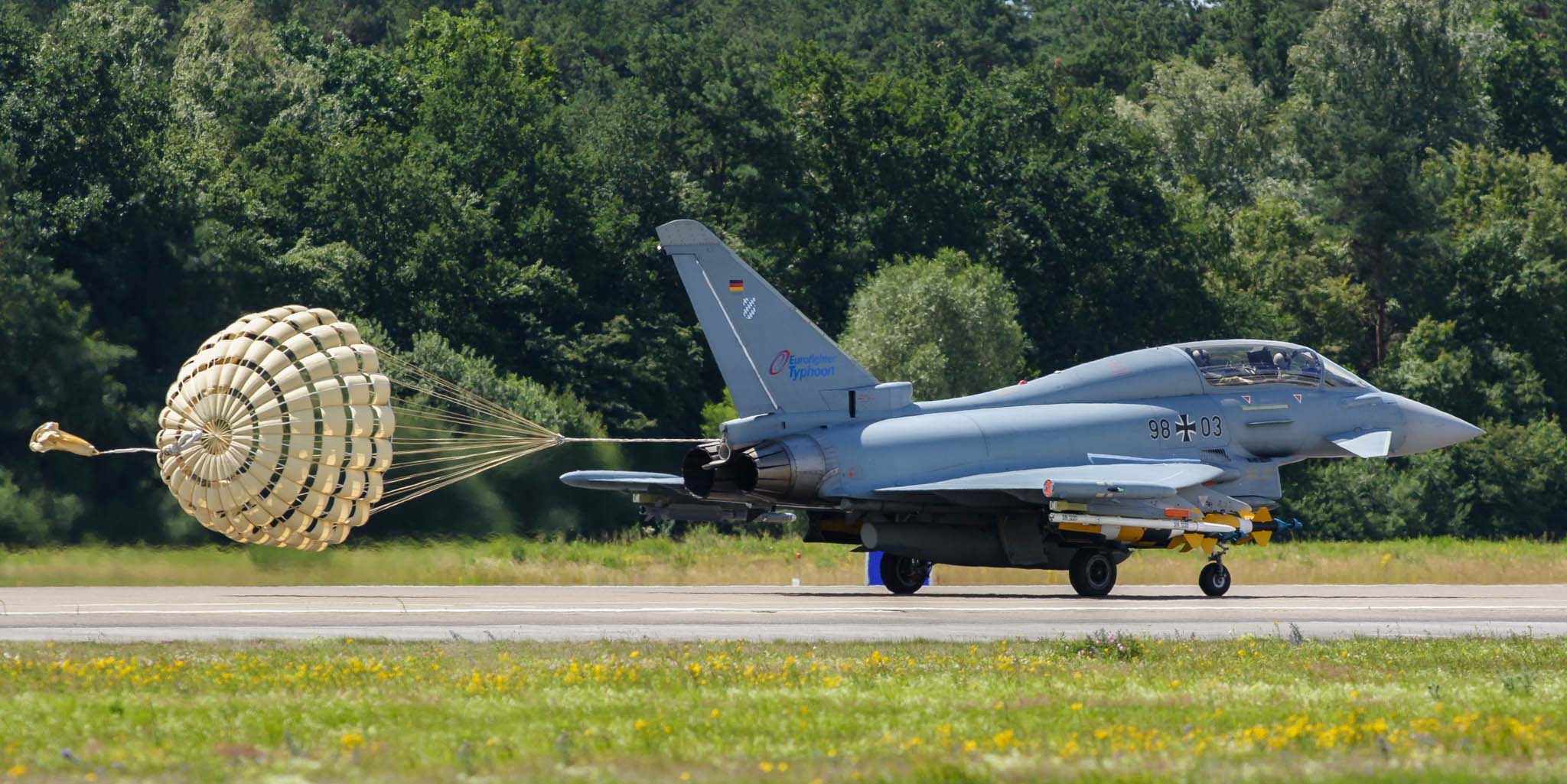
All three missions are flown each day, a typical package consisting of four F/A-18s in front as 'sweep' followed by four GAF Tornados, four RAF Tornados and four Hellenic Air Force F-16s. Two Romanian AF MiG-21s were flown as escorts. In the second week helicopters were added to simulate Combat Search and Rescue (CSAR).
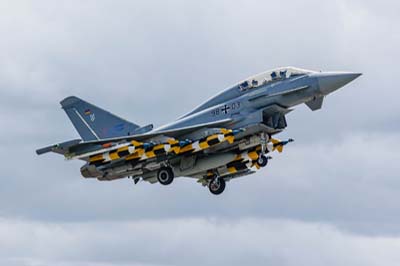
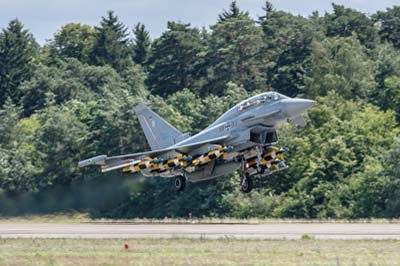
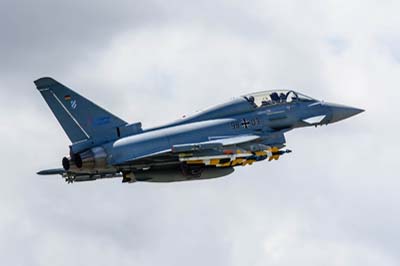
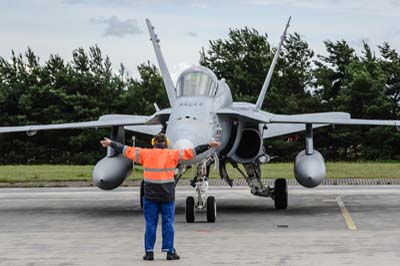 Lt Col Miescher said; he flew against Eurofighters two versus one but would have liked the opportunity for four versus four close air-to-air combat, adding that Beyond Visual Range (BVR) weapons are not much fun. His biggest challenge was in the air-to-air role, assessing the in-flight shots. "It is so difficult with so much EW going on, you don't know what you see on the radar is what actually happened, claiming shots is the issue. Don't claim shots in the air, wait till you are on the ground and assess it there." Lt Col Miescher who flew against both the Eurofighters and much older F-4s and
MiG-21s said that they are not that different, after all it is just an AMRAAM shot. "It's not just the platform but the weapon system that makes the difference. You don't always win against the MiG-21s, you know, never under estimate your opponent."
Lt Col Miescher said; he flew against Eurofighters two versus one but would have liked the opportunity for four versus four close air-to-air combat, adding that Beyond Visual Range (BVR) weapons are not much fun. His biggest challenge was in the air-to-air role, assessing the in-flight shots. "It is so difficult with so much EW going on, you don't know what you see on the radar is what actually happened, claiming shots is the issue. Don't claim shots in the air, wait till you are on the ground and assess it there." Lt Col Miescher who flew against both the Eurofighters and much older F-4s and
MiG-21s said that they are not that different, after all it is just an AMRAAM shot. "It's not just the platform but the weapon system that makes the difference. You don't always win against the MiG-21s, you know, never under estimate your opponent."
How effective are the jammers?
They are the best you can have, they only carry jamming devices. They even do specific comm's jamming depending on which nation they want to jam. We (Swiss) had yodelling, on another occasion they said they were firing 'Fox 3' an AMRAAM and then played pop group Queen's 'Another one bites the dust'! Another tactic designed to confuse pilots was to record their radio calls to play them back during subsequent sorties. One frequency however is kept free from jamming at all times for safety reasons.
With Swiss neutrality, why do you take part in air-to-ground exercises?
Swiss neutral, air-to-ground - due to international laws we have armed neutrality, so we can defend our country against all levels of threat. We need to be ready to defend the country the threats decades ago were perhaps just two weeks away, now we are talking years. To be air-to-ground capable can take two to three years, so we have to be ready should a threat emerge from within Europe. It is all about how much time you need to build up a complete defensive aerial capability. |