Bulgaria Air Force - Bulgarski Voennovazdyshini Sili
Krumovo Helicopter Air Base
(24 Vertoletna Aviobasa - 24.VAB)
Plovdiv, Bulgaria
June 2009 and April 2010
|
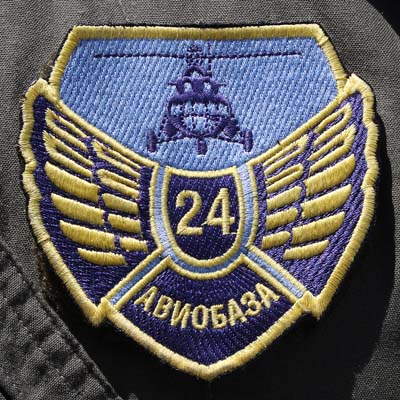 Since joining NATO in March 2004 and as a former member of the Warsaw Pact, the Bulgarian Air Force - BuAF (Bulgarski Voennovazdyshini Sili - BVVS) has had to go through extensive restructuring. Its forces have been reduced in line with the reduction of aircraft and airfields.
Formally known as the 44th Helicopter Air Regiment of the 10th Combined Air Corps, it flew the Mil Mi-17, Mi-8 and Mi-2 at Krumovo. After major restructuring it became an air base. Following the disbandment of the 23rd Attack Helicopter Air Base (23.AHAB) at Stara Zagora one of its squadrons it became 2nd Attack Helicopter Squadron of the 24.HAB.
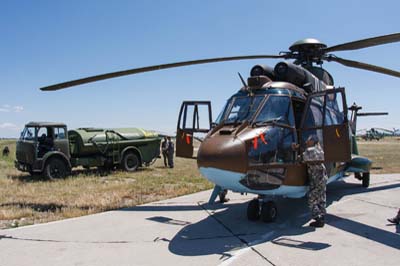
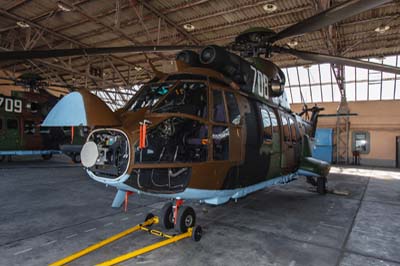
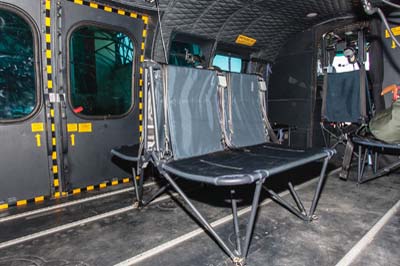
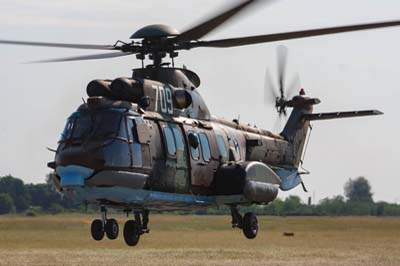
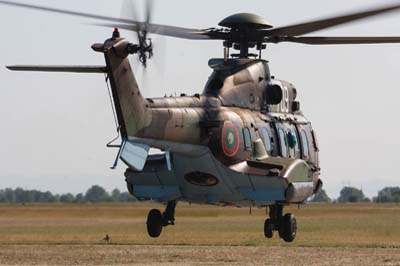
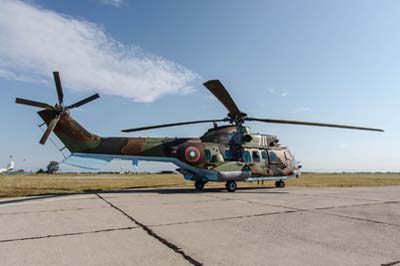
Brig General Stefan Petrov the current base commander of the 24th Helicopter Air Base (24 Vertoletna Aviobasa - 24.VAB) has two squadrons under his command. The 1st Helicopter Squadron (1/24 Vertoletna Avio Eskadrila - 1/24VAE) which operate the Mil Mi-24D/V 'Hind' and the 2nd Helicopter Squadron (2/24 Vertoletna Avio Eskadrila -2/24.VAE) which operate Mil Mi-17 and 12 new Eurocopter AS.532UL/AL Cougars.
New student pilots from the Air Force Academy each year have included two female cadets for the last ten years after a break of 30 years without female pilots. Former fighter pilots have also been transferred to the helicopter base over the years to face the rigors of converting to rotary wing. Indeed Colonel Zlatko Zlatev, Deputy Base Commander of Krumovo arrived with 280 hours on the Aero L-39ZA Albatross said, “Former fixed wing pilots find it difficult hovering. For fixed wing aircraft you are taught to keep your nose up, helicopter pilots will fly nose down”. Col. Zlatev progressed from the Mi-2 (since replaced by the Bell 206) for initial training, to the Mi-8 and finally to the AS.532. |
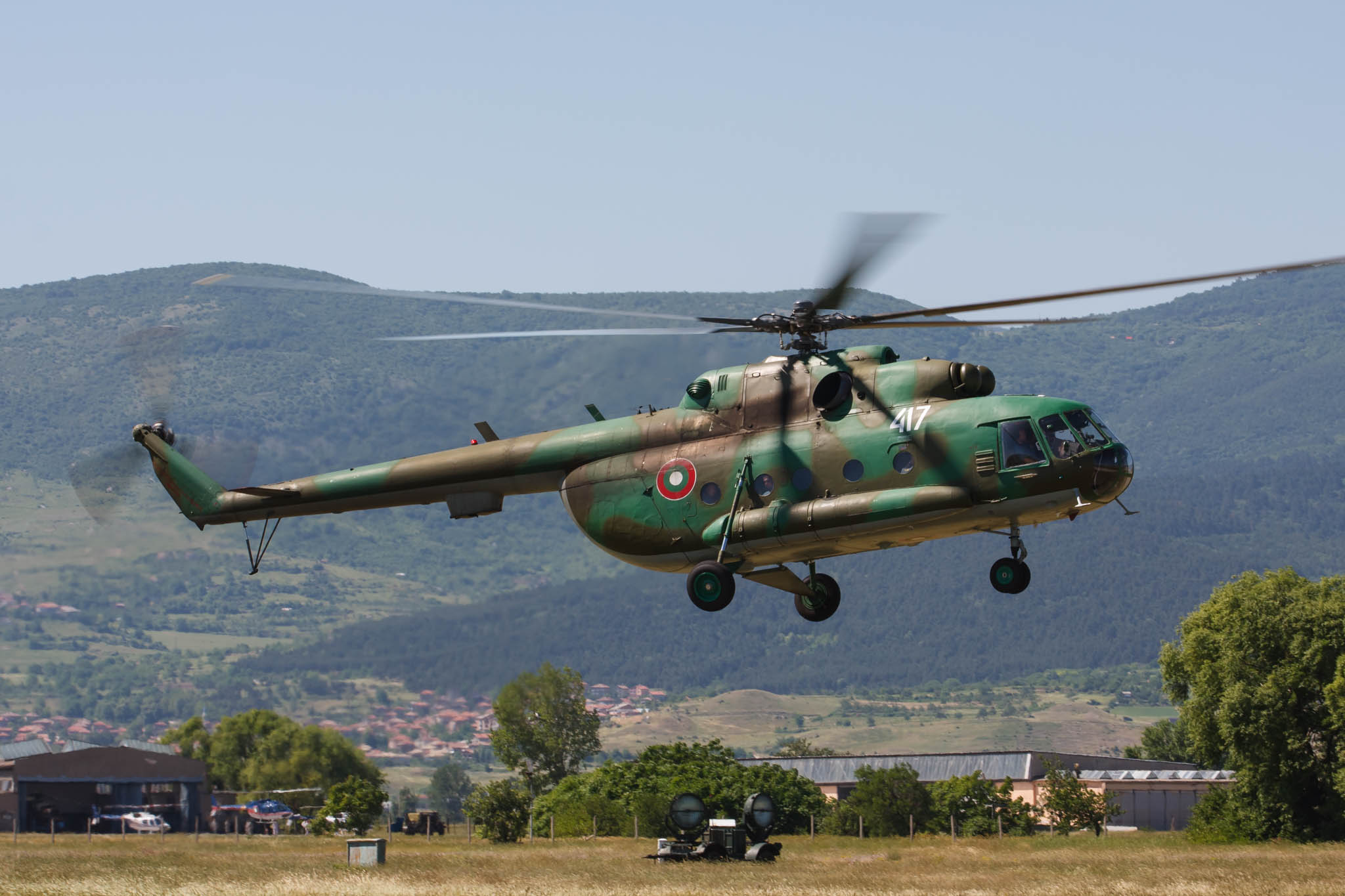 |
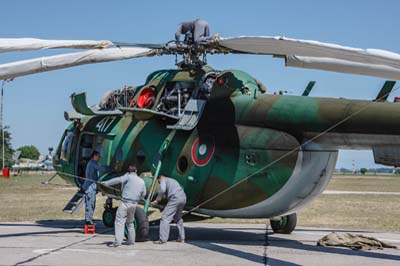
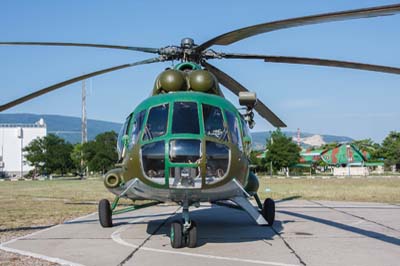
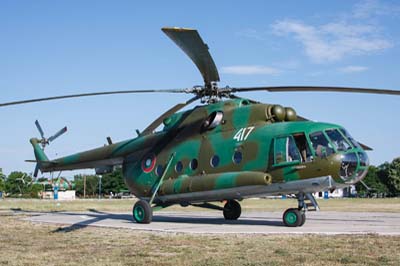
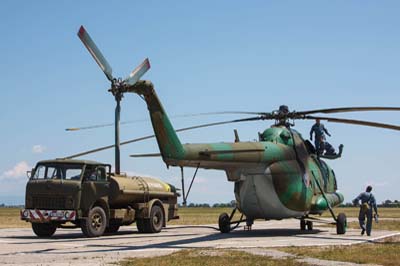
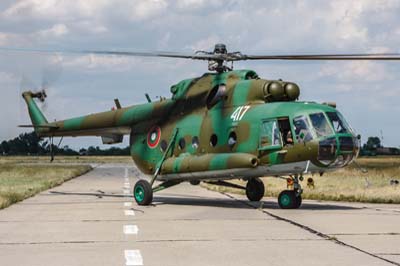
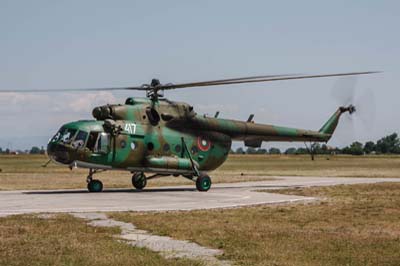
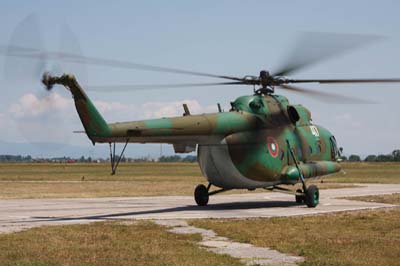
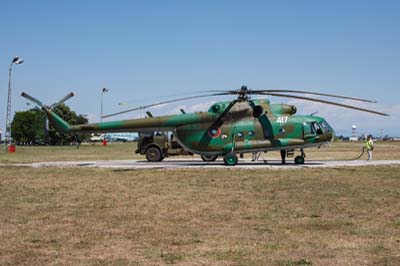
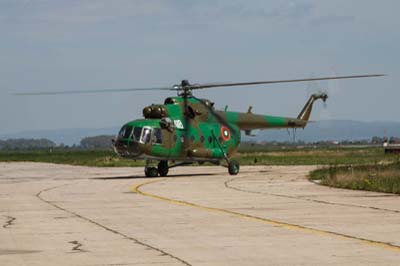
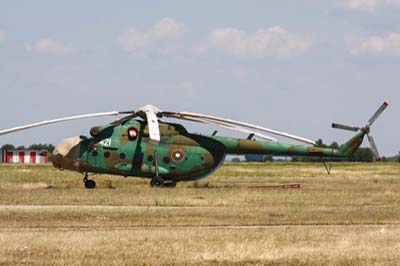
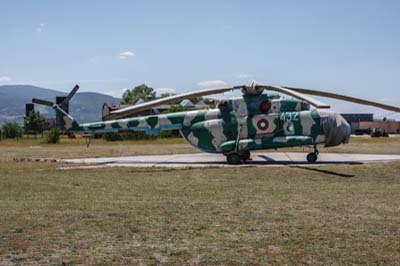
Mi-17 ‘417’ returning to Krumovo in June 2009, at the end of the first phase of the one day training exercise, in preparation for the Forceval planned for later in the year.
During the exercise it was used for troop transport and fast-drop on the landing zone, before being used later for troop exfiltration during a Medevac exercise. |
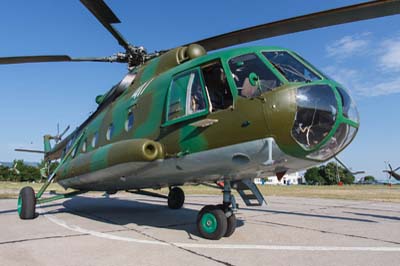
| Left to right: Mil Mi-17 (417). |
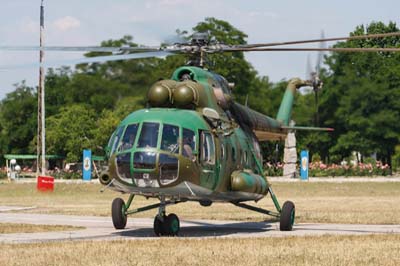
| Left to right: Mi-17 (417). |
| Left to right: Mi-17 (417). |
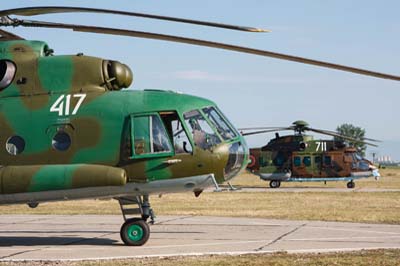
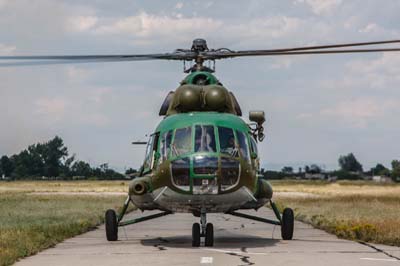
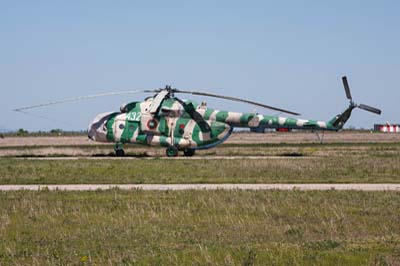
Left to right: Mi-17 (418) just after a test flight from the Terem facility at Sofia ). Mil-17 (421) and former Mi-17PP 'Hip-H EW' (432) now deconverted back from its radar and communications jaming and Comint role.
|
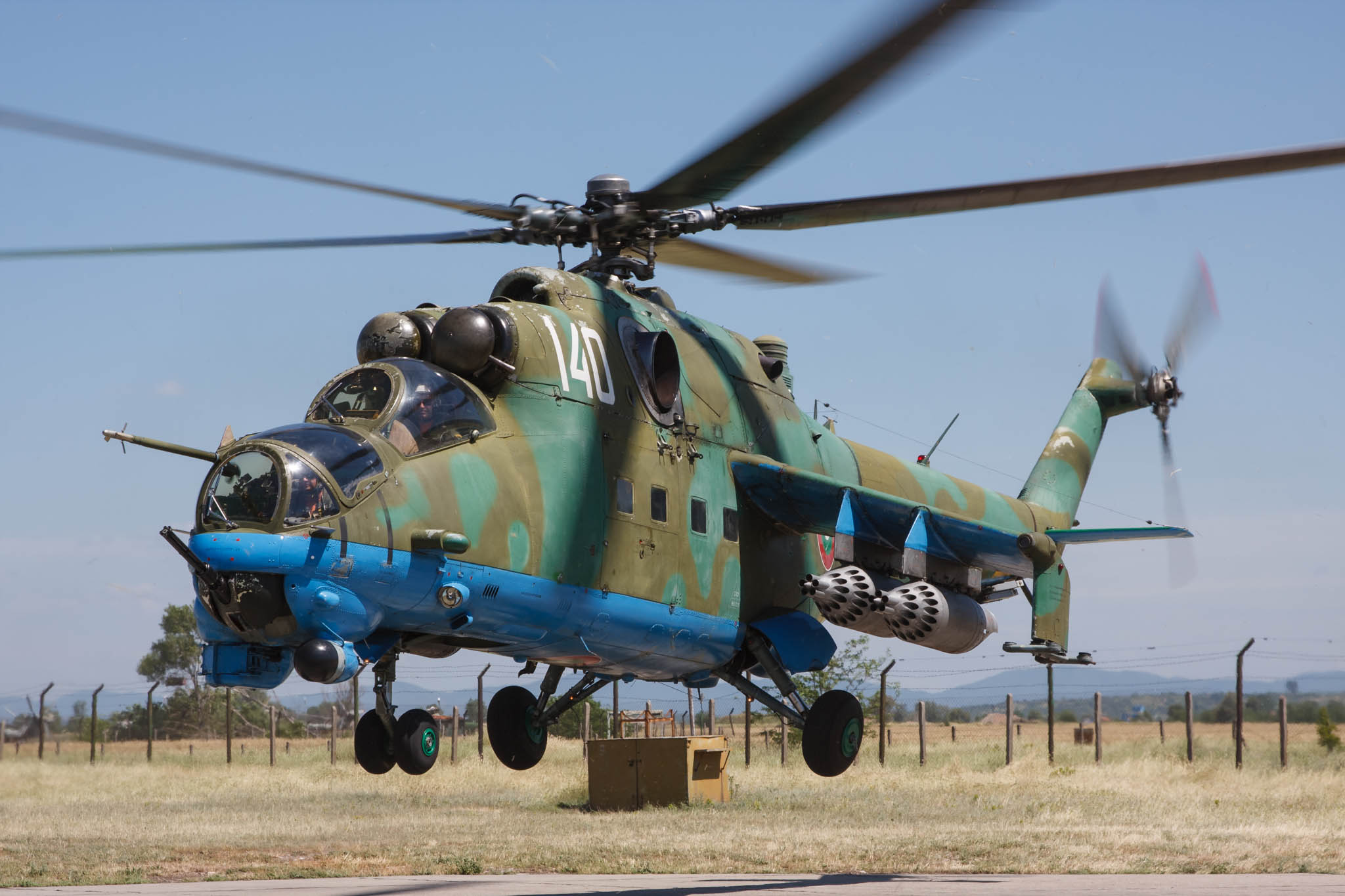
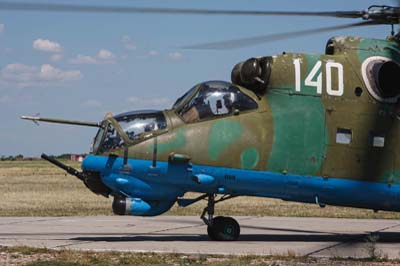
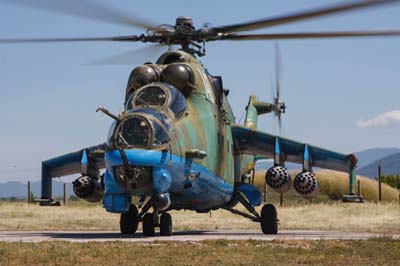
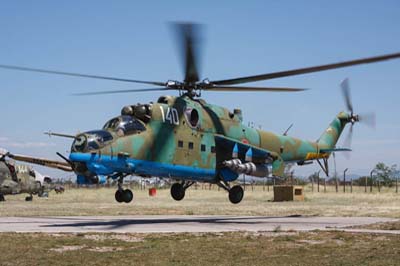
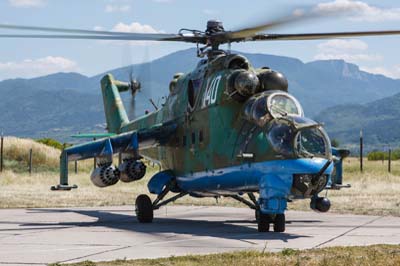
Mi-24V ‘140’ was one of six delivered between 1985 and 1986.
Now out of flying hours, unless funds for an upgrade can be found,
this ‘Hind’ could have been flying for the last time when photographed hovering on June 5, 2009. |
The Mi-24 upgrade, a challenge too far?
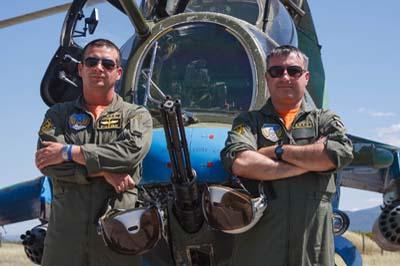
 Gen Petrov while rising to the challenges of gaining NATO certification for Medevac operations for the AS.532UL has other tasks on his plate. The 1/24 VAE operates the Mil Mi-24D/V Hind which are in need of upgrades to NATO standards, if they are to be declared to NATO for the Close Air Support (CAS) and the escort role. All but one of the Mi-24’s are now grounded, requiring a 1,000 hour overhaul before they can continue flying operations. The display at a small public air show on May 22, 2009 by Mi-24D serial ‘140’ took the last operational helicopter to its 1,000 hours. The illusive funding to upgrade 12 Mi-24’s would extend the life cycle by 1,000 hours or around seven years, which could be followed by another 1,000 hour extension.
This work is to be done by Russian civilian contractors in Bulgaria. In addition to this the avionics require upgrading if they are to meet NATO standards. The proposed upgrades to produce a new ‘4th generation aircraft’ include; a Flight Management System (FMS), moving map and an Identification Friend or Foe (IFF) system. Initially a new weapons system will enable the existing store of Russian built weapons, such as the KBM Engineering Design Bureau SHTURM (Storm) anti-tank supersonic missile, before western built weapons are utilised. In one of our discussions in June, Gen Petrov had received news from Air Force HQ that a decision to re-start upgrading was getting closer. |
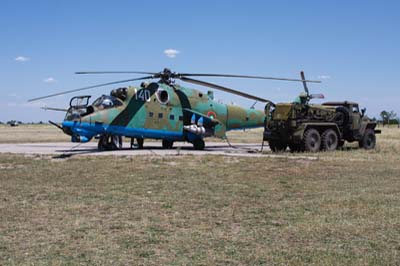
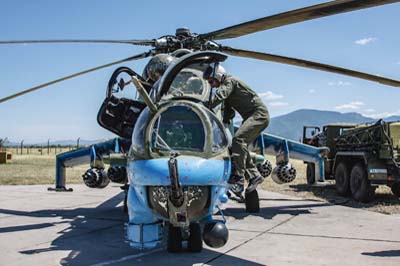
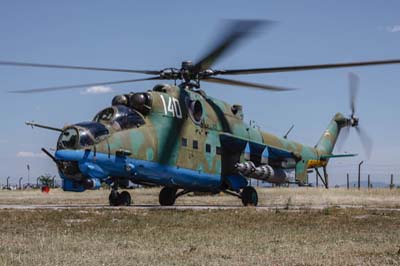
Left to right: Mi-24V Hind (140) is prepared for flight. The Mi-24 can also carry six fully equipped troops to the area of operations.
|
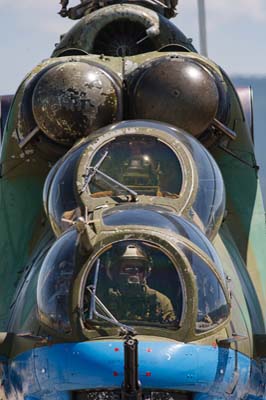
Left to right: Mi-24V Hind (140).
|
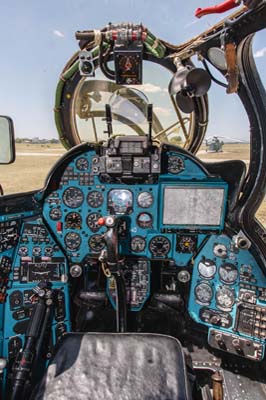
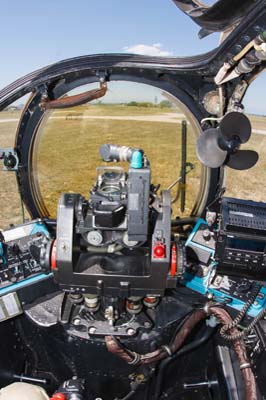
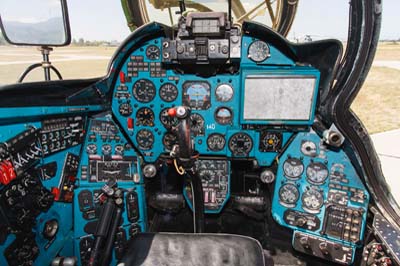
| Left to right: Inside Mi-24V Hind (140), rear seat and front seat. |
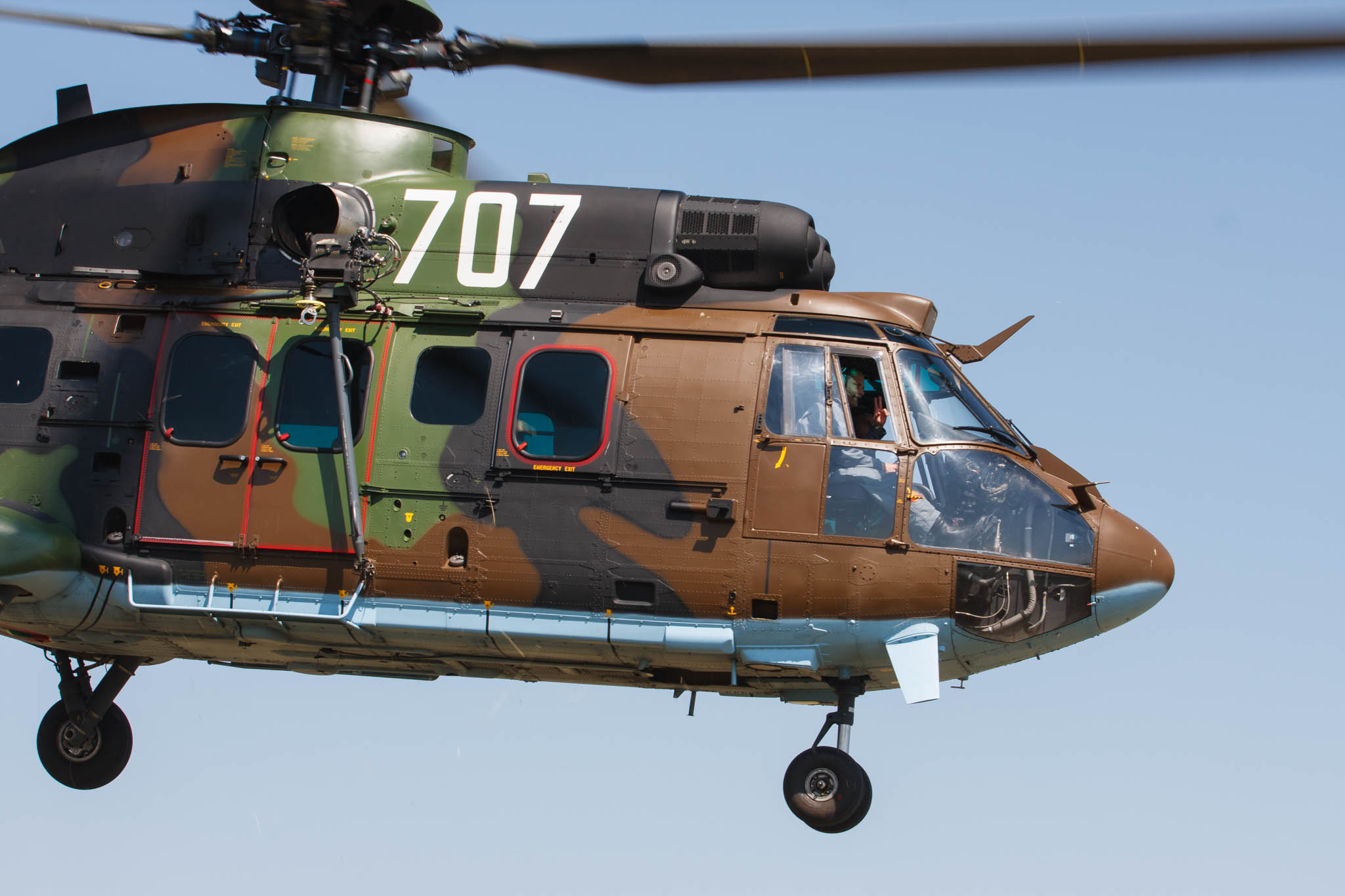
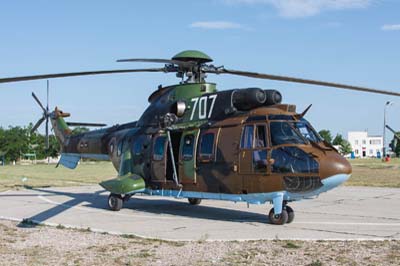
| AS.532UL Cougar (707) departing for the one day training exercise in preparation for the Taceval planned for later in 2009. |
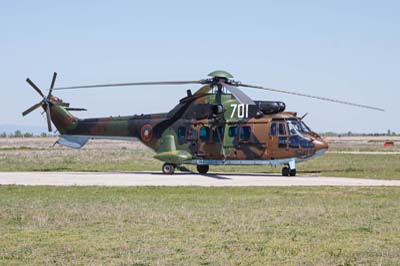
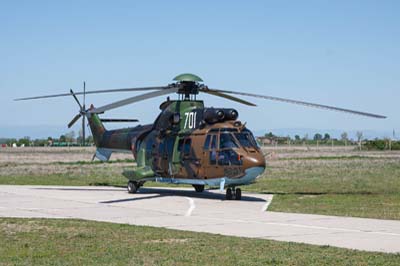
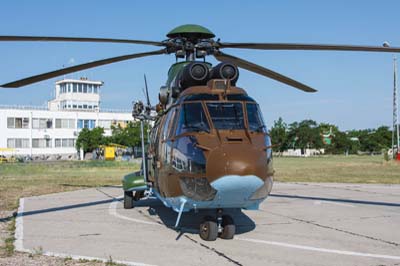
| Left to right: AS.532UL Cougars (701 and 702). |
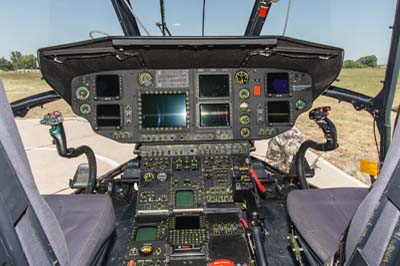
The AS.532 Cougar is the only helicopter in the BuAF fleet with instruments compatible for use with night-vision goggles (NVG). Krumovo’s pilots fly in total around 4,000 hours per year.
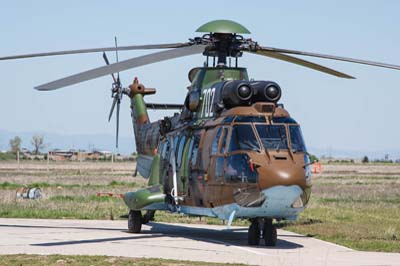
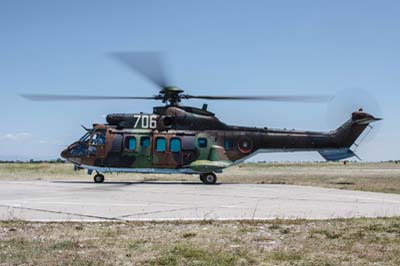
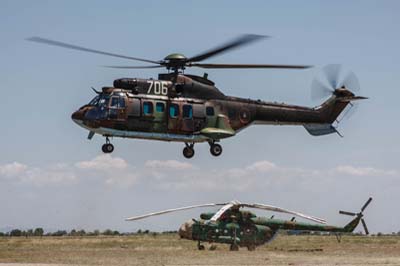
Left to right: Eurocopter AS.532UL Cougar (706). |
Left to right: AS.532UL Cougar (707).
|
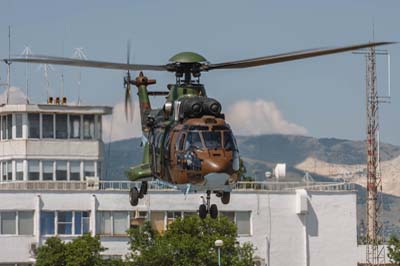
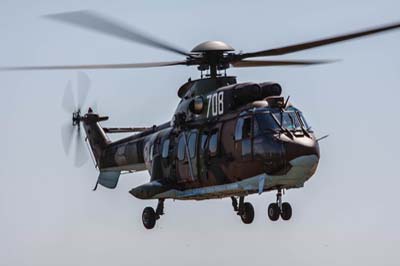
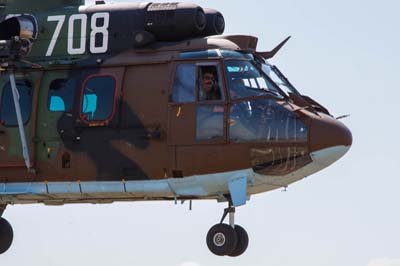
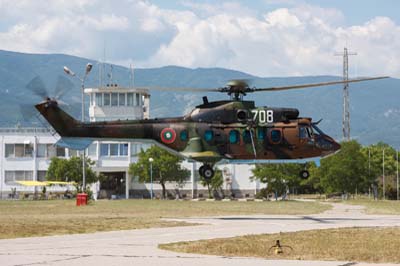
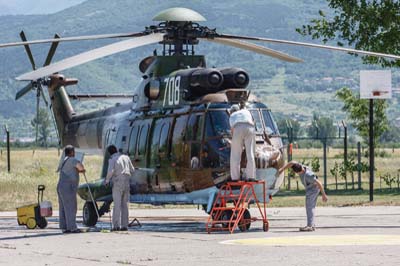
Left to right: AS.532UL Cougar (708).
|
Left to right: AS.532UL Cougar (708).
|
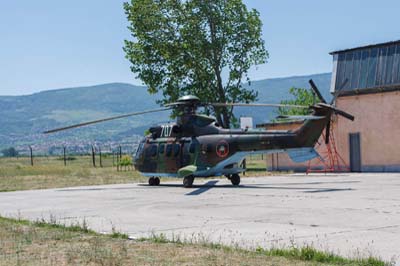
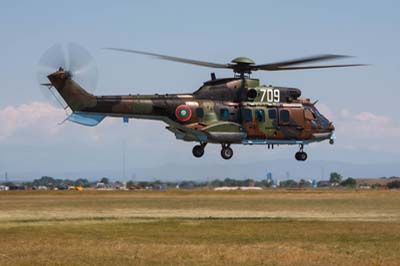
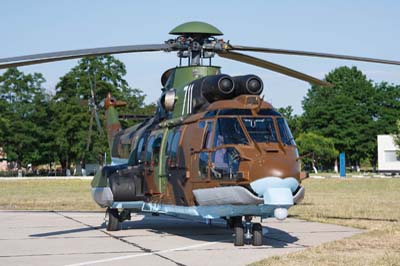
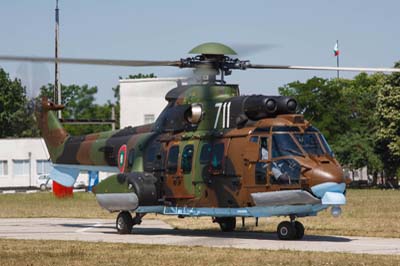
| Left to right: AS.532AL Cougar (709) was the first of four AS.532AL's to be delivered for the CSAR role. |
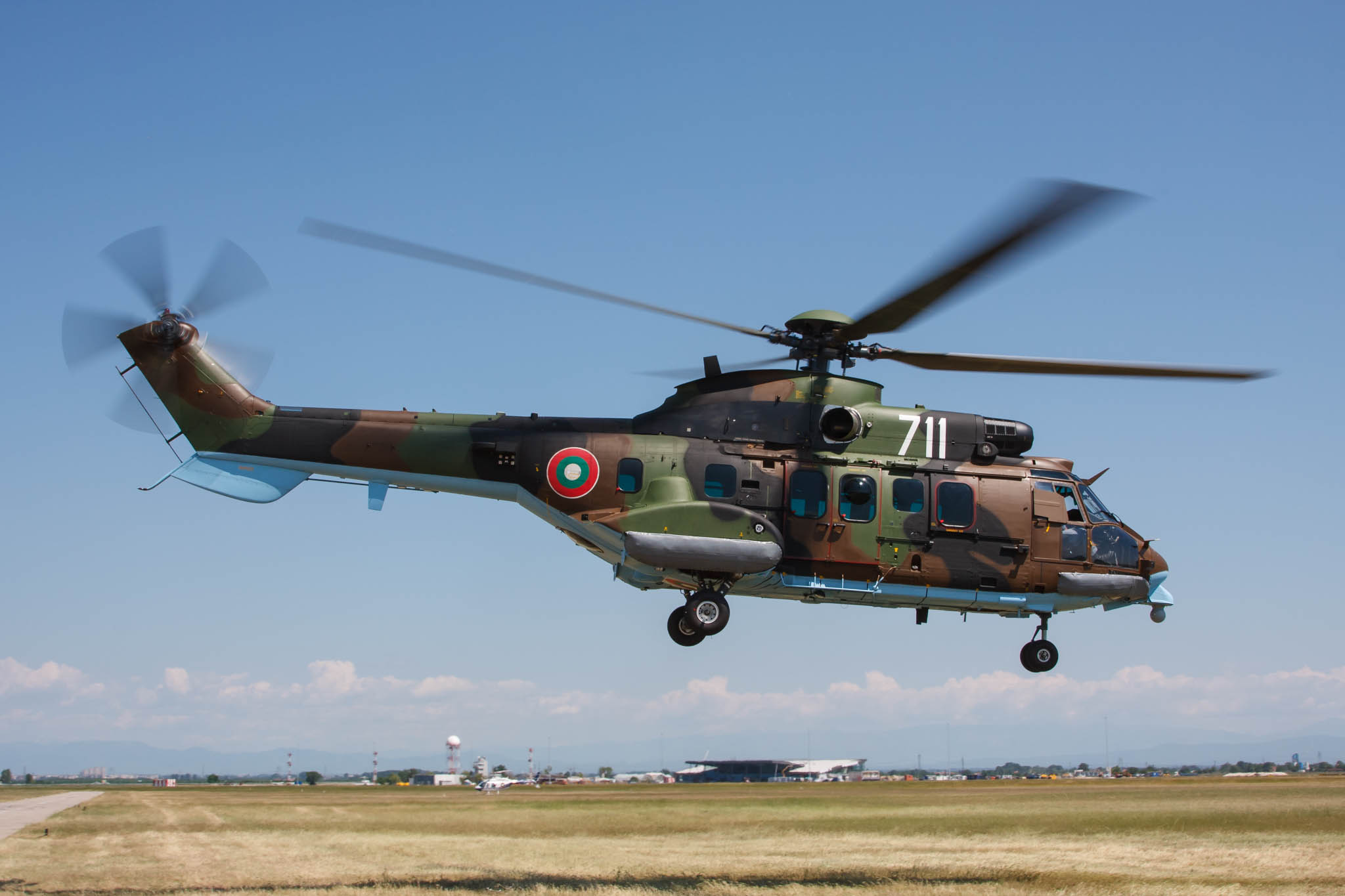
| Recently delivered Eurocopter AS.532AL Cougar (711) departing on a CSAR training sortie in June. |
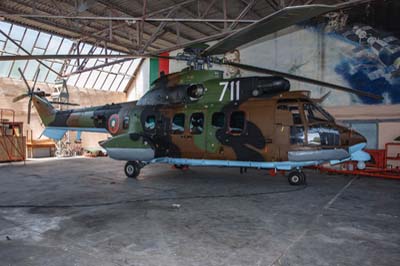
| Left to right: Recently delivered AS.532AL Cougar (711). |
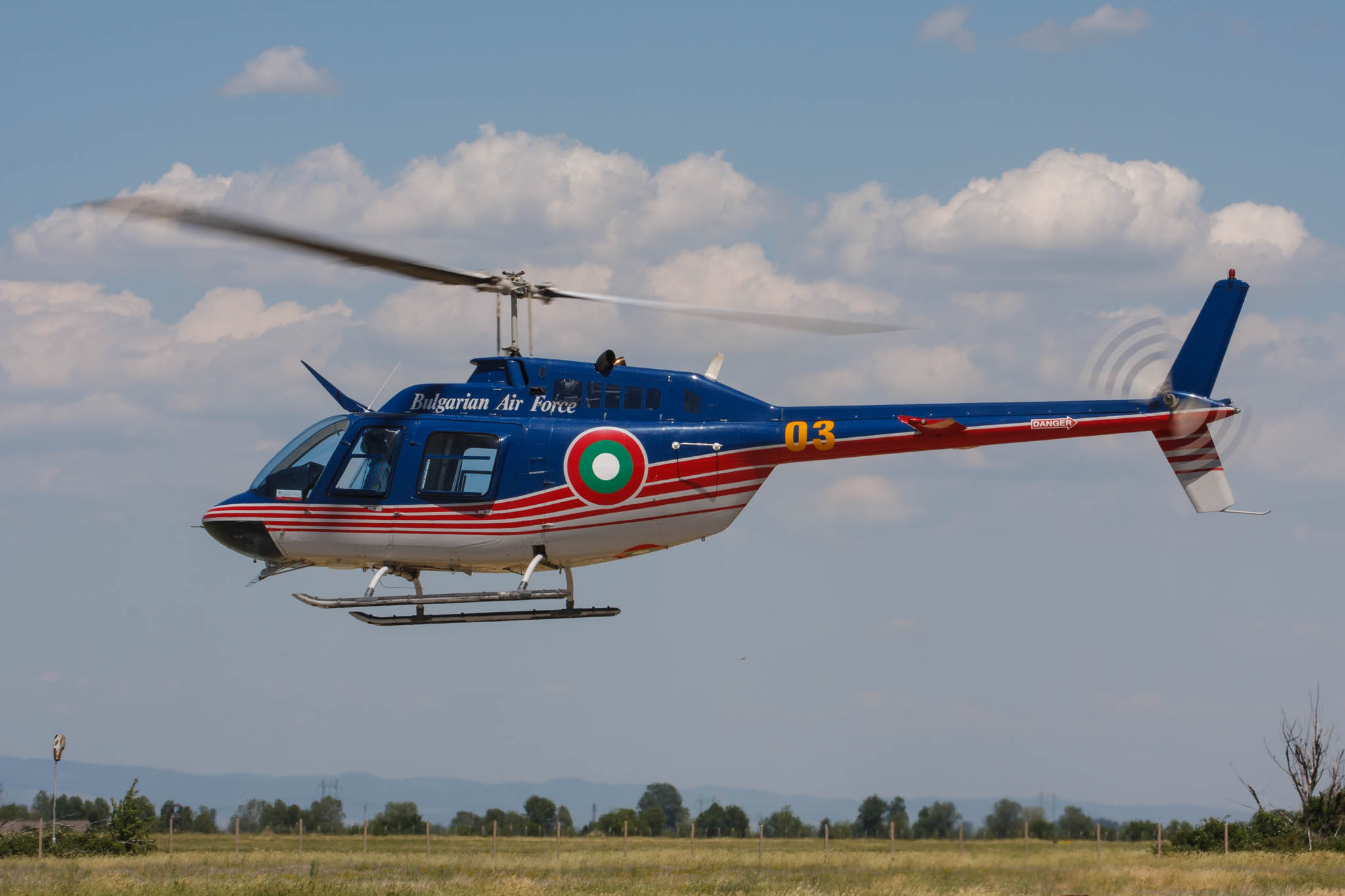
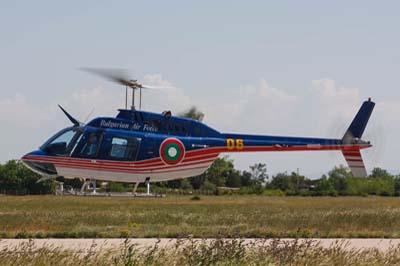
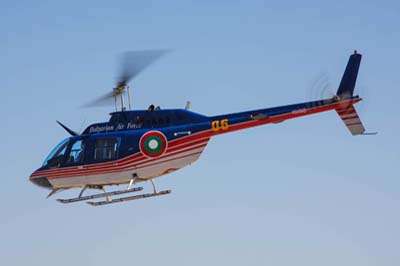
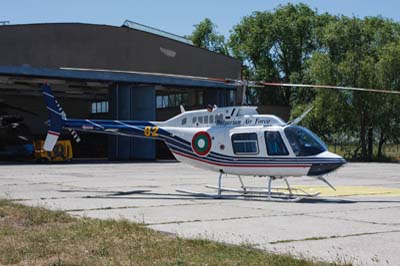
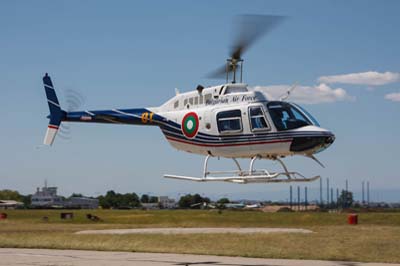
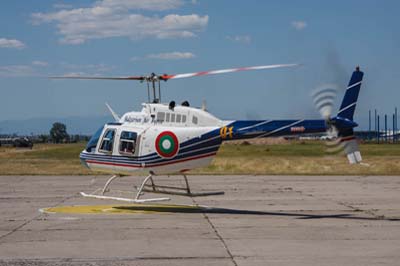
Bell B.206B-3 ‘06’ is one of six delivered in 1999 to Otdelna Uchebno Aviozveno (OUAZ) an Independent Training Flight based at Krumovo air base. With Gen Petrov at the controls practising auto-rotating landings. Following an engine failure, an helicopter may be able to slow its descent before landing to land in a controlled manner.
Bell 206 pilots are expected to fly between 80 and 120 hours, students from the flying training school will fly 60 hours per year. The B.206 is used in numerous roles from basic flying training to low-level reconnaissance which requires the fitting of a cable cutter on the cabin roof. Bell 206 pilots are expected to fly between 80 and 120 hours, students from the flying training school will fly 60 hours per year. |
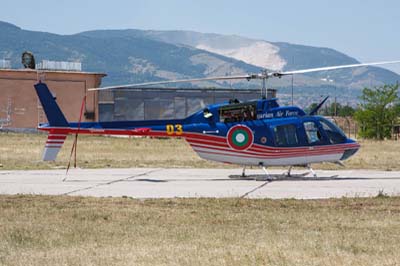
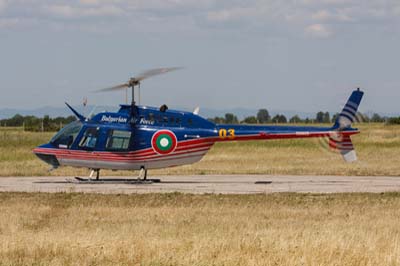
Left to right: Bell 206B-3s (06 and 03).
|
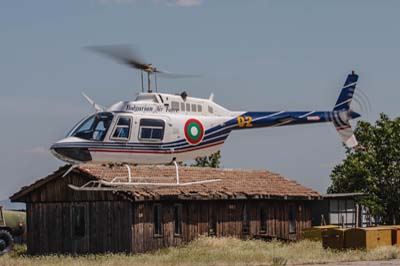
Left to right: Bell 206B-3s (02 and 01).
|
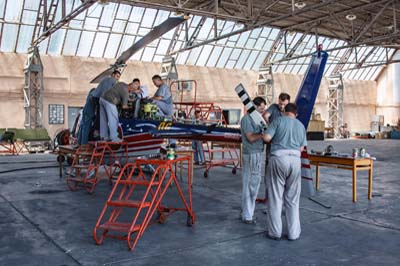 Left: Bell 206B-3 (06) receiving some care and attention.
I would like to thank Gen Petrov and his staff at Krumovo who all made me feel very welcome and gave their time freely for interviews to enable me to produce the article Bulgarian Cougars - Forge NATO Interoperability for Air International, during my three days on base.
The Krumovo air base is centred in the Mavrud wine producing region and consequently was given the nickname of ‘Mavrudovo’. Gen Petrov who was keen to promote this fine Bulgarian wine generously presented me with a bottle at the end of my week on his air base. While keeping his helicopters flying with a well-trained and motivated pilots takes up most Gen Petrov’s time, he still has found time to head a campaign to raise money for a small church to be built on the air base and named after a Saint to protect pilots. Using money raised from donations made by base personnel, the church has been completed and was formally opened in July this year. |