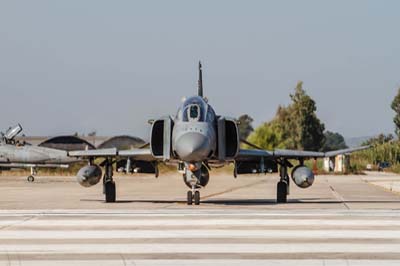
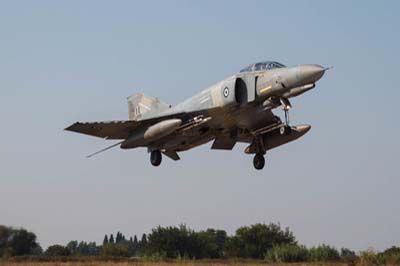
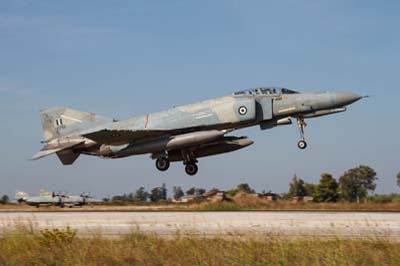
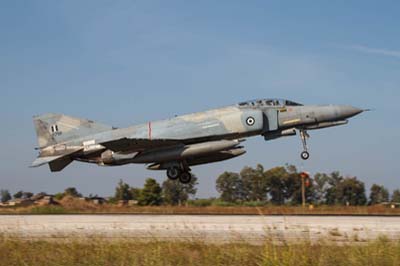
Hellenic Air Force - Elliniki Polemiki Aeroporia
Andravida Air Base
Greece
September 2010
|
Photo-report
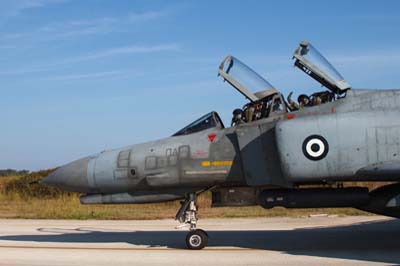
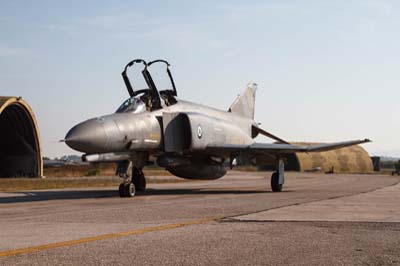
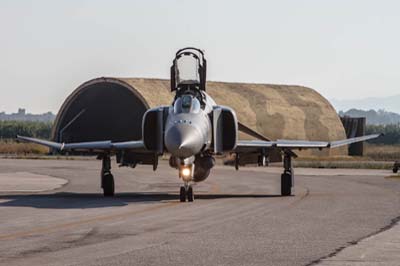
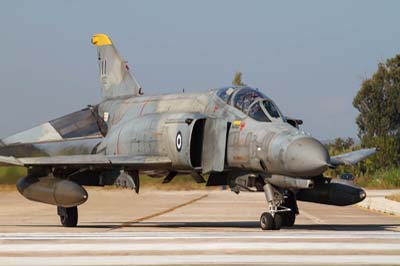
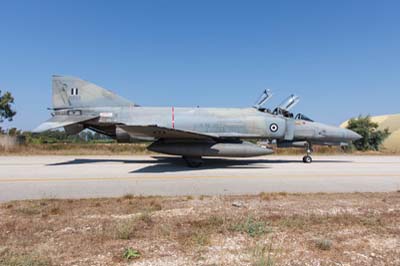
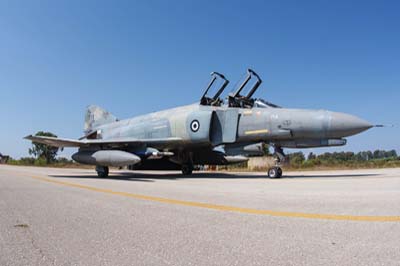
The McDonnell Douglas F-4E(AUP) Phantom IIs of 117 Combat Wing(Pteriga Machis - 117 PM) |
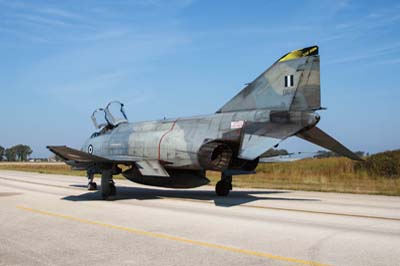
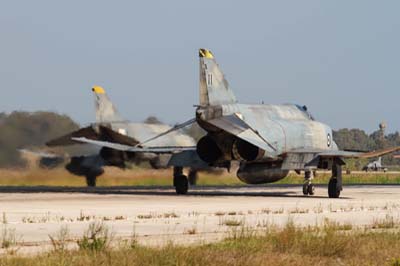
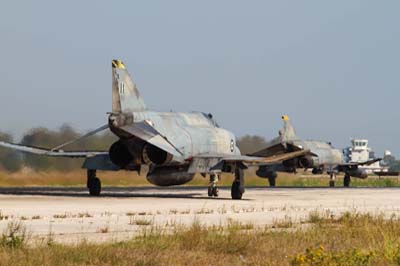
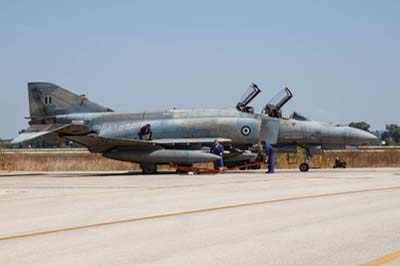
Two pairs of F-4E(AUP) Phantom IIs from 338 MDV (yellow fin tip) and 339 MPK (blue fin tip)
|
338 'Ares' Pursuit Attack Squadron (Mira Dioxis Vomvardismou - 338 MDV)
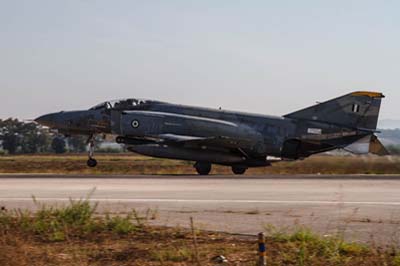
338 MDV (yellow fin tip) is assigned the ground attack role. |
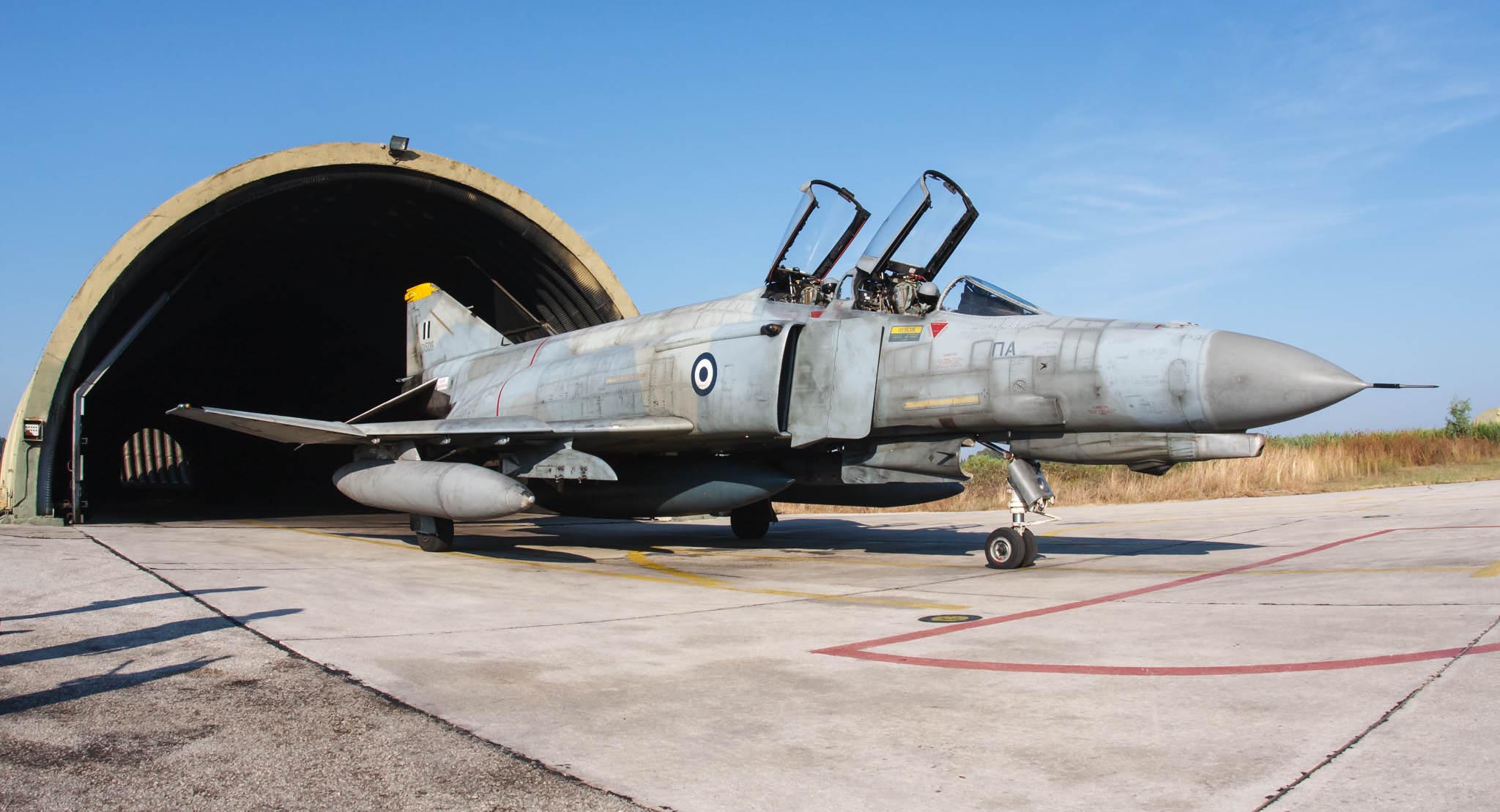
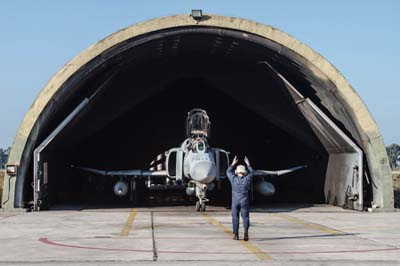
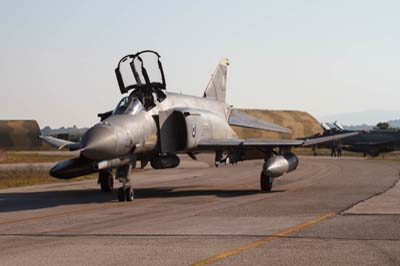
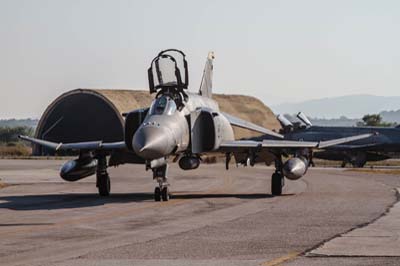
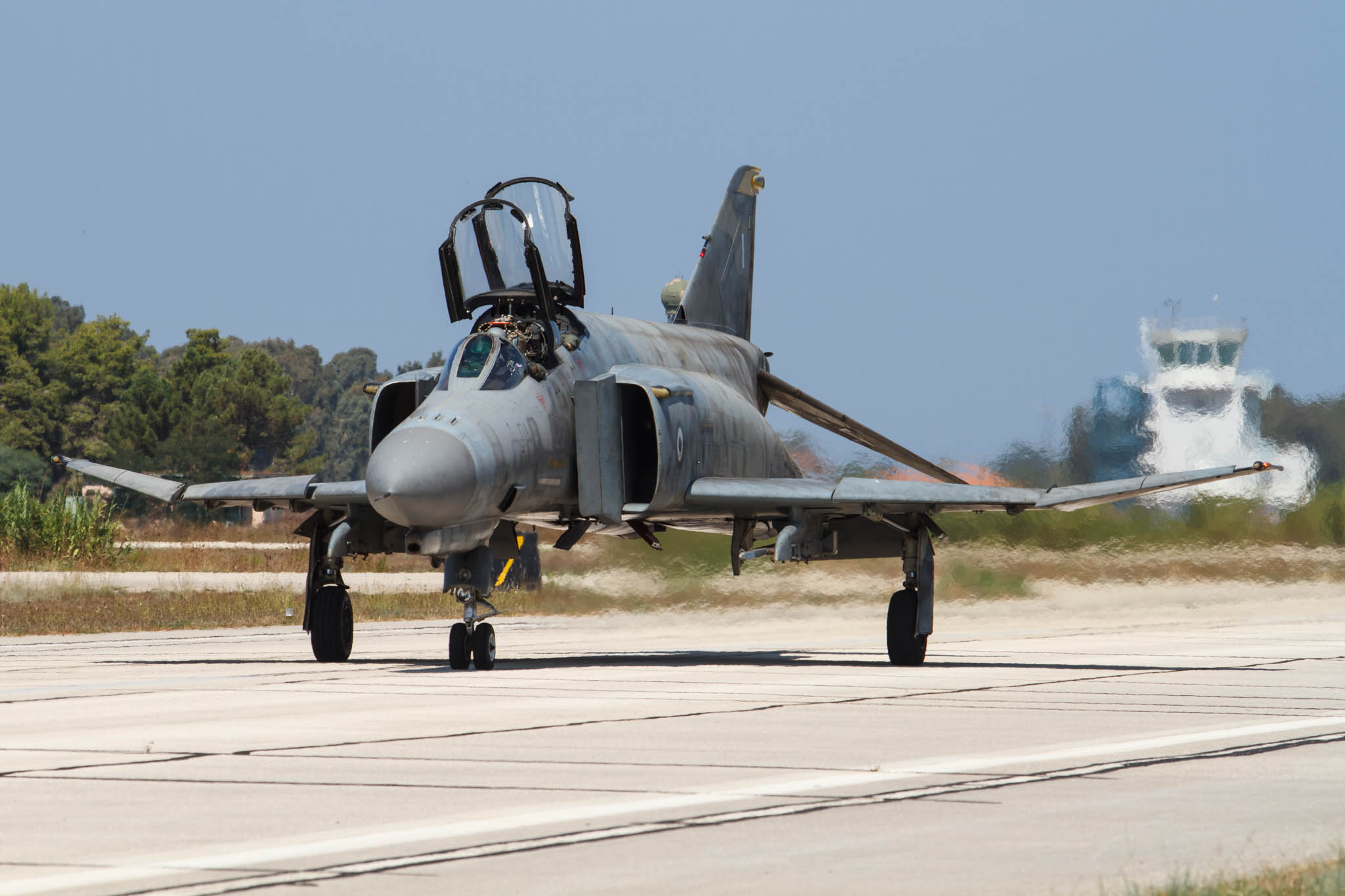
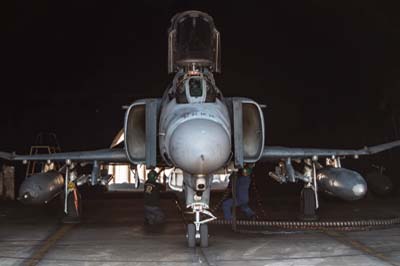
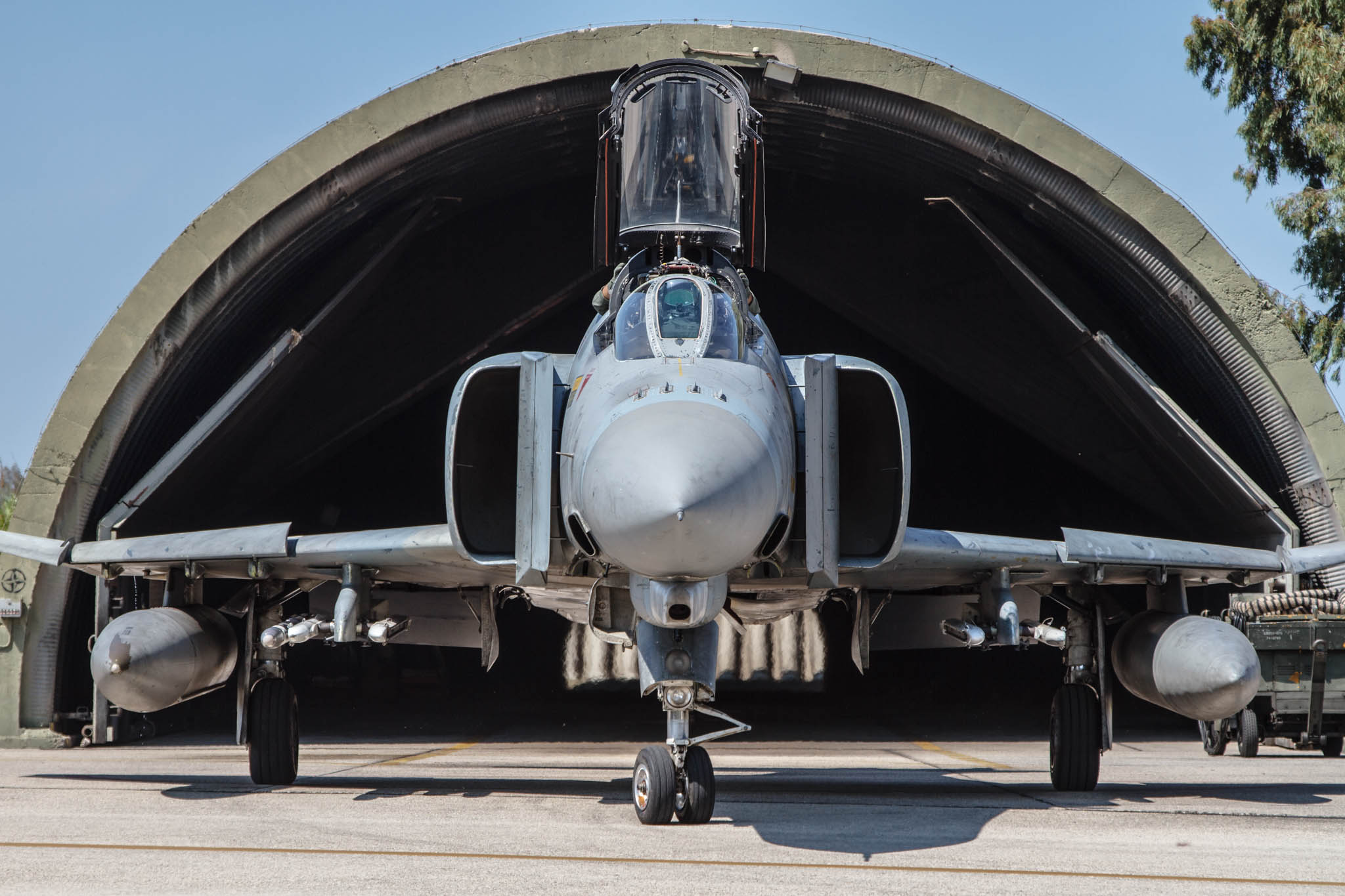
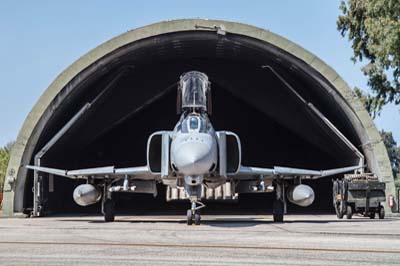
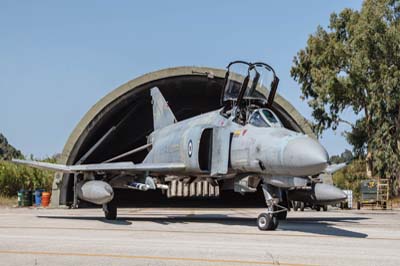
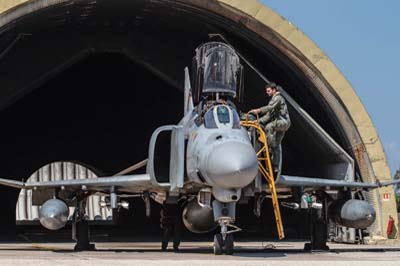
| F-4E(AUP) Phantom II (01508) taxiing out of its Hardened Air Shelter (HAS) |
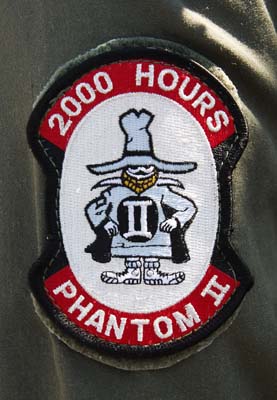
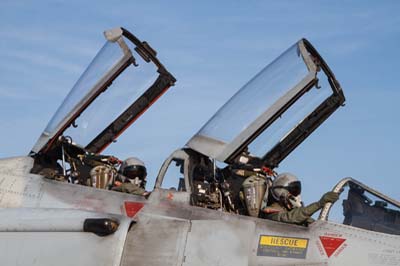
Left to right: A number of pilots have passed the 2,000 hour mark on the F-4E. Lt Col George Christodoulou, 338 Mira Squadron Commander had achieved over 2,800 hours by September 2010 after 20 years on the type. The 117 Wing Commander has passed 3,500 hours and the Lt. General Ioannis Giagkos, Chief of the Hellenic Air Force also has over 3,000 hours on the F-4E.
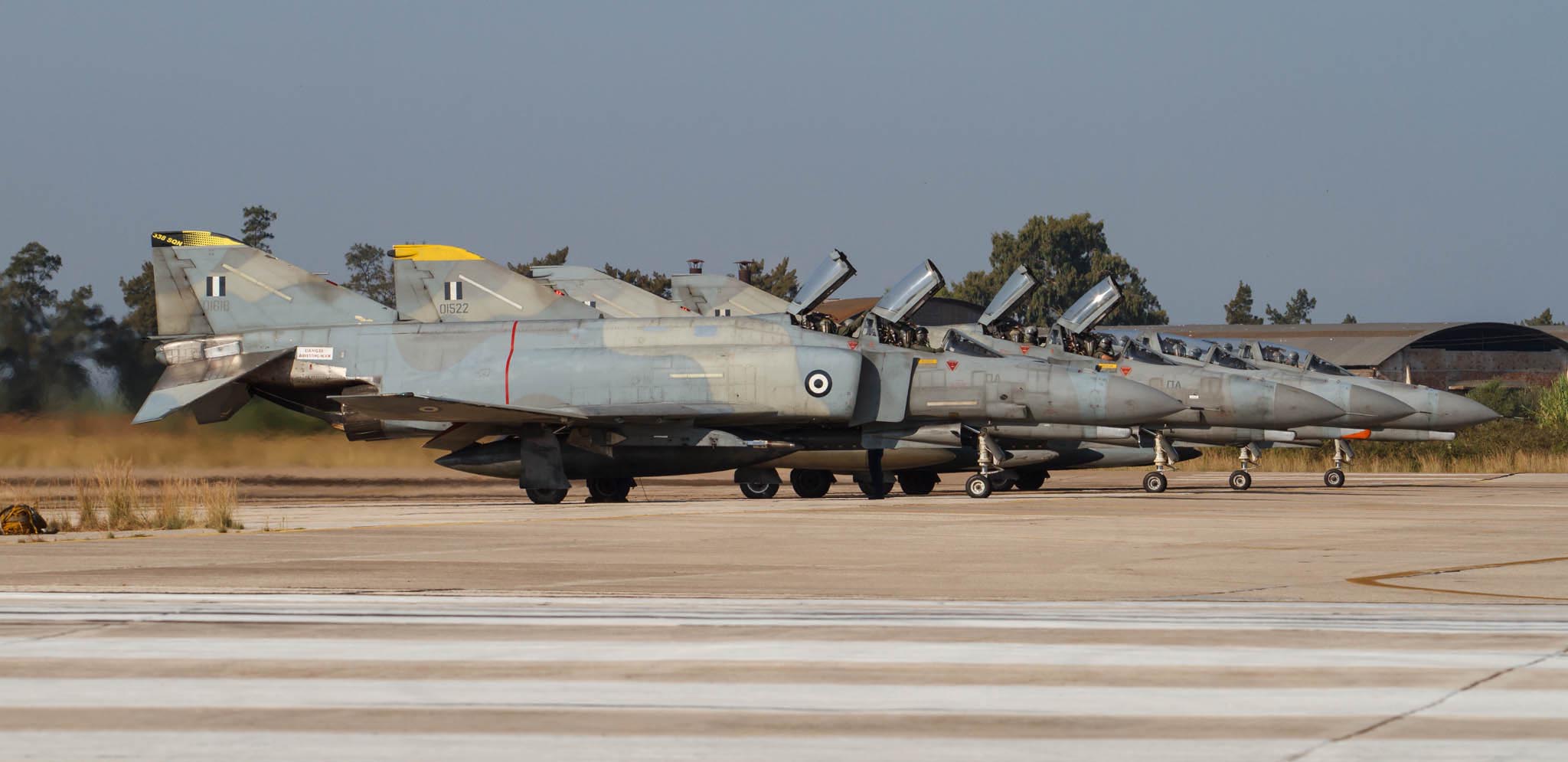
F-4E(AUP) Phantom IIs (01512, 01508 and 01618).
|
Left to right: F-4E(AUP) Phantom II (01508) taxiing from within its Hardened Aircraft Shelter (HAS).
|
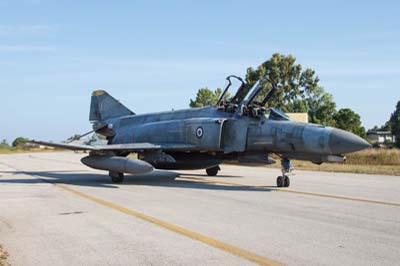
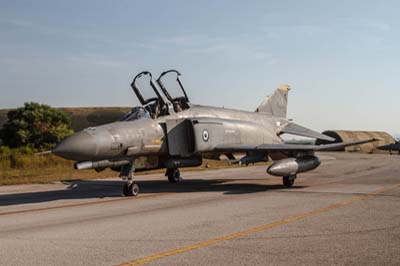
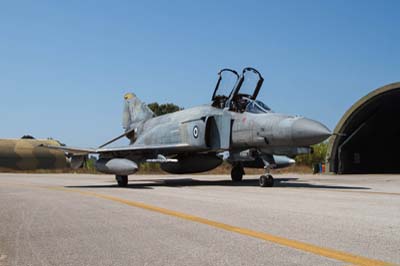
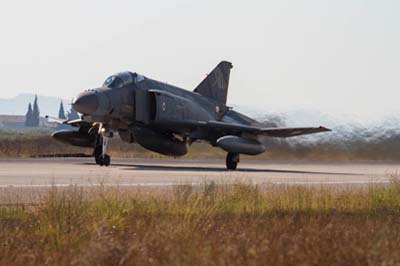
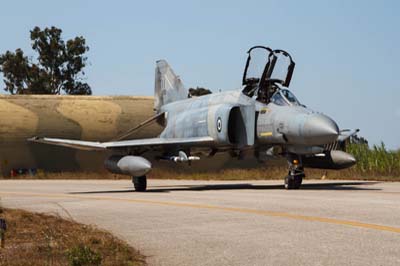
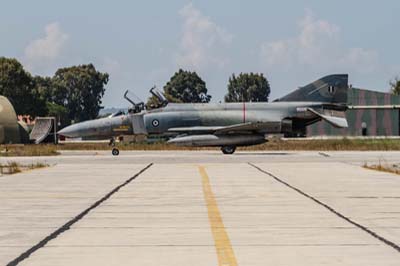
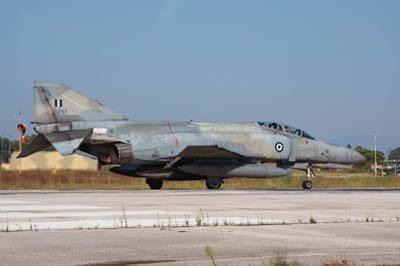
| Left to right: F-4E(AUP) Phantom II (01522) on its way to the runway. |
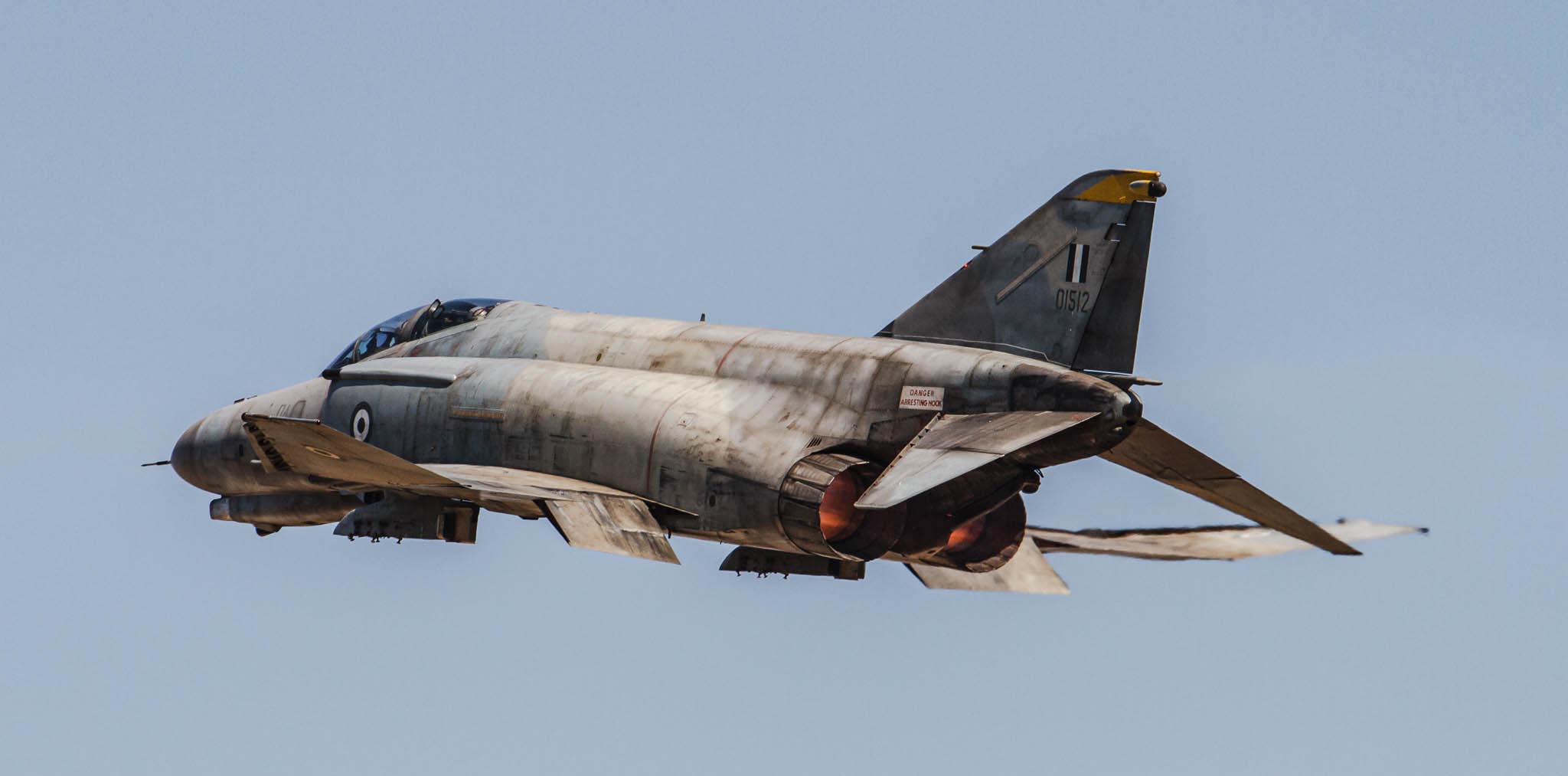
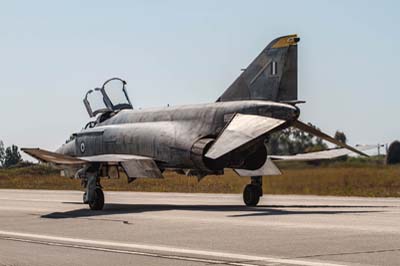
| F-4E(AUP) Phantom II (01512) |
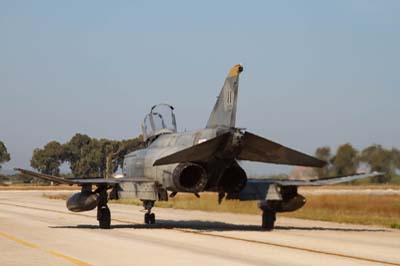
| Left to right: F-4E(AUP) Phantom II (01618) on its way to the runway. |
Left to right: F-4E(AUP) Phantom IIs (01522, 01618 and 01534).
|
| F-4E(AUP) Phantom II (01512). |
| Left to right: F-4E(AUP) Phantom IIs (01528, 01528, 01512 and 01512). |
339 'Aias' All weather Interception Squadron (Mira Pantos Kerou - 339 MPK)
339 MPK (blue fin tip) is tasked with the all-weather interception role it is also the Phantom OCU (Operational Conversion Unit). |
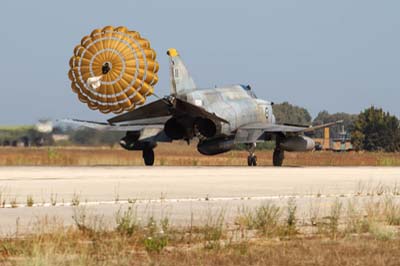
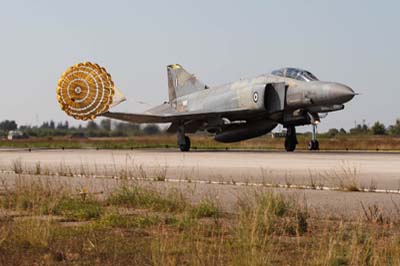
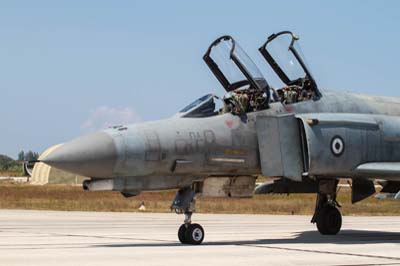
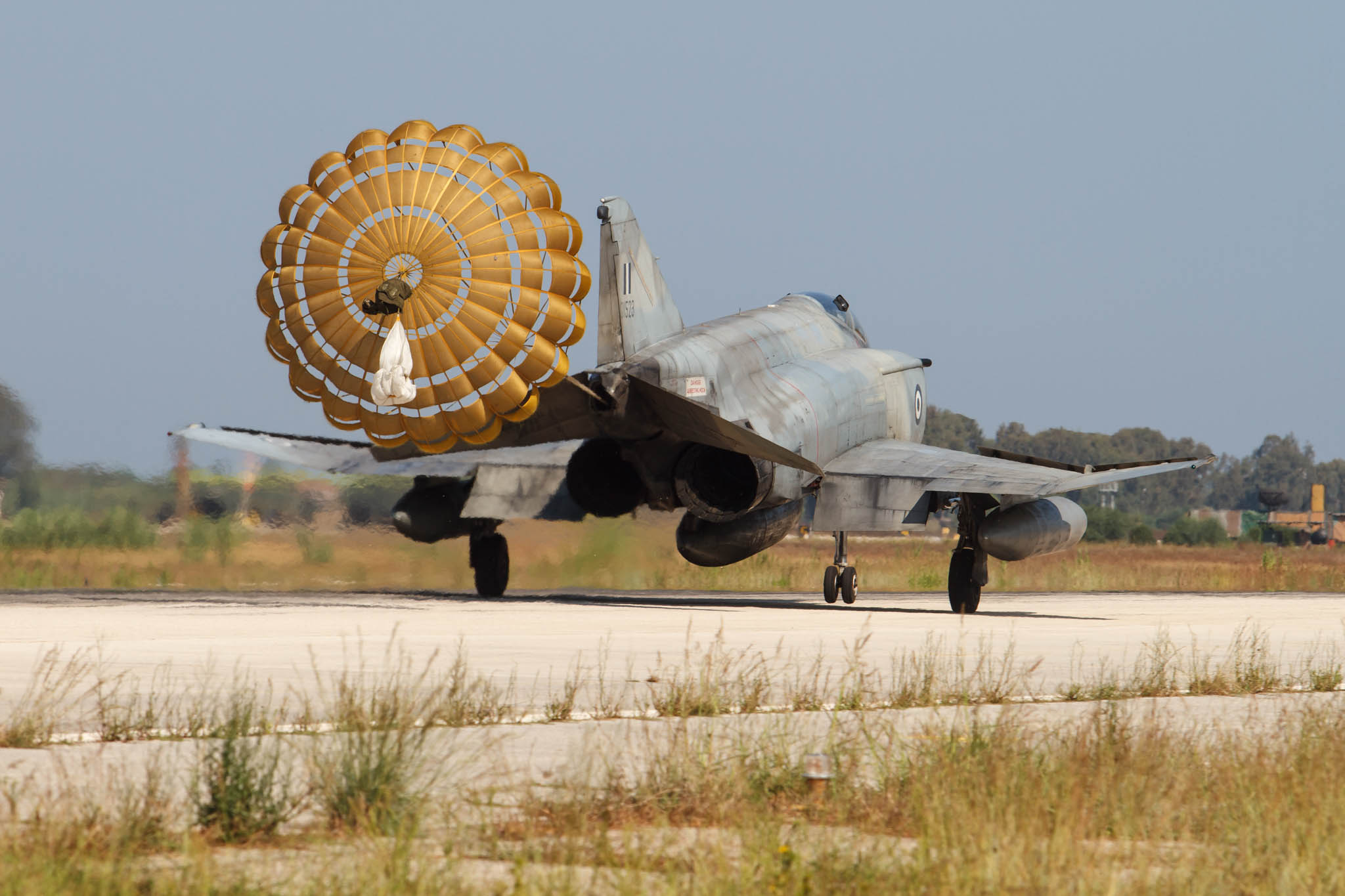
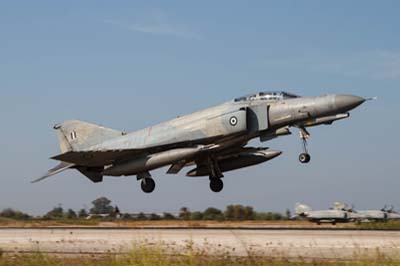
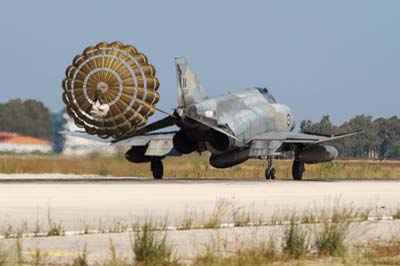
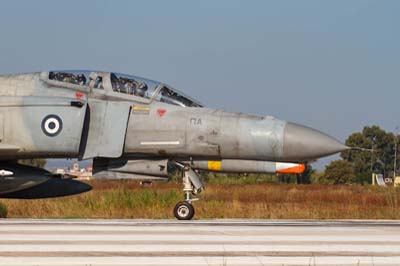
| 339 MPK F-4E(AUP) Phantom II (01523) recovering. |
| Left to right: Last Chance and turning on to the runway, F-4E(AUP) Phantom IIs (71745 and 01523). |
| Left to right: F-4E(AUP) Phantom IIs (71758 x3 and 01505). |
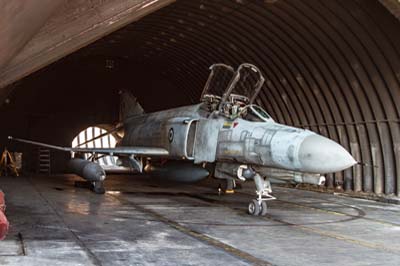
| F-4E(AUP) Phantom II (71759) taxiing from a Hardened Aircraft Shelter (HAS). |
| Left to right: F-4E(AUP) Phantom IIs (01523, 01518, 71759 and 71758). |
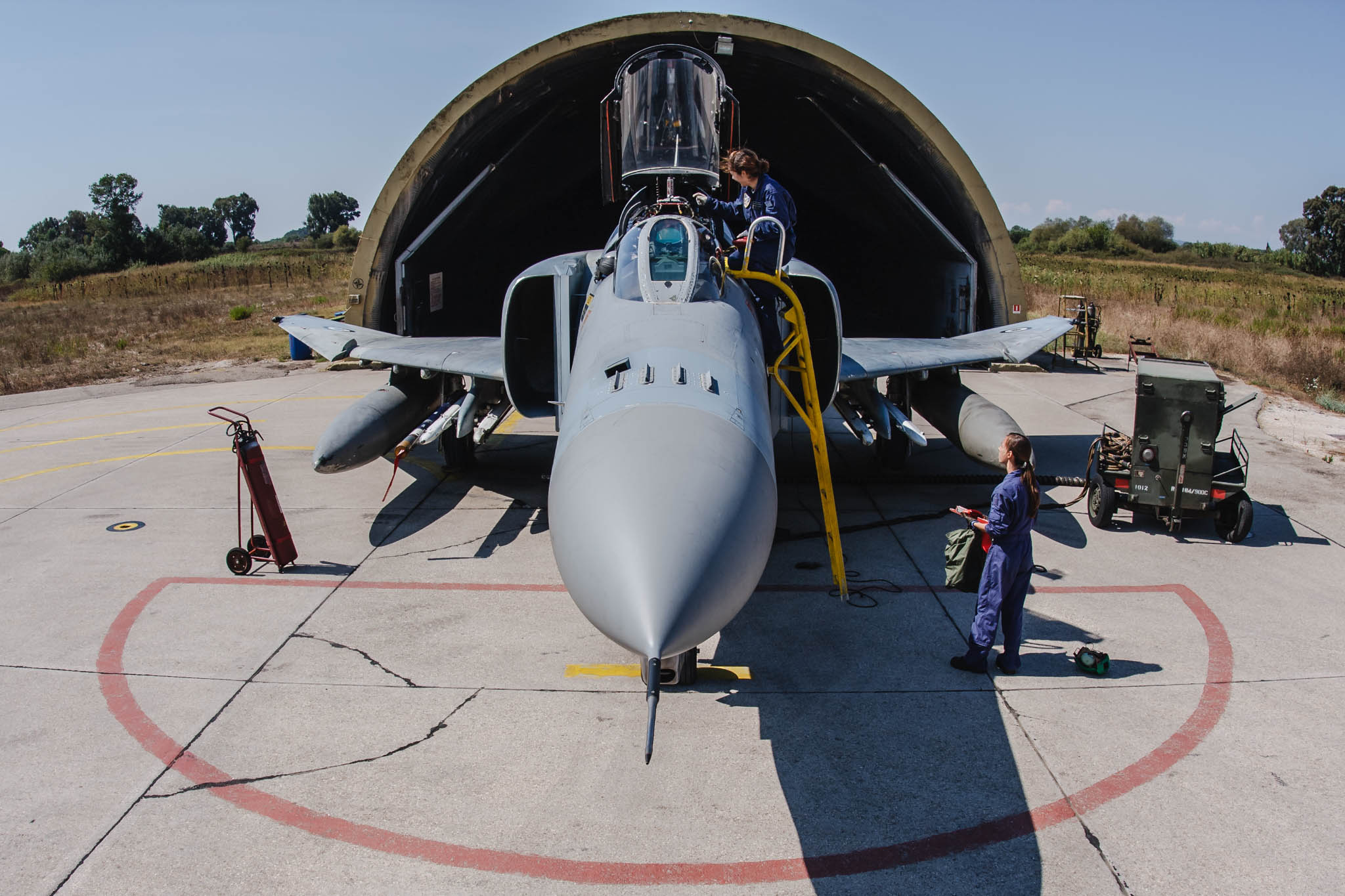
| F-4E(AUP) Phantom II (71758) being prepared for flight. |
| Left to right: F-4E(AUP) Phantom IIs (71759, 71759, 71758 and 71760) |
| Left to right: F-4E(AUP) Phantom II (01523) known as the 'Princess of Andravida' it was the prototype F-4E(AUP) delivered from Germany under the 'Peace Icarus I' program and came without an internal cannon fitted under the nose. F-4E(AUP) Phantom II (71745) groundcrew are loading an under-wing fuel tank before the aircrew climbs aboard and the jet taxis out. |