
|
|
|
|
| KC-135 is 50 NATO E-3A F-15E Strike Eagle Bold Avenger 2009 C-135CF Stratotanker at Istres |
| Air to Air Photography Air to Air Refuelling (AAR) with the KC-135 Stratotanker |
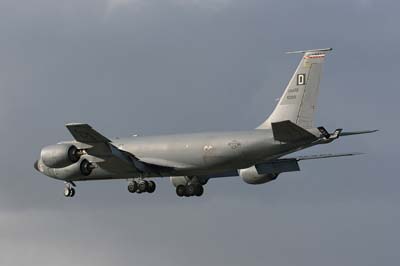
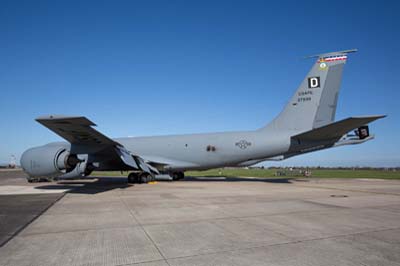
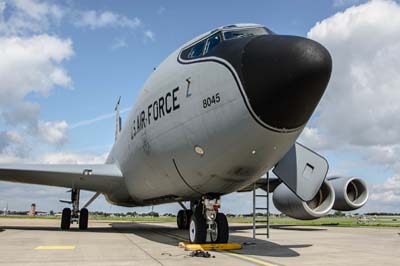 Air Mobility Command (AMC) by September 2009 operated around 417 Boeing KC-135R/T Stratotankers, of the 808 KC-135s originally built and delivered between 1956 and 1965. The AMC comprises tankers operated by the US Air Force, Air Force Reserve (AFRES) and Air National Guard (ANG). The last of the older generation KC-135E’s operated by the ANG was retired on September 23, 2009 joining 73 similar examples in long tern storage for possible reactivation and parts reclamation. After more than 50 years service these air refuelling tankers have served military very well and will continue to do so for many years. It is expected that the KC-135 will remain in service till 2040 when it is to be fully replaced by the new KC-X tanker. The contract for which is currently being fought over by two consortiums.
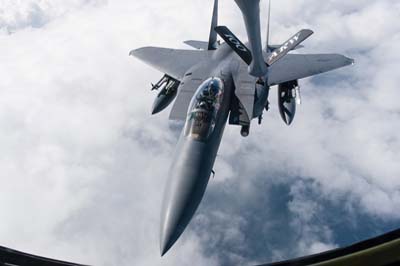
The refuelling procedure The KC-135 is equipped with a rigid ‘boom’ which is steerable using two small wings (ruddevators), manually controlled by a boom operator. It can move 25 degrees left and right and 50 degrees below the horizontal. During air to air refuelling operations the boom is lowered and extended to enter a receptacle in the receiving aircraft. As the time for AAR approaches the boom operator (boomer) lifts the rear protective shield and lowers the boom to its ‘trail’ position of 30 degrees below horizontal and extends the nozzle 10 feet (3m). The receiving aircraft after making radio contact will close in towards the KC-135 to the ‘pre-contact’ position, which is below and about 50 feet (15m) behind the lowered boom nozzle. Clearance is given by the ‘boomer’, either by radio or by a sequence of lights under the tanker, for the receiver to approach (‘close’) and the nozzle is manoeuvred into the receiver’s receptacle (‘contact’). Using controls operated by the pilot the fuel is transferred to the receiver. Two rows of lights, known as pilot director indicators at the rear of the tanker, show the receiving aircrafts relative forward/aft and up/down position to help the pilot maintain position within the refuelling envelope. The refuelling envelope is dictated by the limits of boom movement, exceeding these limits could result in damage being done to either or both aircraft. The refuelling envelope varies with the type of receiving aircraft. The boomer will monitor the relative position of the receiver and should the limits be reached will ‘disconnect’ and order ‘break away’ if necessary for the whole procedure, of pre-contact, close and contact to be repeated if more fuel is required. The boom extension is free moving in and out while the boom is allowed to move up/down and left/right to reduce forces upon it. The boomer will disconnect when the required amount of fuel has been transferred. A disconnect can occur automatically if sensors indicate that the receiver’s tank is full. |
 |
 |
 |
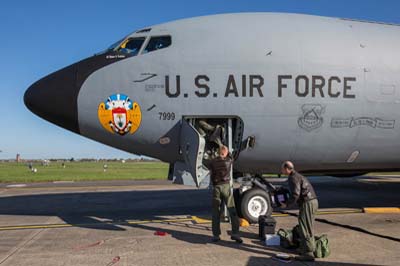 |
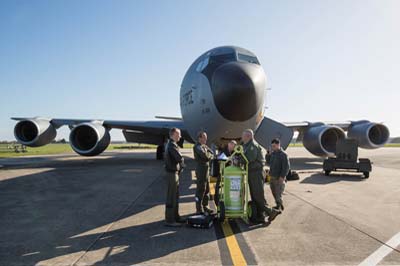
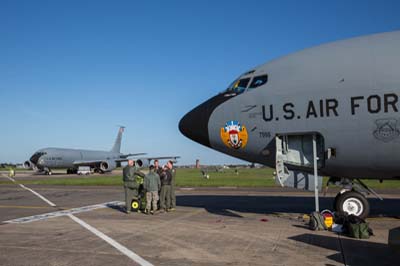
| Ground checks, signing for the aircraft and getting the kit loaded. |
 |
 |
 |
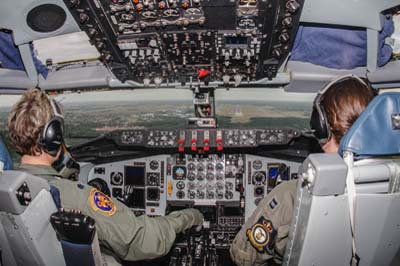 |
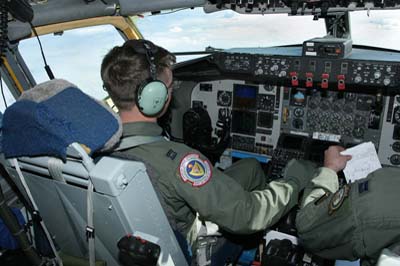
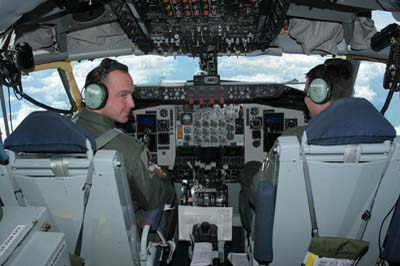
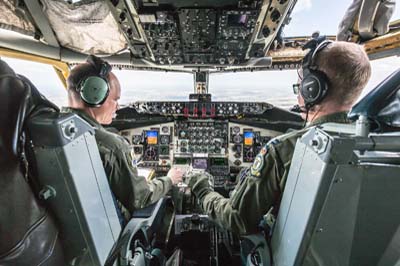
| From the jump seat in the cockpit Left to right: The Captain's seat, in the cruise and two miles on approach to Mildenhall. |
 |
 |
 |
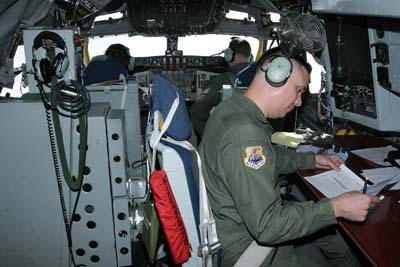 |
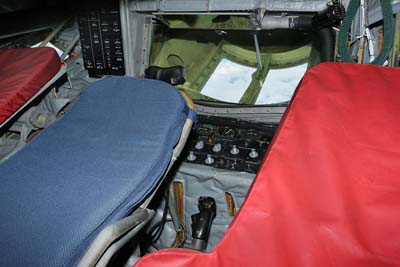
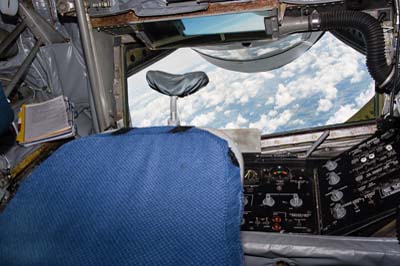
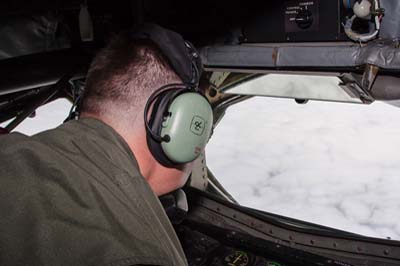
| The Boomer's position at the rear of the tanker, four feet below the cabin floor. Left to right: Each side of the Boomer there are positions where you can lie down and take your photographs. The right-side is better for photography as the window extends further to the right, this was to allow a better view for the Boomer instructors when they are being trained. The outer shield is down, the shield is now retracted and the boomer is in position. Since the navigator position was made redundant and navigation was left to the pilots, the boomer now also carries out duties in the cockpit. |
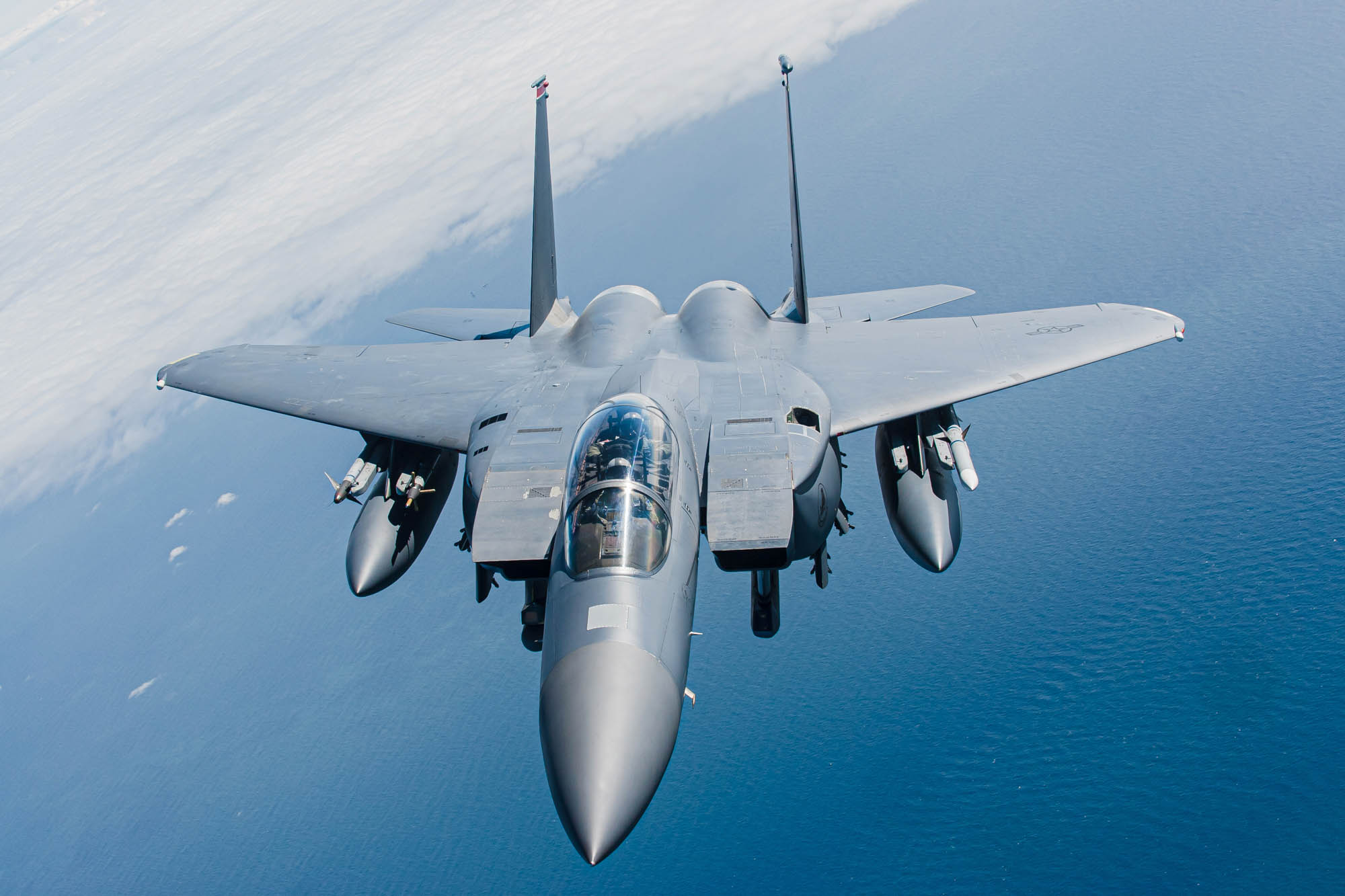 |
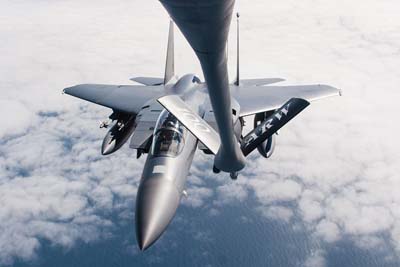
| F-15E Strike Eagle from 494th FS, 48th FW (01-2003 'LN') approaches to within 30 feet of the air refuelling tanker. Note that the opening to his refuelling recepticle is open ready for the boom operator to insert the probe. It is not necessary to be straight and level, as you can see in the image above we are both turning at around 30 degrees to port. DSLR x1.6 sensor + Canon EF 28-135mm (38mm) 1/250 f8. |
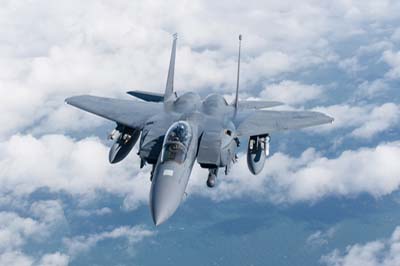
| Getting good and varied images Air to air photography from the boomer’s position offers a different perspective from tankers that use a trailing hose and drogue system. You have an almost unique head-on view of approaching receiving aircraft, which are only a few feet away. Using the best lens for the job is essential, I now use a DSLR camera with a full frame sensor + Canon EF 24-105mm zoom lens, or the 17-40mm lens which is just as good. Most good shots seem to be taken in the 17mm to 60mm range I find. On arriving at the aircraft prior to a photo shoot you will be introduced to the Captain and Co-pilot who will be busy with their pre-flight procedures. The boomer will be your main point of contact. I have found all boomers to be particularly friendly and helpful. Apart from making sure you are safe by giving you a flight safety briefing, they will do their best to make sure you get the best possible images. You do need to ask for what images you are looking for. You should be shooting through a clear flat glass window, however although optically perfect, hydraulic fluid or fuel can frequently coat the glass preventing crisp clear photographs. The blurring of the images worsens the further the receiver is from you. Firstly I go to the boomer’s position at the rear of the aircraft which four feet below the cabin floor. I want to check the state of the glass window, if it is dirty then as the groundcrew are obliged to keep this window clean they will be happy to sort out any problems. Remember it’s too late to have anything done after take-off! It’s possible to sit in the ‘jump’ seat behind the pilots for the take-off and landing, head-phones are usually offered so that you can listen in to the radio communications. Photography from this position can be approved by the Captain if requested, but make sure you ask if and when you can use flash. If they are aware that you will be using flash then I have found that permission is even granted for the take-off and landing. As boomers have more spare time prior to take-off, I tend to put all my requests through them. The ideas you have for shots are best discussed before take-off, when it is quiet and the boomer has more time. Don’t leave it till when they are in the boomer’s position with the head-phones on as the receiver is approaching. I am not sure when they discuss photographic options with the pilot as you can’t hear them speak to the pilot though their lip-mike. Each side of the Boomer there are positions where you can lie down and take your photographs. The right-side is better as the window extends further to the right, this was to allow a better view for the Boomer instructors when they are being trained. Ask the boom operator if he can ask the pilot of the receiving aircraft to do a few extra things before he has to go. Pilots can have time restrictions if they are on their way to a target and will be depart in seconds after disconnecting. However if they are on a routine training sortie or on their way home after a ‘strike’ then some time maybe available for some different shots. I always ask for the boom to be moved away as soon as the receiver disconnects, so that it does not get in the picture. Most of the pictures you take will show the boom in the image as they make their approach and close in on the nozzle. To get more unobstructed shots also ask for the receiving aircraft to descend 30 feet or so, rather than pull back, for a full-frame top shot. A pilot may be able to break right or left with a ‘wing-over’ for a more dramatic shot. Once he has done wing-over he is gone for good, so make that your last request! The break can happen very quickly, the boomer can tell you that it is about to happen but not always, so be ready. Pilots of formations of aircraft may have time to form a tactical formation behind the tanker, again ask if this can be requested. Refuelling can take two or three minutes for fighters and apart from cock-pit shots there are not many other possible shots. Then I often dash upstairs to shoot out the side cabin windows for a minute or two before returning for the disconnect. As only one aircraft can receive fuel at a time the rest of any formation before and after taking fuel will formate on or behind the tanker’s wing. There are four side windows, two each side, the two above the wings leading edges seem to have little photographic potential, the other two are well placed behind the wings. The cabin windows are like portholes and are very poor optically and often have blemishes. I move the camera’s lens around the window, shooting many shots in the hope that one comes out blemish free. You can get lucky especially if the subject aircraft is very close to you, again ask the boomer to request this. If you are flying above very bright white clouds exposure is very import if you are to show every detail in the cloud. I reduce exposure by around one stop or more, using the camera’s exposure compensation feature. In the boomer’s position their are two angled side windows, don’t discount these, a wide-angle shot can show more of the aircraft than from the main window, when it is receiving fuel and the nose of the receiver is hidden beneath the tanker. |
 |
 |
 |
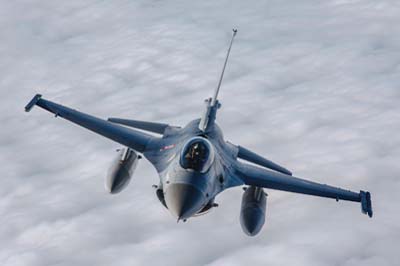 |
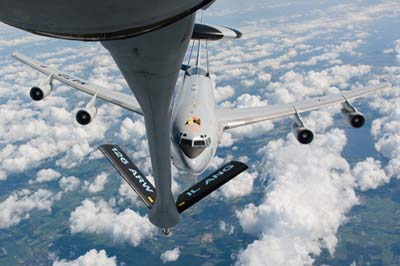
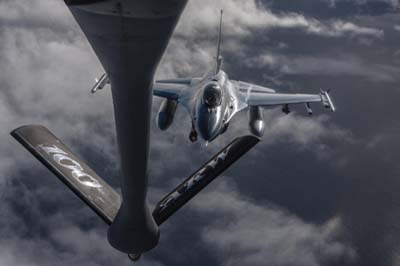
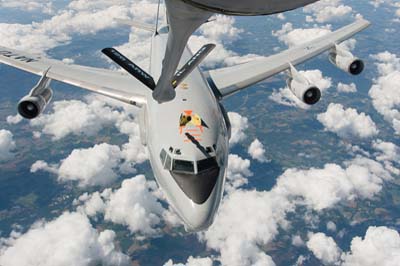
| The 'pre-contact' after the 'Observation'. Left to right: F-15E Strike Eagle (98-0131 'LN') of 492nd FS. DSLR x1.6 sensor + Canon EF 17-40mm (40mm) 1/250 f9. Boeing E-3A (LX-N90458) callsign 'NATO14' F-16AM Fighting Falcon (662) callsign 'Wolf 06' of 331 Skv Royal Norwegian Air Force. DSLR x1.6 sensor + Canon EF 24-105mm (47mm) 1/800 f9 -1 stop exposure compensation. F-16C Fighting Falcon (89-0035) callsign 'Izmir 42' of 162 Filo Turkish Air Force based at Bandirma. DSLR x1.6 sensor + Canon EF 24-105mm (90mm) 1/800 f9 -1 stop exposure compensation. |
 |
 |
 |
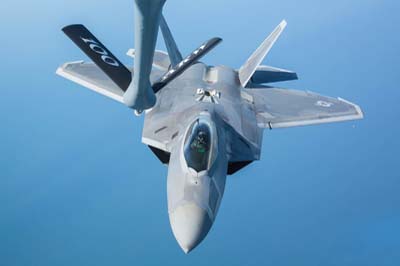 |
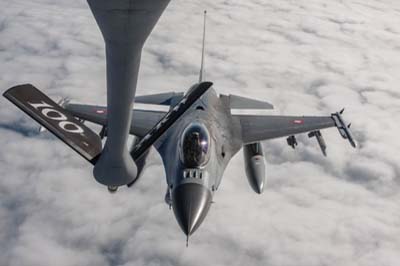
| The 'close' as the receiver approaches the KC-135. Left to right: F-15E Strike Eagles (01-2002 'LN') callsign 'Rico 42'. DSLR x1.6 sensor + Canon EF 17-40mm (33mm) 1/400 f8. Boeing E-3A (LX-N90458) callsign 'NATO14' F-16AM Fighting Falcon (E-107) using callsign 'Coyote 07' of Esk 727 Royal Danish Air Force based at Skrysdstrup. DSLR x1.6 sensor + Canon EF 24-105mm (40mm) 1/1000 f8 -1 stop exposure compensation. F-22A Raptor of 95FS based at Tyndall AFB, Florida. |
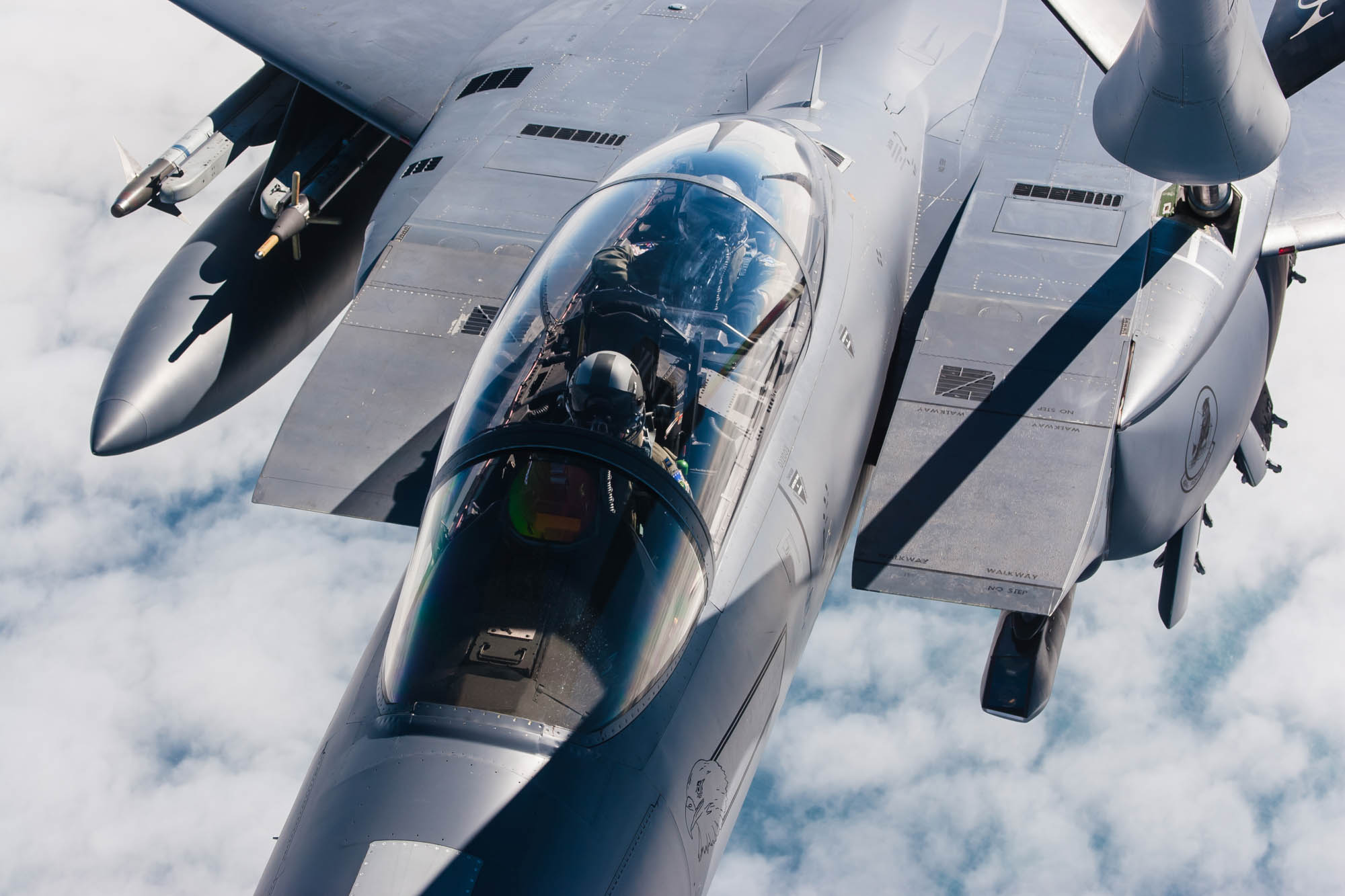 |
| F-15E Strike Eagle (01-2003 'LN') of 494th FS, the WSO can sit back and relax during refuelling. DSLR x1.6 sensor + Canon EF 28-135mm (38mm) 1/320 f8 and ISO 100 |
 |
 |
 |
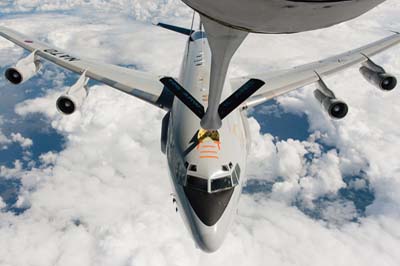 |
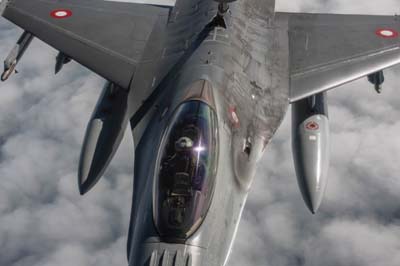
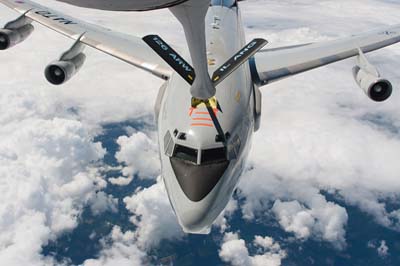
| 'Contact' Left to right: F-15E Strike Eagle (91-0321 'LN') of 492nd FS. DSLR x1.6 sensor + Canon EF 17-40mm (19mm) 1/200 f10. General Dynamics F-16AM Fighting Falcon (E-107) of Esk 727 using callsign 'Coyote 07' of Esk 727 Royal Danish Air Force based at Skrysdstrup. DSLR x1.6 sensor + Canon EF 24-105mm (40mm) 1/1000 f8 -1 stop exposure compensation and ISO 100. Boeing E-3A (LX-N90459) callsign 'NATO13' Boeing E-3A (LX-N90458) callsign 'NATO14' |
 |
 |
 |
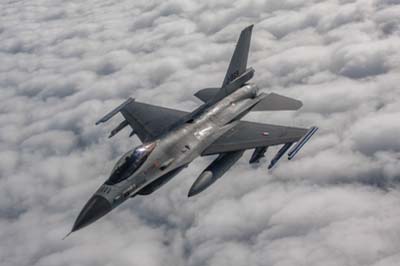 |
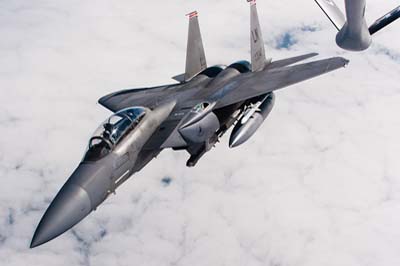
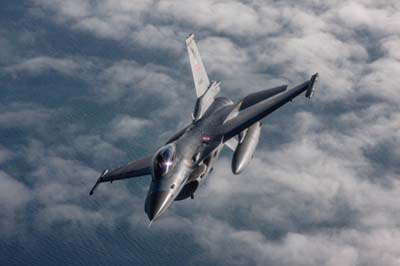
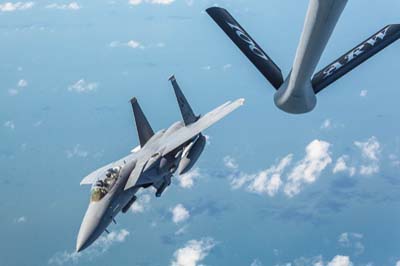
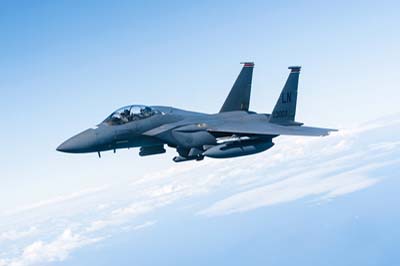
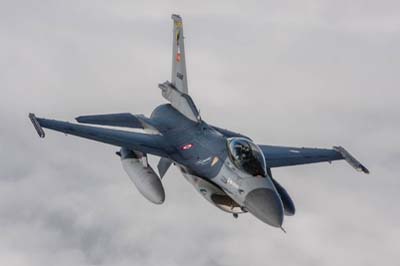
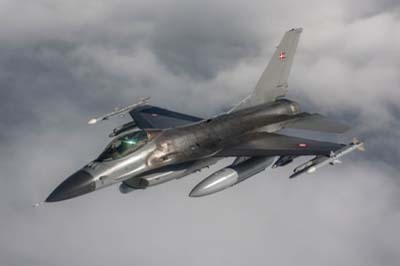
| The 'disconnect' and break from the boom nozzle. Left to right: F-15E Strike Eagles of 494th FS, 48th FW (91-0334 'LN') callsign 'Rico 41'. DSLR x1.6 sensor + Canon EF 17-40mm (28mm) 1/400 f8. F-16C Fighting Falcon (89-0035) callsign 'Izmir 42' of 162 Filo Turkish Air Force based at Bandirma. DSLR x1.6 sensor + Canon EF 24-105mm (90mm) 1/640 f9 -1 stop exposure compensation. F-15E Strike Eagle (91-0334 'LN') breaks off from refuelling over the North Sea. F-16AM Fighting Falcon (J-869) callsign 'Scarlet 02' of 322 Squadron Royal Netherlands Air Force based at Leeuwarden. DSLR x1.6 sensor + Canon EF 24-105mm (40mm) 1/1000 f8 -1 stop exposure compensation. |
 |
 |
 |
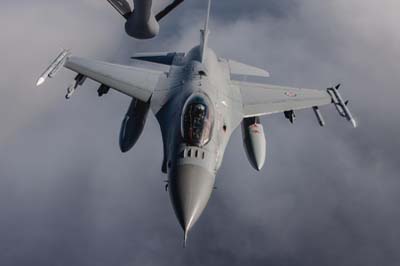 |
| Left to right: F-15E Strike Eagle (01-3003 'LN') of 494 FS. F-16C Fighting Falcon (89-0040) callsign 'Izmir 43' of 162 Filo Turkish Air Force based at Bandirma. DSLR x1.6 sensor + Canon EF 24-105mm (55mm) 1/1000 f8 -1 stop exposure compensation. F-16AM Fighting Falcon (E-107) using callsign 'Coyote 07' of Esk 727 Royal Danish Air Force based at Skrysdstrup. DSLR x1.6 sensor + Canon EF 24-105mm (92mm) 1/1250 f8 -1 stop exposure compensation. F-16AM Fighting Falcon (297) callsign 'Wolf 03' of 331 Skv Royal Norwegian Air Force based at Bodø. The boom operator has moved the boom out of the way straight after the break. DSLR x1.6 sensor + Canon EF 24-105mm (32mm) 1/500 f8 -1 stop exposure compensation. |
 |
 |
 |
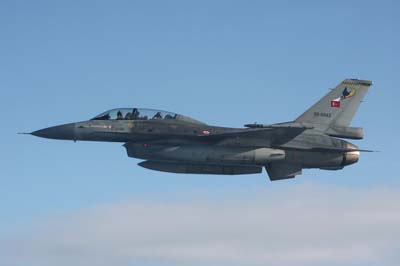 |
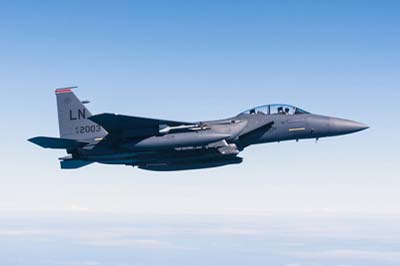
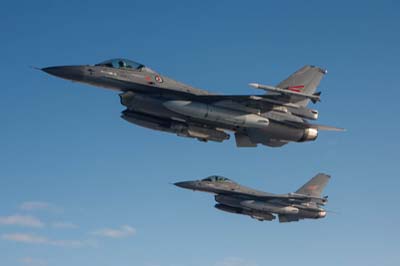
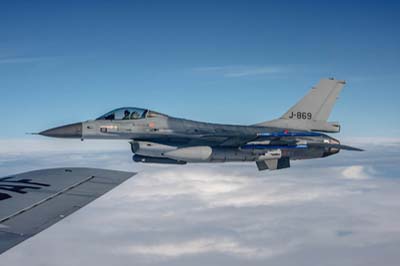
| The 'Reform' and shots from the rear cabin window Left to right: F-15E Strike Eagle (01-2003 'LN') of 494th FS F-16AM Fighting Falcon (297) callsign 'Wolf 03' of 331 Skv Royal Norwegian Air Force based at Bodø. DSLR x1.6 sensor + Canon EF 24-105mm (60mm) 1/400 f9 -1 stop exposure compensation. F-16AM Fighting Falcon (J-869) callsign 'Scarlet 02' of 322 Squadron Royal Netherlands Air Force based at Leeuwarden on the wing of the tanker after receiving fuel enroute to the target. DSLR x1.6 sensor + Canon EF 24-105mm (45mm) 1/800 f8 -1 stop exposure compensation. F-16D Fighting Falcon (89-0043) callsign 'Izmir 41' of 162 Filo Turkish Air Force based at Bandirma. Its a little further away (102mm) than is ideal and so there is a corresponding loss of quality. DSLR x1.6 sensor + Canon EF 24-105mm (102mm) 1/500 f8 -1 stop exposure compensation. |
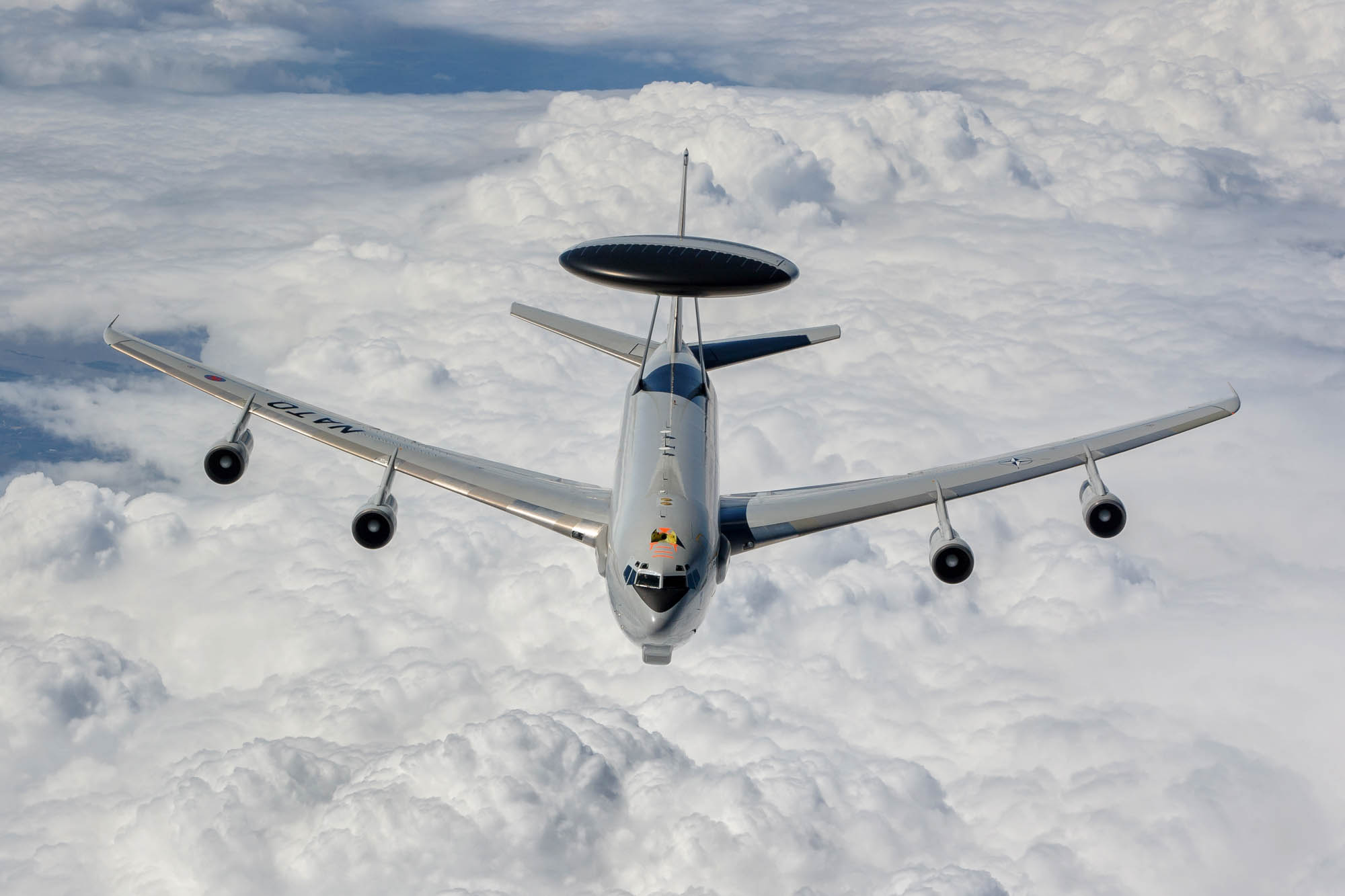 |
| Boeing E-3A (LX-N90458) callsign 'NATO14' drops away from the KC-135 air refuelling tanker Canon EF 24-105mm L (58mm) 1/500 f.11 ISO100 and -2/3 exposure compensation to keep detail in bright clouds. |
 |
 |
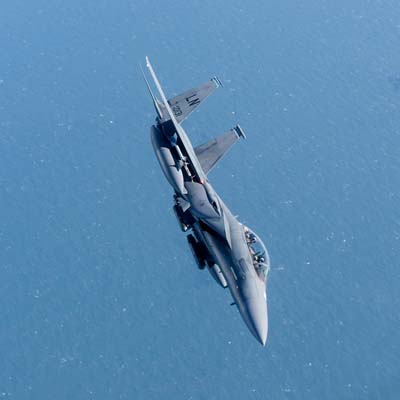 |
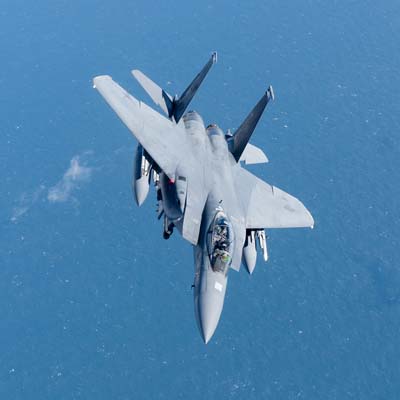
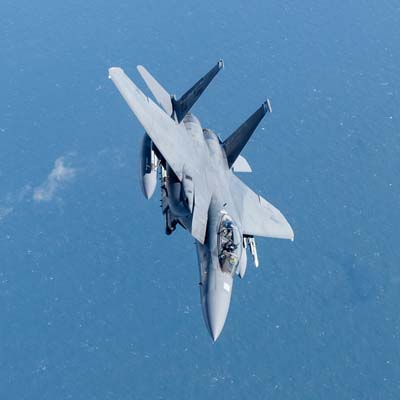
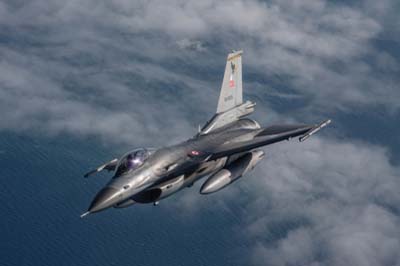
| A break and wing over sequence Left to right: F-15E Strike Eagle (98-0131 'LN') of 492nd FS breaks hard left for the camera. |
 |
|
 |
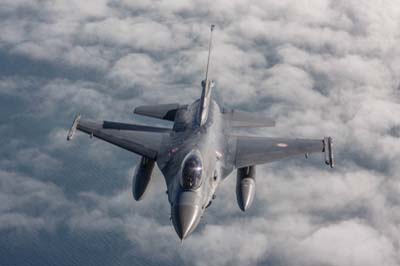 |
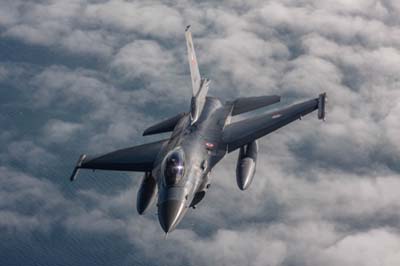
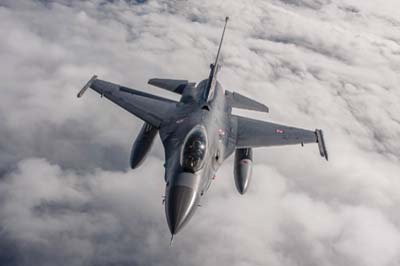
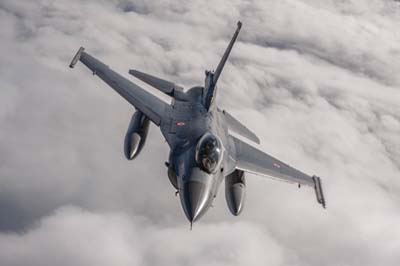
| Left to right: F-16C Fighting Falcon (89-0035) callsign 'Izmir 42' of 162 Filo Turkish Air Force based at Bandirma. DSLR x1.6 sensor + Canon EF 24-105mm (90mm) 1/640 f9 -1 stop exposure compensation and ISO 100. |
 |
 |
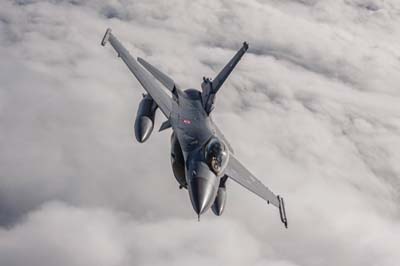 |
| Left to right: F-16C Fighting Falcon (89-0040) callsign 'Izmir 43' of 162 Filo Turkish Air Force based at Bandirma. DSLR x1.6 sensor + Canon EF 24-105mm (58mm) 1/640 f9 -1 stop exposure compensation and ISO 100. |
 |