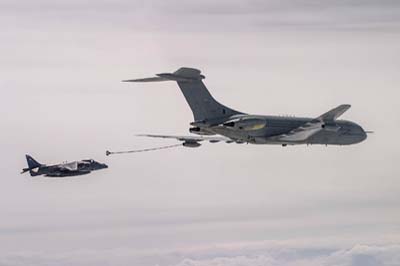
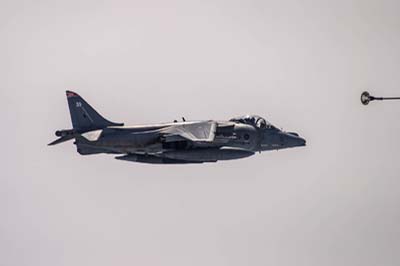
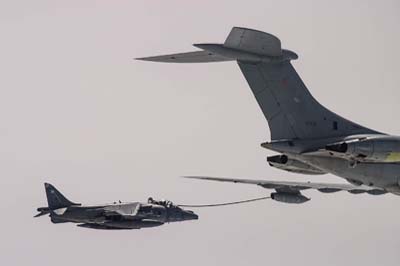
Flying with the RAFs VC-10s
|
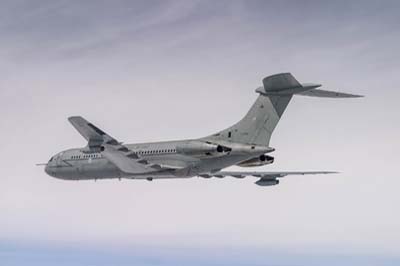
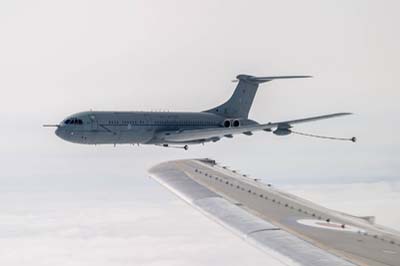
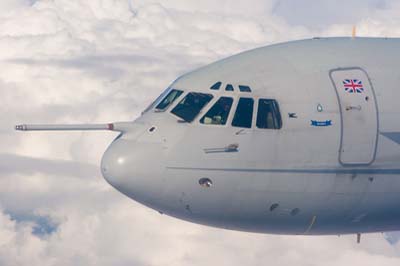
| 101 Squadron is now the only squadron operating the VC-10, since 10 Squadron disbanded in October 2005. 101 Squadron has ten of the C.1K version which were previously operating with 10 Squadron. They also have four K.3 and two K.4 variants in service. The VC-10s operate alongside 216 Squadron with their TriStars at RAF Brize Norton |
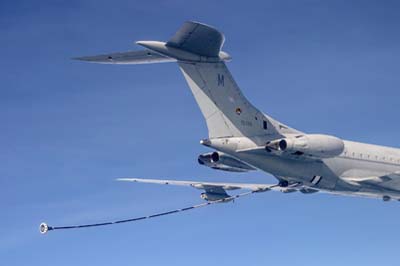 The C.1s were delivered to the RAF from July 1966 to August 1968 to fulfil the role of transporting military personnel and VIPs to locations around the world. They also can perform Aero-medical Evacuation duties as and when required, when they can carry up to 76 stretchers with six medical attendants. The C.1 can carry 150 passengers and has a crew of four with an unrefuelled range of over 3,600 miles.
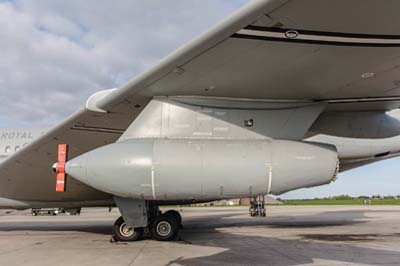
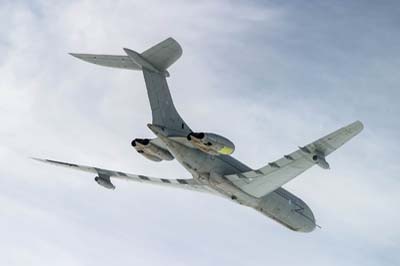
From 1991 to 1996 Flight Refuelling converted the C.1s to C.1K standard to enable them to air to air refuel. Two Mk.32 wing mounted refuelling pods with an under fuselage CCTV camera, were the principal modifications carried out. Without any extra fuel tanks installed, the aircraft continued to have the same capabilities as before and really only air to air refuel when transporting passengers over long distances.
Left: VC-10 K.4 (ZD240 'M') of 101 squadron
By 1982 BAe Filton had completed conversion of a number of ex civilian airline VC-10s to K.2 and K.3 standard. Five ex-British Airways Super VC-10s were later converted to K.4 standard as the Victor K.2s were gradually being phased out. 101 Squadron was reformed in 1984 to operate the 'new' VC-10 tankers. Up to the disbandment of 10 Squadron, 101 Squadron has a different role to 10 Squadron in that it is responsible for all the air to air refuelling of Britain's fighters, throughout the UK Air Defence Region and on exercises around the world. A 101 Squadron VC-10 is on permanent standby at Brize Norton and can take to the air in just 15 minutes. The VC-10 K.3/K.4 variants have three refuelling points, comprising of two wing hoses and a single fuselage-mounted refuelling point.
|
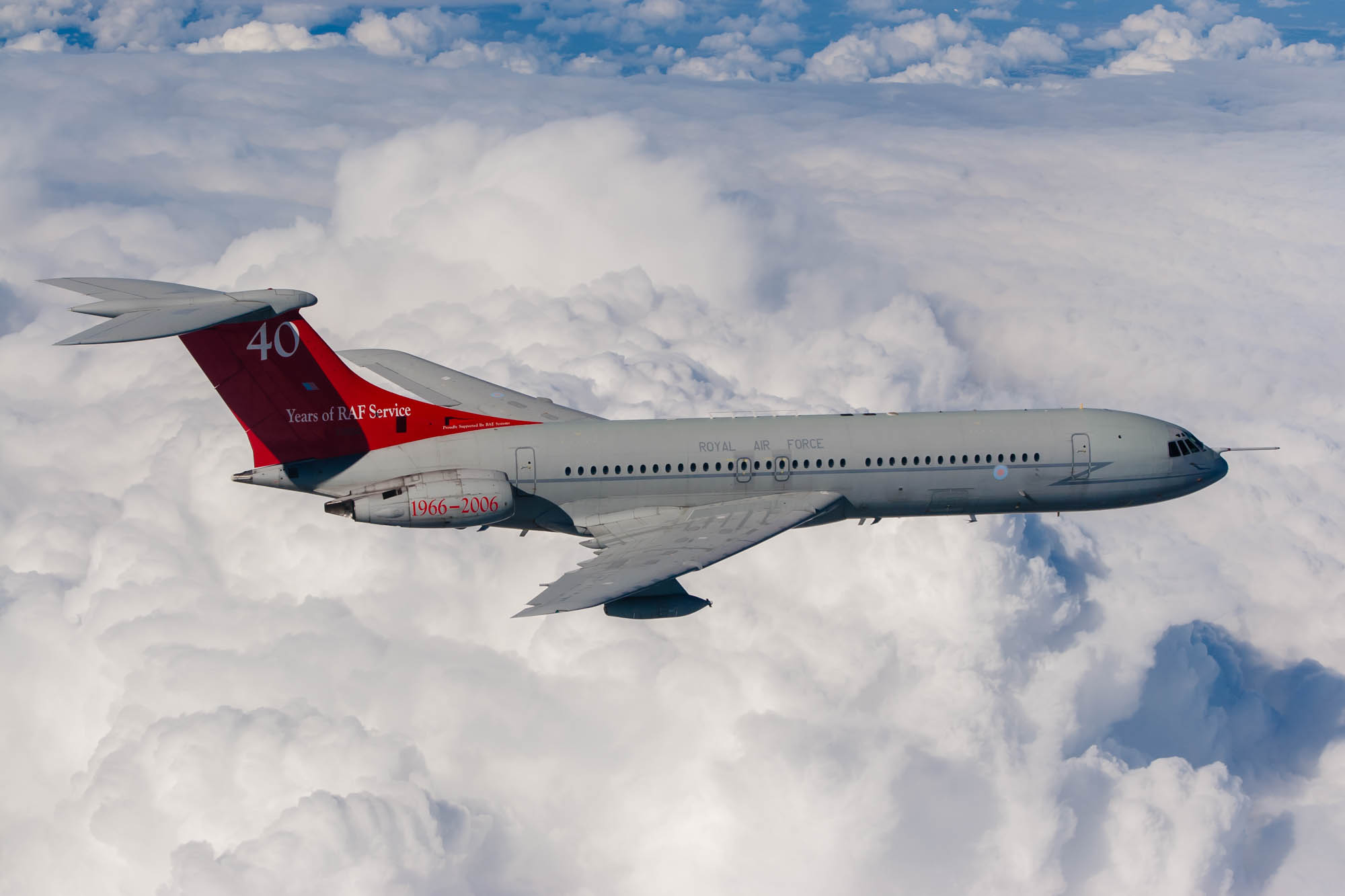 |
| VC-10 C.1K (XV104) in special '40 Years of RAF Service 1966-2006' scheme. |
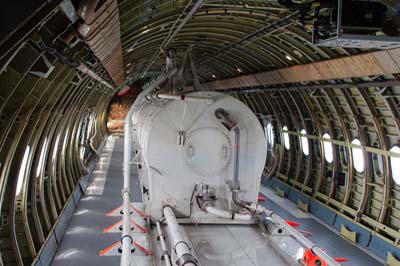
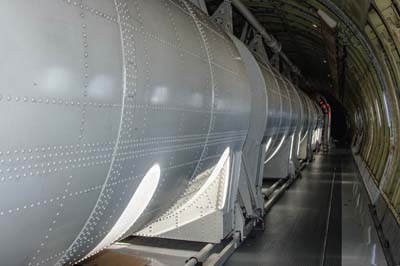
The K.3 has fuselage fuel tanks, installed in the original passenger compartment, giving it a maximum capacity of 78 tonnes. The K.4 however does not have these additional tanks and can only carry a maximum fuel load of 68 tonnes. The seating on the K.4 (as with the K.3) is 30 seats at the front of the aircraft all facing the rear, which initially I found a little disorienting at times. The rest of the aircraft is open plan with securing points for cargo.
Left to Right: Rear facing shot of fuel tanks on VC-10 K.3 (ZA150 'J').
Facing forward in VC-10 K.3 (ZA147 'F') showing one of four internal fuselage fuel tanks. Sadly ZA147 was broken up at Bruntingthorpe in November 2021. |
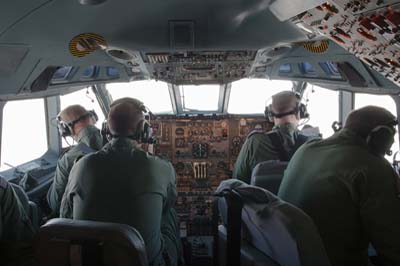
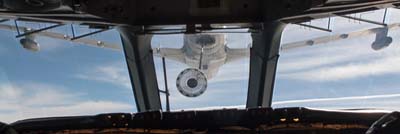
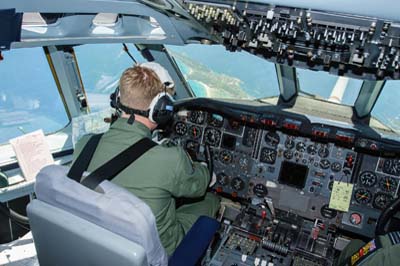
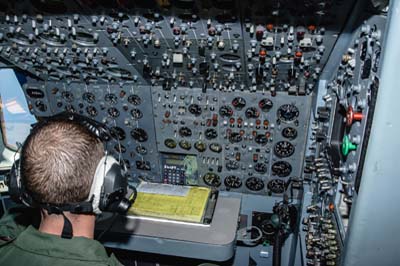
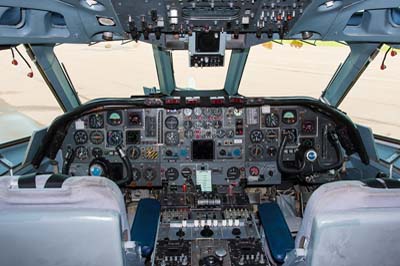
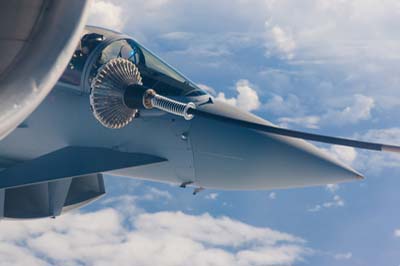
| Left to right: VC-10 K.4 (ZD240 'M') cockpit views during receiver training with K.4 (ZD241 'Tartan 54') over Irish Sea in AARA 13. The 'Tartan' callsigns start with '11' on Monday, '21' on Tuesday. So 'Tartan 54' was the fourth flight on Friday. Port side refuelling point of VC-10 C.1K (XV109). |
|
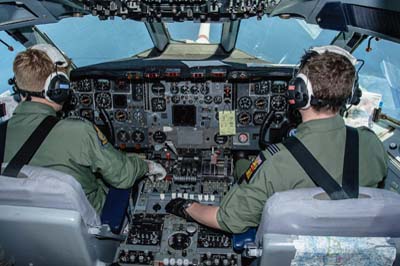
Left to right: The crew of VC-10 C.1K (XV104) during Spring Flag 07over the blue Mediterranean Sea in May 2007. Cockpit of VC-10 K.3 (ZA147 'F') at Brize Norton in October 2008. |
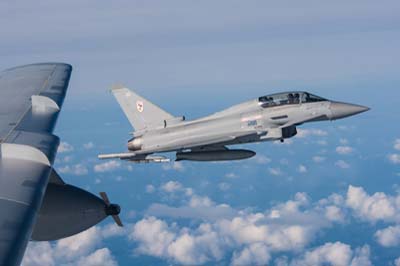
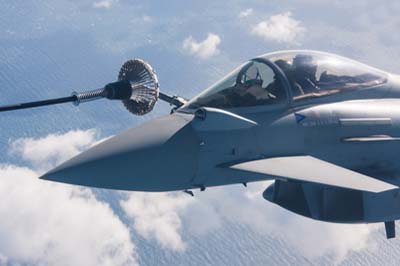
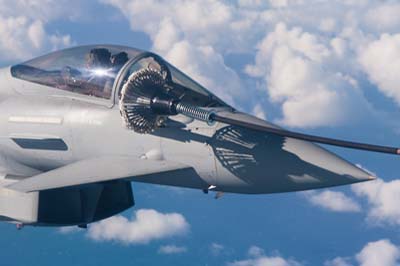
| Left to right: Typhoon F.2 (ZJ917 'QO-G') of 3(F) Squadron receiving fuel from VC-10 C.1K. Typhoon T.1 (ZJ808 'BG') and Typhoon FGR.4 (ZJ930 'AA') of 17(R) Squadron with Typhoon F.2 (ZJ927 'QO-M') of 3(F) Squadron both receiving fuel simultaneously from VC-10 K.3 (ZA147 'F') callsign 'Tartan 51' in October 2008. |
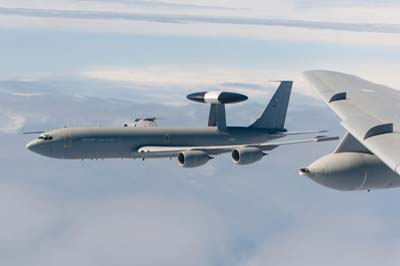
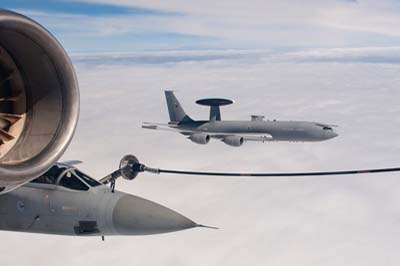
VC-10s can refuel aircraft right up to the E-3D Sentry which has to use the fuselage-mounted refuelling point.
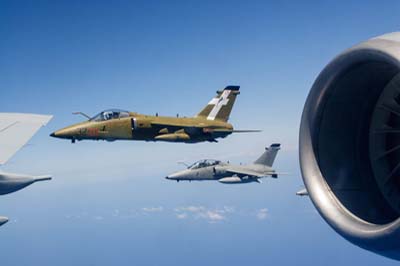
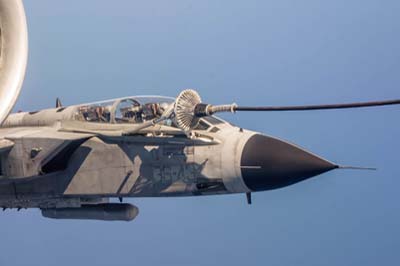
Left to right: E-3D (ZH106) arrives along side a VC-10 K.3 prior to refuelling. Six Italian Air Force AMX and four Tornado IDS were refuelled by VC-10 C.1K (XV104) during exercise Spring Flag 2007 over the Mediterranean Sea. |
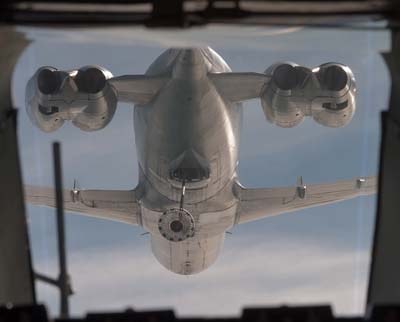
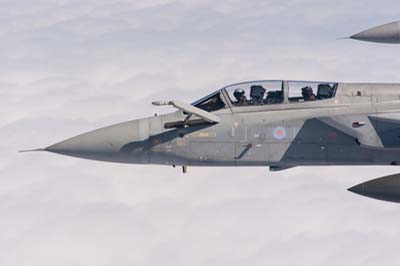
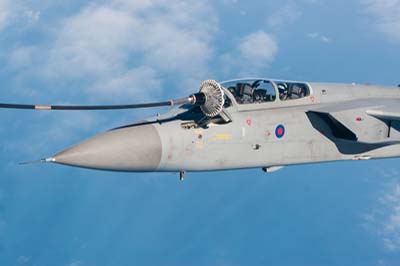
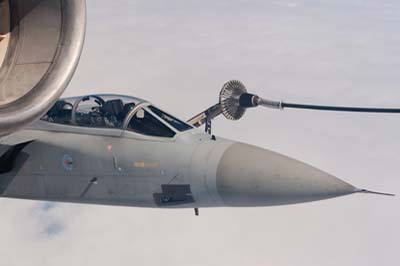
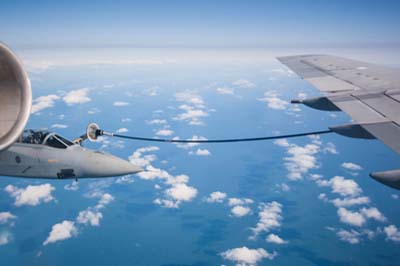
| Left to right: Tornado F.3 comes along starboard side prior to receiving fuel, with it's refuelling probe extended. Tornado F.3s taking fuel from the wing mounted refuelling hoses. These shots are typical of images taken from a VC-10, the rest of the receiving aircraft is hidden behind the VC-10s engines. Tornado F.3 (ZE764 'GL') from VC-10 K.3 (ZA147 'F') c/s 'Tartan 51' in October 2008. |
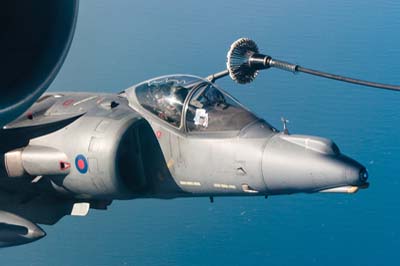
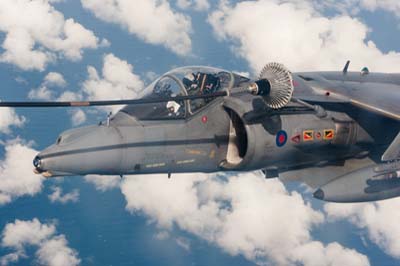
| Left to right: Harrier GR.7As (ZD348 '15A' and ZG471 '61A') from 4 Squadron requested some fuel from 101 Squadron VC-10 in May 2006 during exercise 'Swift Panther'. |
| Left to right: Three images from a 'Receiver Training' sortie flown in July 2004. VC-10 C.1K (XV106) callsign 'Tartan 52' received fuel from TriStar (ZD953) 'Fagin 51' in Air to Air Refuelling Areas (AARA) 5 & 6, during the four hour sortie. VC-10 C.1K (XV104) during a joint refuelling exercise in October 2006. |
| Harrier GR.7 (ZD410 '39') receiving fuel from the 10 Squadron VC-10 C.1K (XV106) in July 2004. |